China Approves World's First CAR-T Therapy for Solid Tumors
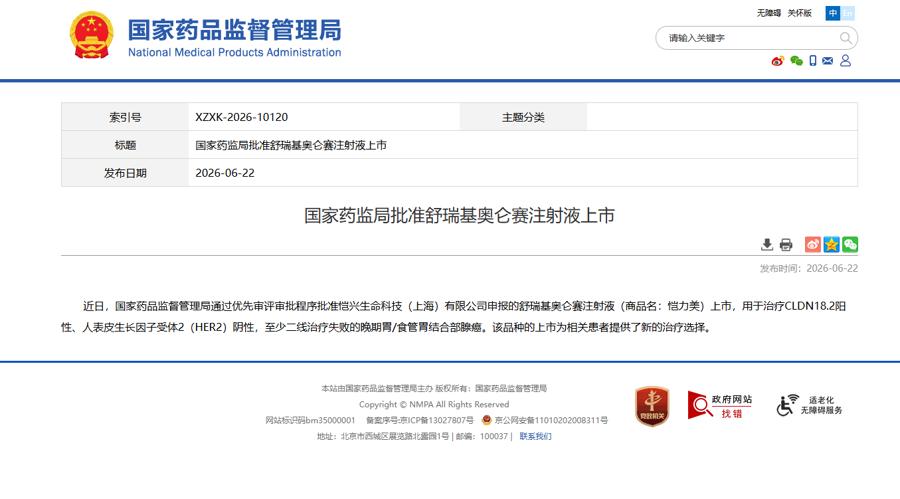
There’s a quiet but consequential shift happening in oncology — one that moves CAR-T therapy, until now largely confined to blood cancers, into the far larger arena of solid tumors. On June 22, China’s National Medical Products Administration (NMPA) approved satricabtagene autoleucel (brand name: Kailimei) through its priority review pathway, making it the first CAR-T product anywhere in the world to receive regulatory approval for a solid tumor indication.
The approval covers patients with CLDN18.2-positive, HER2-negative advanced gastric or gastroesophageal junction (GEJ) adenocarcinoma who have failed at least two prior lines of therapy — a group that, until now, faced a grim prognosis with vanishingly few options. Developed by CAFA Therapeutics, a subsidiary of CARsgen, the therapy represents not just a new drug but a fundamentally different approach to diseases that account for roughly 90% of all malignancies.
Solid tumors — cancers that grow as discrete masses in organs like the stomach, lungs, and liver — have long resisted the kind of engineered T-cell therapies that revolutionized blood cancer treatment. The physical barriers, immunosuppressive microenvironments, and antigen heterogeneity of solid tumors made them a far tougher target. That this approval arrived for gastric cancer is particularly significant: China bears a disproportionate share of the global burden, with roughly 40% of all new gastric cancer cases worldwide each year.
The clinical data behind the approval tells a striking story. A 2024 investigator-initiated trial published in Nature Medicine showed that among four gastric cancer patients with measurable target lesions who received satricabtagene autoleucel as sequential therapy after first-line treatment, the objective response rate was 100%. Two of those patients went on to surgical resection after CAR-T infusion — and both achieved nearly five years of long-term survival, an outcome that would have been unthinkable with conventional salvage therapy alone.
The signal extends beyond gastric cancer. At the 2025 European Society for Medical Oncology (ESMO) congress, preliminary results from an IIT evaluating the therapy as adjuvant treatment for pancreatic cancer showed that five of six patients (83.3%) experienced a significant drop in CA19-9 levels — a key tumor marker — with declines ranging from 51.3% to 96.1%. One patient completed a full 52-week follow-up with no evidence of disease recurrence.
CARsgen, which has spent over a decade building one of the most comprehensive CAR-T pipelines in the industry, now has more than ten programs spanning autologous, allogeneic, and in vivo CAR-T approaches across hematologic malignancies, solid tumors, and autoimmune diseases. Building on this approval, the company has already initiated trials exploring satricabtagene autoleucel as sequential therapy immediately after first-line gastric cancer treatment, as well as CAR-T consolidation following adjuvant chemotherapy — both aimed at expanding the window during which patients might become eligible for curative surgery.
For oncologists who have spent years watching CAR-T deliver remarkable results in leukemia and lymphoma while remaining stubbornly out of reach for the vastly larger solid tumor population, this approval marks the beginning of a new chapter. Whether the therapy can repeat its early results in larger, randomized trials will determine how widely that chapter opens — but for the patients who have already seen their tumors shrink and their survival stretch to years instead of months, the door is already ajar.