Inside China's 8,000-Meter Window to the Cretaceous: The Deepest Continental Science Borehole on Earth
There’s a hole in northeastern China that goes deeper into the continent than any science borehole in history. It’s not for oil or gas. It’s for reading the planet’s memory.
The Songke-2 well, drilled into the heart of the Songliao Basin in Heilongjiang Province, punches through more than eight kilometers of rock that accumulated over 100 million years. Every meter of that sedimentary column represents roughly 10,000 years of Earth’s history. The team behind it pulled out over 8,000 meters of continuous rock core — a feat no other continental scientific drilling project has matched.
The project began in 2006, led by Chinese Academy of Sciences geologist Wang Chengshan. Over nearly two decades, his team drilled “three wells and four holes” across the basin, accumulating more than 10,000 meters of total footage. The target was the Cretaceous Period — the most well-documented greenhouse climate in Earth’s geological record.
The Cretaceous is the period that interests climate scientists most. It was a world without ice caps, with CO₂ levels several times higher than today and sea levels hundreds of meters higher. Understanding how the planet functioned under those conditions — how the atmosphere, oceans, and ecosystems interacted — is one of the most urgent questions in paleoclimatology.
The catch is that recovering intact core from a continental borehole at that depth is extraordinarily difficult. Unlike commercial oil drilling, which can tolerate fragmented rock, science drilling demands continuous, undisturbed samples. The Songke-2 team achieved a core recovery rate above 95 percent, a benchmark that had no precedent in the International Continental Scientific Drilling Program (ICDP).
That achievement earned the project China’s 2025 National Science and Technology Progress First Prize.
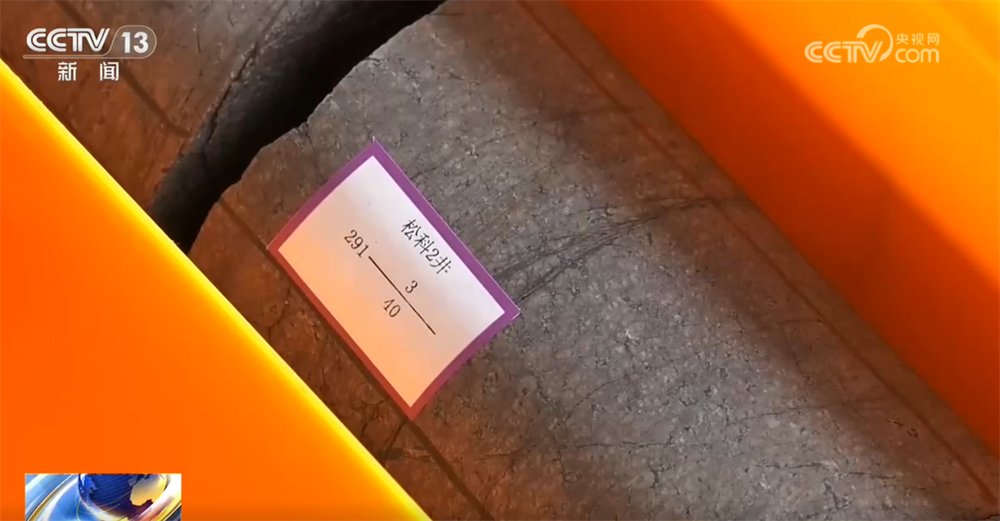
“The cores are like a giant history book that encodes 100 million years of time,” Wang said in an interview with state media. “Our goal was to build a complete continental Cretaceous archive — to understand exactly how hot it got, and what the climate system looked like at peak warmth.”
The project was organized as a multi-site configuration under the ICDP umbrella. Wang’s team built an end-to-end technical system covering drilling site selection, core handling, high-precision measurement, and geochronological calibration — a complete pipeline that the ICDP has described as a “beacon” project for future continental drilling worldwide.
The samples preserved in the core (fossil pollen, mineral layers, stable isotope signatures) record year-by-year and century-by-century shifts in temperature, precipitation, and atmospheric composition. It’s the closest thing geologists have to a time machine for the Cretaceous.
Now that the drilling phase is complete, the real work begins. The cores are split across three storage facilities: the National Core Repository in Hebei’s Yanjiao, the China University of Geosciences (Beijing) core library, and the Daqing Oilfield Research Institute core library. Scientists are already deploying laser scanning, spectral analysis, and high-resolution imaging to extract quantifiable data from the rock.
The Songke-2 well has already changed how geologists think about continental drilling. Before this project, no ICDP borehole had gone this deep — the previous records were held by ocean drilling projects. The well proves that continental cores can be recovered at depth with enough integrity to do cutting-edge paleoclimate science.
For climate modelers, the dataset arriving from those 8,000 meters of core will take years to process. But it promises something the field has lacked: a direct, high-resolution continental record of the last great natural greenhouse, drilled and documented at a resolution that lets scientists read Earth’s climate system year by year.