Galactic Energy's Reusable Rocket Engine Passes 163rd Test — Maiden Flight Is Next
There’s a difference between testing an engine on the ground and putting it in the sky. Galactic Energy, one of China’s leading private aerospace firms, is about to find out how big that gap really is.
The company’s Cangqiong-50 — a reusable liquid-oxygen/kerosene engine — completed its 163rd hot fire test on July 1 at the Niutoushan Propulsion System Test Center. The engine ran normally, which at this point is routine. What’s less routine: Galactic Energy has now fired 57 production-grade Cangqiong-50 units for a combined 20,088 seconds on the test stand. The longest single engine run hit 2,757 seconds.
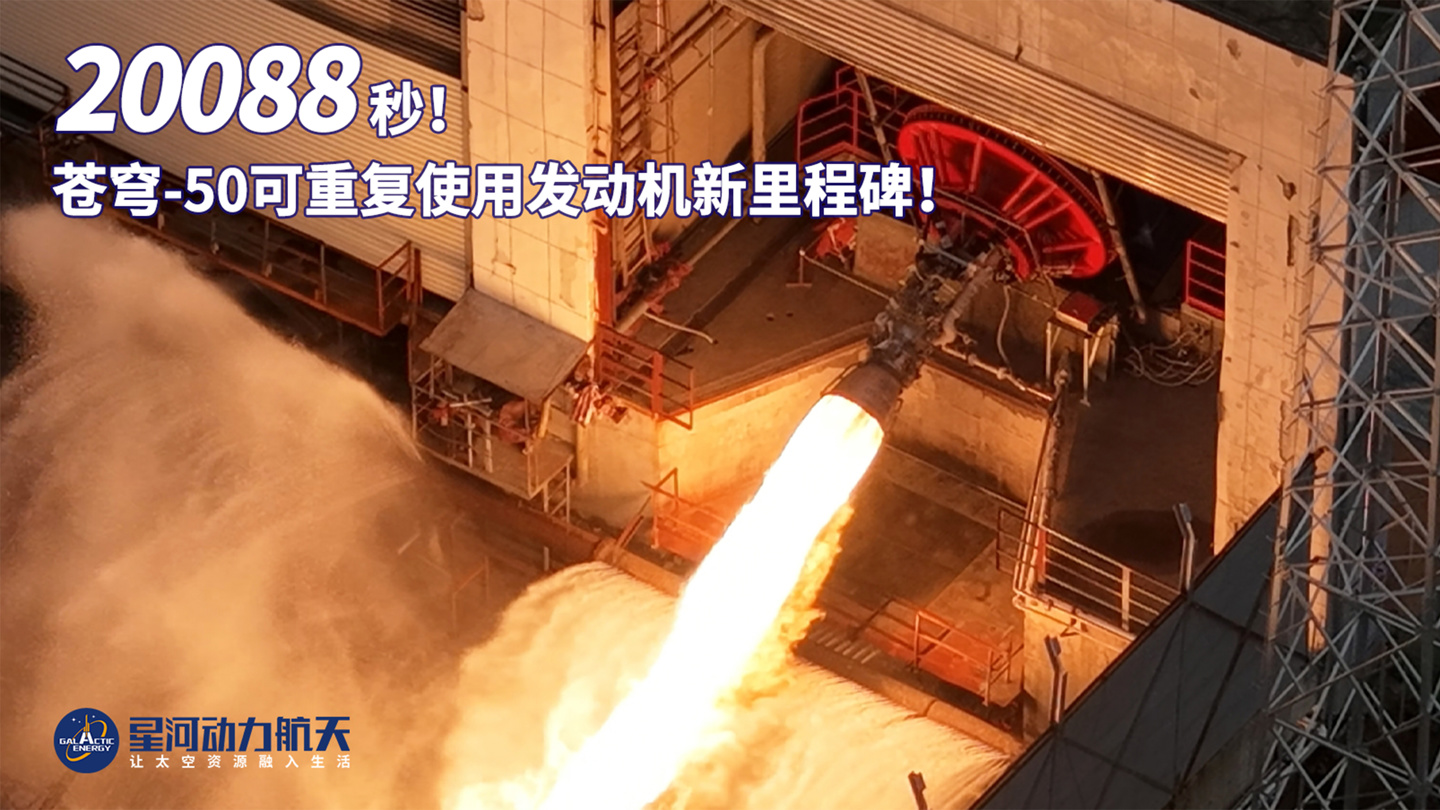
The numbers matter because reuse is the point. The Cangqiong-50 uses a pintle injector design — the same architecture SpaceX’s Merlin engine popularized — and is rated for at least 25 reuses. It can throttle from 32% to 105% of rated thrust, with a control accuracy of 0.5%. That kind of precision is essential for a vertical landing, where the engine has to ramp down smoothly from a supersonic deceleration burn to a near-hover touchdown.

On the manufacturing side, Galactic Energy is printing parts rather than machining them. The combustion chamber uses a 3D-printed regenerative cooling structure with a welded-body process. The company says this cuts production time by 30% and cost by 15% compared to conventional fabrication. More than 40 engines have already been assembled and delivered.
The engine is the heart of the Zhishenxing-1, a medium-to-large reusable liquid rocket that Galactic Energy plans to fly soon. The vehicle is designed to compete in the commercial launch market, where reusability is quickly becoming table stakes rather than a differentiator. Chinese private space companies — including LandSpace, iSpace, and Deep Blue Aerospace — have all been racing toward reusable launchers, but none has yet landed an orbital-class booster intact.
Galactic Energy hasn’t announced an exact launch date. But with the engine test campaign essentially complete and a production line running, the Zhishenxing-1’s first flight is the last major milestone before the company can start working on recovery — and eventually, the kind of rapid reuse cycle that drives launch costs down.