Intel's Nova Lake Flagship CPU Could Draw 474W — Z990 Boards Get Triple 8-Pin Power
Intel’s next desktop processor is going to need a lot of power — like, a genuinely shocking amount.
Leaked chipset design guidelines show the Nova Lake-S flagship, a 52-core dual-chiplet processor under the Core Ultra 400 series, could demand up to 474W at peak boost. That’s nearly double the thermal budget of current Arrow Lake-S chips.
The numbers come from LC Tech Leaks, who shared Intel’s revised Z990 power delivery specifications with motherboard makers. Nova Lake-S processors with a single compute chiplet will stick to more conventional power envelopes. The dual-chiplet variants, which pack 16 performance cores, 32 efficiency cores, and 4 low-power cores, are a different story.
The 150W PL1 baseline alone rivals the boost power of many current-generation CPUs. PL2 hits 474W, and the PL4 instantaneous spike ceiling reportedly reaches 854W. Anything beyond 474W moves into overclocking territory.
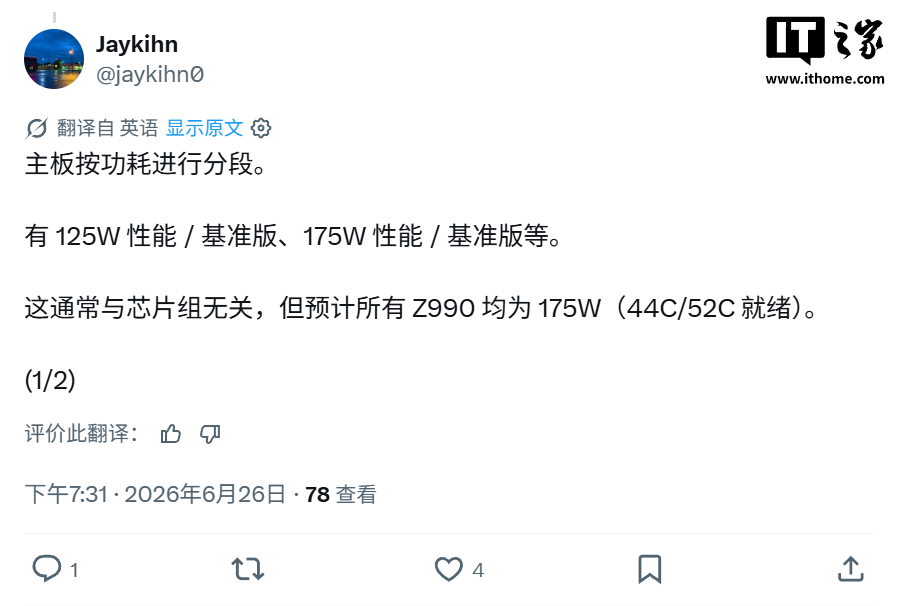
Power delivery tiers for Intel 900-series motherboards
| Tier | Power Class | Configuration | CPU Connectors |
|---|---|---|---|
| Entry | 35W | 2 configs | Standard 8-pin |
| Mid | 65W | 2 configs | Standard 8-pin |
| High | 125W | 2 configs | Single/dual 8-pin |
| Performance | 175W | 2 configs | Triple 8-pin EPS |
Intel told motherboard makers that some Z990 boards need three 8-pin EPS connectors to handle the 474W peak. But leaker Jaykihn clarified this isn’t mandatory across the board. Only the 175W performance-class Z990 boards will ship with triple connectors. That’s not a niche requirement, though — most flagship Z990 boards are expected to use the 175W standard anyway.
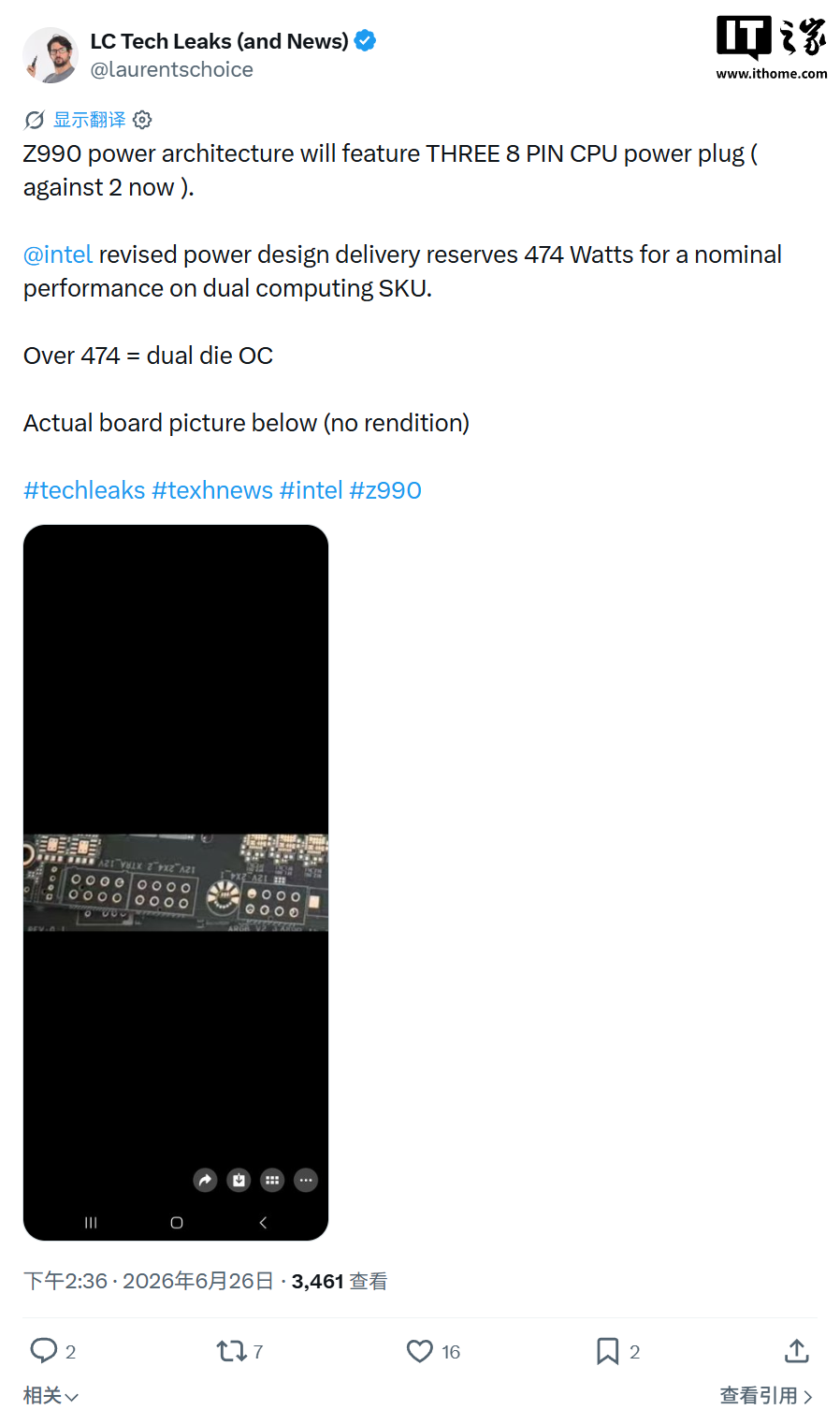
Gigabyte already showed a 900-series board at Computex 2026 with three EPS 8-pin connectors and the new FCLGA1954 socket. Given the power design and timeline, it’s almost certainly a Z990 board built for Nova Lake-S.
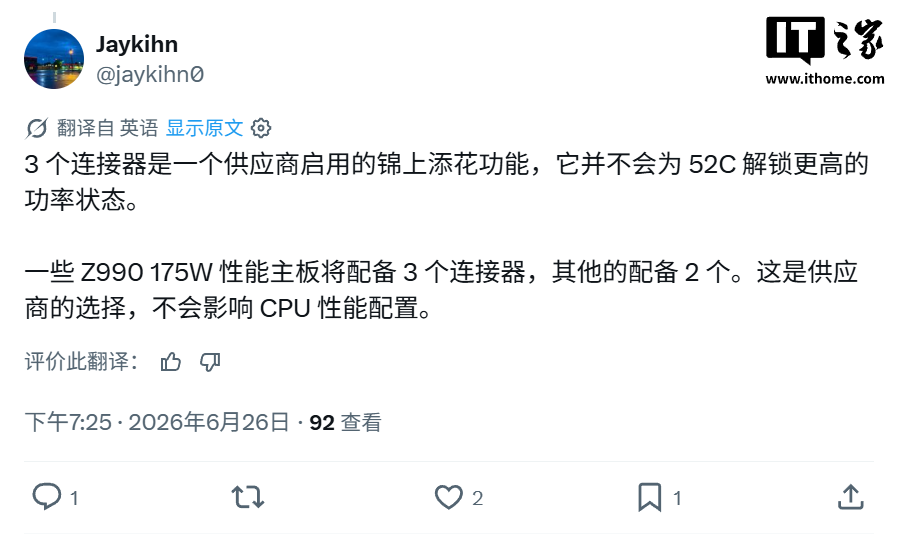
There’s a practical constraint here. Drop a dual-chiplet Nova Lake CPU into a lower-rated board and the system defaults to a reduced performance profile. Intel is effectively locking those chips to Z990 boards — same logic as dropping an AMD Ryzen 9 9950X3D into an A620 board and wondering why it chokes.

On timing: Intel previously confirmed Nova Lake would arrive in the second half of 2026. Multiple sources at Computex 2026 now point to Q1 2027 instead, with an official unveiling likely at CES 2027. The first chips to ship will be single-chiplet 28-core SKUs. The 52-core dual-chiplet flagship — the one that needs the triple power connectors — follows about two to three months later, landing around May or June 2027.
The 474W figure raises practical questions. Cooling a chip at that power level requires serious hardware — think 420mm radiators or custom loops, not air coolers or standard AIOs. And standard motherboard power stages may struggle without careful VRM design. Expect Z990 boards in the 175W tier to carry premium price tags, likely north of $600 for the feature-rich models.
Intel has played the power game before. Alder Lake and Raptor Lake both pushed thermal limits higher with each generation, and Arrow Lake took things further. Nova Lake, at least in its dual-chiplet form, represents a genuine inflection point — not an incremental step, but a fundamental shift in what a desktop CPU demands from the rest of the system.