Rockstar Employees Speak Out: Opaque Pay, Forced Crunch, Widening Gender Gaps
Rockstar Games built its reputation on some of the most critically acclaimed titles in gaming history — Grand Theft Auto and Red Dead Redemption. But behind that success, employees say the company has a culture problem that no amount of award wins can fix.
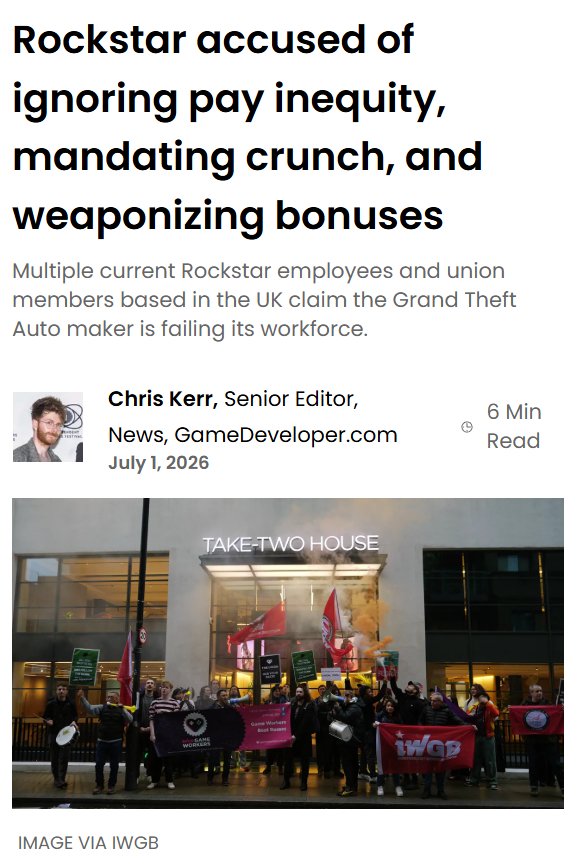
A report from GameDeveloper, published July 1, collects testimony from three anonymous Rockstar employees who have unionized and are speaking publicly about working conditions at the studio. Their complaints span three major issues: a compensation system so opaque that employees can’t predict their own annual income, a steady push to write mandatory crunch into employment contracts, and a widening gender pay gap that the company has allegedly done little to address.
Bonuses that feel like gambling
The three employees — all members of the UK game workers’ union — say bonuses make up a significant portion of most Rockstar salaries, but the company provides no clear criteria for how they’re awarded or withheld. The amounts fluctuate wildly, making it nearly impossible for staff to plan financially.
“When the bonus is high, it can feel like a windfall,” one employee said. “But more often than not, the money isn’t enough, and your actual annual income ends up much lower than you expected.”
Because the bonus system lacks transparency, the employees argue that Rockstar’s total compensation often falls below industry averages. Different departments use different criteria. Even employees within the same team are judged inconsistently. Sometimes the system appears to be entirely subjective.
“If a fifth of your annual salary can be docked for no clear reason, or reduced because of some sudden factor, imagine how that feels,” another employee told GameDeveloper.
Promotions are similarly opaque. Employees say the criteria keep shifting, making career progression at Rockstar a constant guessing game.
The return of crunch culture
Rockstar has a well-documented history of crunch. Around the release of Red Dead Redemption 2 in 2018, multiple reports described 100-hour workweeks and burnout across the studio. The company pledged to change. Employees now say the old patterns are making a comeback — this time, written into the fine print.
According to the workers, Rockstar is asking employees to sign contracts that include a clause voluntarily opting out of the UK’s Working Time Regulations, which cap mandated overtime at 10 hours per week. Employees say the company presents this as standard procedure.
“The company defaults to asking you to sign ‘I agree to voluntarily opt out of the Working Time Regulations’ in your contract,” one employee said.
The Working Time Regulations are a UK labor protection that limits the working week to 48 hours on average, including overtime. Employees can individually choose to opt out, but critics argue that making it a default contract term — especially at a studio with Rockstar’s crunch history — amounts to coercive pressure.
Gender pay gap widening, not shrinking
The employees also raised concerns about pay equity. They say the median wage gap between men and women at Rockstar has actually been expanding. A subsidy program that was supposed to close the gap has reportedly been eliminated. Night shift workers have lost additional pay that had previously compensated for unsociable hours.
“We want fair pay for the work we do,” one employee said. “We don’t feel we’re getting what we deserve.”
Rockstar has not publicly responded to the employees’ allegations. The studio is currently deep in production on Grand Theft Auto VI, one of the most anticipated games in history, set for a 2027 release. The timing of these complaints — during a critical development window — puts additional pressure on the company to address internal morale before the launch cycle begins.
For now, employees say they’ll keep pushing for transparency. “We’re not asking for special treatment,” one worker said. “We’re asking for a workplace where we know the rules.”