Windows 11 Tops SteamOS in CPU Benchmarks on the Steam Machine — But Games Tell a Different Story
Valve released official Windows drivers for the Steam Machine earlier this month, opening the door to something the company probably never intended: a direct operating system showdown on its own hardware. YouTuber ETA PRIME ran the test, putting Windows 11 head-to-head against SteamOS in both synthetic benchmarks and real games. The results are more nuanced than either camp might expect.
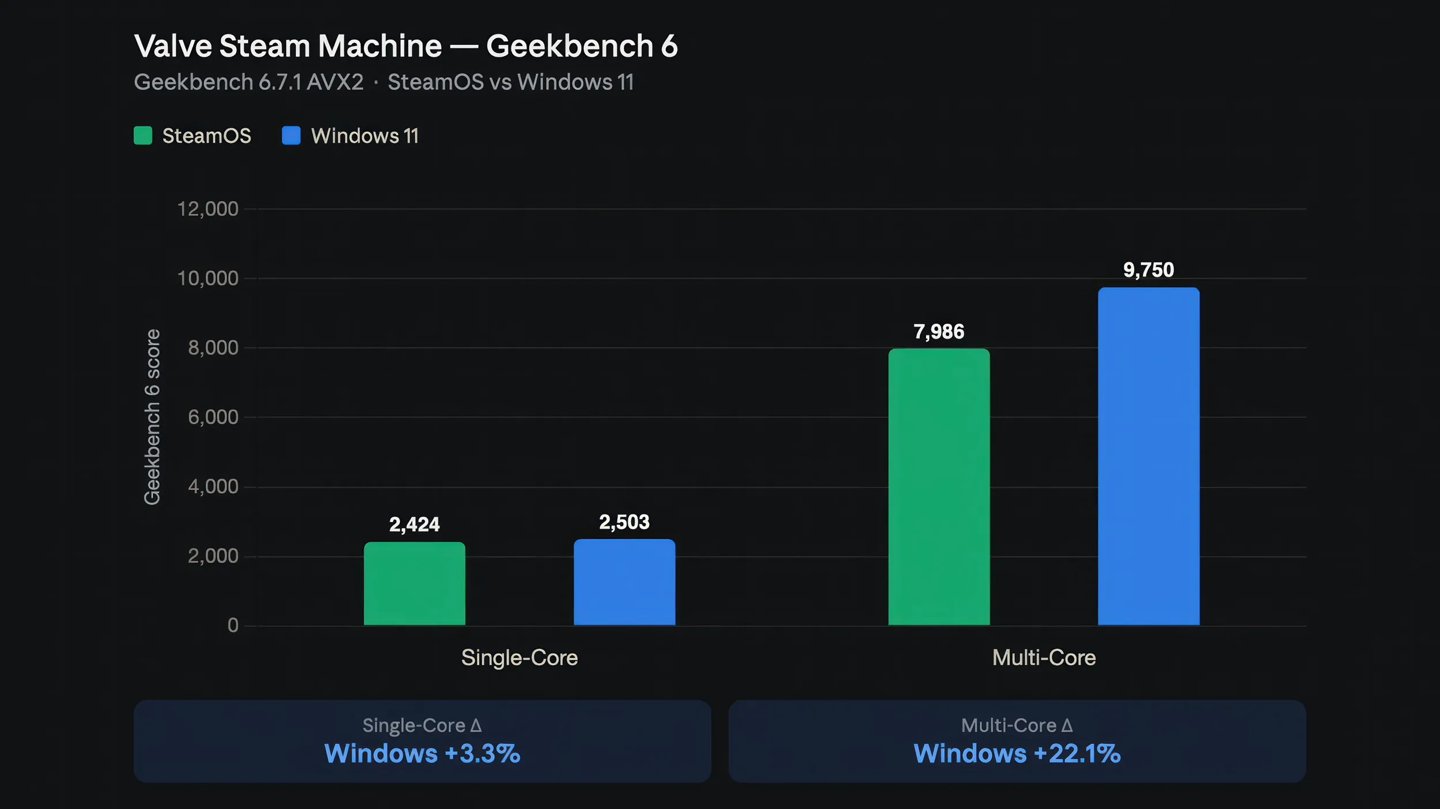
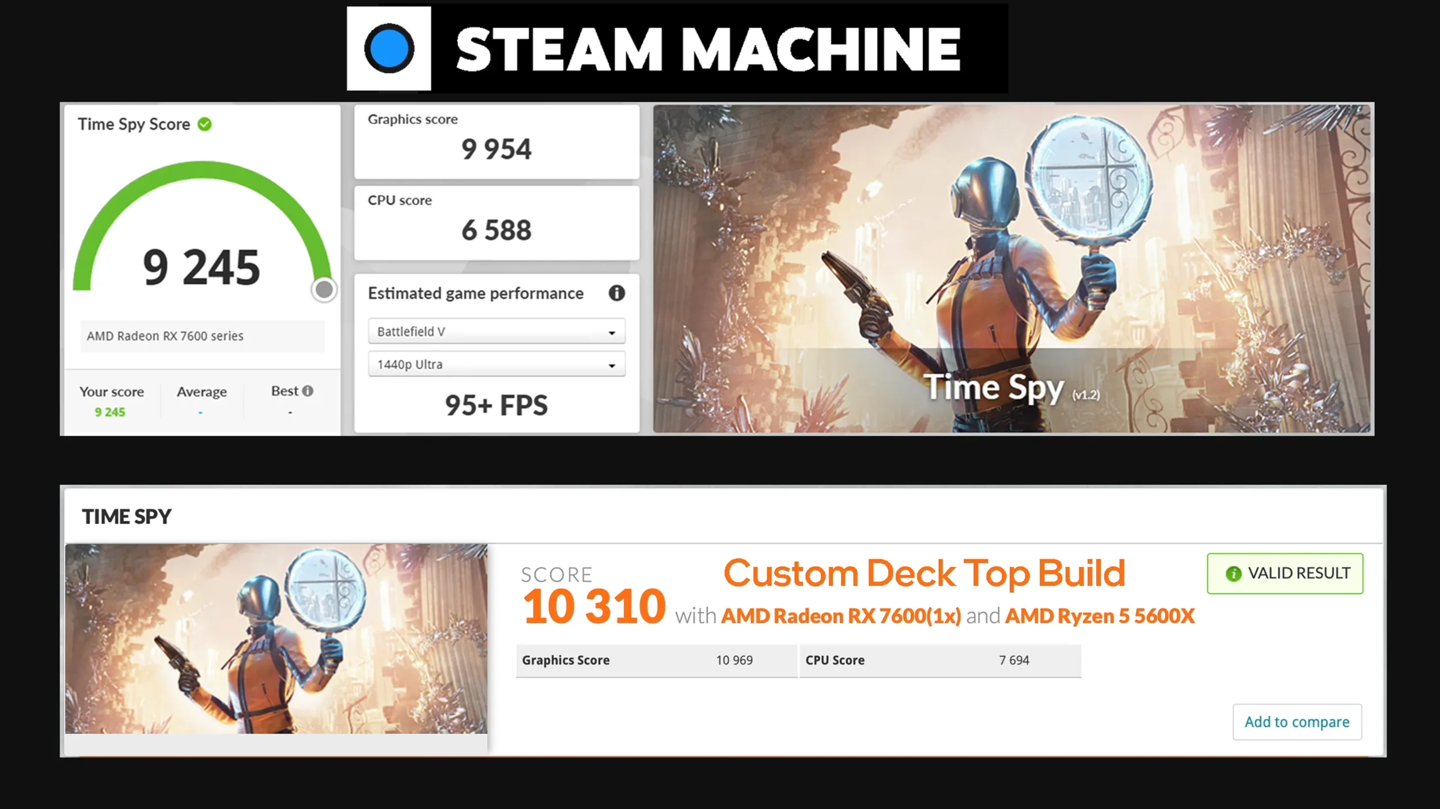
Under Windows 11, the console’s custom six-core Zen 4 processor shows up as an “AMD 1772,” paired with an 8GB Radeon RX 7600-series GPU. In GeekBench 6, Windows 11 pulled ahead by 3.3 percent in single-core and a striking 22.1 percent in multi-core performance. Cinebench 2024 tells a similar story: the chip scored 99 points single-core and 554 multi-core — 5.3 percent faster than a Ryzen 5 5600X in single-threaded work, though 14.1 percent behind in multi-threaded.
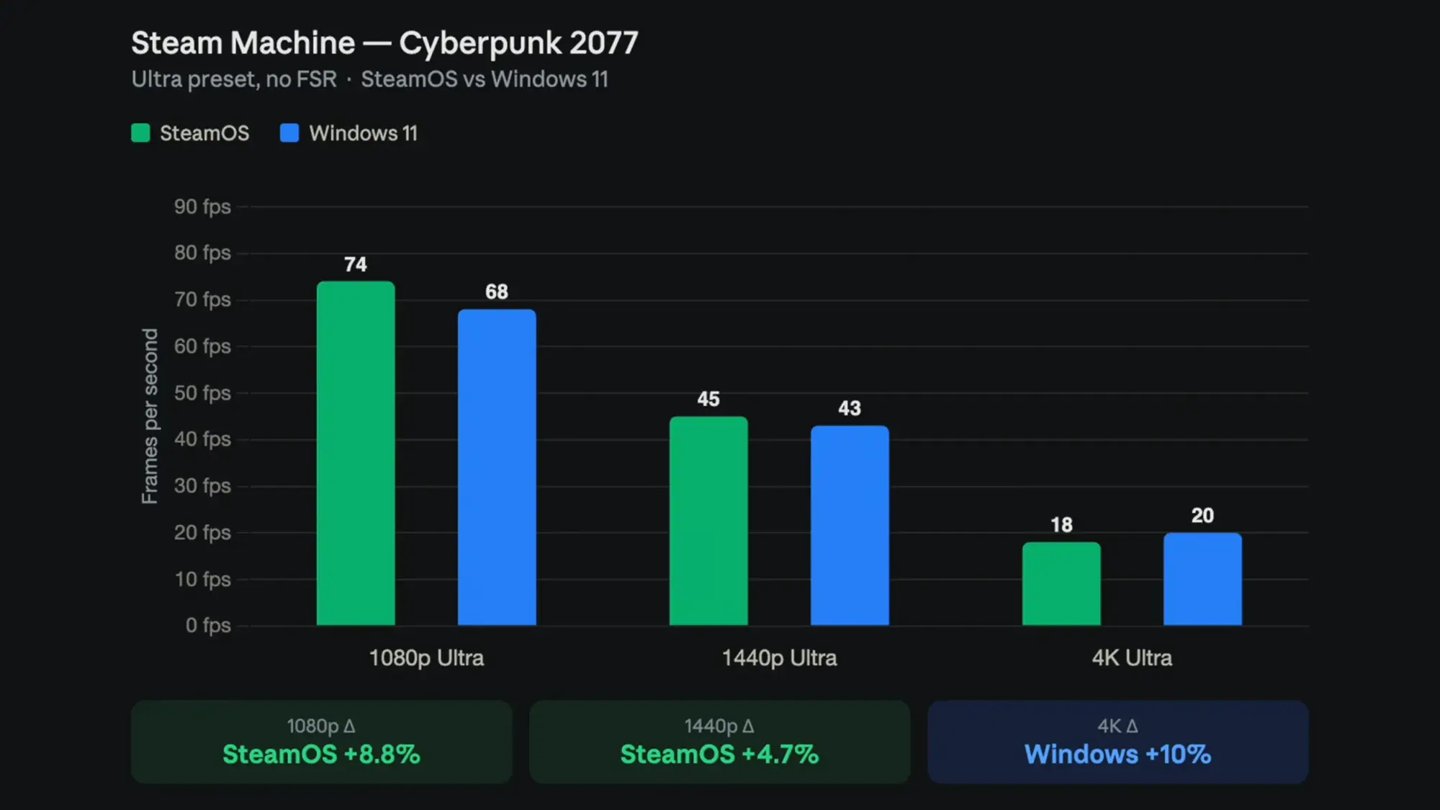
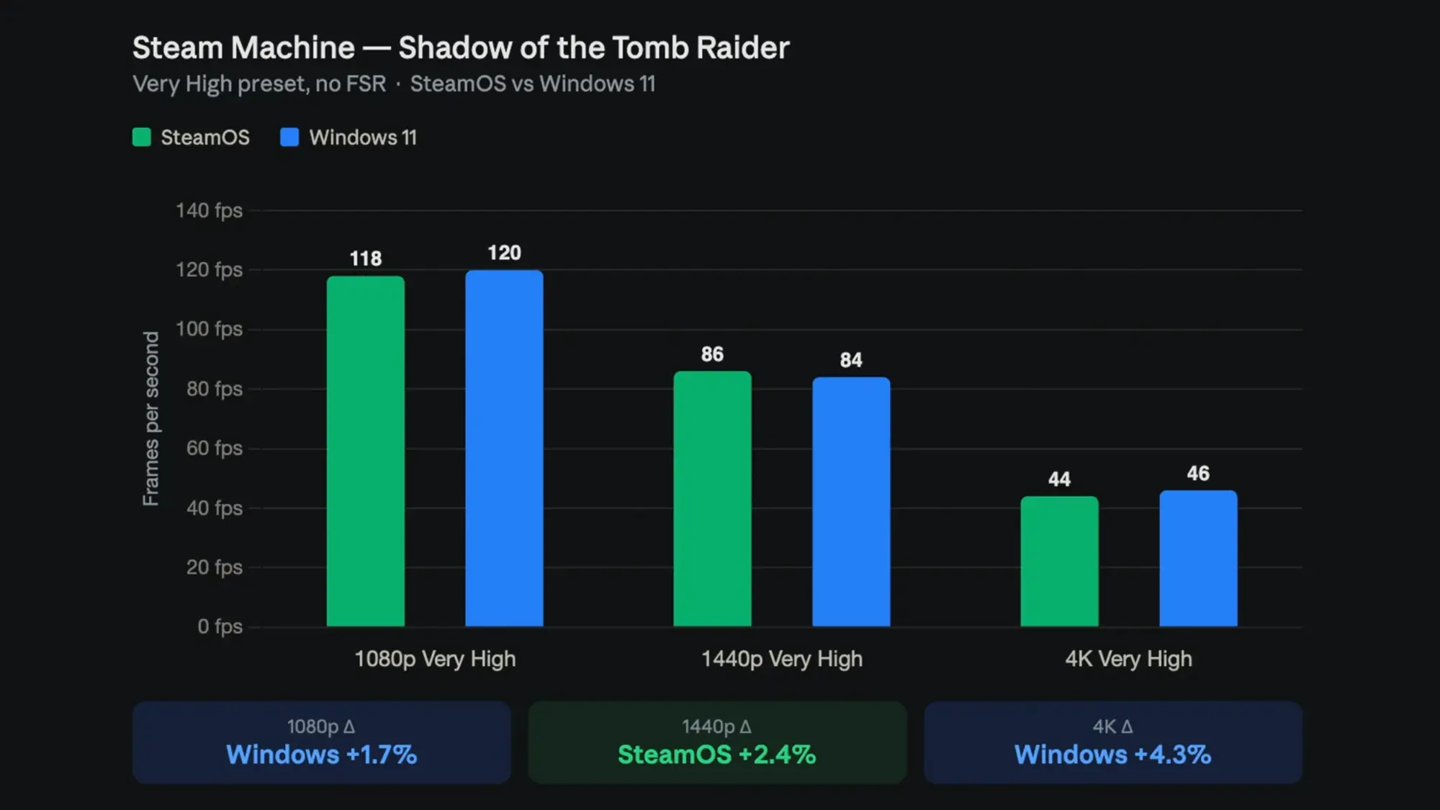
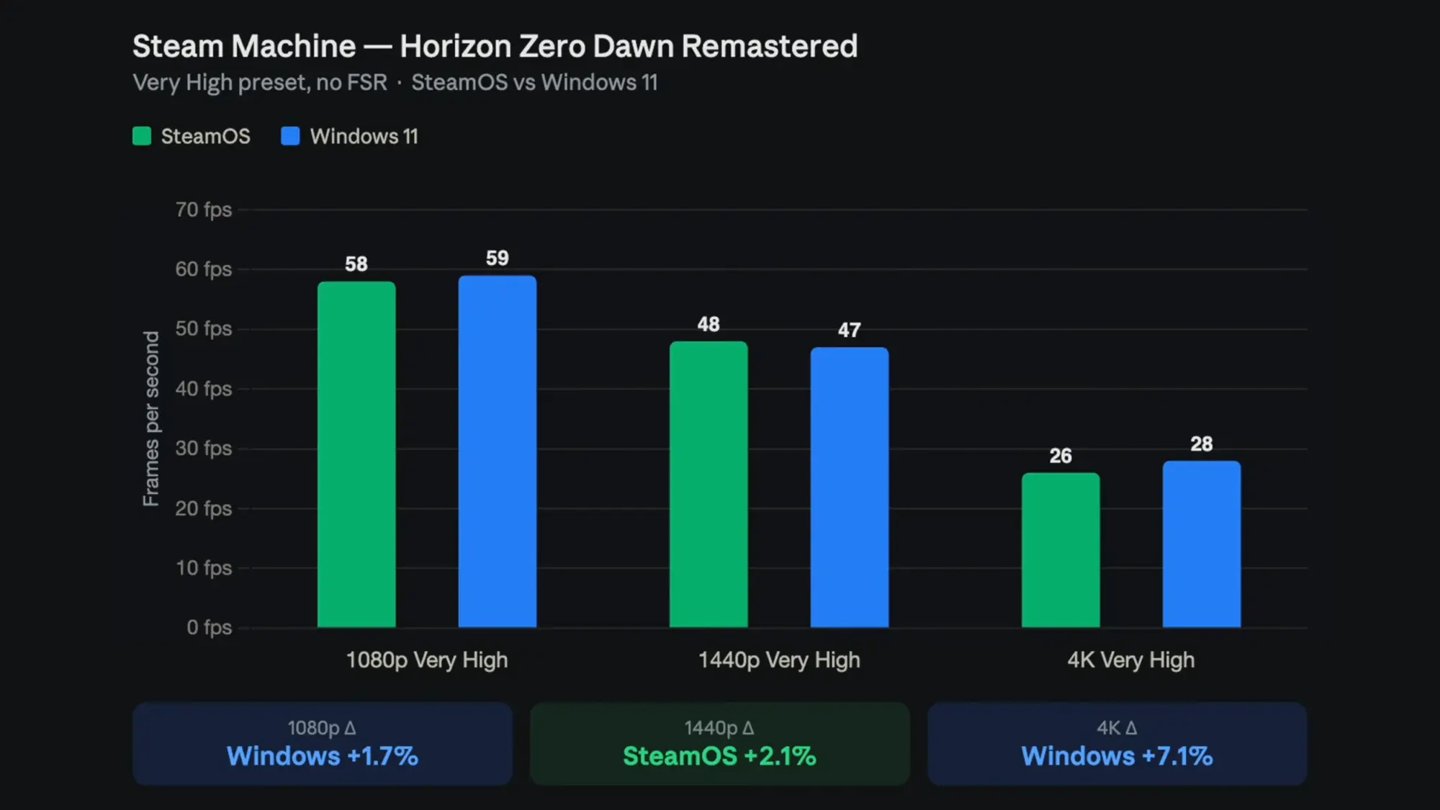
Real-world gaming, however, is where the plot twists. In Cyberpunk 2077, SteamOS actually outperformed Windows 11 at 1080p (74 vs 68 FPS) and 1440p (45 vs 43 FPS), with Windows only taking a narrow lead at 4K (20 vs 18 FPS). Shadow of the Tomb Raider was a near photo-finish across the board — Windows 11 hit 120 FPS at 1080p against SteamOS’s 118, then the two traded 2-FPS leads at 1440p and 4K. Horizon: Zero Dawn was similarly close, with Windows 11 edging ahead by 1 FPS at 1080p and 2 FPS at 4K, while SteamOS took 1440p by the same margin.
What’s happening here is fairly straightforward. SteamOS runs on a lower-overhead graphics stack that gives it an edge in GPU-bound scenarios — particularly at higher detail settings where DirectX’s API overhead on Windows eats into frame rates. The raw compute advantage still belongs to Windows, and that matters if you use the Steam Machine for anything beyond gaming.
These are early days, though. Valve’s Windows drivers just shipped, and driver maturity typically improves over time. Combined with the fact that the Steam Machine ships with single-channel RAM that already leaves CPU performance on the table, there’s clearly more tuning ahead. For now, the takeaway is practical: if you bought a Steam Machine for gaming, stick with SteamOS. If you need a compact PC that also runs Windows applications, the option is there — and it works surprisingly well.