Uber is closing in on Delivery Hero — a €12.5 billion bet on global food delivery
Uber is closing in on its biggest bet yet. The company is nearing a deal to acquire Delivery Hero, the Berlin-based food delivery giant, for roughly €12.5 billion, according to people familiar with the negotiations. Delivery Hero confirmed on July 14 that it is in advanced talks with Uber.
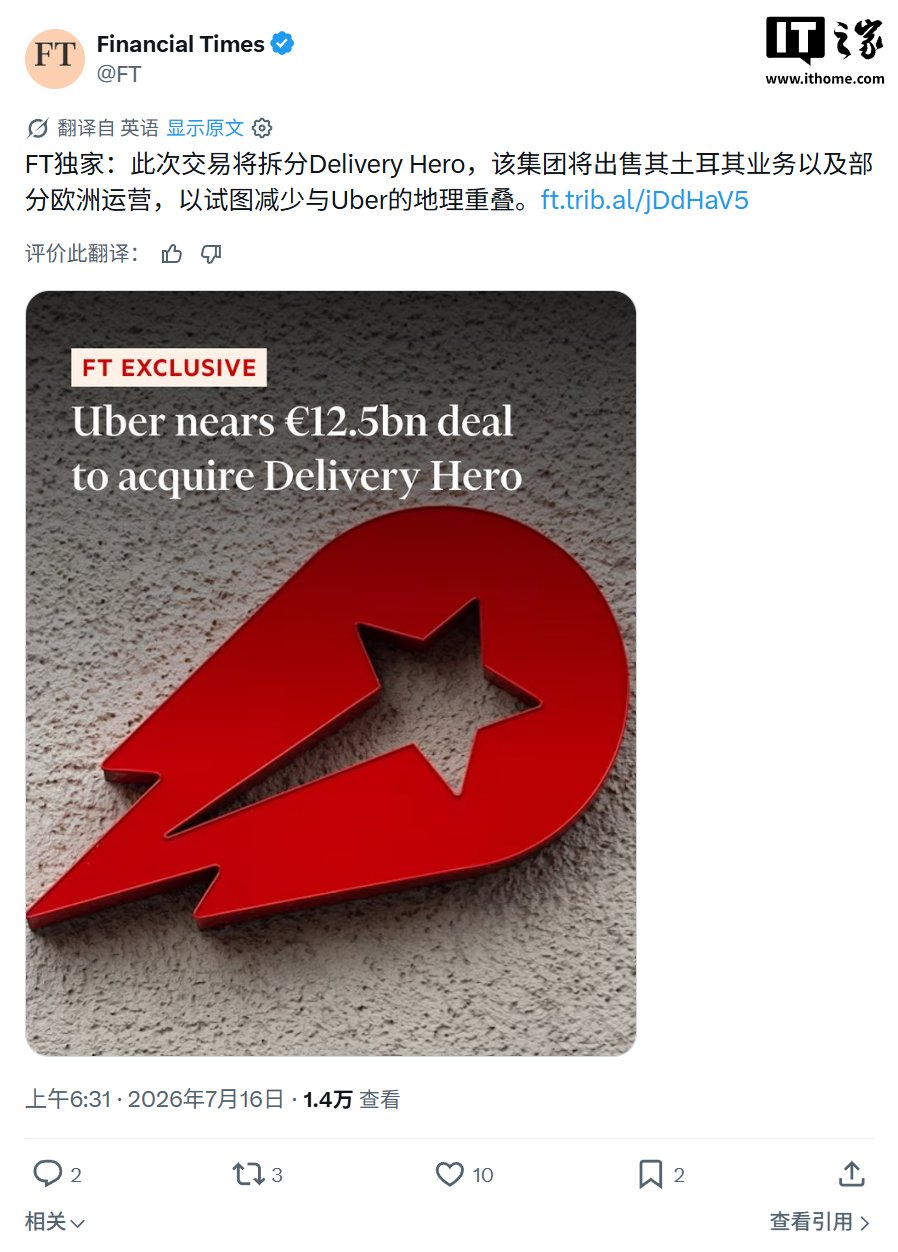
The deal, which could be announced as soon as Thursday, would give Uber a sprawling delivery network spanning 60 countries across Europe, the Middle East, Asia, and Latin America. Uber is offering around €41 per share, a significant premium over the stock’s level before talks began. Delivery Hero shares have climbed roughly 62% this year, pushing its market cap to about €11.2 billion.
Uber already owns a substantial stake in the company — 24.99% of voting shares, plus derivative contracts that bring its total economic interest to roughly 36.8%. That position was assembled quietly over several months. In April, Uber spent €270 million buying a 4.5% stake from Dutch investment group Prosus. A month later, it picked up more shares from Hong Kong hedge fund Aspex Management. The 24.99% voting stake is a carefully chosen ceiling: it sits just below the threshold that would trigger German foreign investment and merger control reviews, while still being large enough to block any competing bid.
The deal dates back to May, when Uber CEO Dara Khosrowshahi approached Delivery Hero’s board with an initial offer of €33 per share, valuing the company at about €10 billion. Investors rejected that price as too low. Khosrowshahi kept working the deal, and the offer eventually rose to the current €41 figure.
Antitrust is the obvious complication. Uber and Delivery Hero overlap in at least four European markets — Poland, Portugal, Spain, and Sweden — where both companies operate food delivery platforms. To smooth regulatory approval, Delivery Hero would sell its Turkish subsidiary Yemeksepeti and several European operations to a US investment firm under the proposed deal structure. Uber has already taken preemptive steps: it paused plans to launch delivery services in five new European markets, including Austria, Norway, and Greece — all markets where Delivery Hero already operates.
The pressure to sell comes partly from shareholders. Aspex Management, an activist investor, has been pushing Delivery Hero to streamline operations, accelerate asset sales, and replace management. In May, Delivery Hero co-founder and CEO Niklas Östberg said he would step down by March 2027.
If the deal closes, it would mark one of the largest consolidations in the food delivery industry, combining Uber Eats with a company that operates everything from the Middle East’s Talabat to South Korea’s Yogiyo. For Uber, it’s also a hedge: the company’s core rides business faces margin pressure from autonomous vehicle competitors and regulatory battles around driver classification. Food delivery, with its higher frequency and wider addressable market, has become its most reliable growth engine.