Vint Cerf, Co-Creator of the Internet, Is Retiring Next Week
In 1973, Vint Cerf and Robert Kahn started sketching out a way for different computer networks to share information. Fifty-three years later, that blueprint — TCP/IP — still carries almost every packet on the internet. Next week, Cerf is retiring.
David Patterson, the UC Berkeley professor who helped pioneer RISC processor architecture, made the announcement on stage at the Open Frontier conference hosted by the Raud Institute. “Cerf has been at Google for more than 20 years and will officially retire in a week,” Patterson said. “I think we should applaud his reasonably good career.” The room erupted.
Cerf, 83, is widely recognized as one of the primary architects of modern networking. He and Kahn developed TCP/IP in the 1970s, solving the problem of how to connect disparate computer systems into a single global network. For that work, he received the Presidential Medal of Freedom, the Turing Award, and enough honorary degrees to fill a wall. He joined Google as VP and Chief Internet Evangelist in 2005 and never really left.
The conference also wrestled with a more recent concern: a handful of deep-pocketed labs are pulling away from everyone else in the race to build advanced AI models. Cerf’s TCP/IP protocol, by contrast, emerged from a decentralized, open environment — exactly the kind of environment he believes is the reason the protocol survived.
Cerf expects the tech industry will eventually need to rally around shared standards again, especially as autonomous AI agents start interacting with each other at scale. “When multiple AI agents from different sources need to interact,” he said, “the industry will have to achieve composability and establish mechanisms for interoperability and standardization.”
Some attendees argued that large language model agents could simply communicate in plain English. Cerf disagreed. Agents need precise, formal communication standards, he said — natural language is too fuzzy. “I don’t think English is the best choice,” Cerf explained. “English is flexible, but it’s also ambiguous. Communication between agents has to be very precise. One agent must be sure that another agent truly understands what they’ve just agreed to do together. Remember the telephone game? A sentence can be completely different by the time it passes from person one to person ten. Imagine a bunch of agents all talking to each other in natural language. It’s a bit terrifying.”
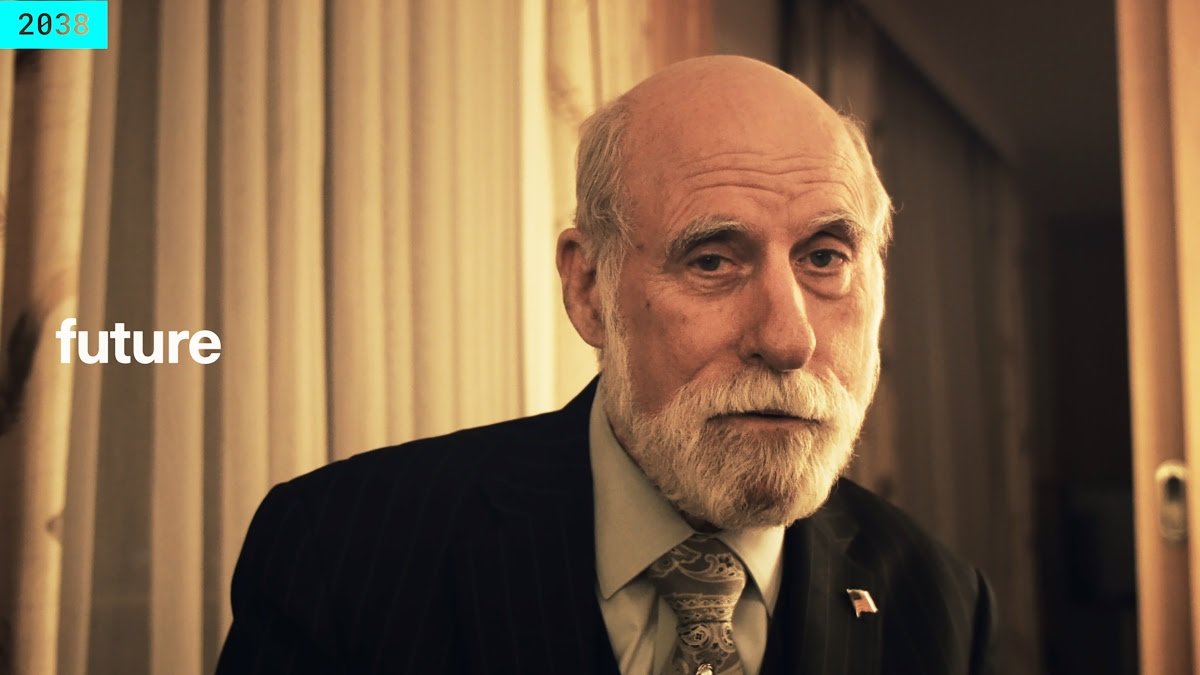
The conversation had its lighter moments. Patterson recalled meeting Cerf in the 1970s, when Cerf was still a graduate student known for an unusual fashion choice. “He was always the best-dressed computer scientist I’ve ever seen,” Patterson said. “Back in the 1970s, when Vint was a grad student, he was already wearing a shirt and tie.”
Cerf laughed. “Yeah, I was even wearing a vest back then. I wanted to stand out. Other people grew their hair long and wore nose rings — I figured dressing differently was another way to do it.”