AMD's New Texture Compression Tech Cuts VRAM Usage — But There's a Trade-Off
Graphics memory has been the quiet bottleneck for years — games look better, resolutions climb, but VRAM doesn’t scale as fast as the texture budgets that modern titles demand. At the I3D 2026 symposium on Wednesday, AMD researchers presented a clever mathematical shortcut to ease the pressure: a technique called PEPS that cuts the size of neural texture compression models by a quarter, holding image quality steady while shifting some of the work to the GPU’s compute units.
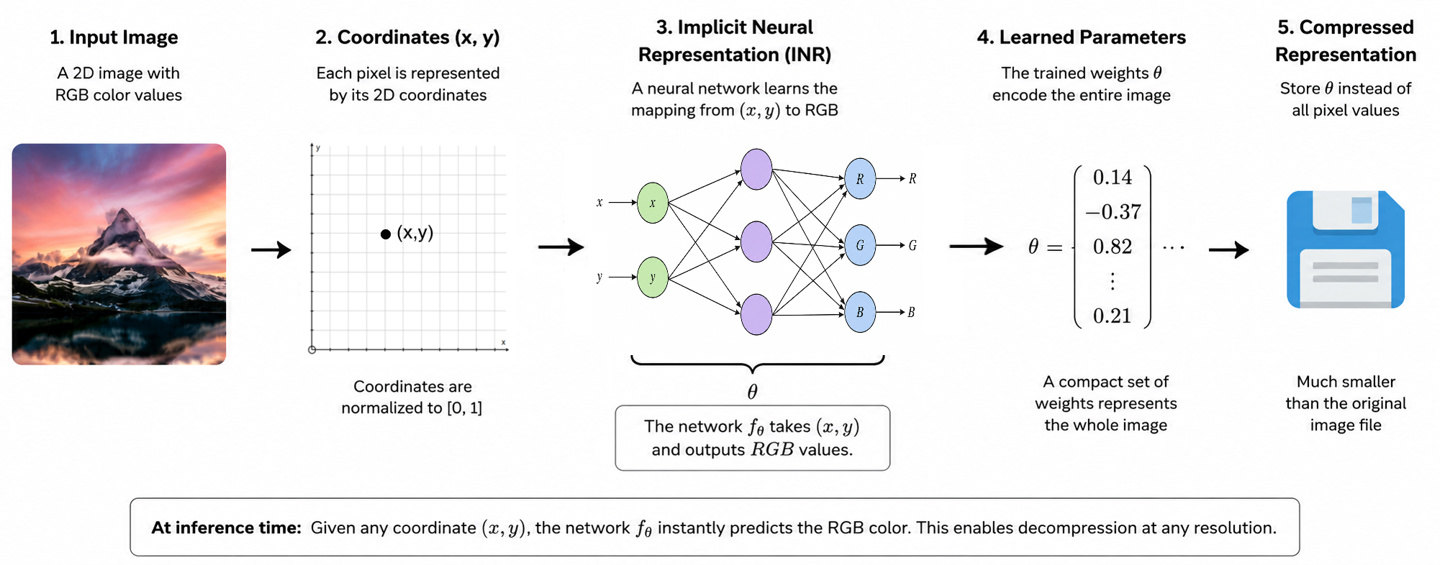
Neural texture compression works by training a small neural network — an implicit neural representation — to map texture coordinates to final color values. The network learns to reconstruct textures from compact parameters instead of storing every pixel directly. The key ingredient in these networks is positional encoding, which takes low-dimensional coordinates and projects them into higher-dimensional sine and cosine vectors so the network can represent fine detail.
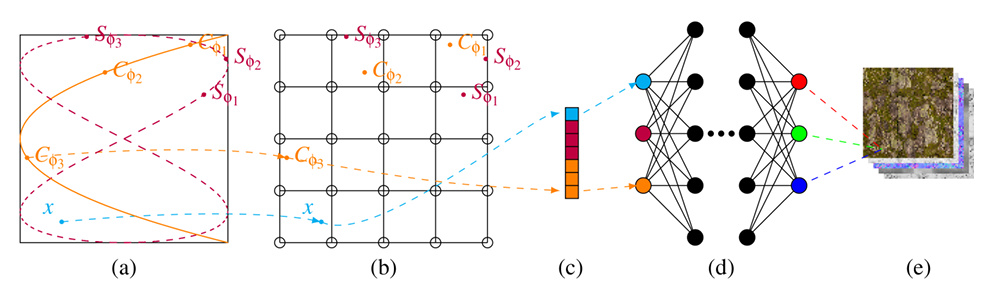
AMD’s insight, presented in a paper titled “PEPS: Position Encoding Projection Sampling,” reframes this encoding step. Rather than treating each sine/cosine projection as a separate dimension, the researchers view every projection as a point on a Lissajous curve — those oscilloscope-like patterns you might remember from physics class — and then samples those projection points. This lets the implicit neural representation pack more information per parameter, so the network needs fewer parameters to achieve the same visual fidelity.
The trade-off is immediate and predictable: fewer parameters means less VRAM used, but the extra sampling step demands more compute and more memory accesses. In AMD’s benchmarks on a Radeon RX 9070 XT, generating a 1024×1024 three-channel texture took 4.32 milliseconds with the baseline BI-grid method and 5.47 ms with their Grid-PEPS implementation. That’s a 27% slowdown in texture generation. A refined version called Grid-PinkPEPS brought the cost down to 4.86 ms, narrowing the gap but not closing it entirely.
The technique isn’t limited to textures. AMD also tested PEPS on signed distance fields (SDFs) — a workhorse of 3D rendering that represents surfaces implicitly, often at a steep VRAM cost. On a Pitted Stonefish SDF, Grid-PEPS matched the reconstruction accuracy (measured by intersection-over-union) of conventional methods while using one-eighth the encoder parameters. For developers trying to squeeze complex 3D scenes into modest GPU memory budgets, that’s a meaningful result.
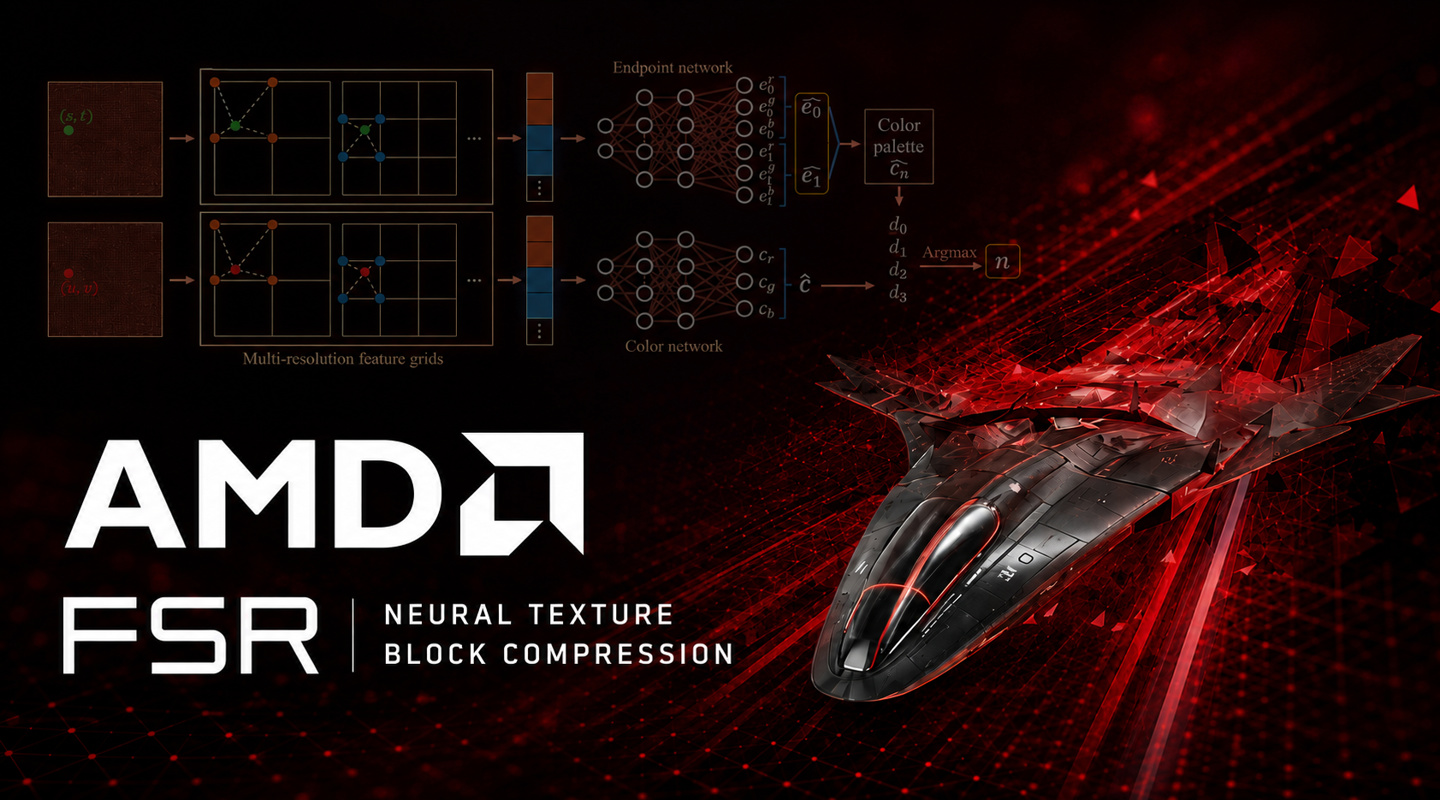
Reality check: none of this is ready for games yet. NVIDIA is the only vendor currently shipping a public neural texture compression toolkit and demo, and no commercial game has shipped with full neural texture support. On AMD’s side, the technology is even earlier — there’s no product name, no roadmap, just a research paper and benchmark numbers. The company is still using generic technical terminology in its publications.
Still, the direction is worth watching. With 8 GB GPUs likely to remain the mainstream baseline for years and texture budgets growing faster than VRAM capacities, every compression technique that trades compute cycles for memory headroom moves the needle. PEPS won’t ship in the next driver update, but it’s a reminder that the biggest gains in graphics might come not from faster silicon, but from smarter math.