Apple's MacBook Price Hikes Could Trigger 13.6% Global Notebook Market Decline, TrendForce Warns
Apple raised MacBook prices across the board last month. Now the entire notebook industry is feeling the pressure.
TrendForce released its latest market analysis on Wednesday with a stark forecast: global notebook shipments will drop 13.6% in 2026. The research firm points to Apple’s price adjustments as a key trigger, combined with a broader consumer pullback that’s spreading across the PC market.
The logic is straightforward. Apple added hundreds of dollars to the MacBook Air, MacBook Pro, and the entry-level MacBook Neo. That changed what consumers expect to pay for a premium laptop. Even Windows OEMs now find it hard to avoid passing rising component costs to buyers, and shoppers are responding by holding onto their current machines longer.
“This is no longer just an Apple problem,” the TrendForce report says. By pushing prices higher at the high end, Apple made it harder for every brand to keep them low. The result is a market-wide drag on upgrade cycles.
TrendForce expects Apple to ship roughly 23.1 million MacBooks this year. That’s still double-digit growth, driven by the strong launch of the MacBook Neo and disciplined pricing in the first half. But momentum should fade in the second half as the full weight of the price increases hits consumer demand.
There is one potential twist. Higher MacBook prices narrow the gap with premium Windows laptops. That could push some price-sensitive buyers toward Windows alternatives. But TrendForce sees limited upside from any cross-platform migration. Overall consumer demand is weakening and component costs are rising across the board. “It’s unlikely to become the main driver of a market recovery,” the report states.
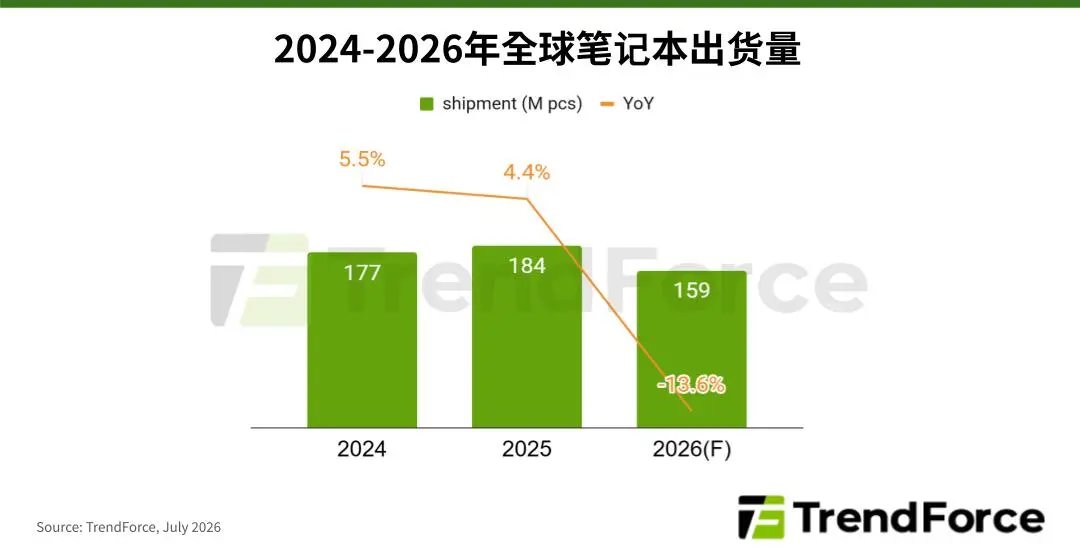
Two structural problems sit beneath the surface. AI data centers are consuming a massive share of memory chips and advanced fabrication capacity, keeping component costs high and supply chains tight. Meanwhile, the question nobody has answered is whether consumers will accept higher prices for their next laptop. The early evidence says no.
For notebook brands, the choices are narrowing. Costs keep rising. Consumers keep hesitating. The companies that figure out how to bridge what they need to charge with what buyers will actually pay will define the notebook market through the rest of 2026.