Apple's macOS 28 Is Killing Support for an Older Encrypted File System
Apple has been nudging users toward APFS for nearly a decade. Now it’s drawing a harder line.
IT-NEWS, July 8 — Apple announced Tuesday that macOS 28 will no longer support disks formatted as “Mac OS Extended (Journaled, Encrypted),” the encrypted variant of the legacy HFS+ file system that served as the default on Macs for decades.
The company quietly started warning users two years ago. Since macOS 26, plugging in an external drive formatted as Mac OS Extended (Journaled, Encrypted) triggers a notice that the disk won’t be readable on macOS 28 and later versions.
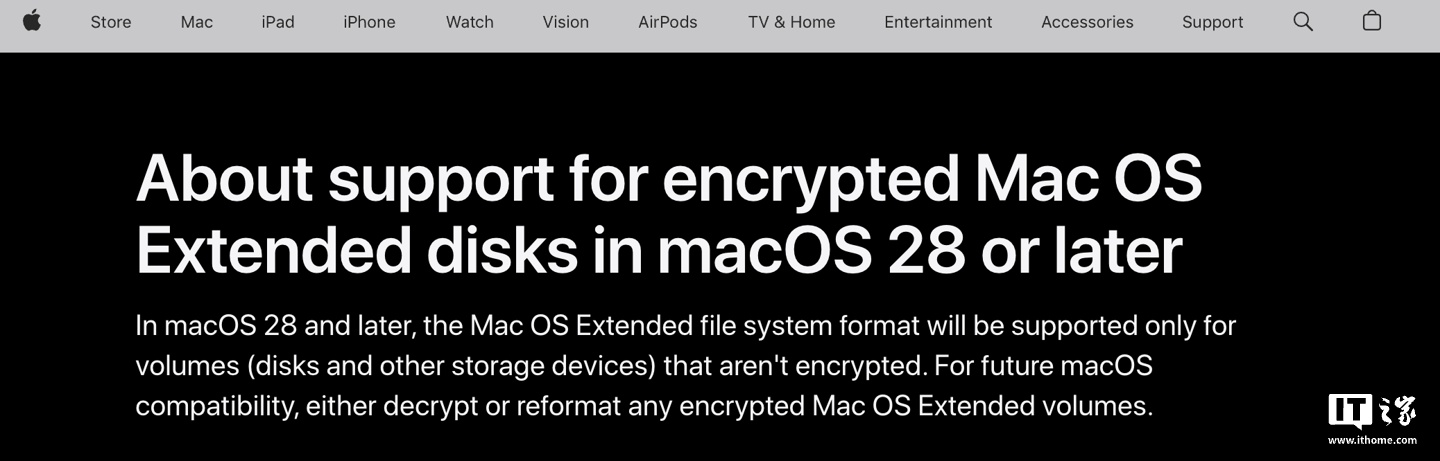
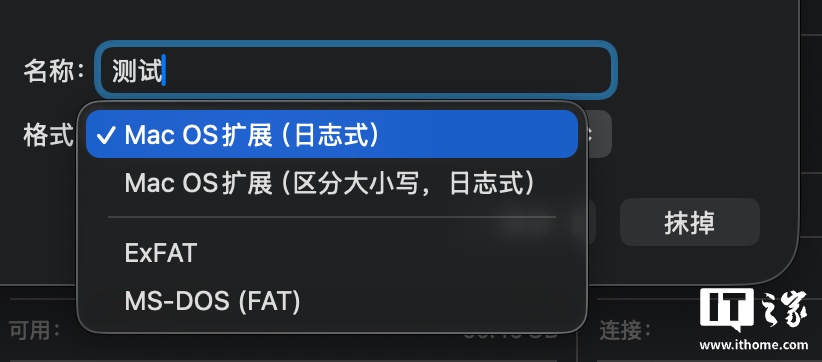
Apple recommends migrating any affected external drives to APFS (Encrypted) — its modern replacement — before upgrading. Users comfortable with losing encryption can also reformat as plain “Mac OS Extended (Journaled)” or ExFAT using Disk Utility if APFS isn’t an option.
APFS, or Apple File System, was first announced at WWDC 2016 and shipped with macOS High Sierra (10.13) in 2017. It was purpose-built to replace HFS+, a file system that had been in service for more than 30 years. The new system brought native encryption, space sharing, snapshots, file cloning, and noticeably better SSD performance. The encrypted variant of APFS is Apple’s recommended path forward.
Apple has been steadily tightening APFS’s grip since then. macOS Catalina (10.15) made APFS the only supported format for boot volumes, a clear signal of the long-term plan to phase out the old file system entirely. This latest move is another step in that direction, narrowing the gap between what macOS can read and what it prefers.
Most users won’t feel the change — APFS has been the default since High Sierra nearly a decade ago. But anyone with older encrypted external drives still formatted as Mac OS Extended (Journaled, Encrypted) has roughly a year to plan the migration before the format becomes unreadable.