Astronomers Discover First 'True Sugar' Molecule in Deep Space
Astronomers have identified erythrulose — a four-carbon sugar molecule — in a gas and dust cloud near the center of the Milky Way. It’s the first “true sugar” ever confirmed in space, and it gives scientists a clearer picture of how complex organic chemistry plays out beyond Earth.
The finding, reported in Nature on Monday, comes from a team at the Spanish National Research Council led by astronomer Izaskun Jiménez-Serra. They detected the molecule’s spectral fingerprint in a dense interstellar cloud and verified it using two radio telescopes in Spain: the Yebes 40-meter and the IRAM 30-meter.
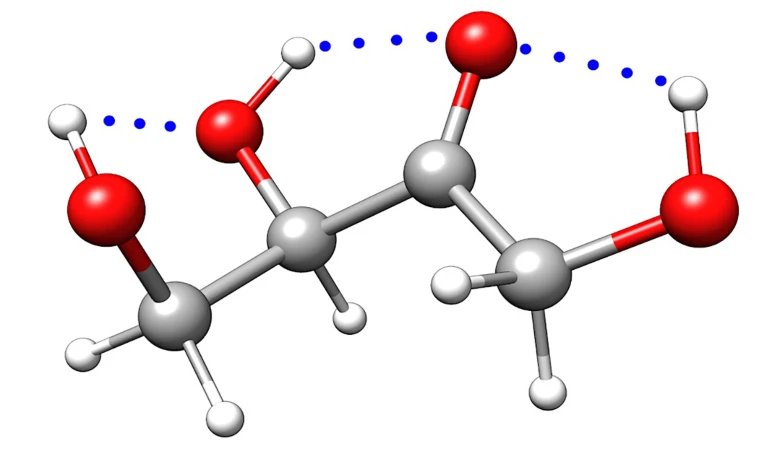
The discovery builds on work that goes back more than two decades. Astronomers first found glycolaldehyde in space in 2000 — a two-carbon molecule that acts like a sugar but technically doesn’t qualify. Under the current definition, a true sugar needs at least three carbon atoms forming its backbone. Erythrulose has four. It also contains oxygen and hydrogen.
Jiménez-Serra’s team first proposed searching for erythrulose in 2022. The detection confirms that molecules capable of forming the backbone of RNA and DNA — both sugar-based — can emerge in the kind of interstellar clouds that eventually collapse into planets. That doesn’t mean life is inevitable. It does mean the prebiotic chemistry is there, drifting through clouds that will one day become new solar systems.
The paper was published in Nature on July 13.