ASUS TUF Gaming 7X Review: Next-Gen Aquarium Design Meets Intel Core Ultra 9 with Dual 180W Power Delivery
Last year, ASUS introduced the TUF Gaming 6X, a desktop that carved out a respectable niche in the competitive gaming PC market with its distinctive mecha-inspired aesthetic and relatively accessible pricing. Now, the company is back with the TUF Gaming 7X — a larger, bolder, and significantly more powerful successor that moves from a compact footprint to a full 47-liter “aquarium” chassis, complete with dual glass panels and a next-generation Intel platform under the hood.
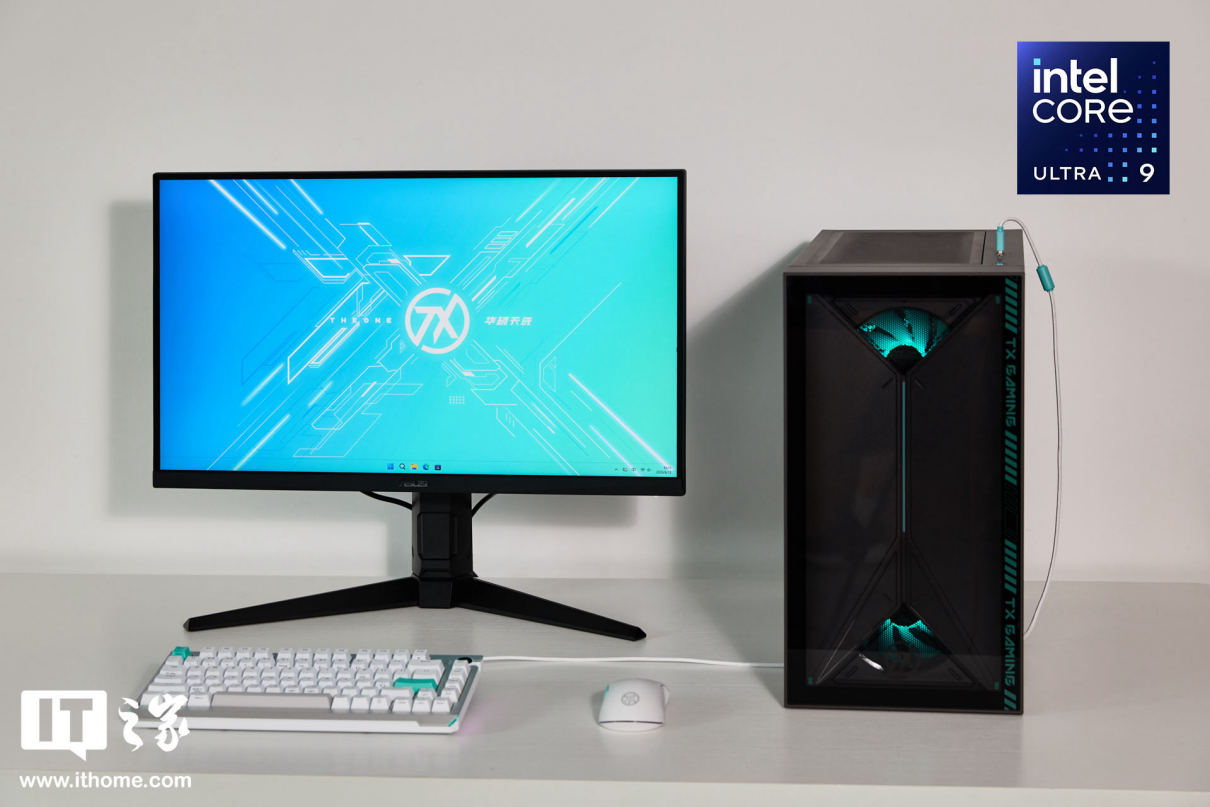
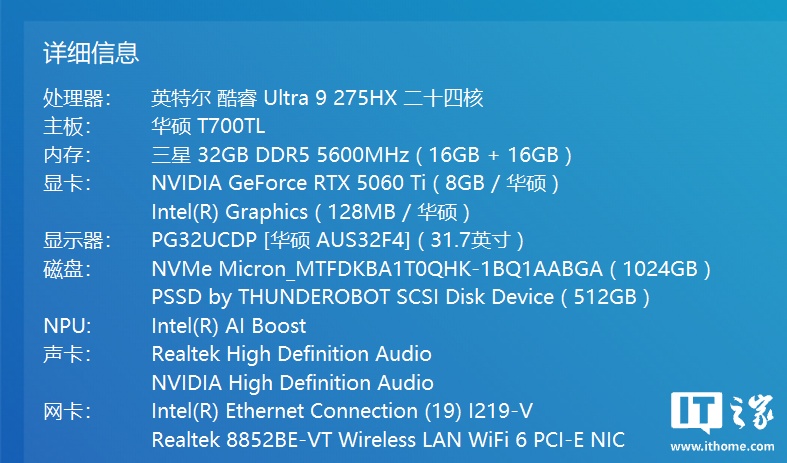
The unit IT-NEWS tested comes equipped with an NVIDIA GeForce RTX 5060 Ti 8GB graphics card paired with the Intel Core Ultra 9 275HX mobile processor, built on TSMC’s N3B process. The Arrow Lake-HX platform brings together 8 performance cores and 16 efficiency cores in a 24-core, 24-thread configuration, with P-cores boosting up to 5.4 GHz and E-cores reaching approximately 4.6 GHz. Rounding out the spec sheet are 32 GB of DDR5 memory, a 1 TB PCIe 4.0 SSD, and a 240 mm all-in-one liquid cooler.
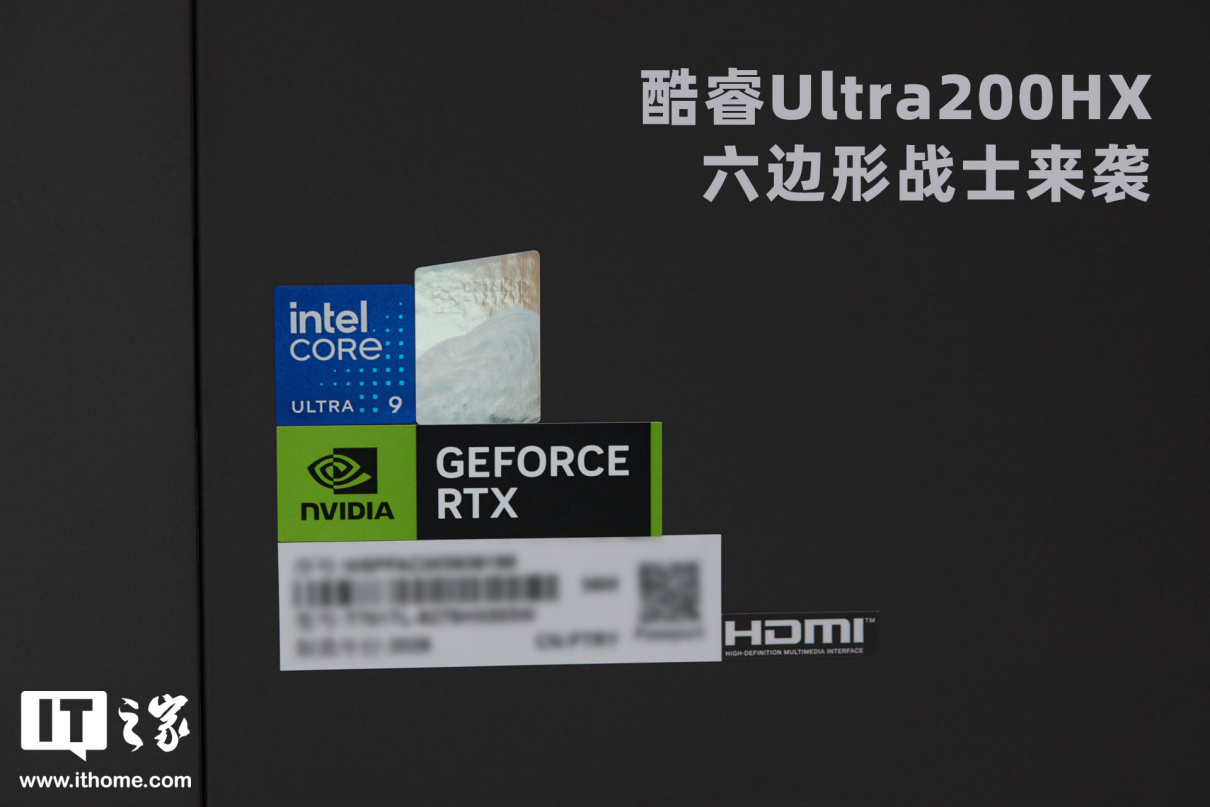
Under sustained dual-load testing, the system delivers approximately 360 W of total board power — 180 W from the CPU and 180 W from the GPU — a figure that places it among the more generously configured pre-built gaming desktops in its class.
Design: Bigger, Bolder, and Fully Transparent
The most immediately obvious change from the 6X is the sheer scale. At 414 × 232 × 490.3 mm and roughly 18 kg, the 7X is a proper full-tower chassis. The front and left side panels are both tempered glass — the left panel uses a dark-tinted finish rated at 6.5H hardness with an ITO coating to reduce electromagnetic interference.
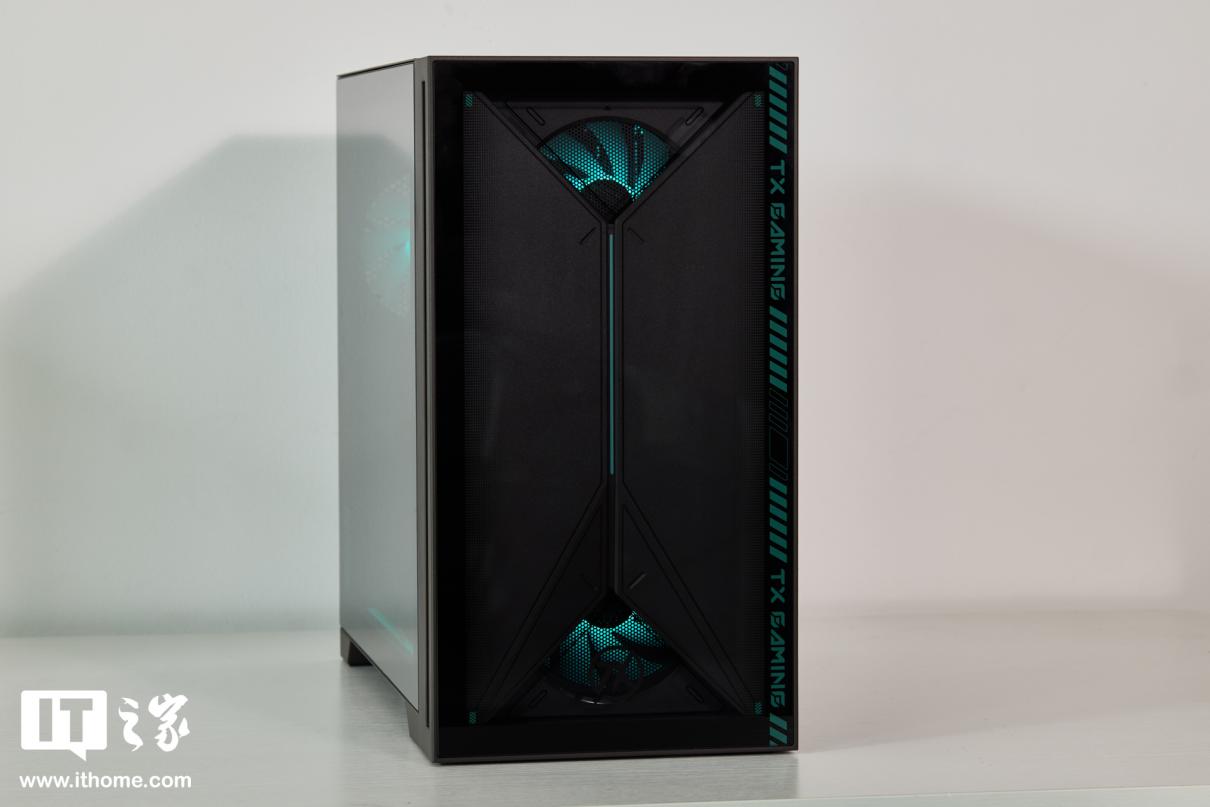
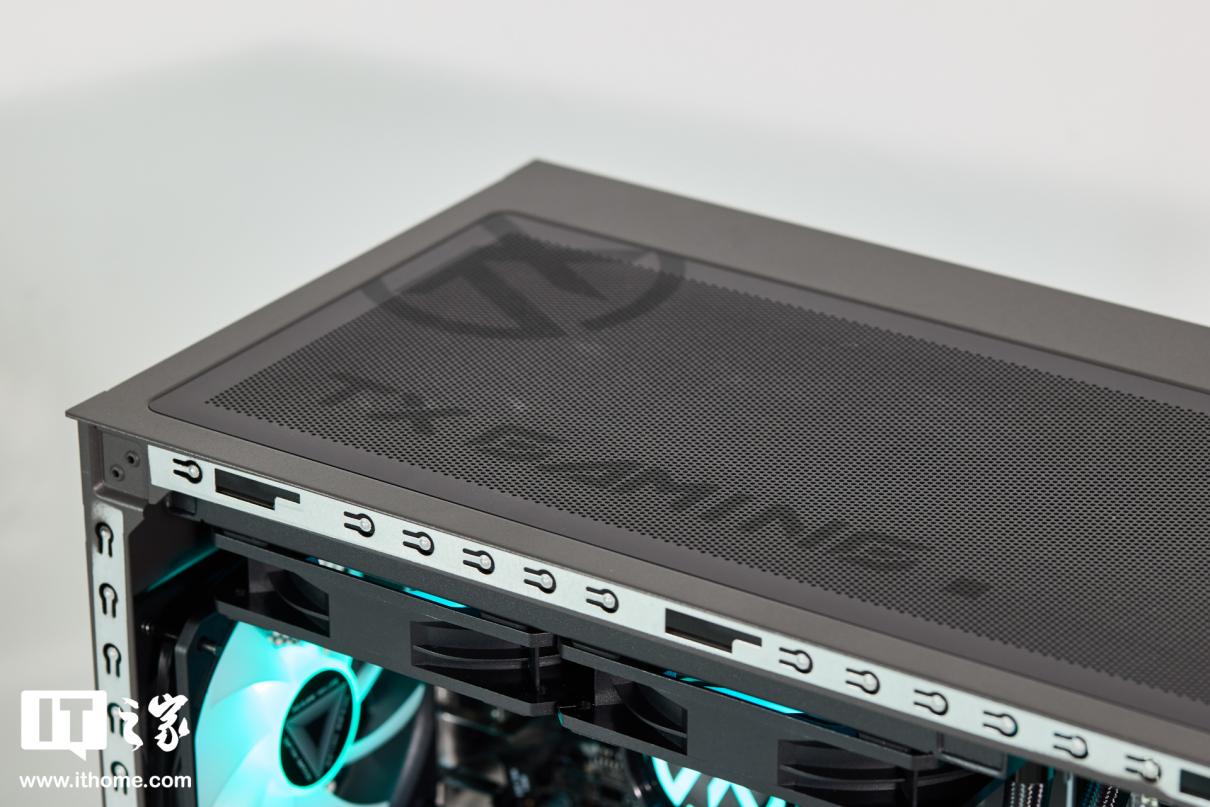
ASUS has doubled down on the TUF series’ mecha design language. The front panel features a distinctive X-shaped structural motif with an integrated RGB light bar running vertically through the center, creating a strong visual anchor. The internal layout is tidy, with a front-to-back airflow path complemented by top exhaust — a classic thermal configuration scaled up for the larger enclosure.
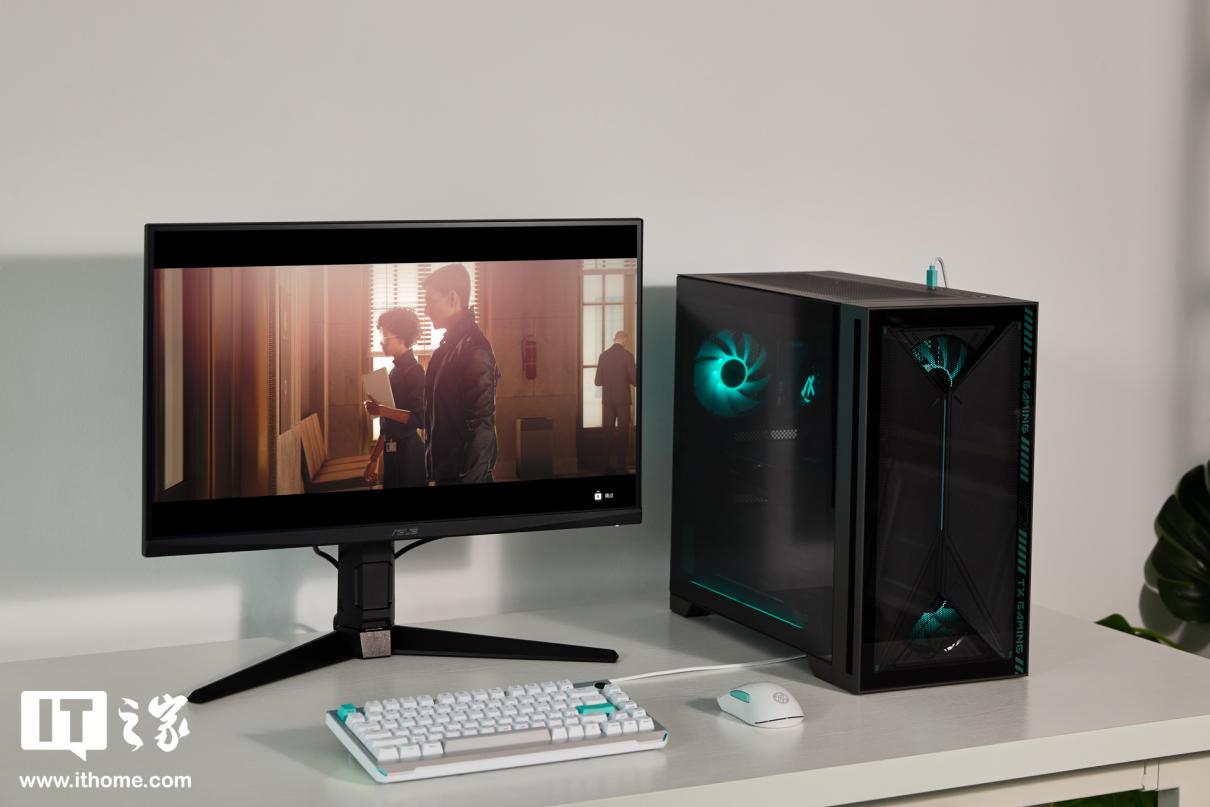
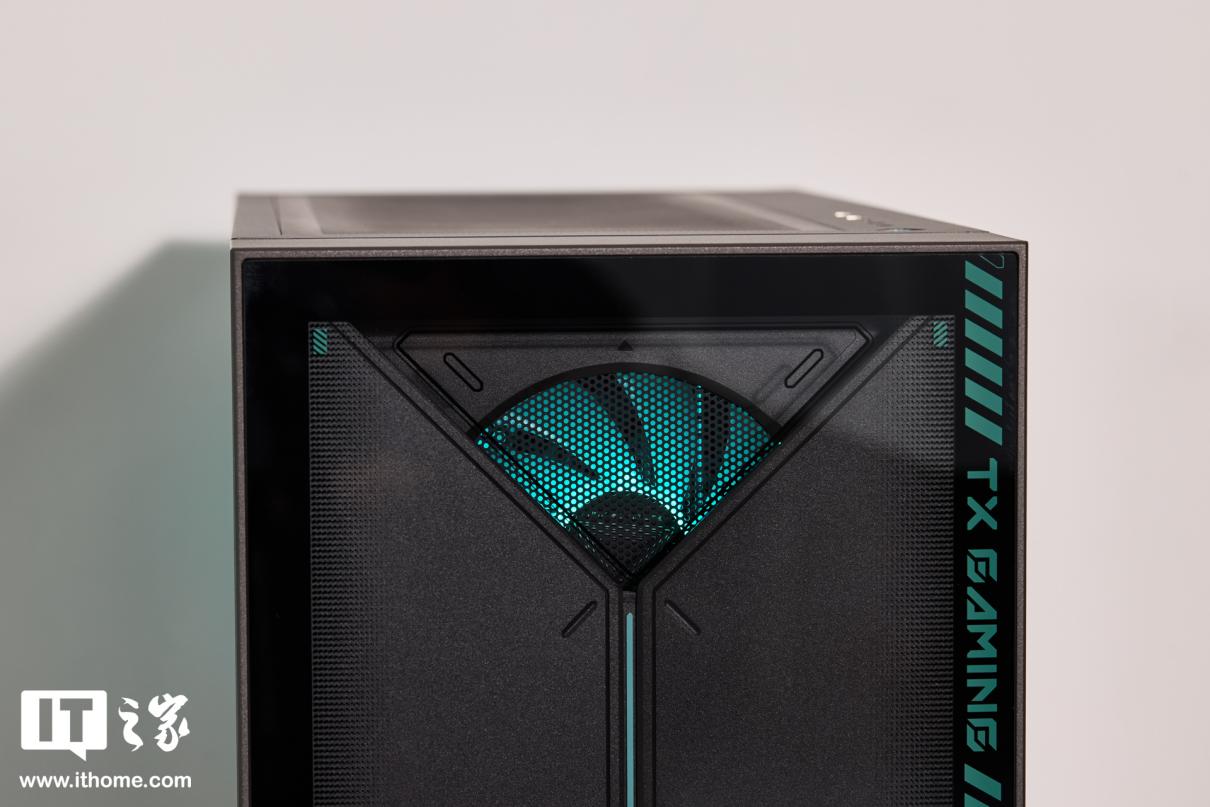
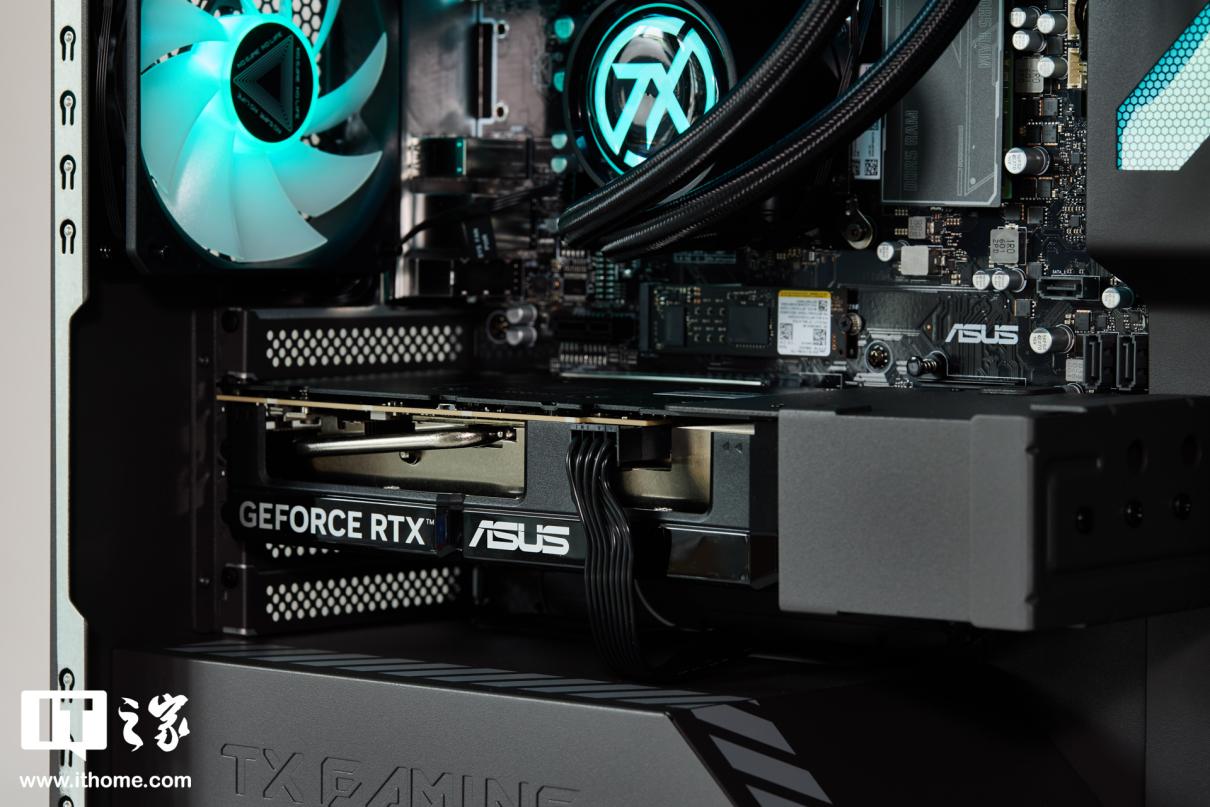
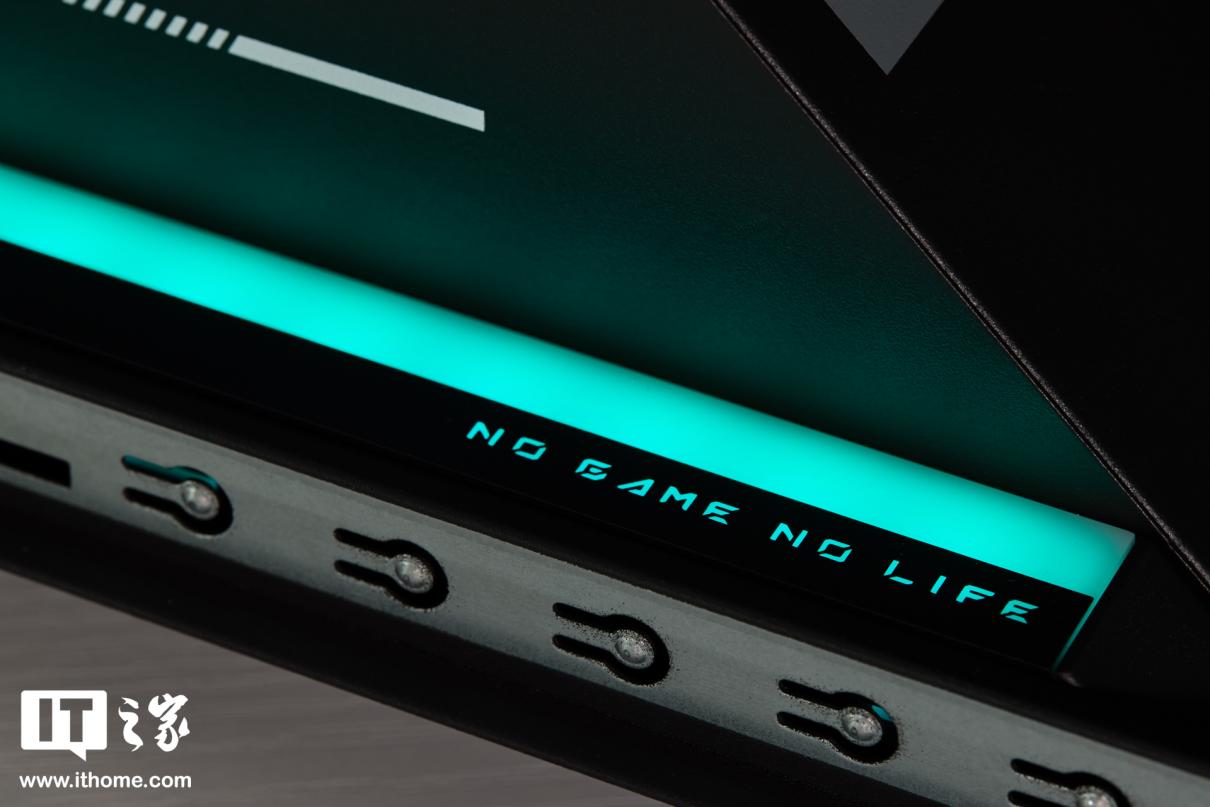
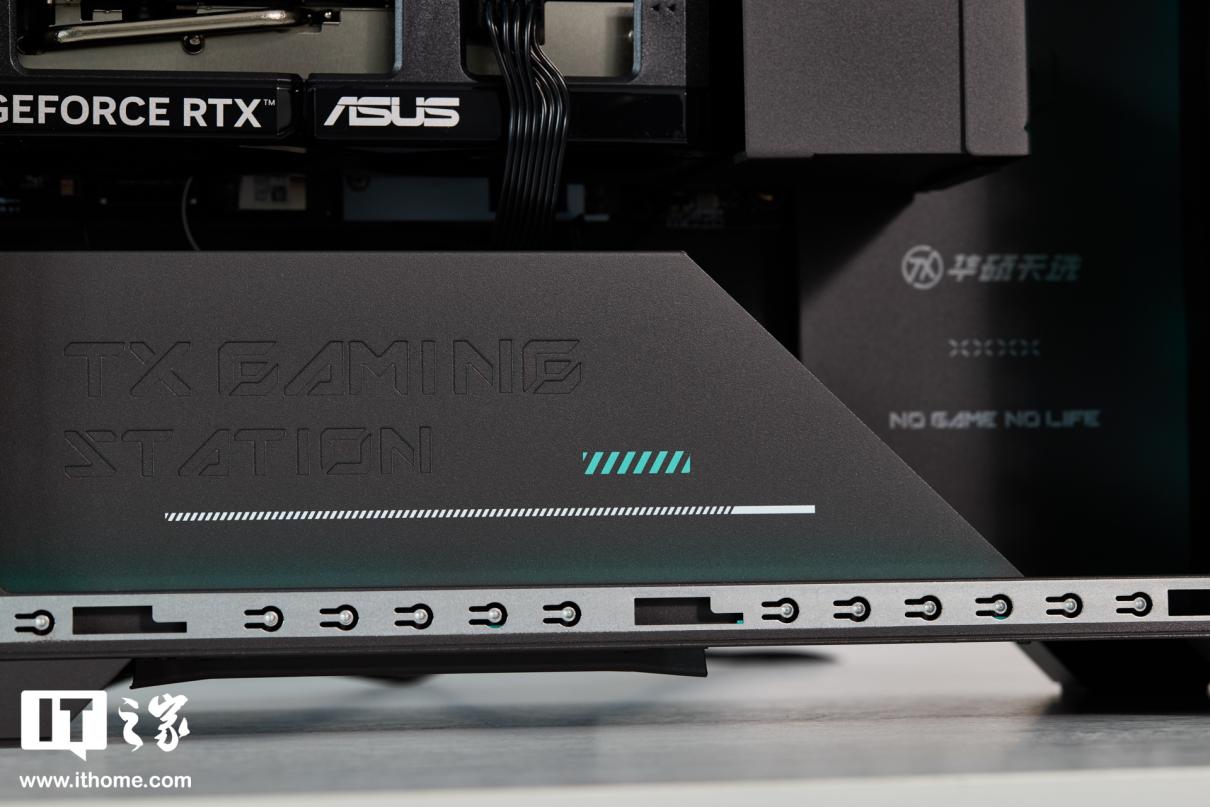
The signature TUF cyan-blue lighting — customizable via standard RGB controls — illuminates the front intake fans and the AIO pump head, which features the TUF Gaming logo. A dedicated GPU support bracket comes pre-installed to prevent long-term sag, and the power supply shroud carries TX GAMING STATION branding with embedded RGB strips.
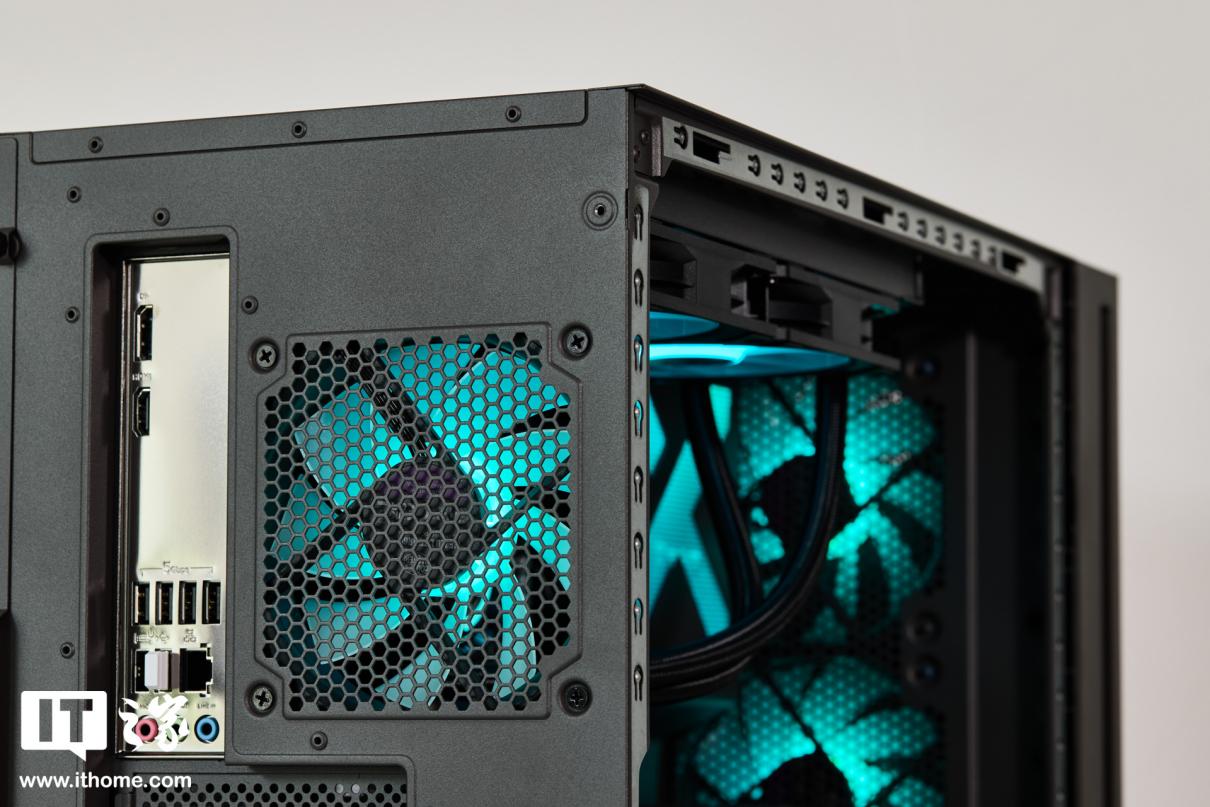
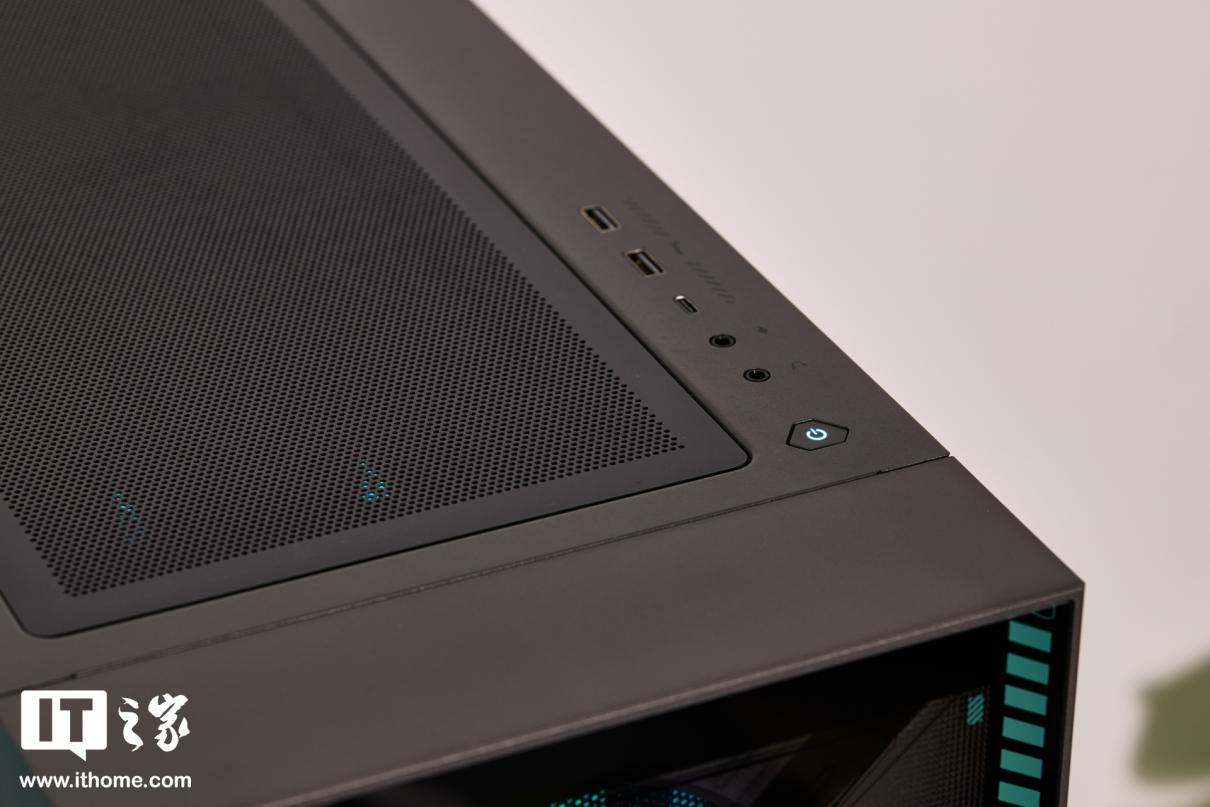
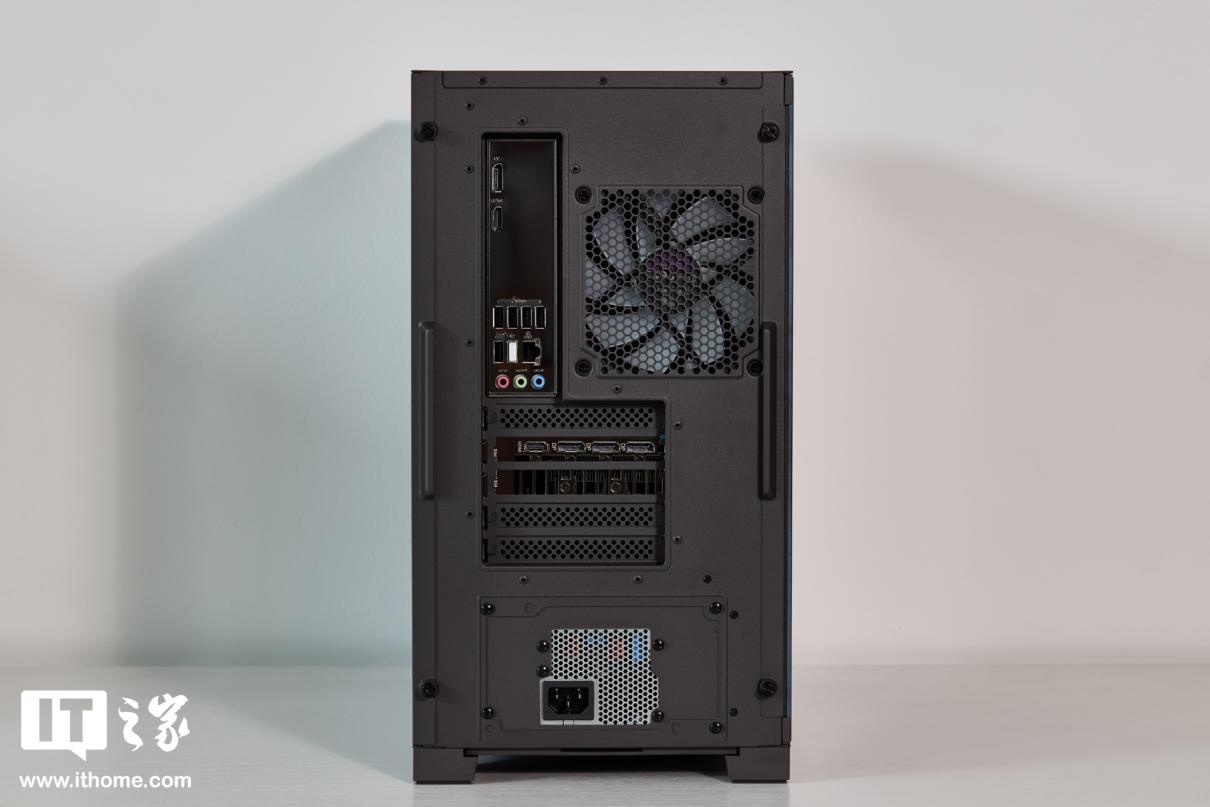
Top-panel connectivity includes two USB-A (5 Gbps), one USB-C (5 Gbps), and dual 3.5 mm audio jacks, all hidden beneath a magnetic dust filter. Around the back, you’ll find DP 1.4, HDMI 2.1, additional USB-A ports, a USB 2.0 port, RJ45 Ethernet, and a full audio jack array.
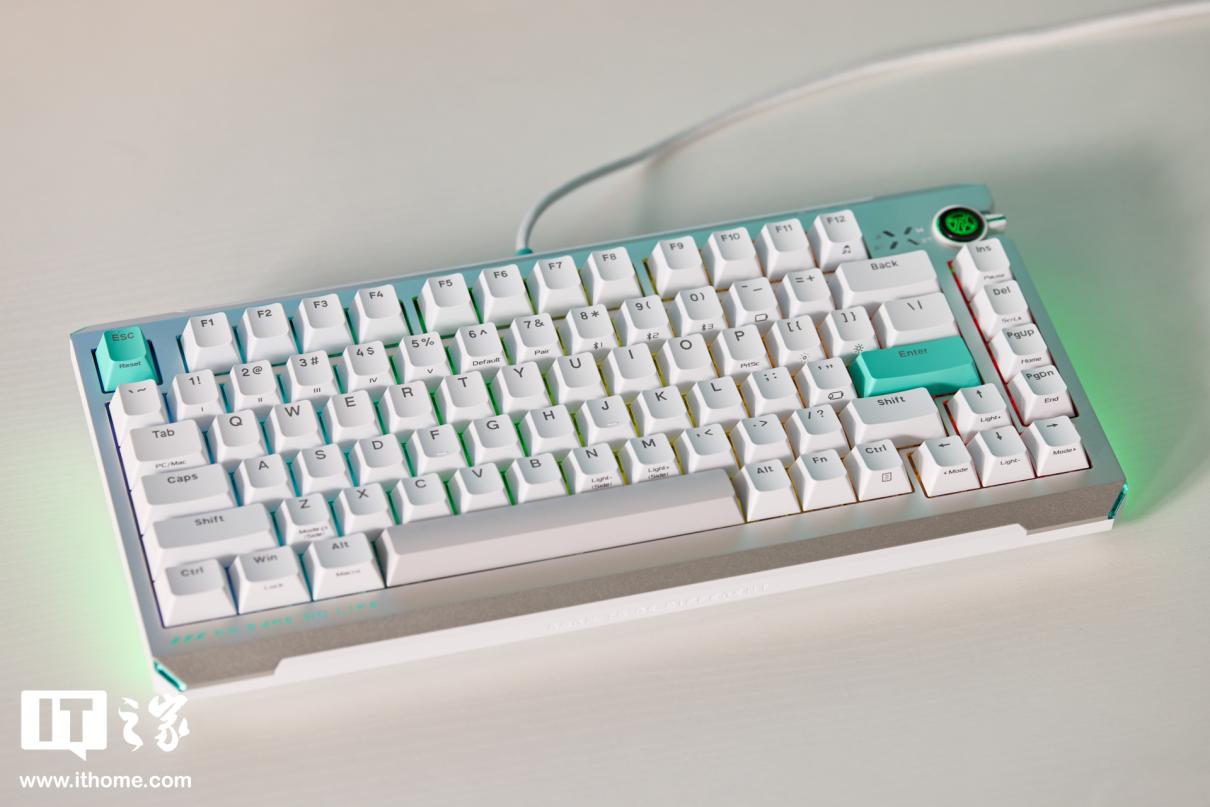
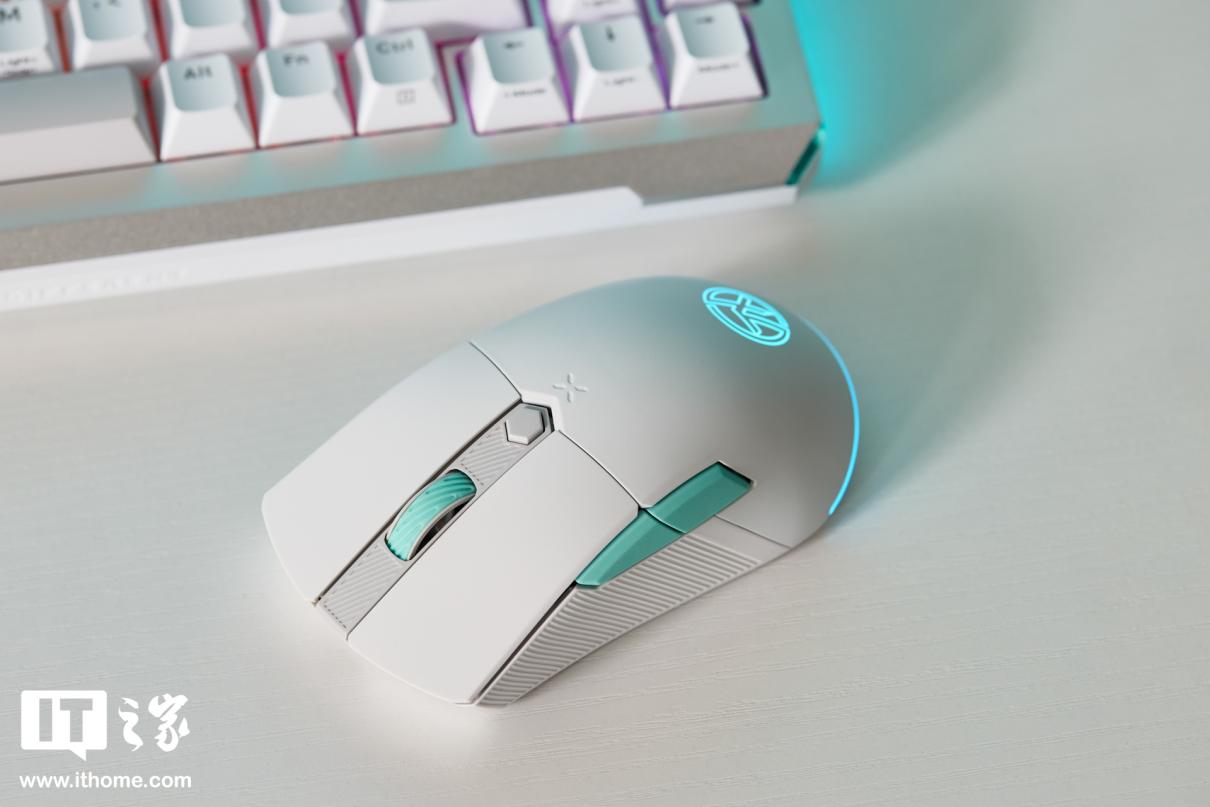
Paired with other TUF ecosystem peripherals — monitors, keyboards, and mice — the 7X integrates neatly into a full-family setup with synchronized lighting and streamlined device management.
Internal Layout and Cooling
Opening the side panel reveals a clean, well-organized interior. The 240 mm AIO radiator is mounted at the top, with the pump head and fans supporting RGB. Three 120 mm intake fans sit behind the front panel, and an additional M.2 expansion slot sits alongside the primary system drive, offering some room for future upgrades.
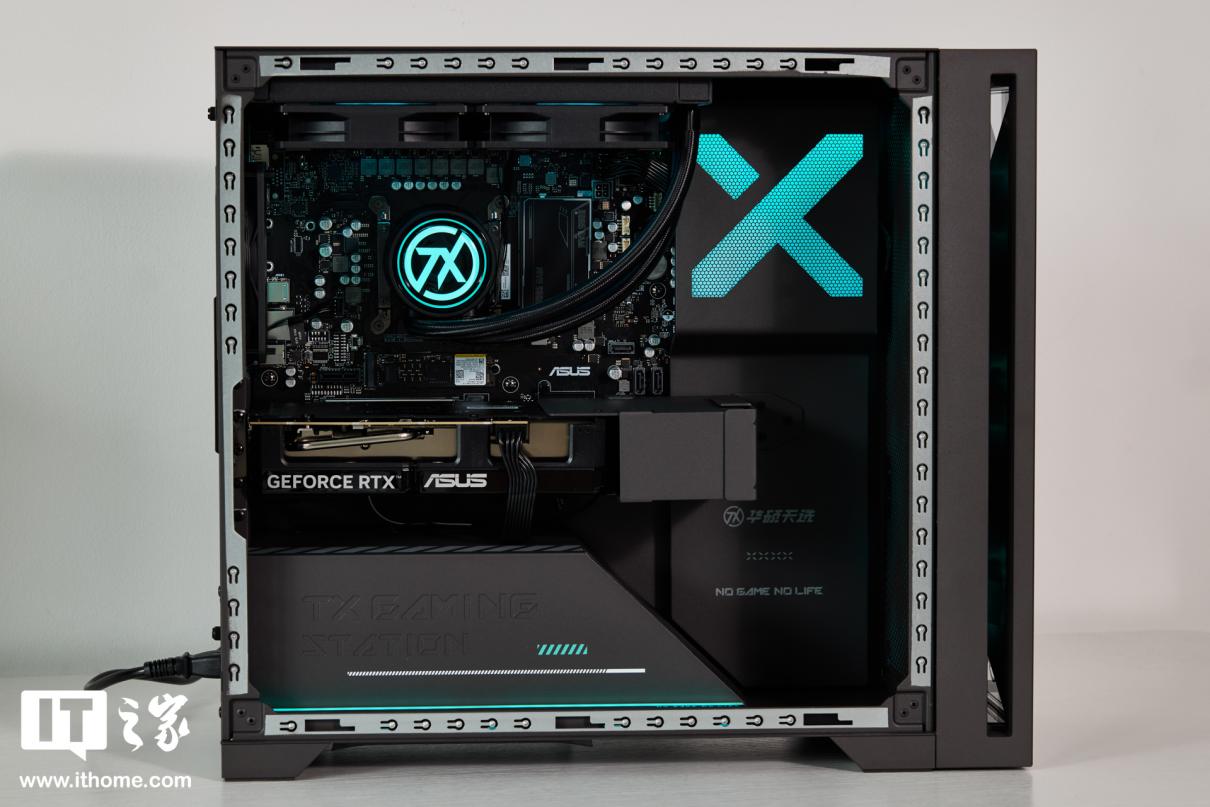
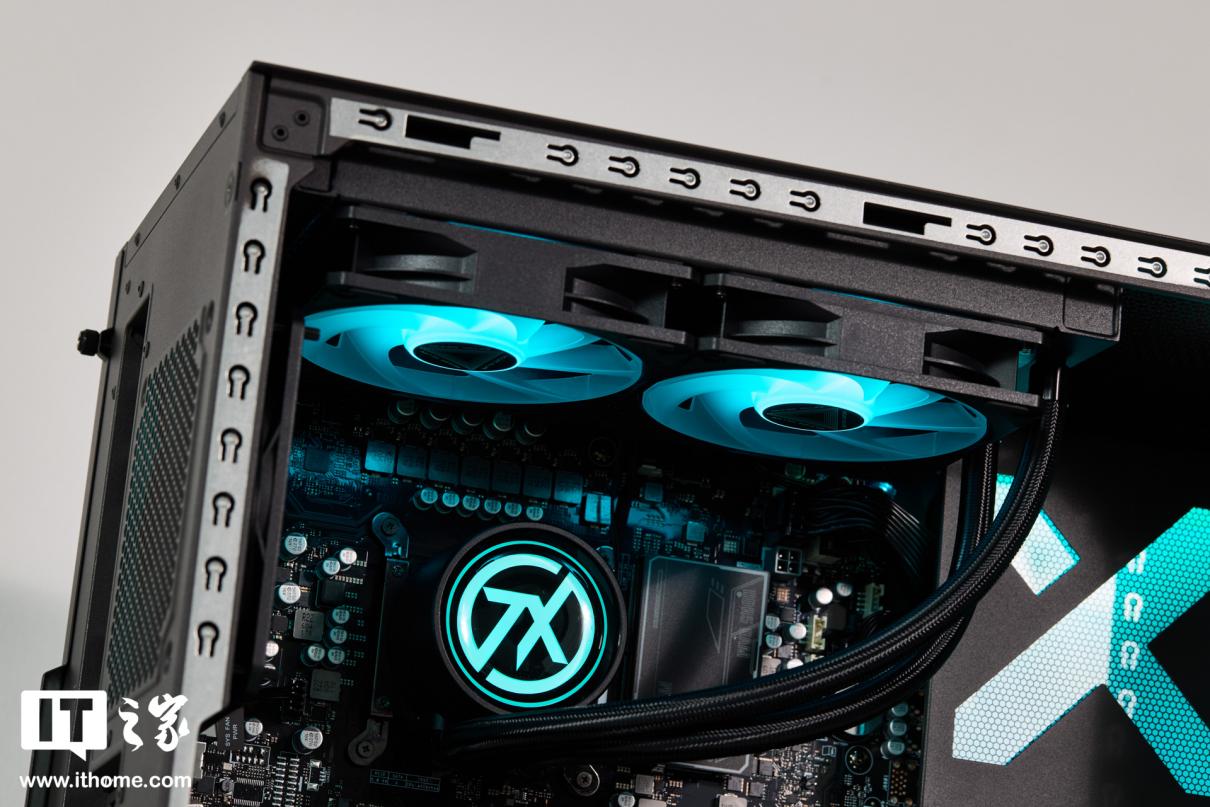
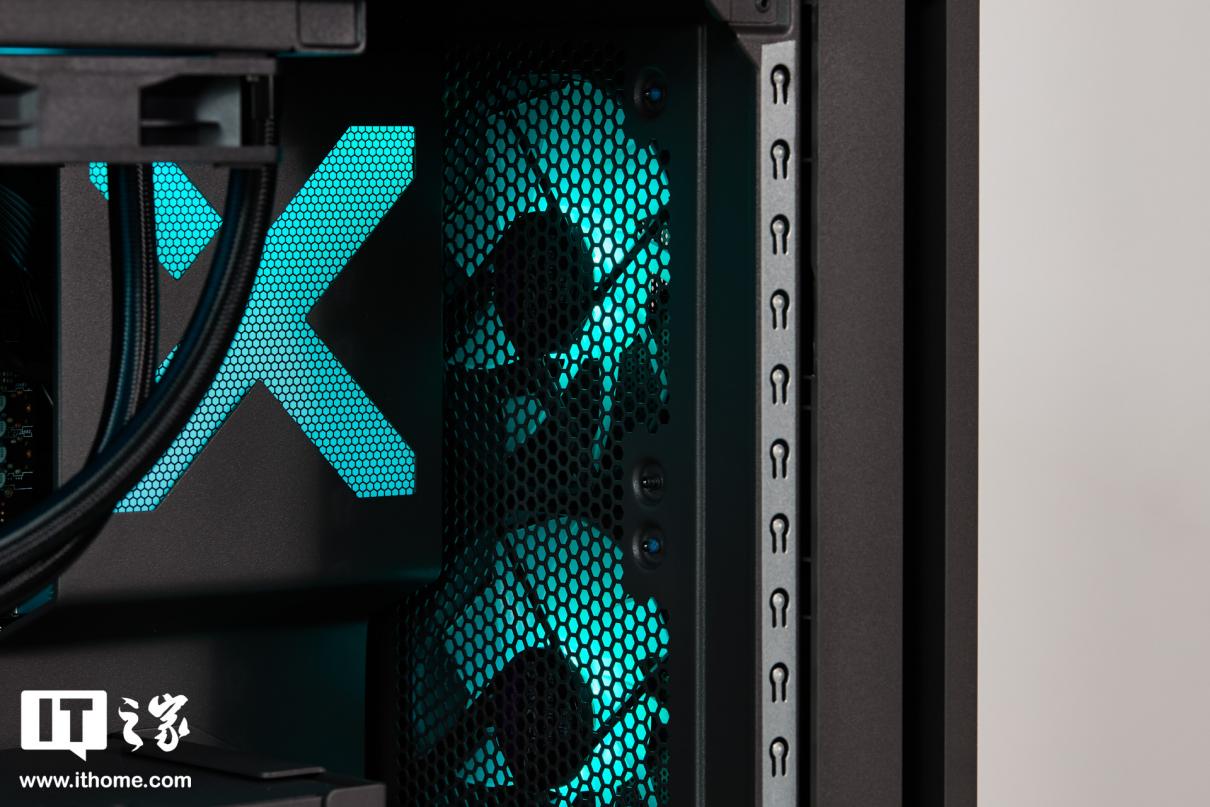
The graphics card area features TUF-themed RGB trim, and a 500 W 80 Plus Gold-rated power supply sits in an independent compartment at the bottom.
Processor: Intel Core Ultra 9 275HX Deep Dive
The Core Ultra 9 275HX is one of Intel’s flagship Arrow Lake-HX mobile processors. With 8 P-cores and 16 E-cores across 24 threads, it features approximately 40 MB of L2 cache and 36 MB of L3 cache. The base power is rated at 55 W, but maximum turbo power reaches 160 W — and as thermal testing reveals, the 7X’s cooling solution comfortably allows the chip to exceed even that.
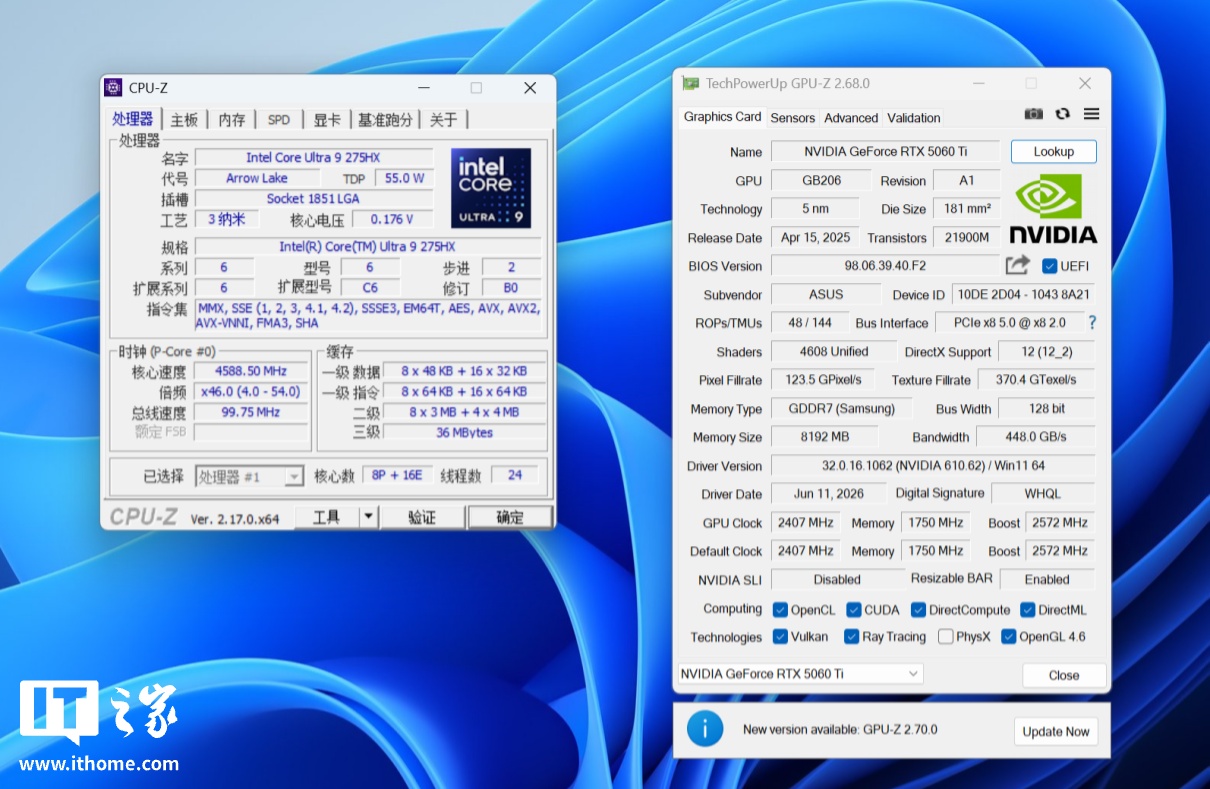
The platform also integrates an NPU delivering roughly 13 TOPS of local AI inference capability and supports DDR5-6400 memory alongside PCIe 4.0 expansion.
Thermal and Stress Testing
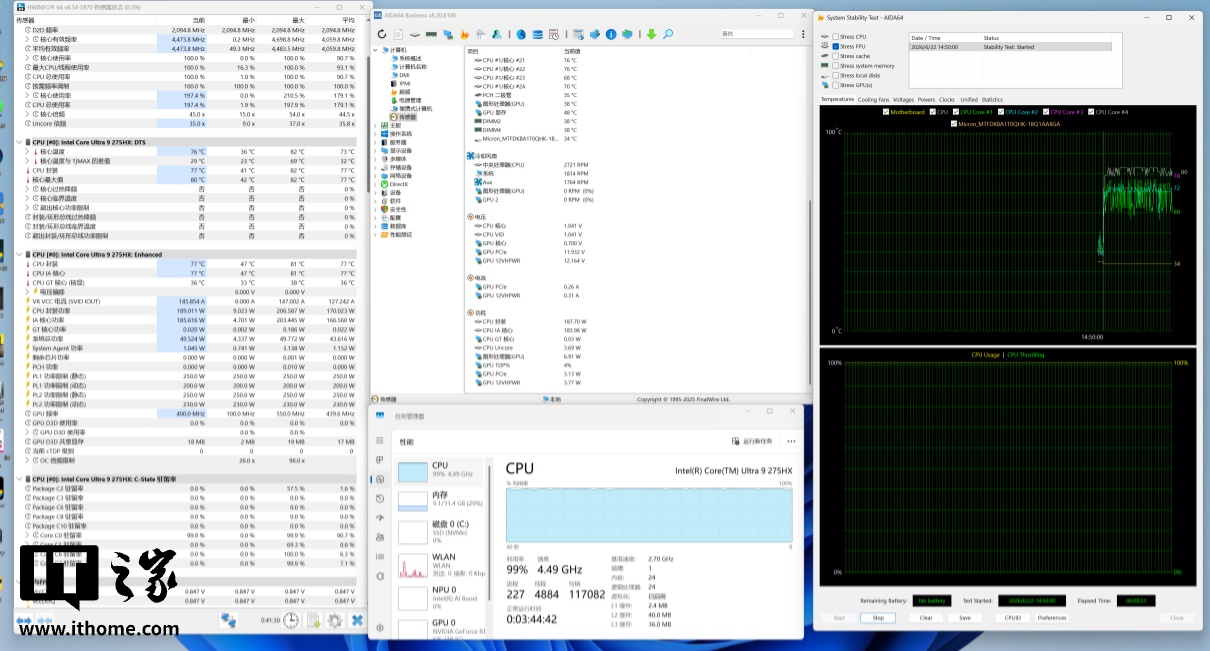
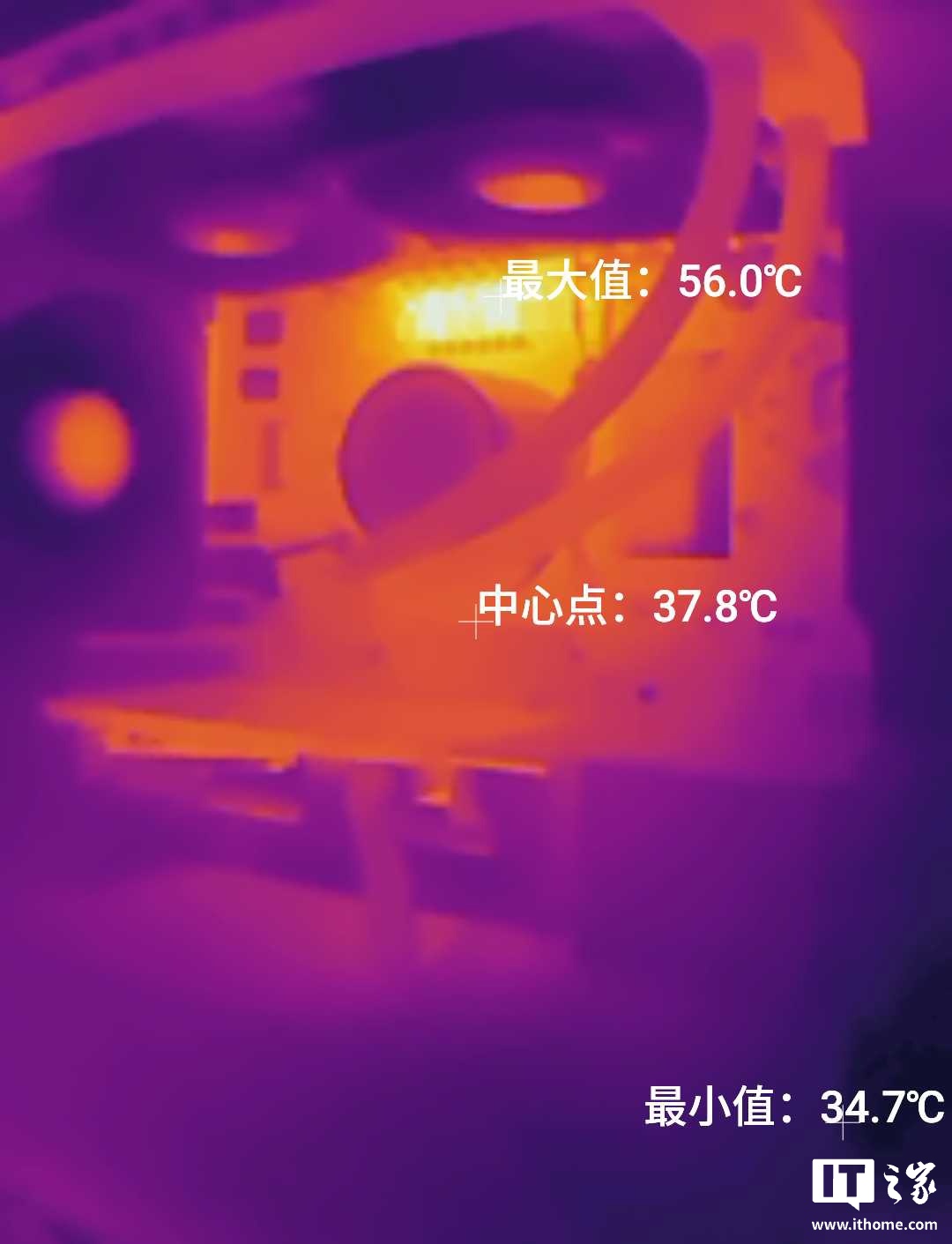
In a 15-minute AIDA64 FPU stress test, the CPU initially spikes to roughly 200 W before settling into a steady 185–190 W range. Core temperatures stabilised around 77°C under the 240 mm AIO, with fan speeds increasing audibly but without unpleasant whine or oscillation. Thermal imaging with the glass panel removed showed a peak internal temperature of 56°C, concentrated near the AIO pump head.
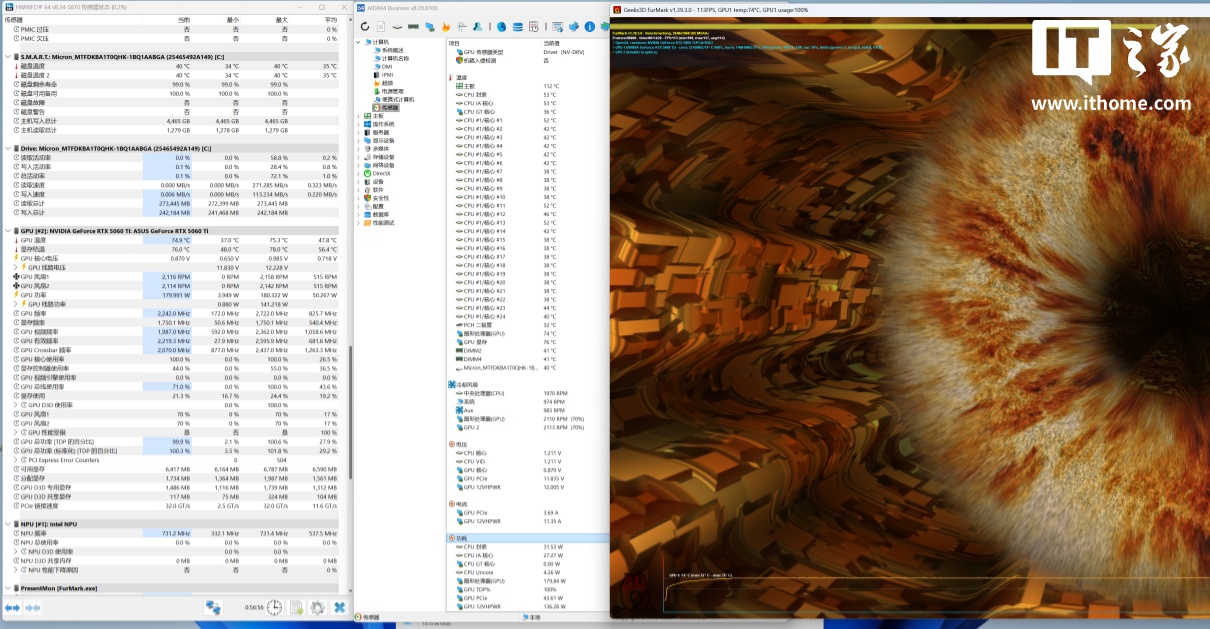
The RTX 5060 Ti held a rock-steady 180 W in FurMark, with the core clock around 2,235 MHz (briefly spiking to approximately 2.8 GHz). GPU core temperature sat at roughly 75°C, memory at 76°C — plenty of thermal headroom with no throttling or power fluctuation.
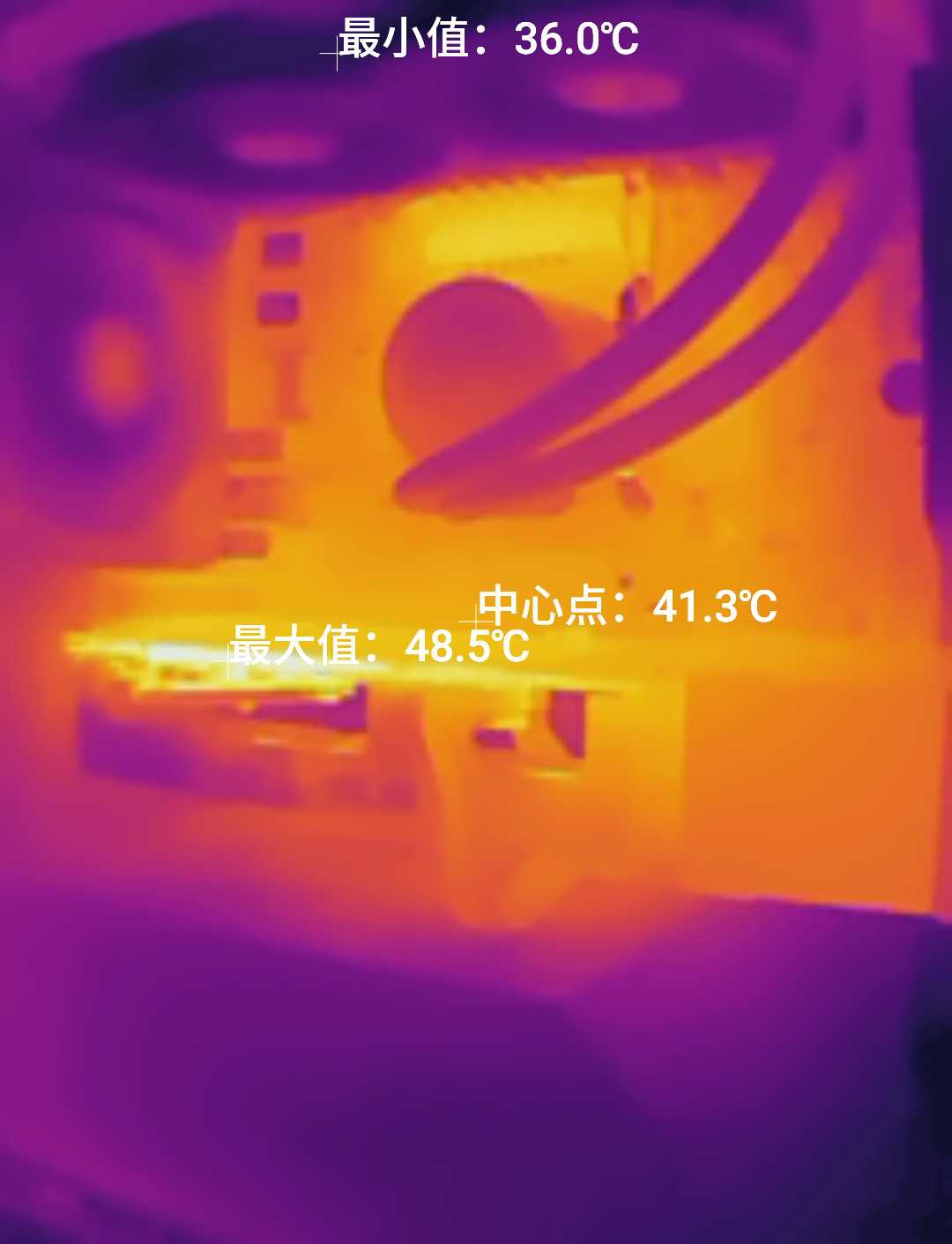
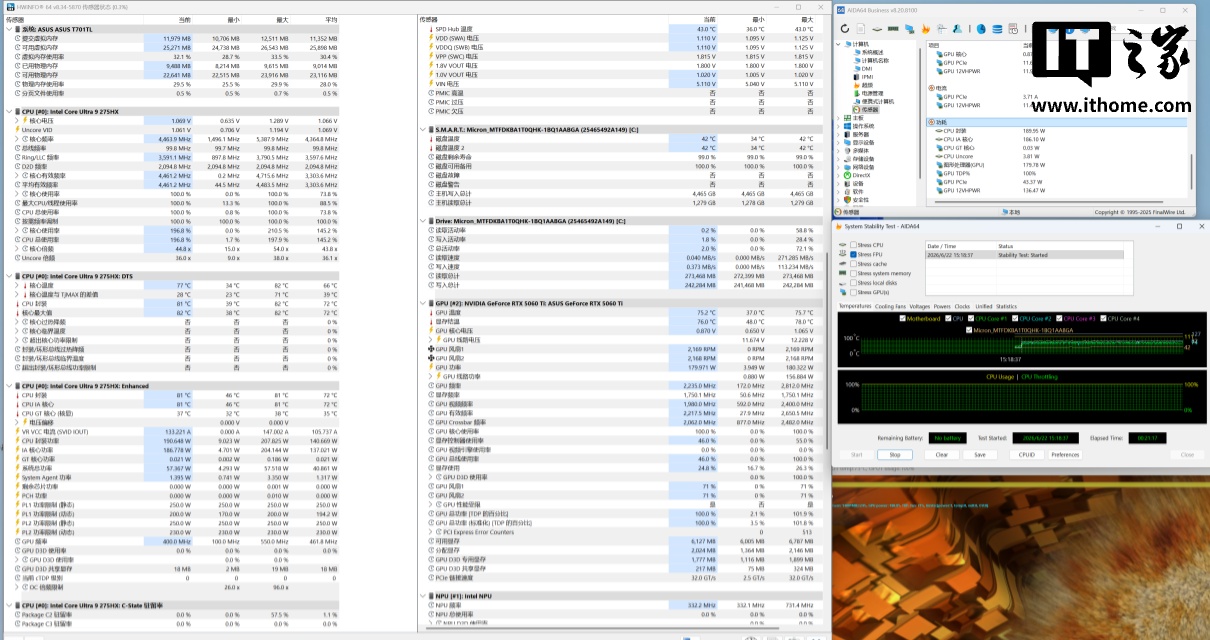
In a simultaneous CPU+GPU dual stress test sustained for 20 minutes, total system power held at 360–370 W (CPU ~190 W + GPU ~180 W). CPU frequency remained around 4.4 GHz, and the GPU held 2.2–2.3 GHz — performance remained consistent with single-load figures, showing no meaningful degradation.
Memory and Storage
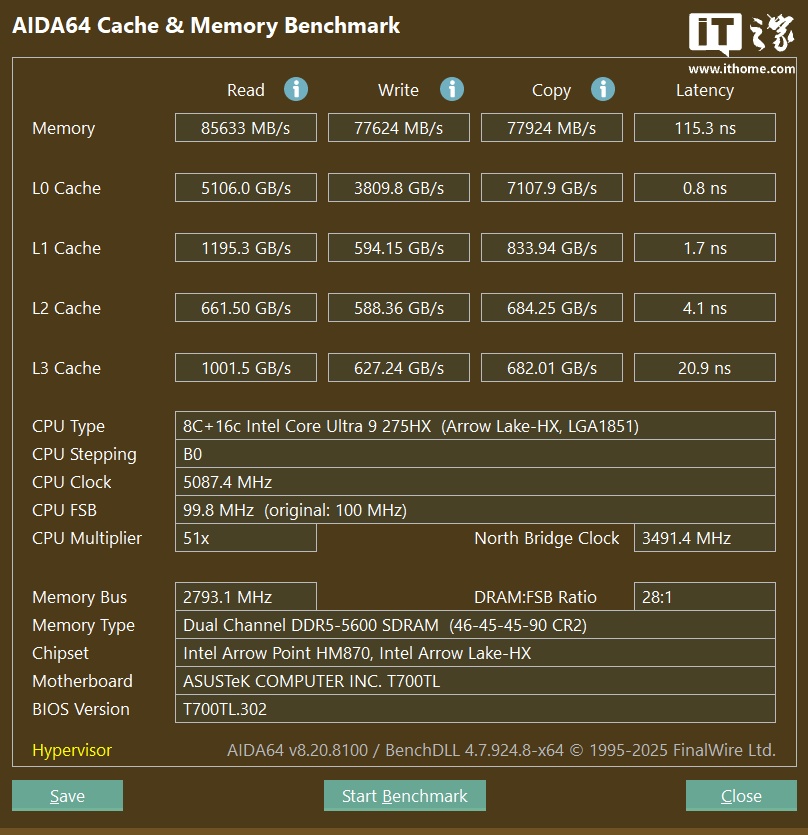
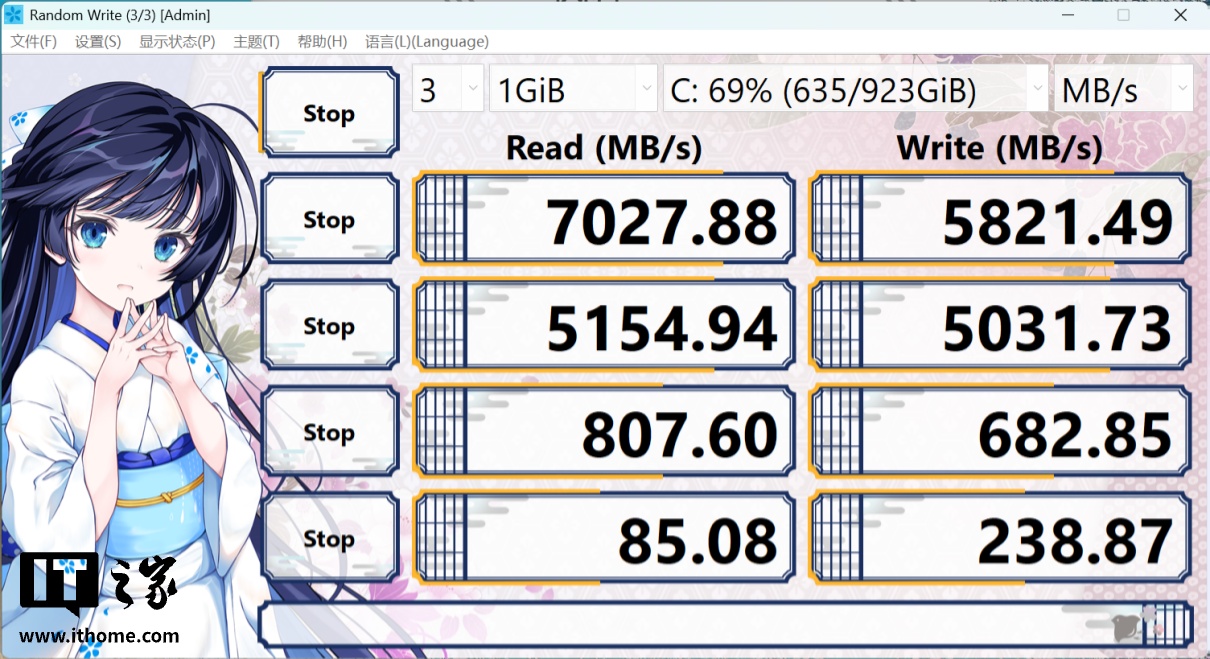
The DDR5-5600 dual-channel memory delivered sequential read speeds of approximately 85,633 MB/s, writes of 77,624 MB/s, and latency around 115.3 ns — in line with expectations for the platform. The Micron 1 TB PCIe 4.0 SSD achieved sequential reads up to 7,027 MB/s and writes of 5,821 MB/s in CrystalDiskMark, sufficient for rapid game loading and media workflows.
CPU Benchmarks
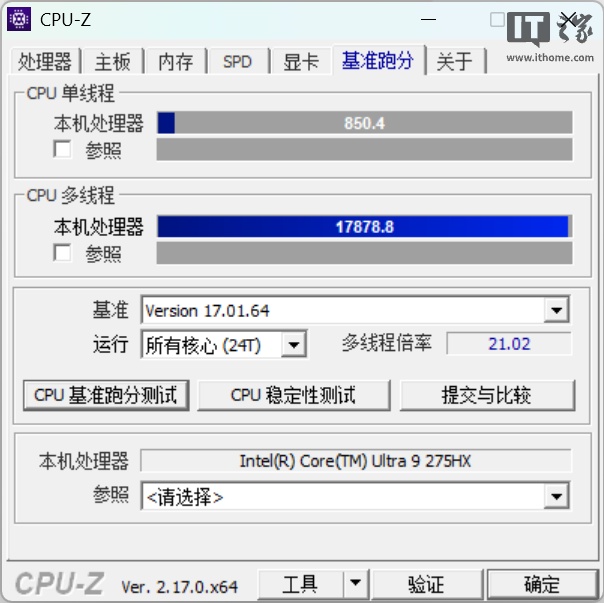
In CPU-Z, the Core Ultra 9 275HX scored 850.4 single-thread and 17,878.8 multi-thread. Compared to the previous-generation i7-13700HX (~820 / ~15,000), this represents roughly a 3.7% single-core and 19.2% multi-core improvement.
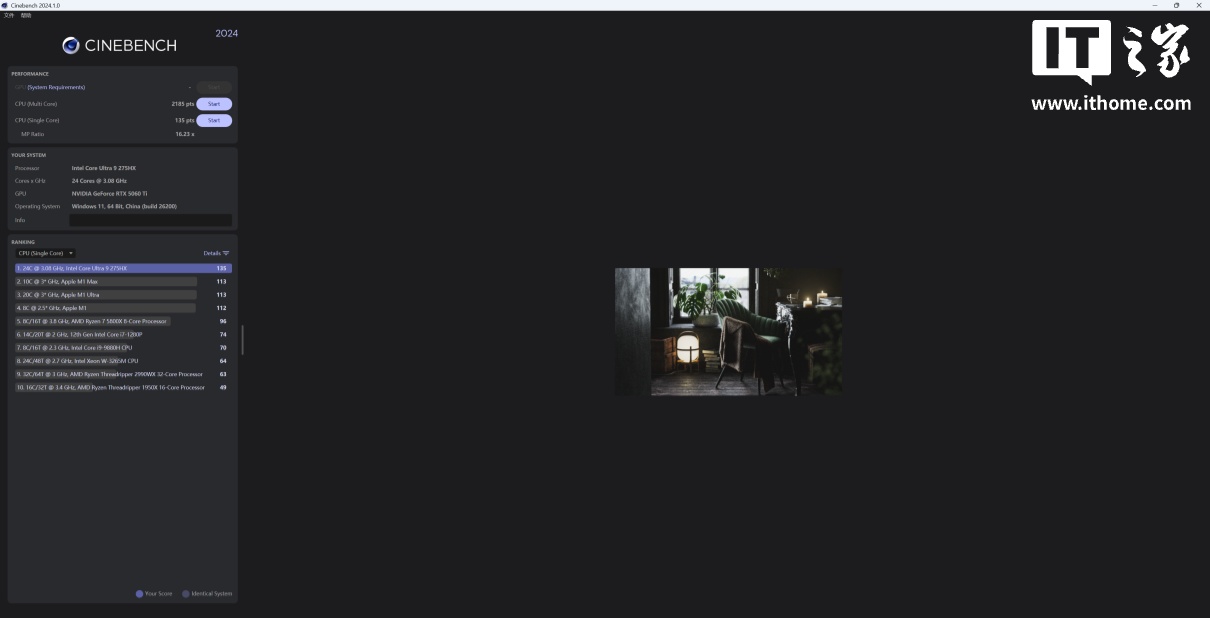
Cinebench 2024 returned 135 pts single-core and 2,185 pts multi-core — gains of roughly 18.4% and 59.5% respectively over the i7-13700HX, highlighting the Arrow Lake architecture’s strength in heavily threaded workloads.
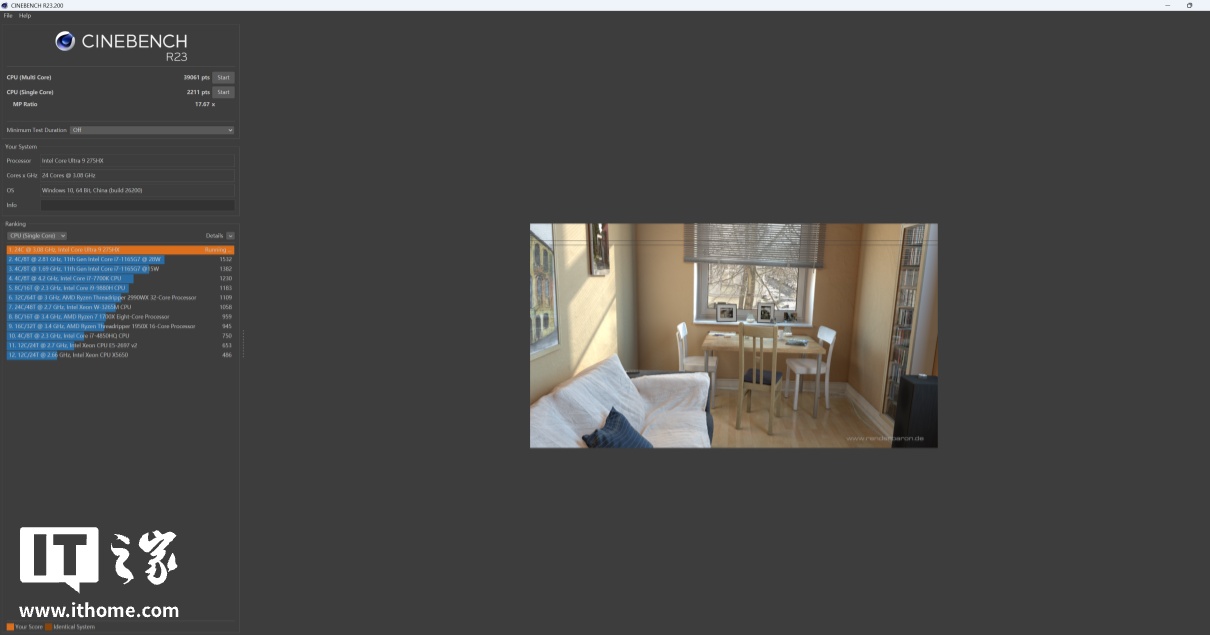
Cinebench R23 delivered 2,211 pts single-core and 39,061 pts multi-core, representing increases of about 13.4% and 39.5% over the same comparison point.
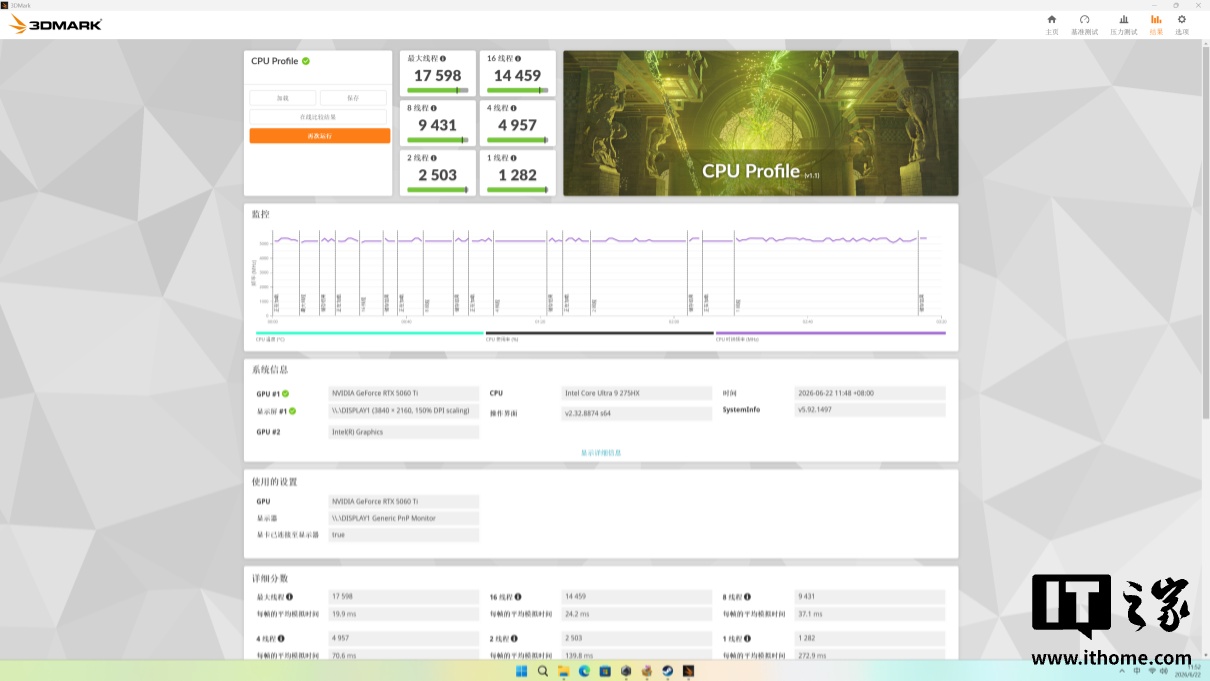
3DMark CPU Profile recorded 1,282 single-thread and 17,598 max-thread scores — roughly 11.5% and 25.7% gains respectively.
GPU Benchmarks: RTX 5060 Ti in Numbers
The RTX 5060 Ti 8 GB turned in the following 3DMark results:
- Fire Strike (DX11): Graphics 34,876 | Physics 49,841 | Combined 12,503
- Time Spy (2K DX12): Graphics 15,728 | CPU 16,520 | Overall 15,841
- Time Spy Extreme (4K DX12): Graphics 7,416 | CPU 12,418 | Overall 7,892
- Port Royal (Ray Tracing): 10,143 (46.96 FPS)
- Speed Way (Next-Gen): 4,067 (40.67 FPS)
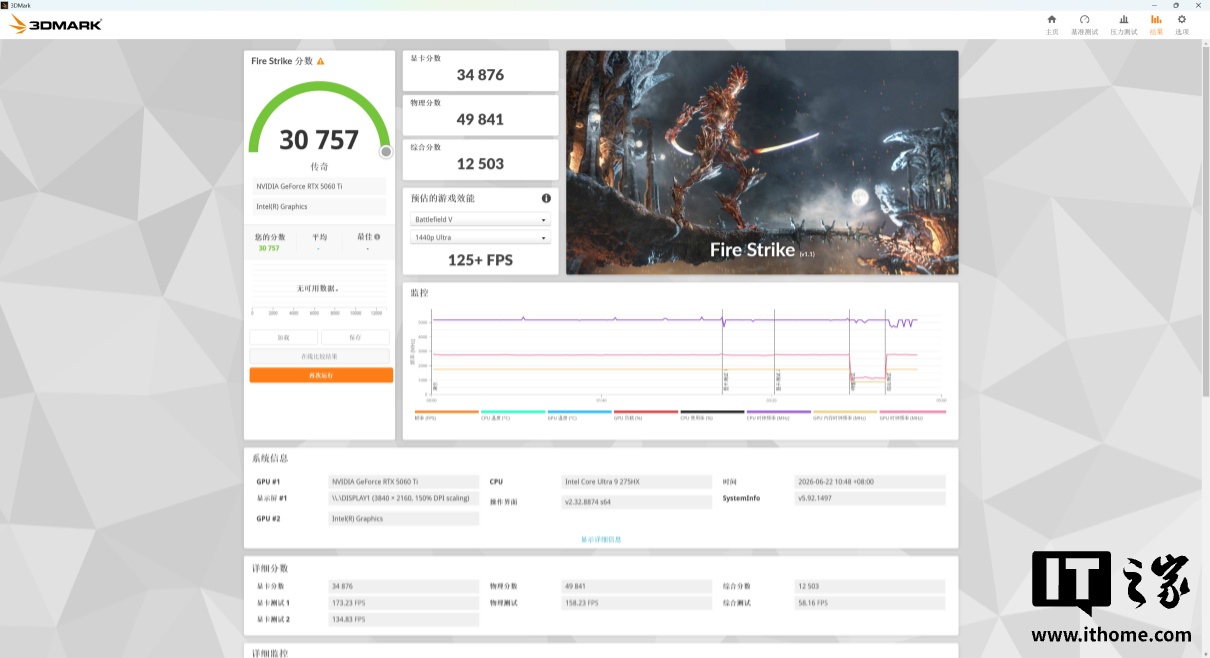
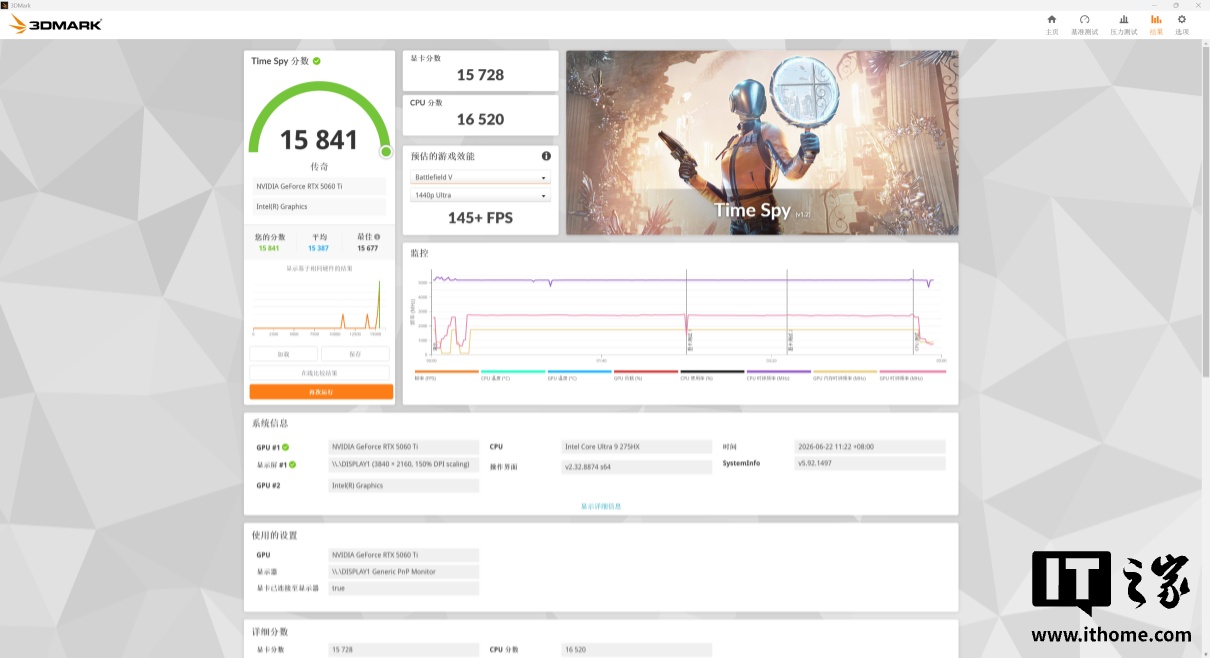
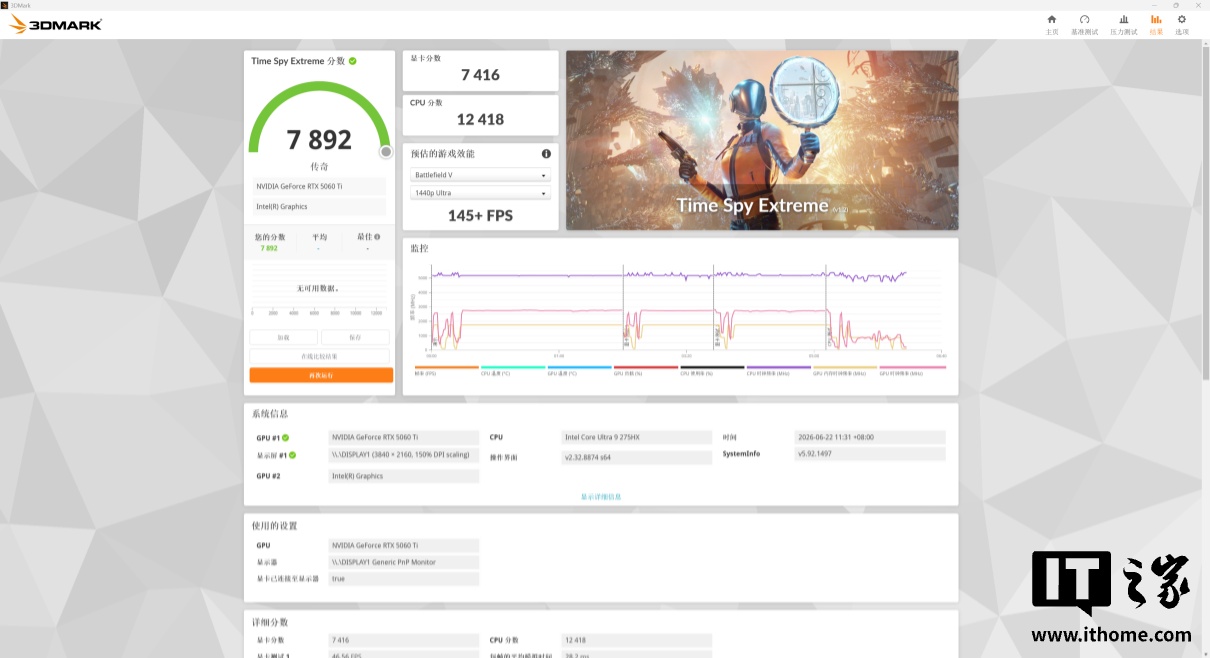
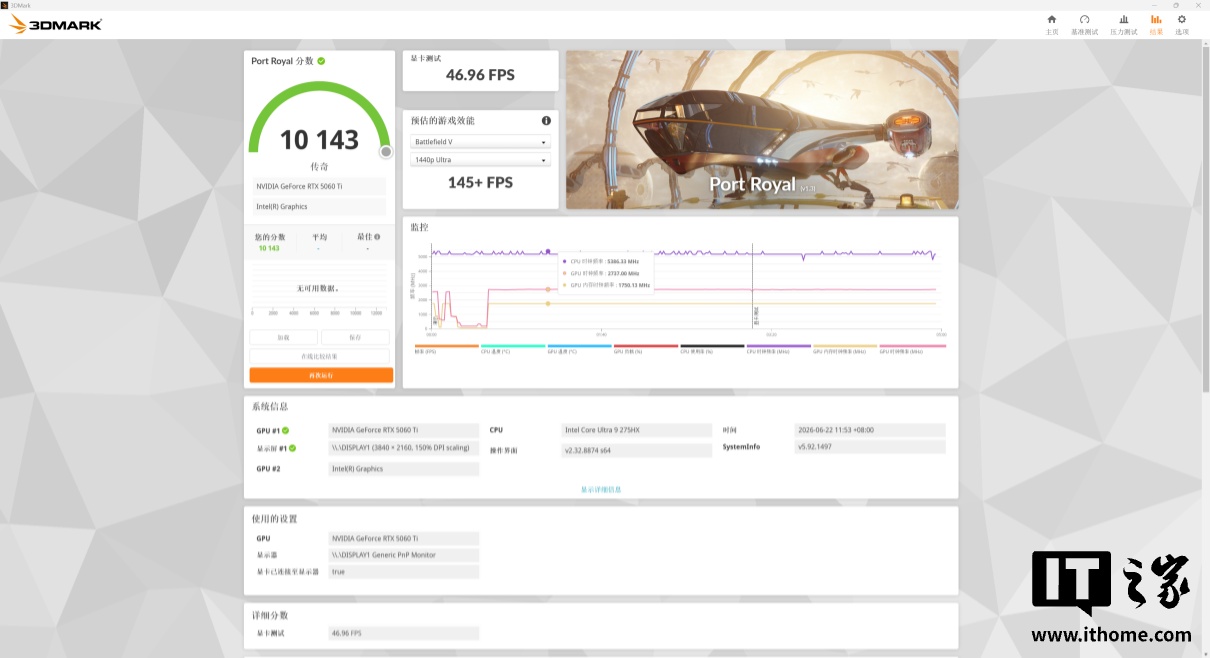
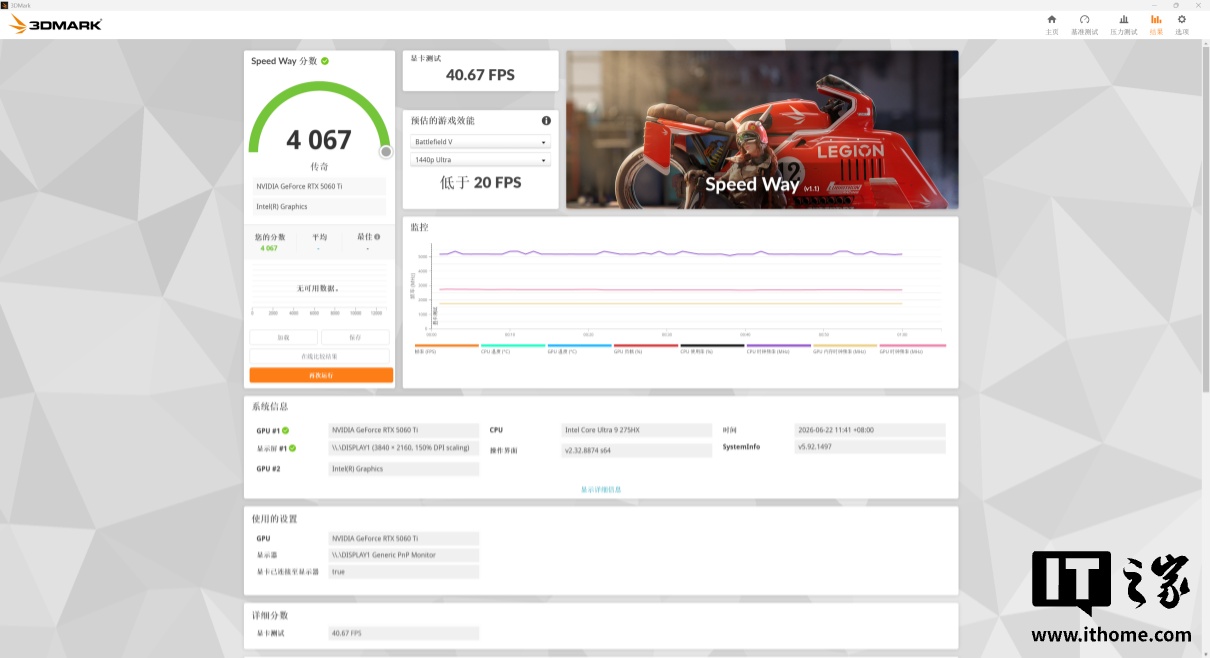
A Fire Strike graphics score approaching 35,000 confirms the card handles high-refresh esports titles at 1080p and 1440p with ease. The 15,728 Time Spy graphics score means it can comfortably run the majority of AAA titles at 1440p with high settings. Port Royal breaking 10,000 points indicates that with DLSS enabled, smooth 60+ FPS ray-traced gaming at 1440p is well within reach.
Real-World Gaming Performance
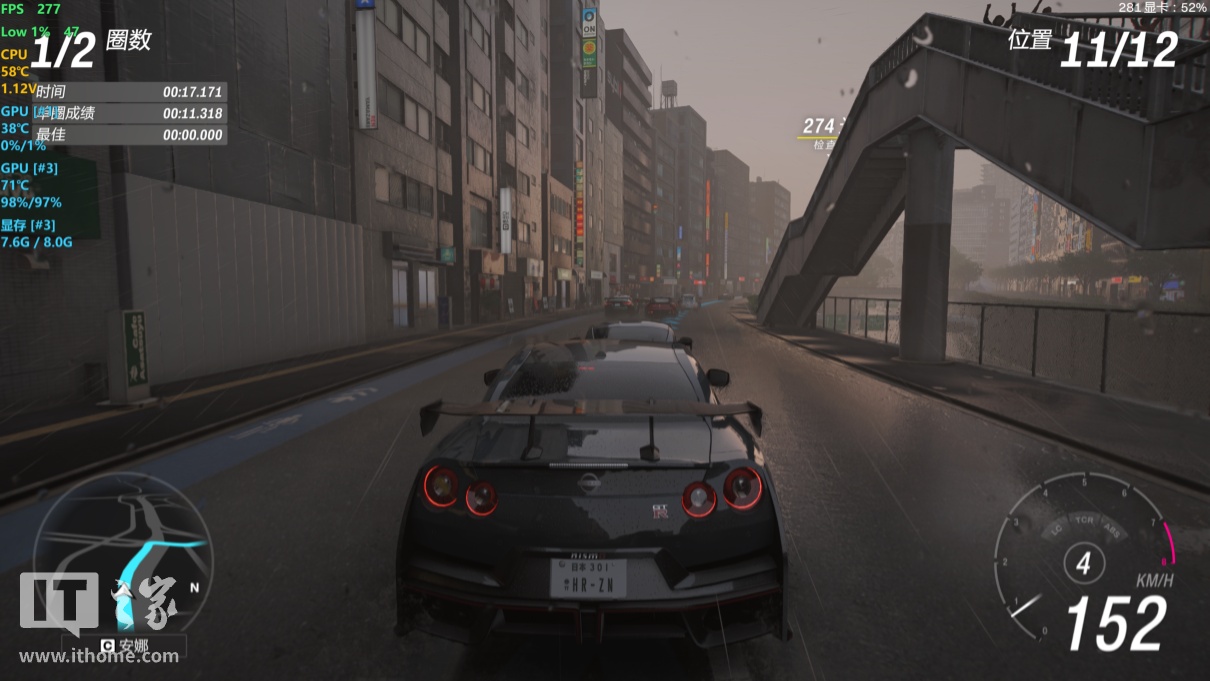
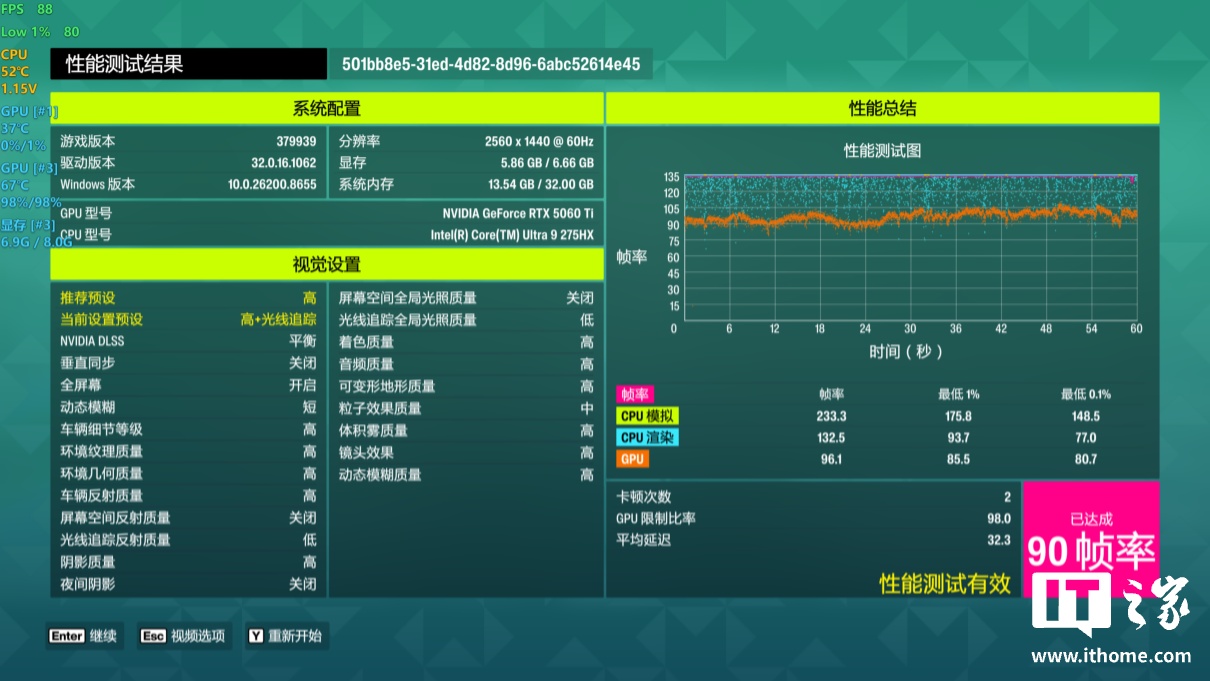
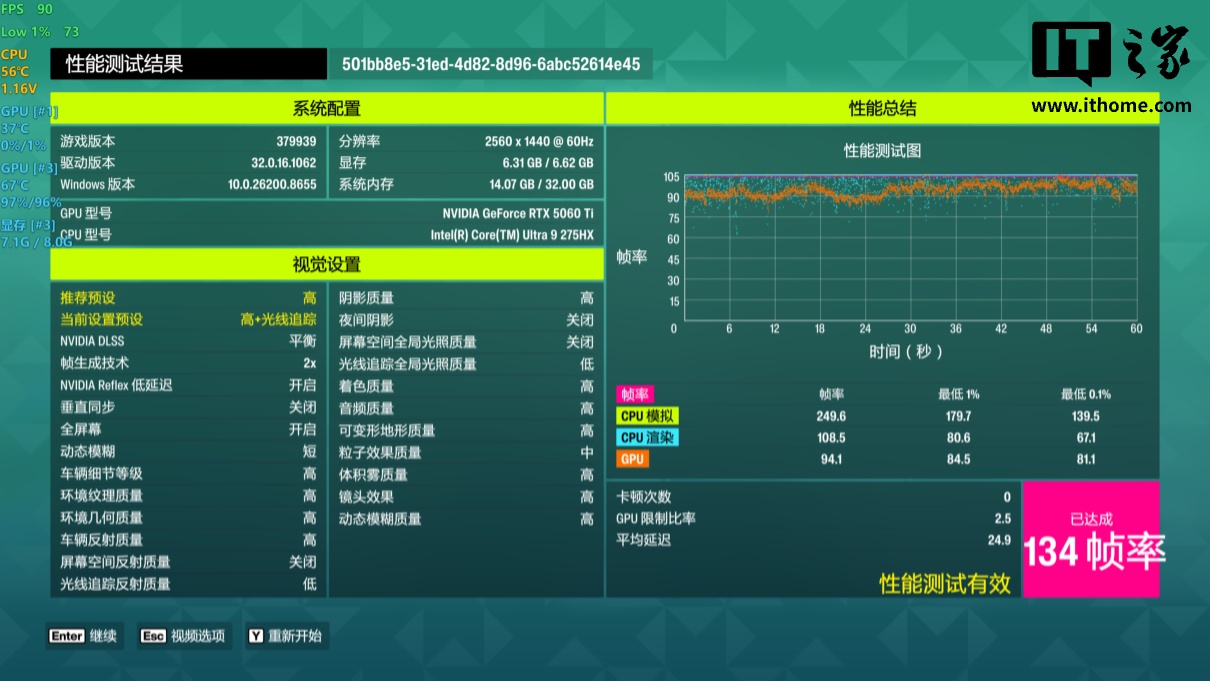
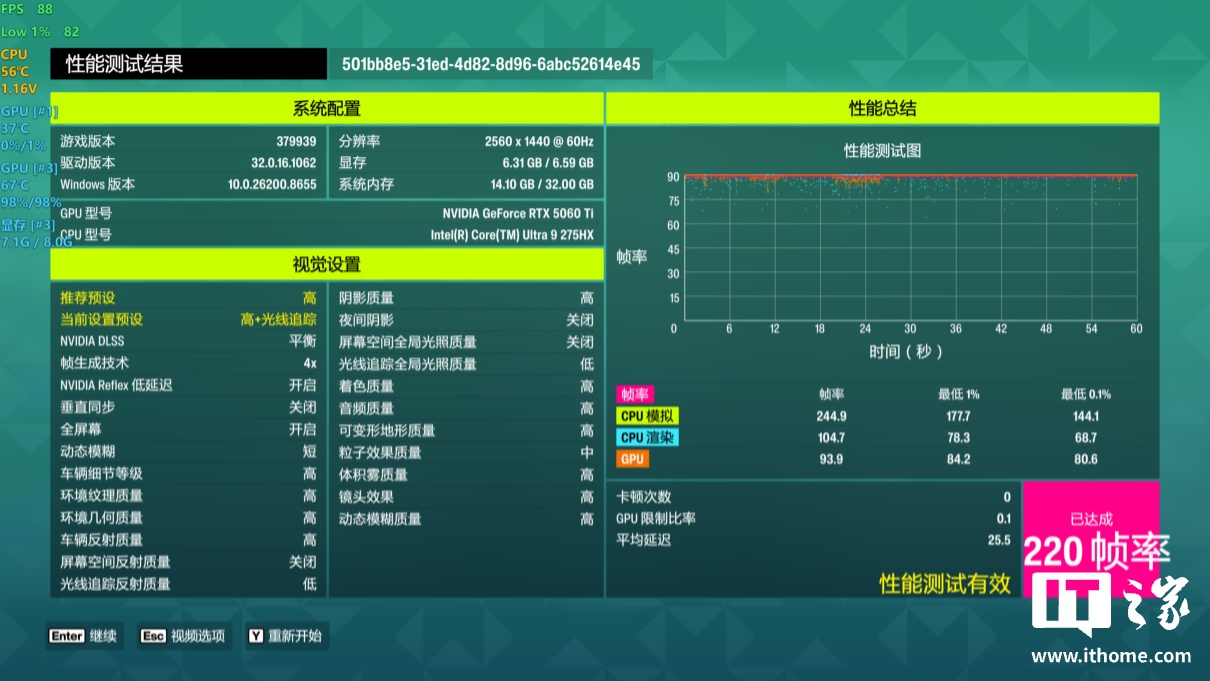
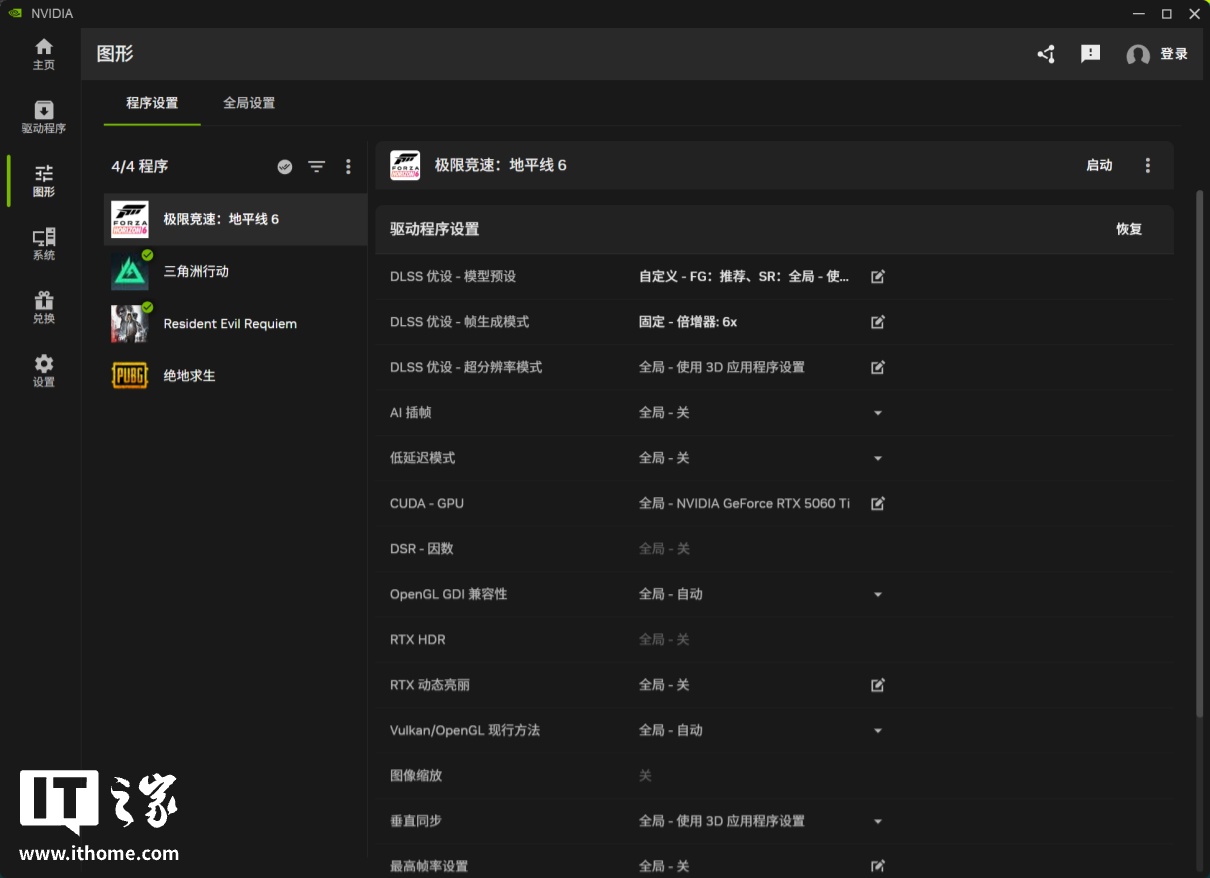
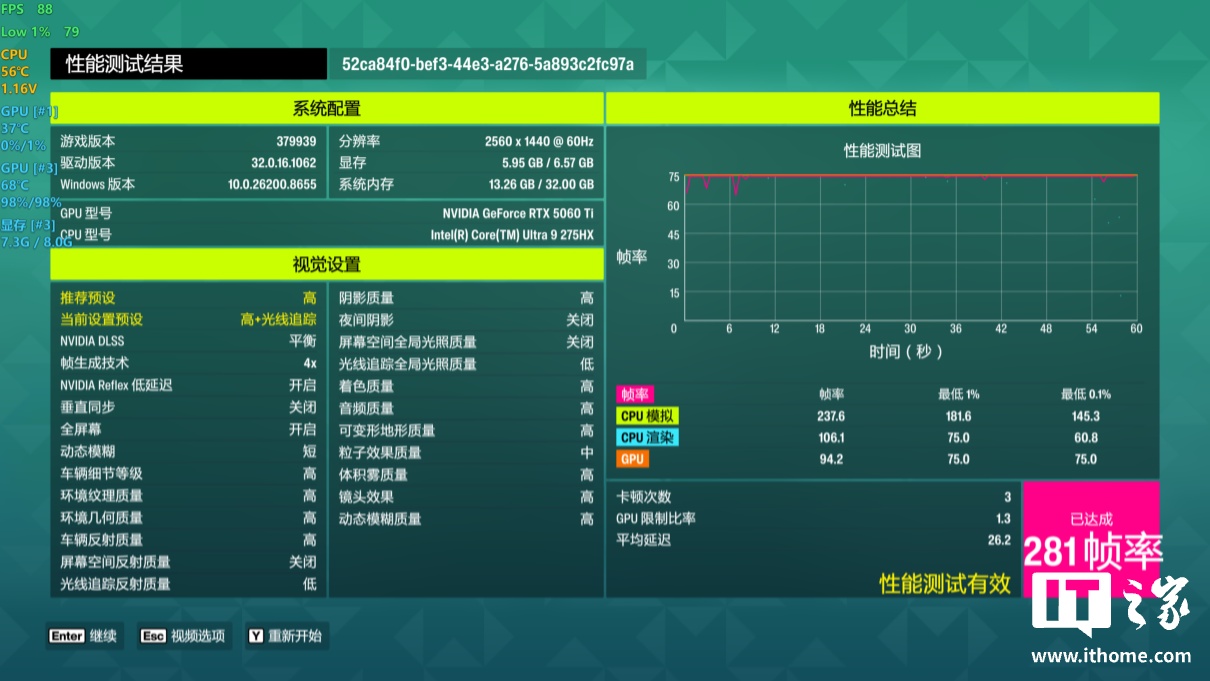
Forza Horizon 6
Tested at 1440p with high settings and low ray tracing, using the in-game benchmark:
- DLSS Balanced, no frame generation: 90 FPS average
- DLSS Balanced + 2x frame generation: 134 FPS (+48%)
- DLSS Balanced + 4x frame generation: 220 FPS
- 6x frame generation (via NVIDIA App): 280 FPS
Resident Evil 9
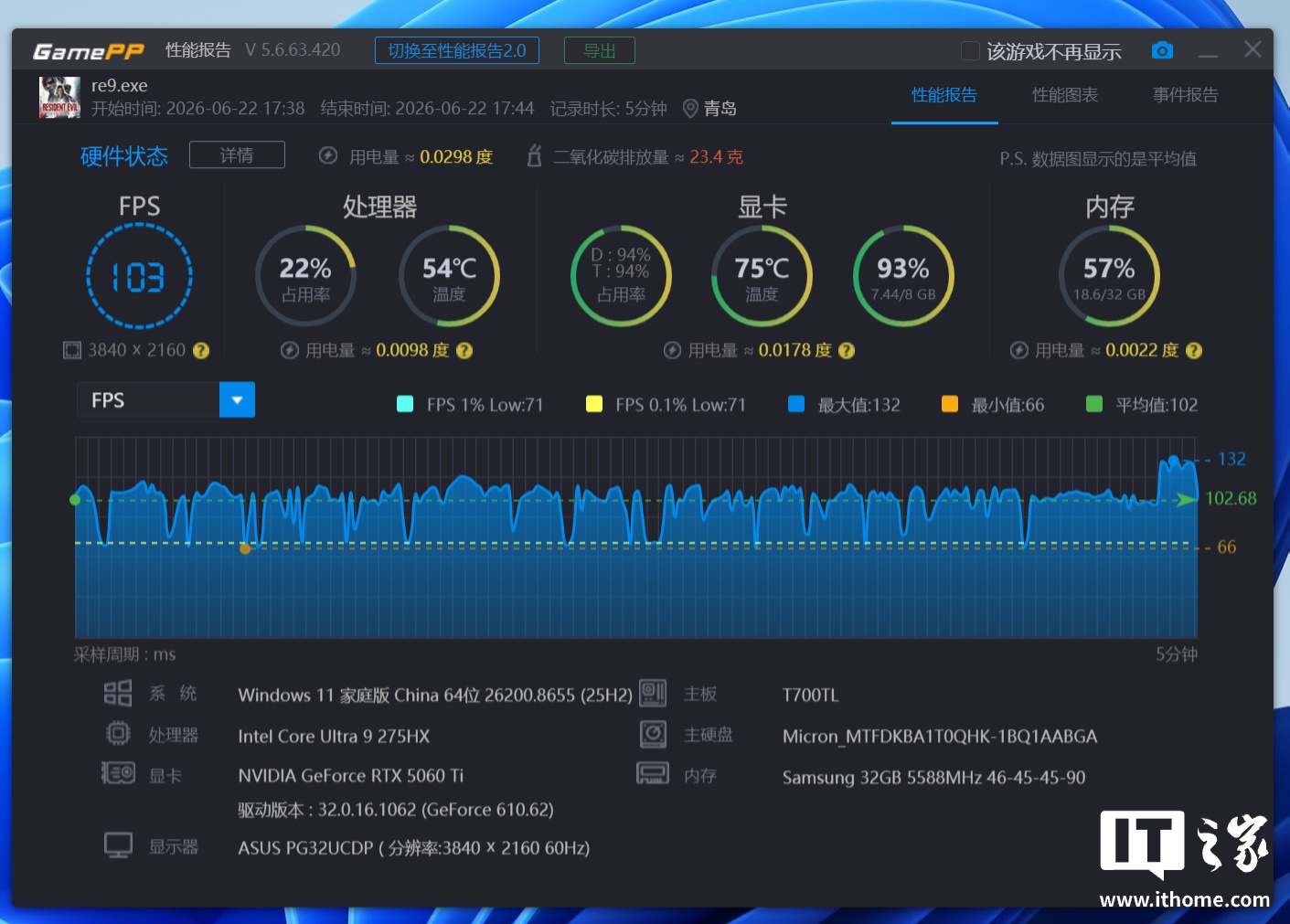
At 1440p with high settings, DLSS Balanced super-resolution, and ray reconstruction enabled:
- 2x frame generation: 103 FPS average, 71 FPS 1% Low. CPU usage 22%, GPU temperature 75°C, VRAM usage 7.44 GB.
- 4x frame generation: 189 FPS average — nearly doubling the frame rate.
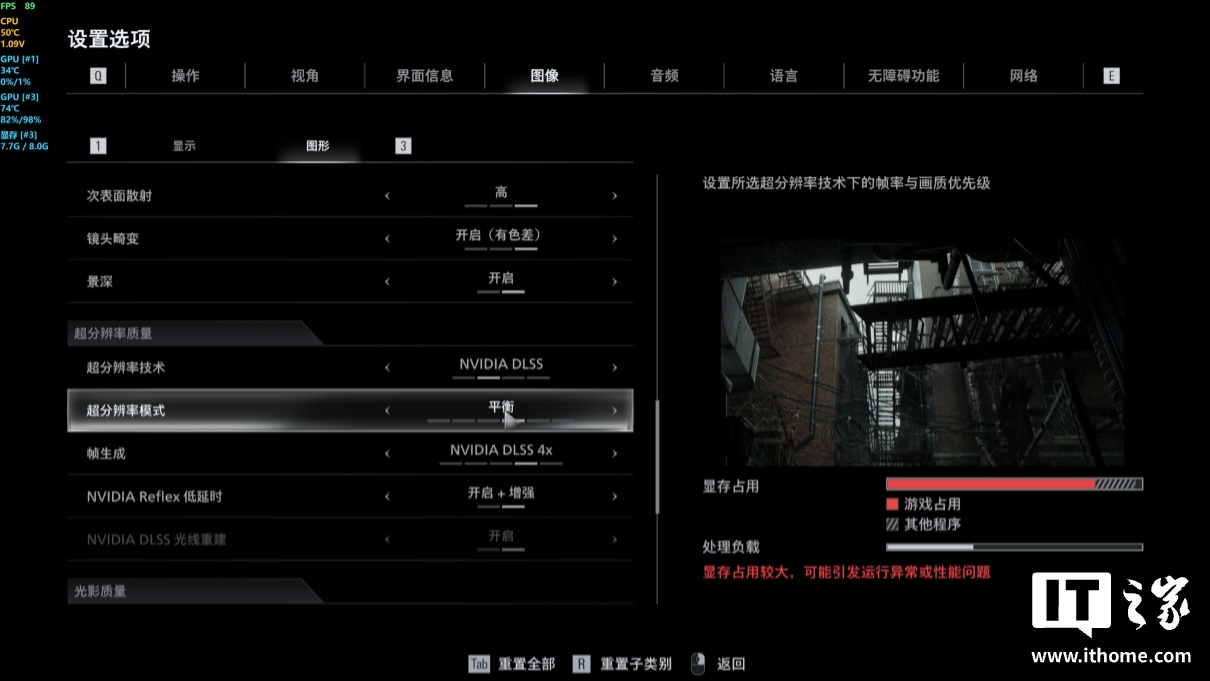
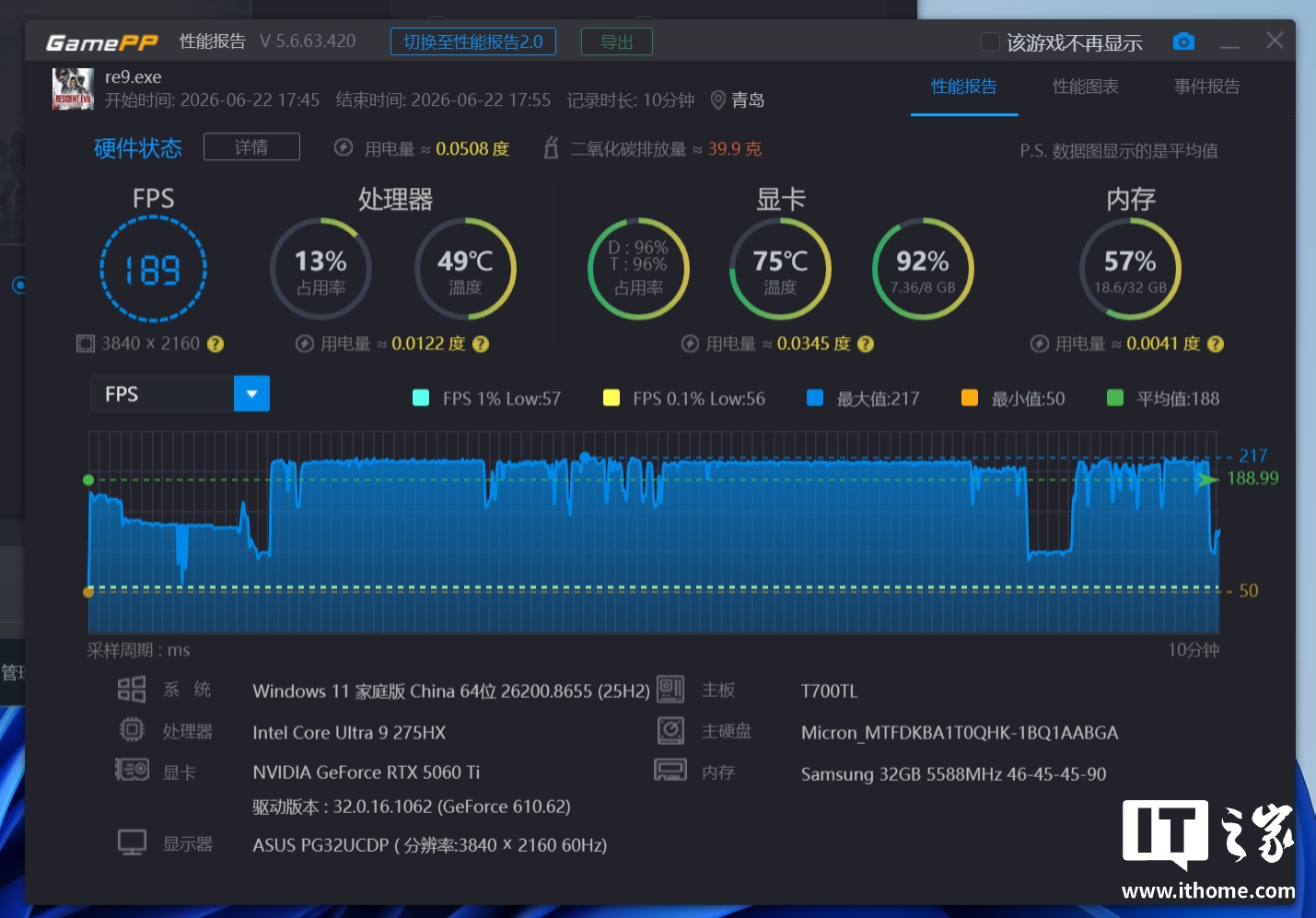
The 8 GB framebuffer on the RTX 5060 Ti is clearly working at full capacity, but DLSS 4 multi-frame generation proves transformative, pushing frame rates deep into high-refresh territory even under demanding conditions.
Cyberpunk 2077
At 1440p with ray tracing set to low and the Transformer DLSS model:
- No frame generation: 99.74 FPS average, 87.46 FPS minimum
- 2x frame generation: 127.81 FPS average, 162.84 FPS maximum
- 4x frame generation: 209.64 FPS average
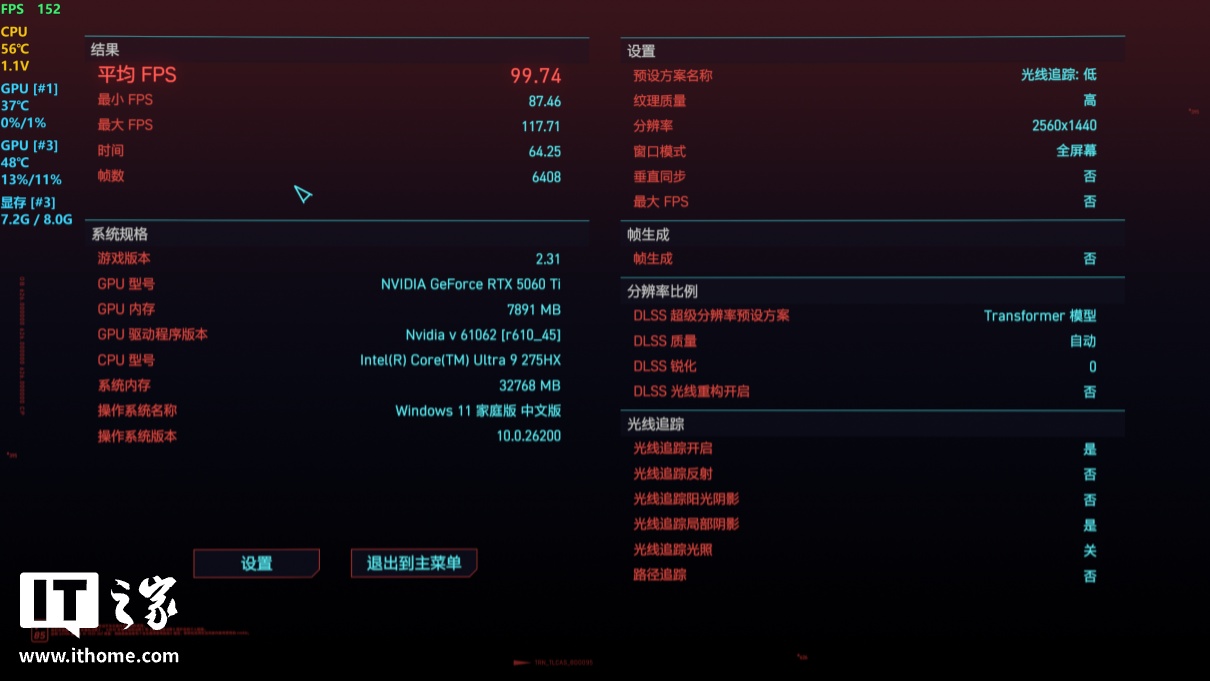
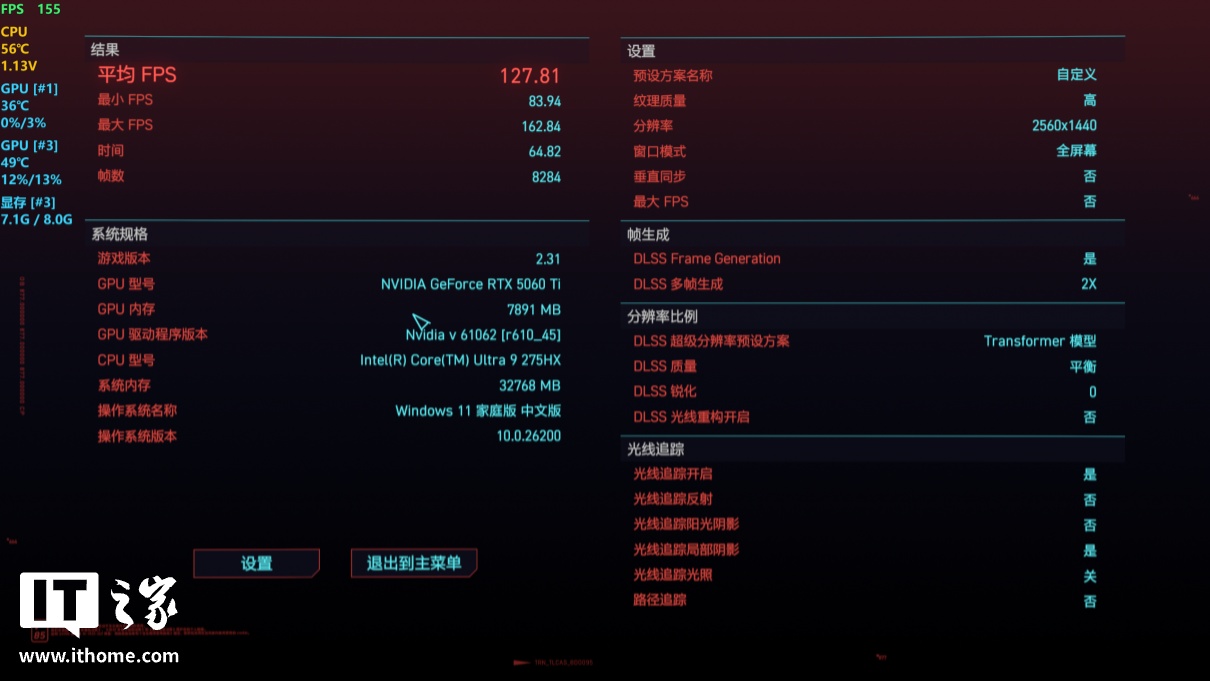
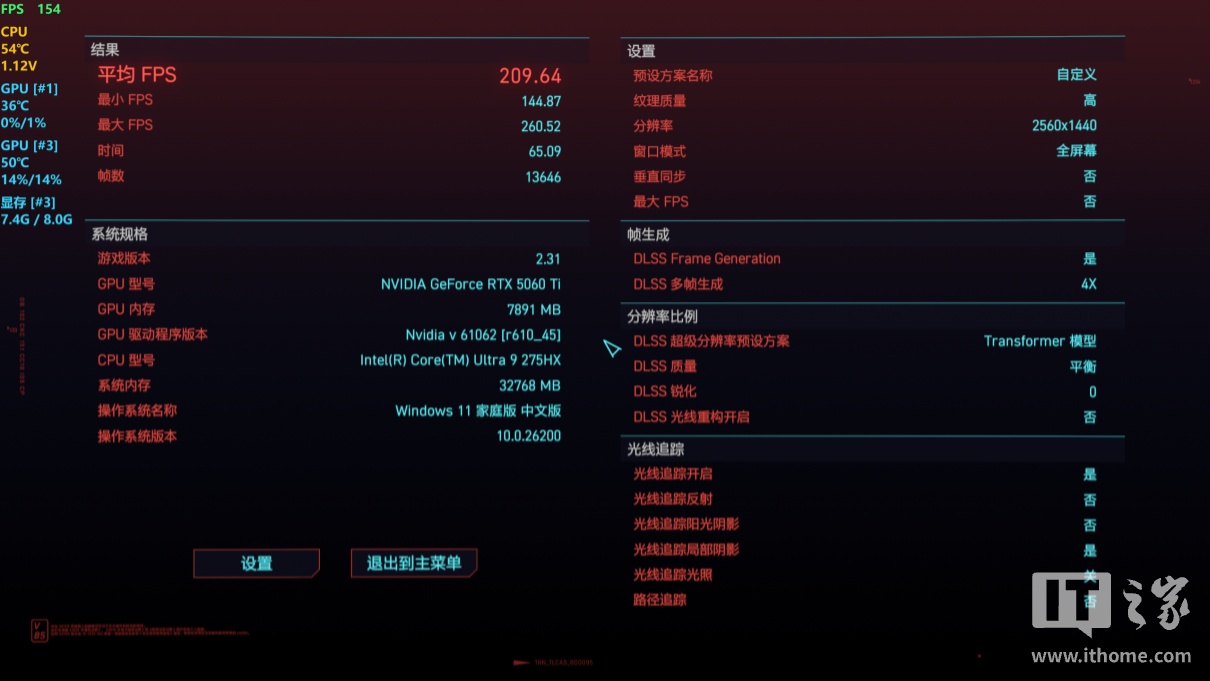
Even in Night City’s dense and complex lighting environment, the baseline performance is thoroughly playable, and frame generation unlocks genuinely high-refresh-rate experiences.
Delta Force
At 4K with high settings in live multiplayer matches:
- 94 FPS average, with 1% and 0.1% lows both at 61 FPS — critical for a competitive shooter.
- GPU usage sat at 94–95%, with VRAM at 7.04 GB (88% utilisation), indicating that 4K pushes the 8 GB buffer close to its ceiling.
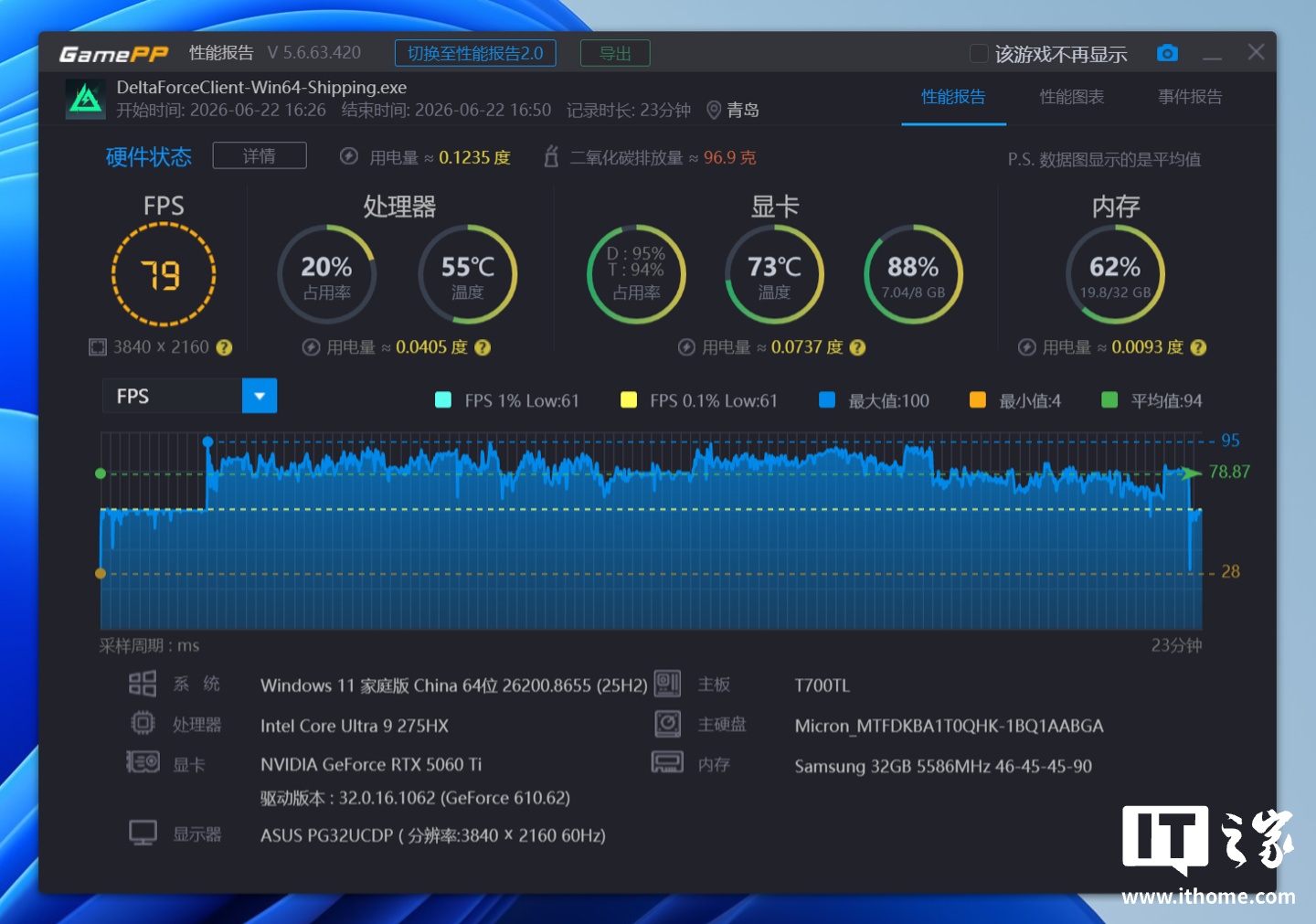
For AAA gaming, 1440p remains the sweet spot for this configuration.
Verdict
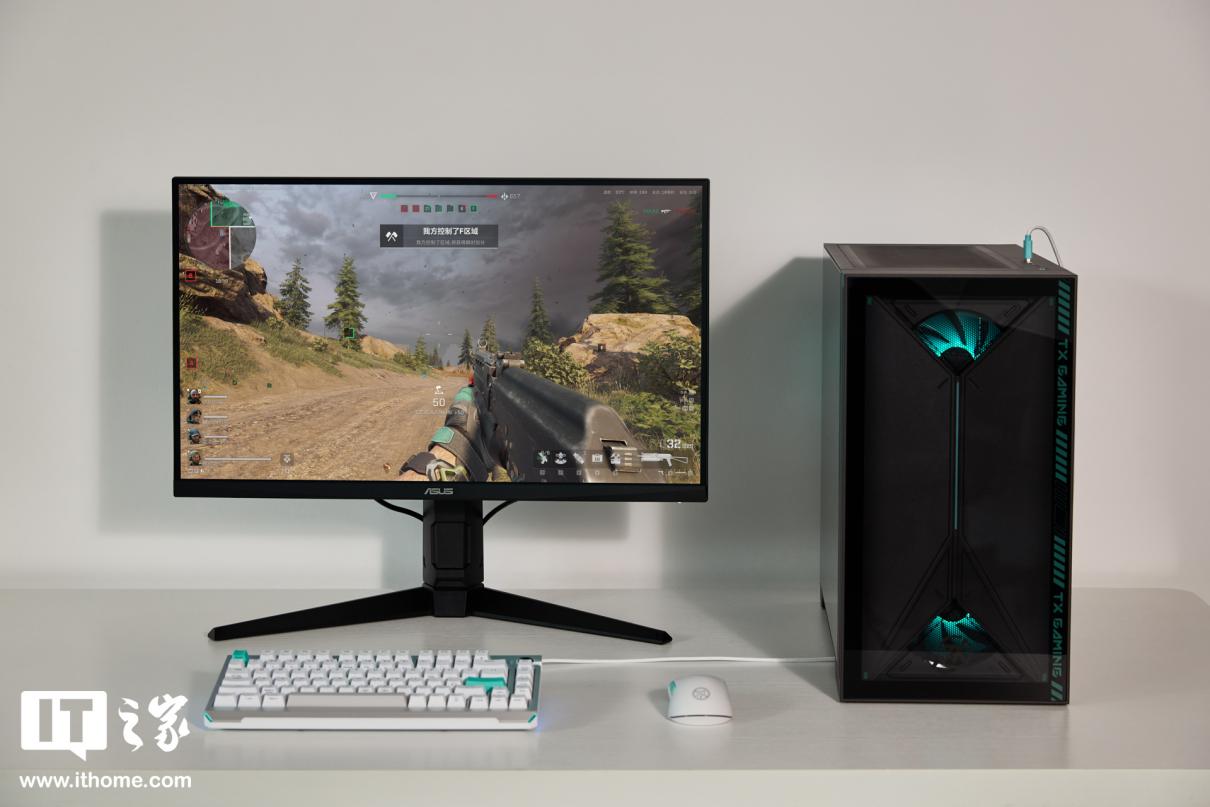
The ASUS TUF Gaming 7X makes a clear statement: this is a gaming desktop designed for enthusiasts who value both visual presence and sustained performance. The 47-liter chassis isn’t just about aesthetics — the extra volume directly translates into superior thermal management, enabling the system to maintain a combined ~360 W power envelope without throttling.
The Core Ultra 9 275HX and RTX 5060 Ti pairing covers virtually every AAA title at 1440p with confidence, and DLSS 4 multi-frame generation stretches the experience into high-refresh-rate territory that borders on esports-grade responsiveness.
With pricing positioned above the 10,000 RMB mark, the TUF Gaming 7X is decidedly not a value play. But for buyers who want a turnkey, warranty-backed gaming rig that arrives ready to perform — wrapped in one of the most distinctive chassis designs on the market — ASUS has delivered a compelling and cohesive package.