Beijing Humanoid Robot Innovation Center Unveils Multi-Agent Group Control for Synchronized Robot Formations
The Beijing Humanoid Robot Innovation Center (National Local Joint Embodied Intelligence Robot Innovation Center) has unveiled a multi-agent group control solution, demonstrating multiple full-size Tiangong 3.0 humanoid robots performing highly synchronized, multi-formation dance routines with impressive fluidity.
According to the center, the solution is built on its independently developed general-purpose embodied intelligence platform — Huisi Kaiwu — which achieves three key capabilities: a unified intelligent base compatible with multiple robot types, a single global command system driving multi-agent coordination, and one-time technical development adapting to diverse application scenarios.
The system’s cognitive brain handles global scene understanding, long-sequence task planning, multi-agent task allocation, and dynamic environment perception. This enables autonomous decomposition of global objectives into granular subtasks with comprehensive planning and coordination.
The execution cerebellum relies on a self-developed low-latency distributed communication protocol, millisecond-level synchronization control algorithms, and a cross-platform motion adaptation engine. Together, these components orchestrate robot motion control, navigation execution, and status feedback, significantly improving synchronization, stability, and coordination during collective operations.
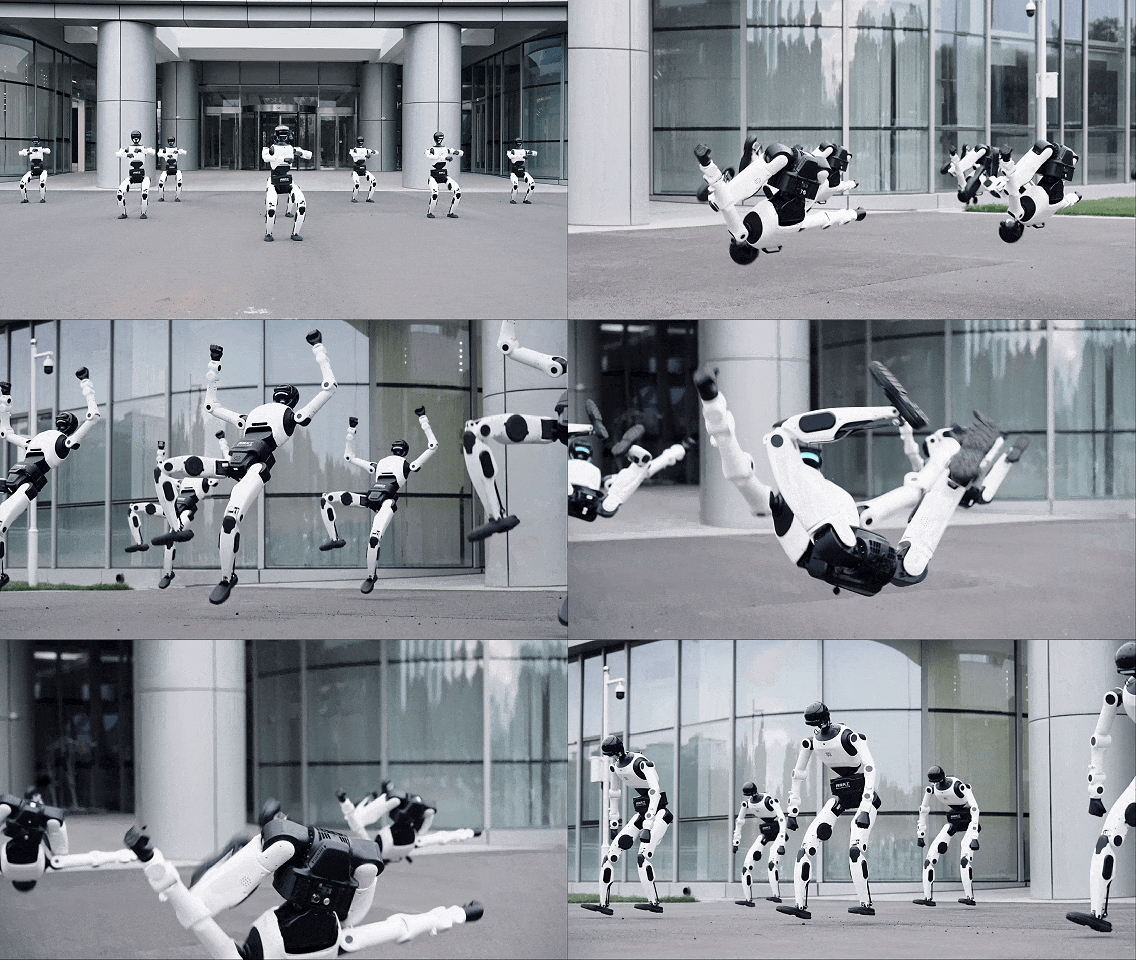
The entire solution supports low-code development and rapid deployment, allowing flexible adaptation across different industry needs and lowering the barrier to real-world application deployment.
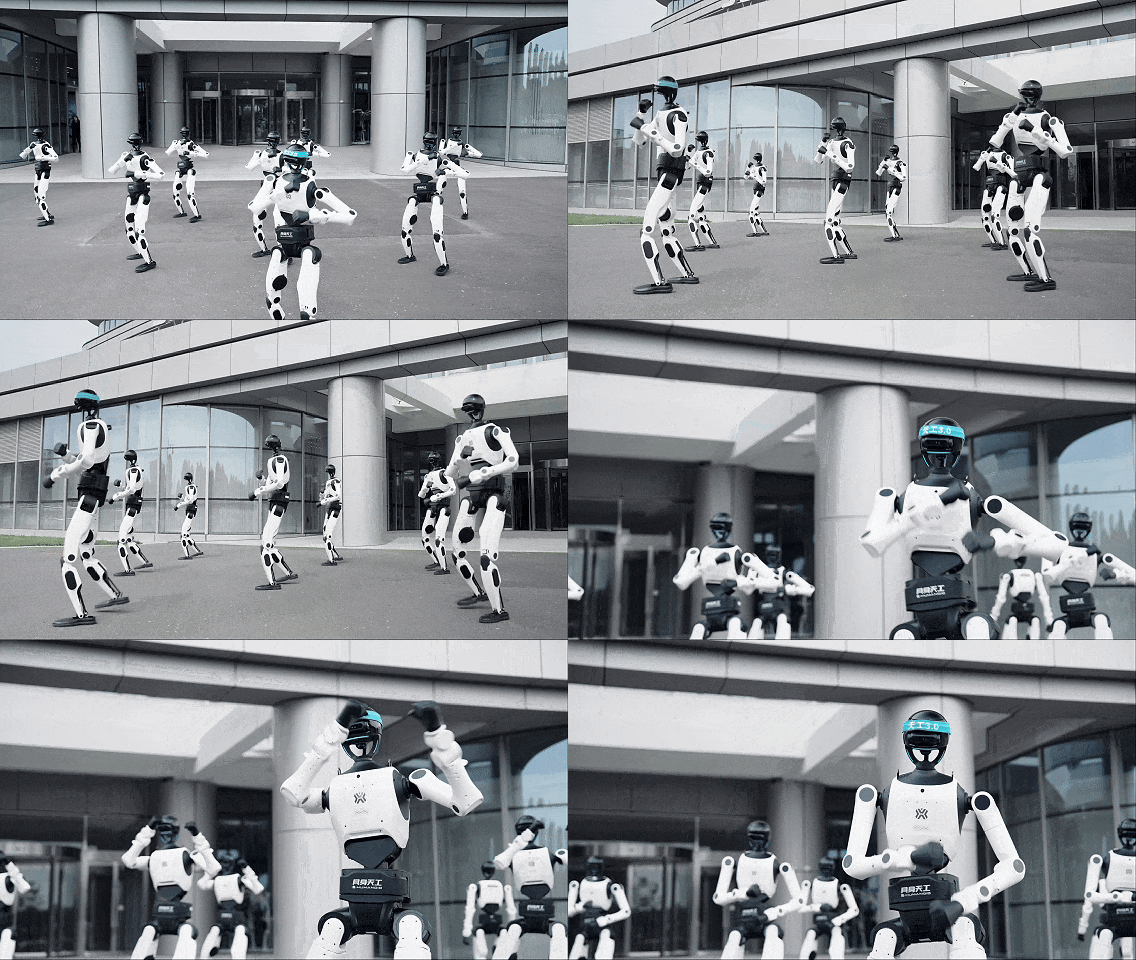
This breakthrough marks a significant step forward in multi-humanoid coordination, addressing one of the key challenges in deploying humanoid robots in real-world environments where synchronized teamwork is essential — from manufacturing assembly lines to logistics warehousing and emergency response scenarios.