BYD and Horizon Robotics CEOs meet — 'something really, really big' is coming
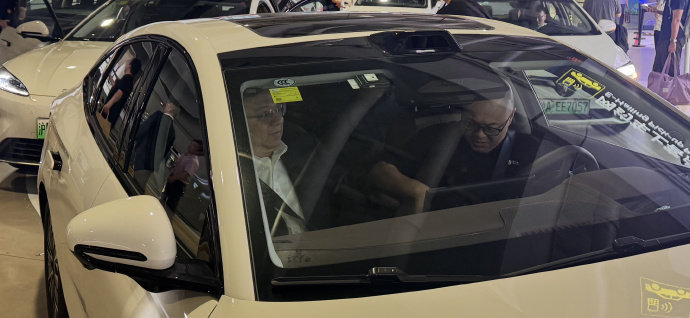
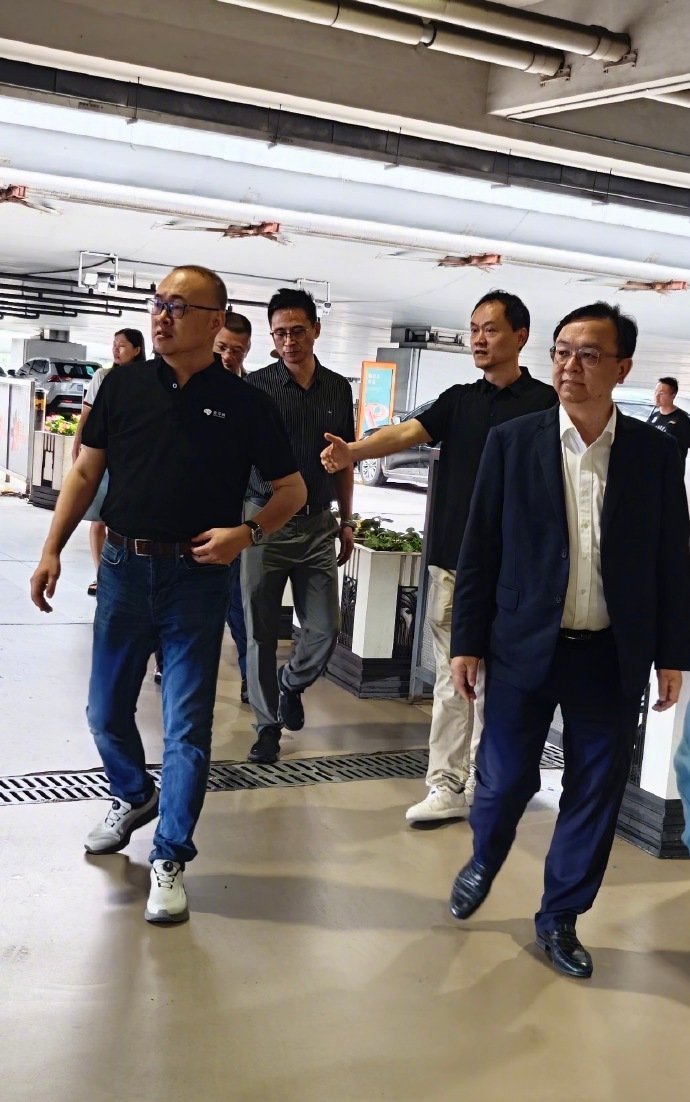
Wang Chuanfu, chairman of the world’s largest EV maker BYD, was recently photographed alongside Horizon Robotics founder and CEO Yu Kai, testing a BYD Seal equipped with the company’s autonomous driving system. The meeting between both companies’ top executives signals deeper collaboration ahead — and Yu’s cryptic comment about doing “something really, really big” has the industry paying close attention.
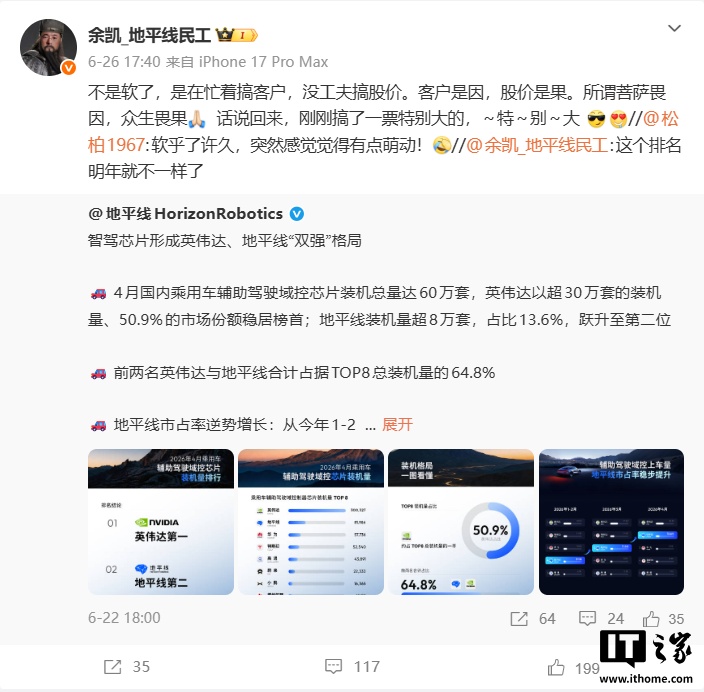
Yu Kai, responding on social media to questions about his company’s stock performance and upcoming plans, wrote: “Not soft — busy with clients, not stock prices. Clients are the cause, stock is the effect. Speaking of which, we just pulled off something really, really big. R-e-a-l-l-y b-i-g.”
The comment came after Horizon’s stock dropped over 7% in late May, when BYD announced its own 4nm “Xuanji A3” smart driving chip with over 700 TOPS of computing power. The market worried BYD might reduce reliance on Horizon’s chips. But the two companies’ relationship appears far from over — if anything, it’s deepening.
Horizon remains BYD’s primary supplier for its “God’s Eye C” autonomous driving system, shipping roughly 2.5 million units of its Journey 6 chip in 2025 alone. BYD needs to cover a vehicle lineup spanning from 70,000 yuan (about $9,600) to well over a million yuan. Its self-developed chip targets high-end models, but the company still requires cost-effective third-party solutions for mass-market vehicles.
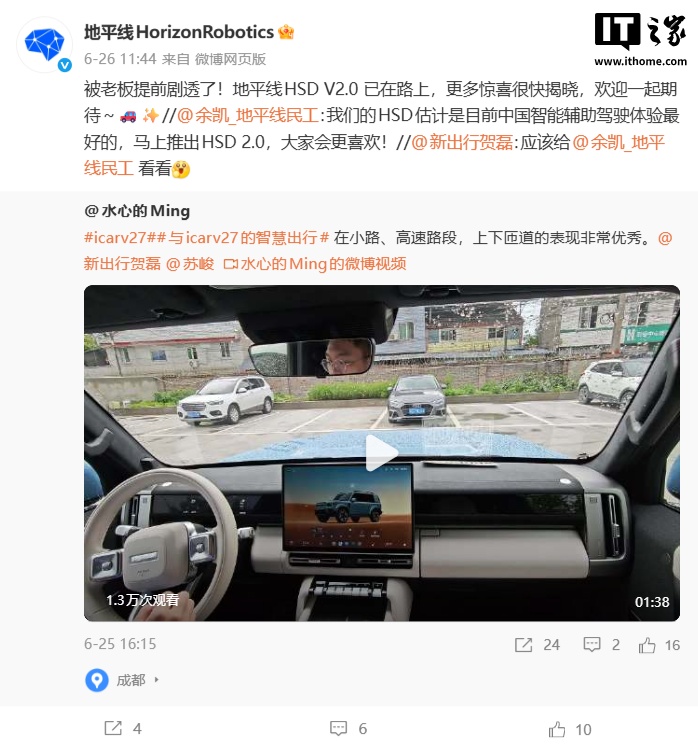
Yu claims Horizon’s HSD is currently the best assisted driving system in China, and HSD 2.0 — a full-scenario urban navigation system — could debut on BYD vehicles first.
The strategic logic is straightforward. Horizon’s “Xingkong” cabin-drive fusion chip can save automakers 1,500 to 4,000 yuan per vehicle in hardware costs, a significant advantage for BYD’s push to make advanced smart driving accessible across its entire lineup. BYD’s in-house “Didixia” and Horizon’s “Kakaxia” vehicle intelligence systems may eventually converge or co-develop.
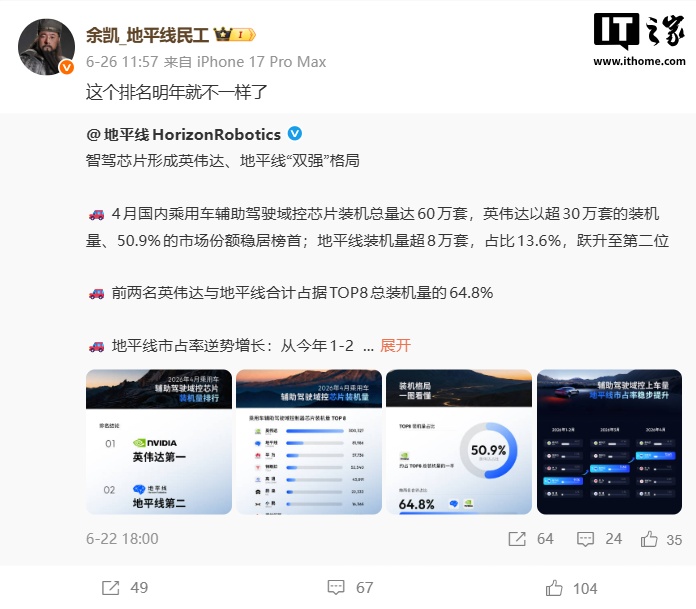
Industry data backs the momentum. In April 2026, Horizon ranked second in China’s passenger car ADAS domain control chip installations with over 80,000 units and a 13.6% market share. Nvidia led with over 300,000 units and a 50.9% share. “This ranking will look different next year,” Yu said bluntly.
This isn’t the first sign of closeness between the two. Wang Chuanfu reportedly spent over two hours at Horizon’s booth during the Beijing Auto Show in April, testing the company’s “Kakaxia” cockpit system. BYD executives followed up with multiple visits afterward.
For now, the mutual dependency is clear: Horizon needs BYD as its anchor customer to challenge Nvidia’s dominance, and BYD needs Horizon’s economies of scale for its volume models. That’s what makes this partnership — and whatever “really big” effort Yu alluded to — worth watching.