China's Strictest EV Battery Safety Standard Just Went Live — Chery Is Already On Board
China’s new mandatory battery safety standard — widely described as the toughest in the world for electric vehicles — went into effect on July 1. Hours later, Chery became one of the first automakers to publicly guarantee compliance across its entire lineup.
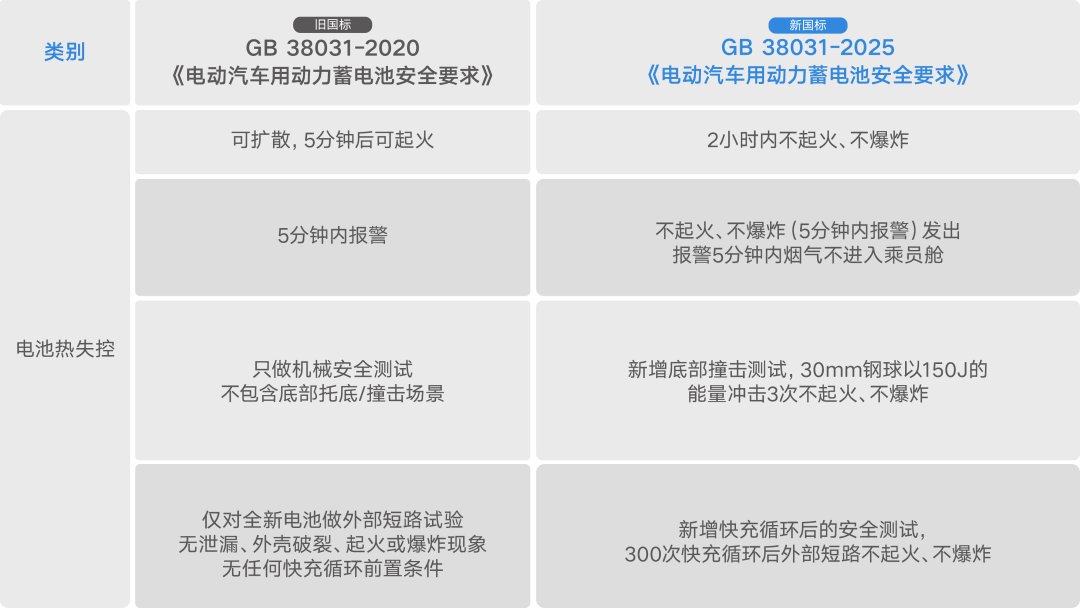
The regulation, officially designated GB38031-2025, rewrites the rules on what happens when an EV battery fails. Under the old standard, a battery pack only needed to give occupants five minutes of warning before catching fire or exploding. The new requirement: zero fire, zero explosion for at least two hours after thermal runaway begins. That’s a 24× improvement in the observation window.
The standard also introduces two tests that didn’t exist before. A bottom impact test fires a 30mm steel ball at the battery pack with 150 joules of energy — three times, no fire permitted. And a fast-charge endurance test requires a battery to survive 300 rapid charging cycles, then pass a short-circuit test without igniting.
These aren’t theoretical benchmarks. China accounted for roughly 60% of global EV sales in 2025, and battery fires — though statistically rare — have become a flashpoint for consumer confidence. The new standard closes what safety advocates called a glaring gap: the old “5-minute rule” assumed drivers had time to pull over and escape, but said nothing about preventing the fire itself.
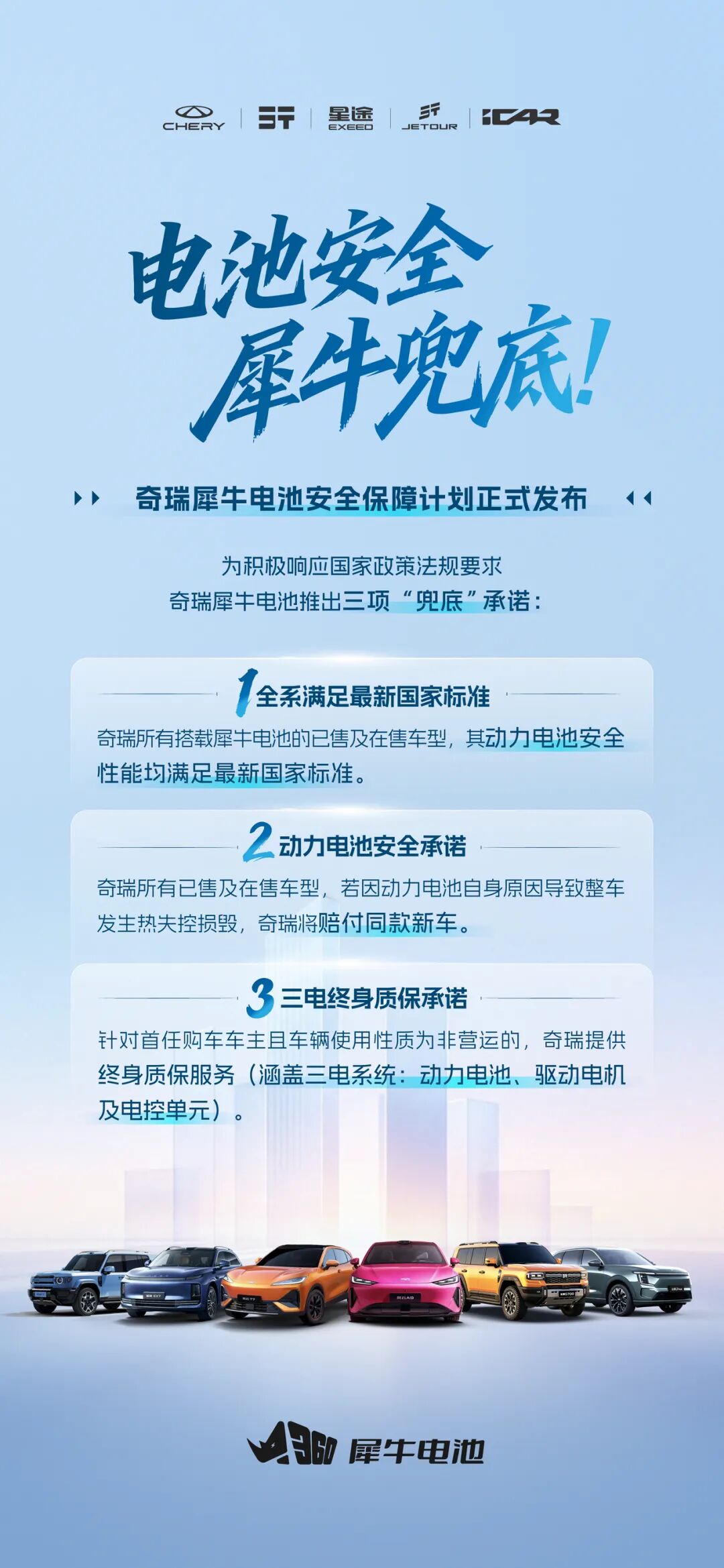
Chery’s response came the same evening. The automaker’s Rhino Battery Safety Assurance Plan makes three concrete promises. First, every Chery vehicle sold or currently on sale — if equipped with a Rhino battery — meets the new national standard. Second, if a battery defect causes thermal runaway that destroys the car, Chery will replace it with a new vehicle of the same model. Third, first owners with non-commercial vehicles get lifetime warranty coverage on the full three-electric system: the battery pack, drive motor, and electronic control unit.
The lifetime warranty on the so-called “three-electric” system is not trivial. Battery replacement costs can run $8,000 to $20,000 depending on the vehicle, and range degradation over time remains one of the biggest anxieties for EV buyers in China. By tying that warranty to compliance with GB38031-2025, Chery is betting that safety assurance — backed by a tangible replacement guarantee — is a competitive advantage.
The timing is deliberate. China’s Ministry of Industry and Information Technology had signaled the tougher standard for over a year, giving automakers time to redesign battery enclosures, improve thermal management, and reinforce underbody protection. The July 1 enforcement date gave the industry a hard deadline, and most major manufacturers had already certified their current-generation packs.
Still, Chery’s public pledge stands out. Most automakers have quietly met the standard in engineering documents. Few have turned compliance into a marketing event with a vehicle-replacement guarantee attached. Whether competitors follow suit — or whether consumers will notice the difference — will play out over the next year as the first GB38031-tested cars enter the used market and the real-world data starts coming in.