China's Gravity-1 Rocket Is Launching From the Sea Next Week
There’s a quiet buildup in Chinese commercial spaceflight, and the next big moment is scheduled for July 22. Oriental Space’s Gravity-1 Y4 rocket will launch from a ship in the East China Sea, carrying six satellites into orbit.
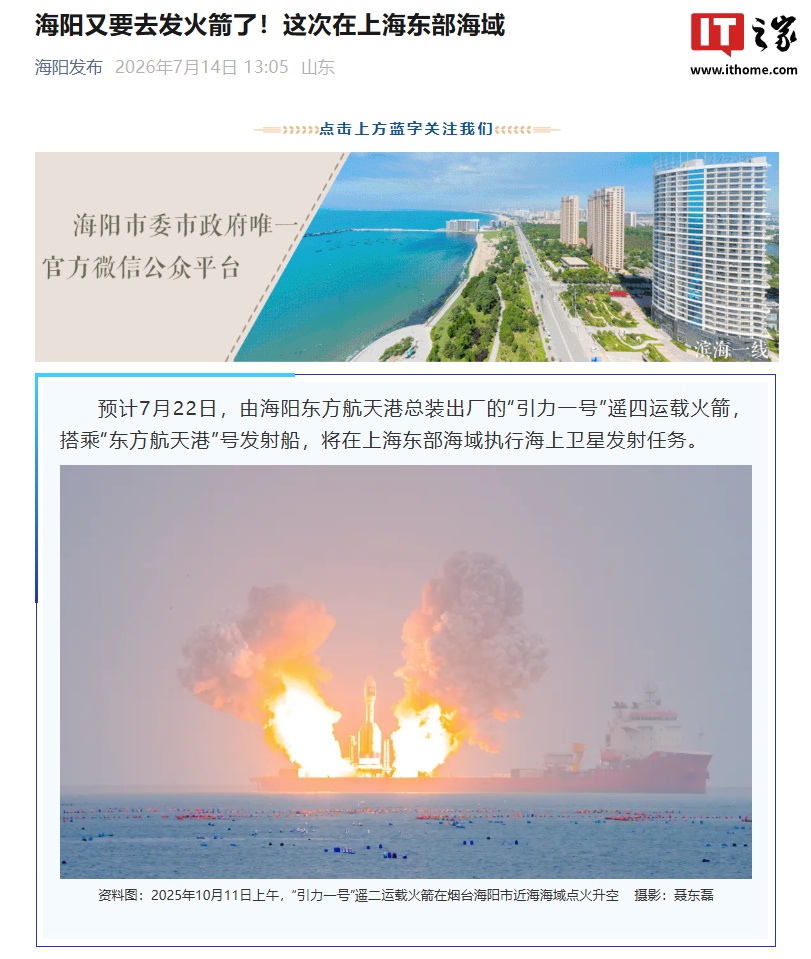
The rocket rolled off the assembly line at the Haiyang Oriental Aerospace Port and was loaded onto the “Oriental Aerospace Port” launch vessel. Gravity-1 is the world’s first all-solid bundled medium-lift rocket, strapping solid-fuel boosters together for extra thrust. The first one flew successfully in January 2024.
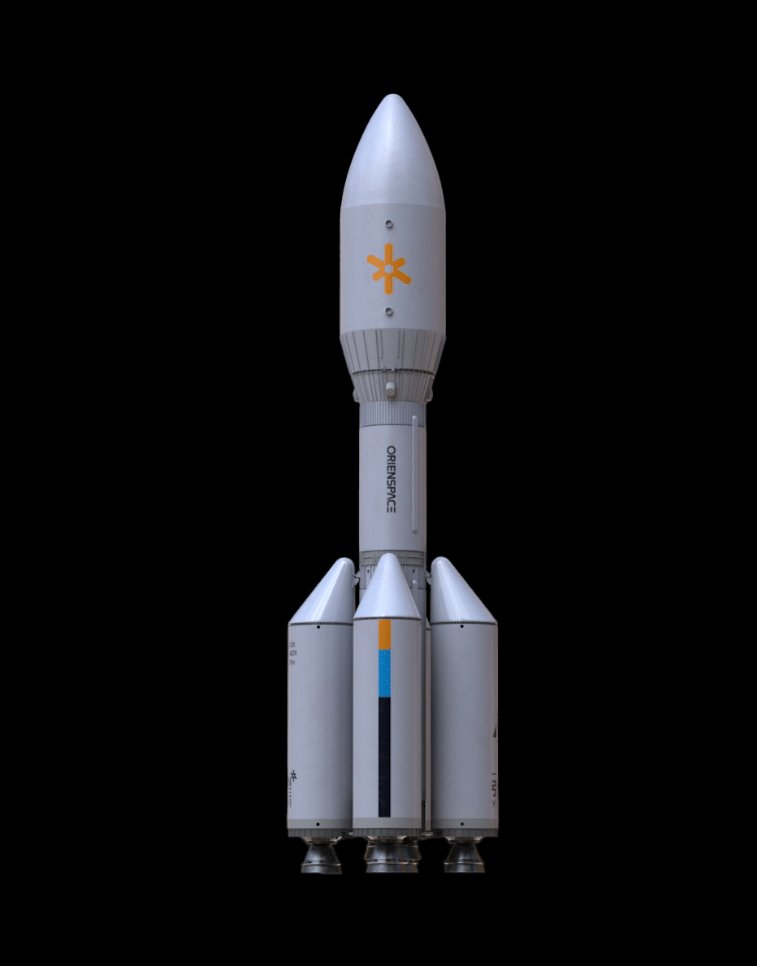
The specs are straightforward. The rocket stands 29.4 meters tall, with a payload fairing diameter of 3.8 or 4.2 meters. It weighs 405 tons at liftoff and produces 600 tons of thrust. To low Earth orbit, it can carry 6.5 tons. To a 500 km sun-synchronous orbit, it handles 4.2 tons.
The payload for this mission is six “Dongpo” series satellites from Minospace, a Chinese microsatellite maker. These are part of the Huantian Constellation — an Earth observation network made up of two optical satellites and four synthetic aperture radar (SAR) satellites. SAR can image the ground in any weather, day or night, which makes the constellation useful for everything from disaster monitoring to agriculture.
Oriental Space, founded in 2020, builds and operates rockets for cargo transport. The company is based in Beijing and uses Haiyang’s coastal launch facilities. Sea-based launches offer flexibility that ground-based sites cannot match. China’s geography limits overland launch corridors — debris fall zones constrain most inland trajectories to narrow corridors — and launching from the ocean opens up a much wider range of orbital inclinations.
The Gravity-1 Y4 launch will be the company’s fourth mission and another step toward routine commercial sea launches, a capability only a handful of launch operators worldwide have demonstrated at this scale.