China's Long March 10B nails world-first net-based rocket recovery
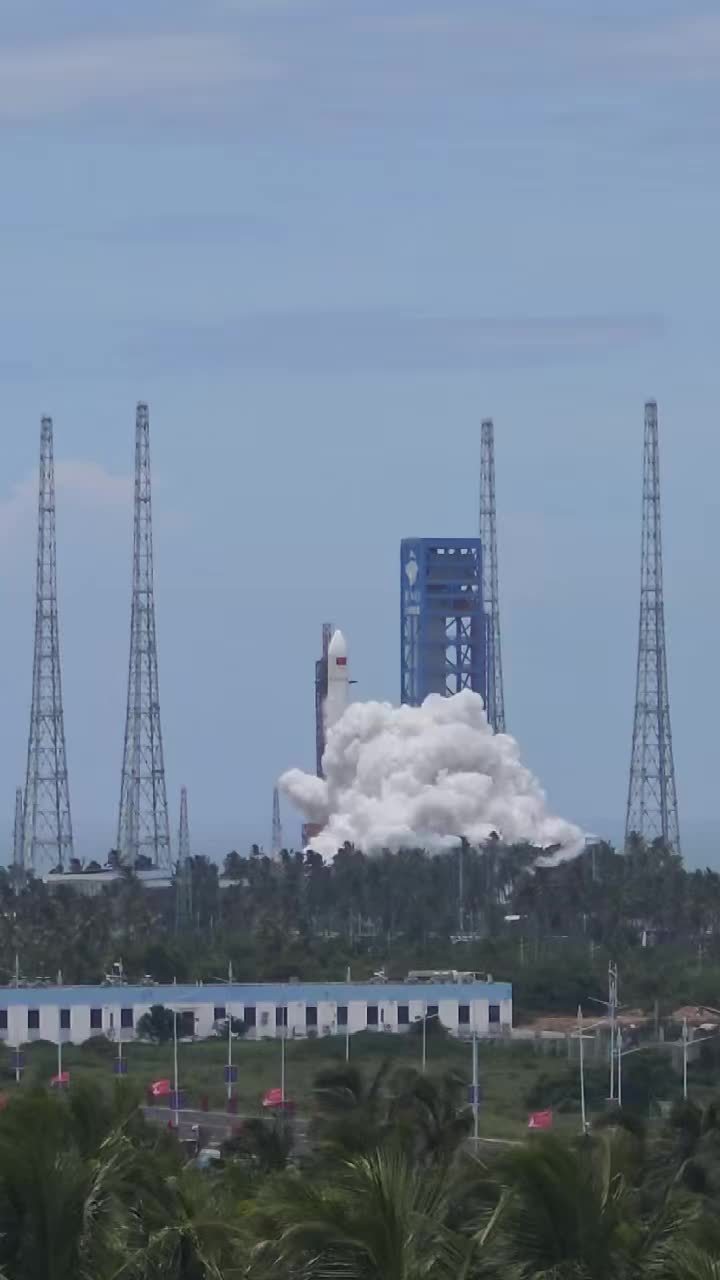
The world just saw a new way to catch a rocket. China's Long March 10B lifted off from the Hainan Commercial Space Launch Site on Friday and, roughly six minutes after its first stage separated, that booster pulled off a controlled vertical descent and touched down on an offshore recovery platform.
It was China's first successful controlled recovery of a rocket first stage. But more notably, it was the first time anyone has used a net-based system to catch a returning booster — a fundamentally different approach from SpaceX's landing-leg touchdowns on drone ships or launch pads.

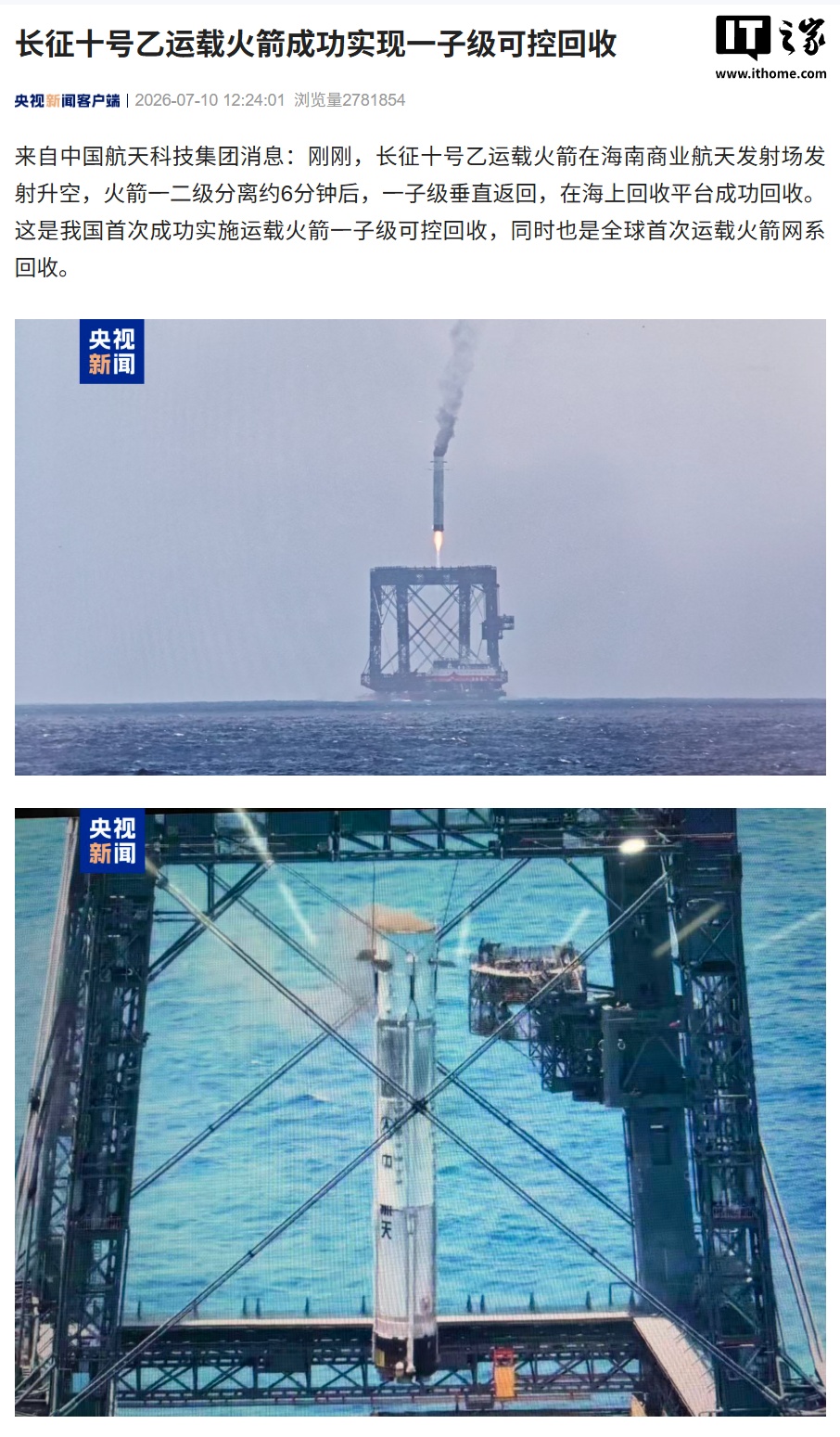
The Long March 10B is a two-stage reusable commercial cargo rocket developed by CASC's First Academy. It is a derivative of the Long March 10A, stripped of its crew-rated systems and repurposed for cargo. The rocket shares key technologies with China's crewed lunar landing program, including the same first-stage reuse architecture, a cluster of seven YF-100K engines firing in parallel, and a liquid oxygen-methane upper stage.
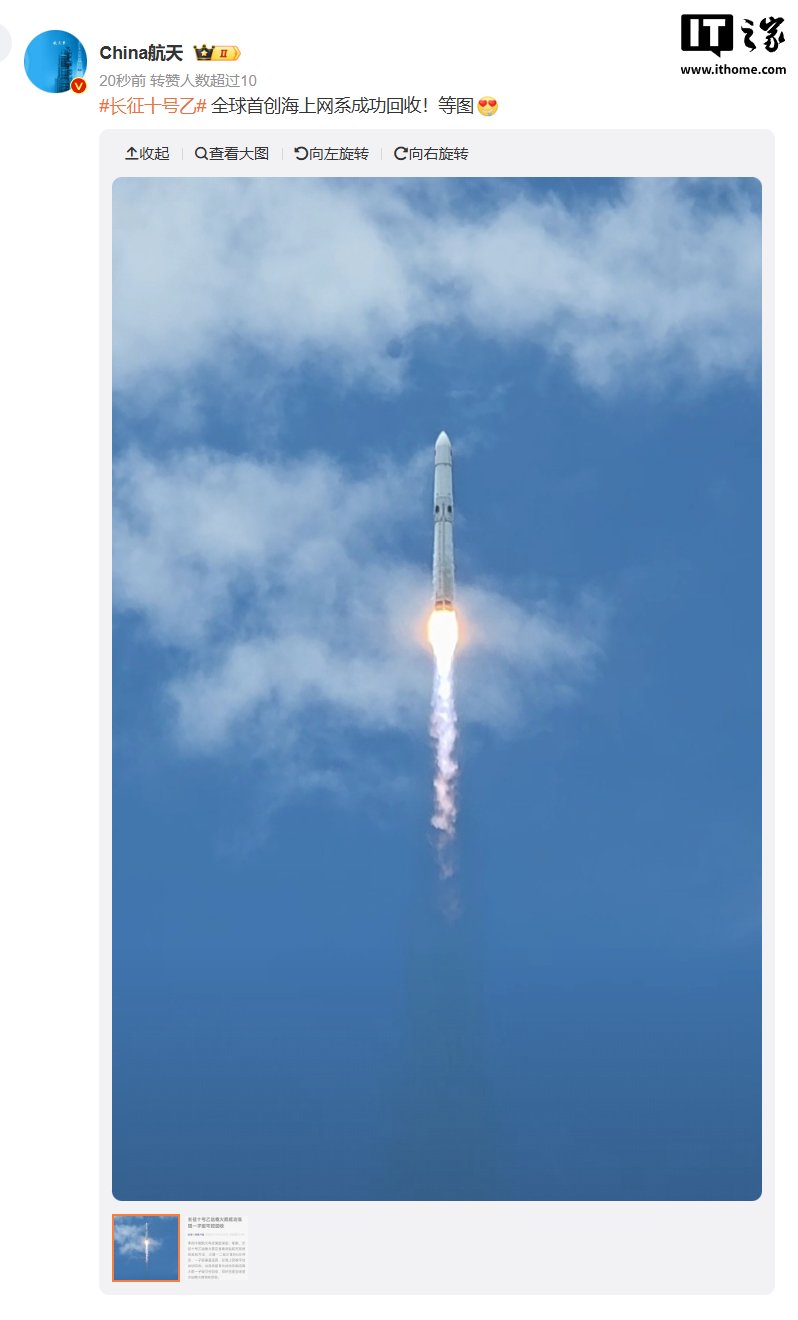
The recovery method is distinctly Chinese. Instead of landing legs, the Long March 10B has no legs at all. After the first stage completes its reentry burn, hooks deploy from the aft end of the booster. A dedicated recovery vessel — the Navigator, a 25,000-ton DP platform — stretches a giant damping net across the designated recovery zone. The booster flies into the net, the hooks engage, and the entire stage is brought to a controlled stop in one motion.
IT-NEWS has learned that the Long March 10B is designed for two primary roles: low-cost, high-frequency launches for LEO satellite internet constellations and large commercial satellites, and deep-space cargo delivery. It also functions as a technology verification platform for China's crewed lunar landing program, testing the reusable first stage and the seven-engine parallel cluster under real flight conditions.
The success puts China in a small club of nations that have demonstrated rocket reusability in flight — and gives the country a recovery method that no one else has tried at scale.