GAC and Huawei's Qijing GT7 Arrives With Level 3 Self-Driving and a 2.98-Second 0-60
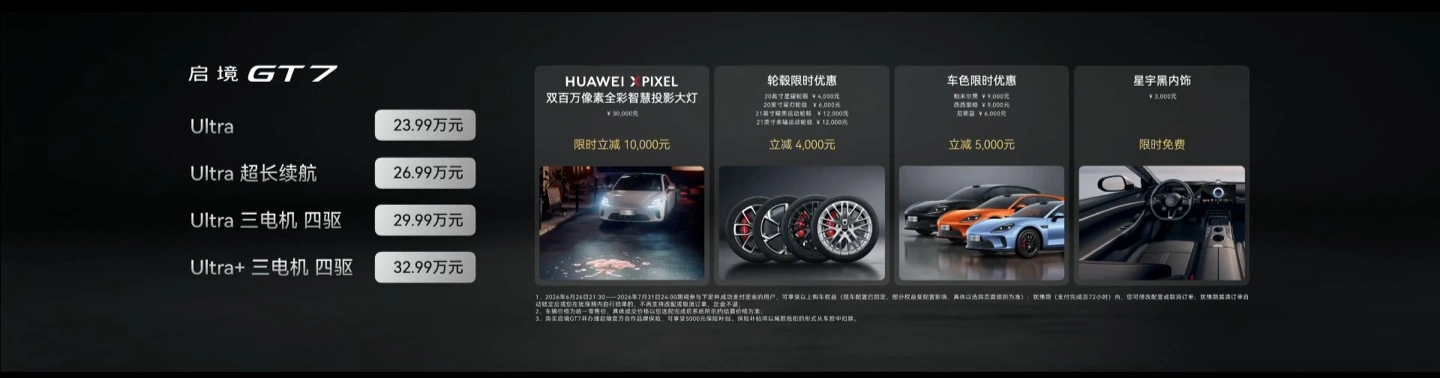
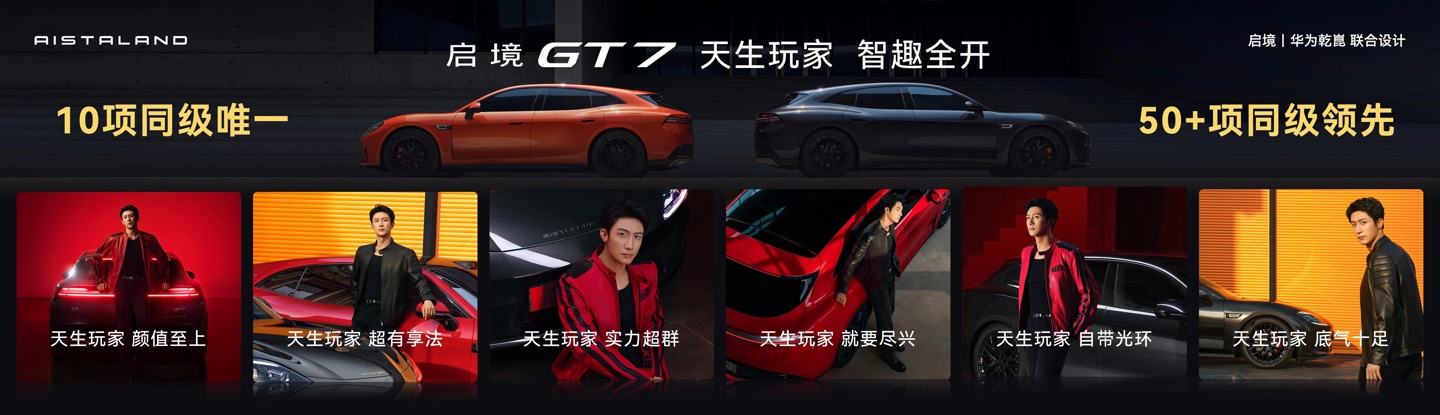
GAC and Huawei launched their first joint-brand vehicle Thursday — the Qijing GT7, a battery-electric shooting brake that’s also the first production car to ship Huawei’s newest ADS 5 autonomous driving system. Prices start at 209,900 RMB (roughly $29,000) and go up to 329,900 RMB for the fully loaded Ultra+ trim.
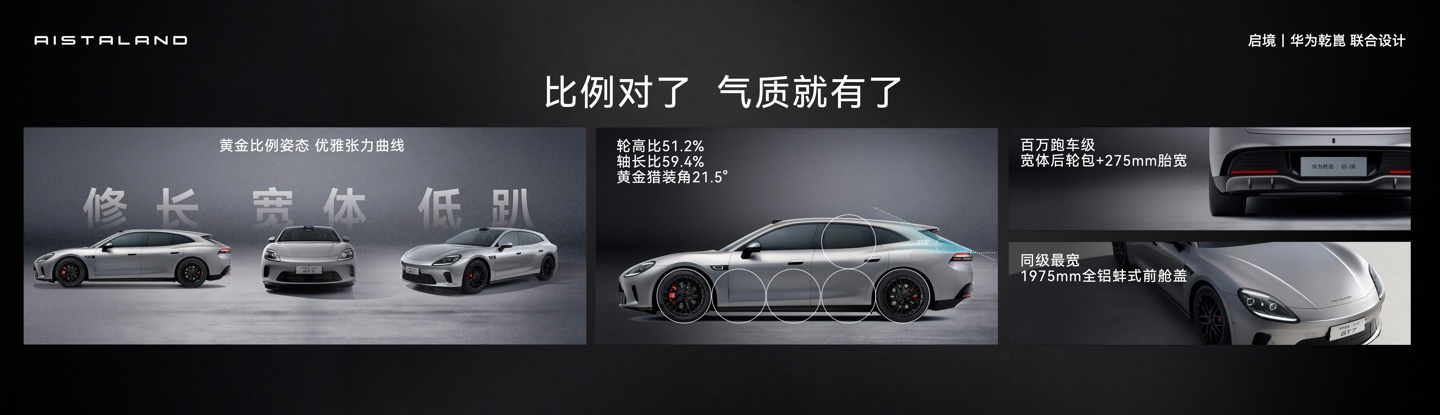
The GT7 is built on an 800-volt architecture and comes in five variants. The base standard edition is rear-wheel drive. Step up to one of the Ultra trims and you get a tri-motor all-wheel-drive configuration that pushes 0-100 km/h in 2.98 seconds — a number that puts it in genuine supercar territory. Braking is equally serious: the car stops from 100 km/h in under 33 meters.
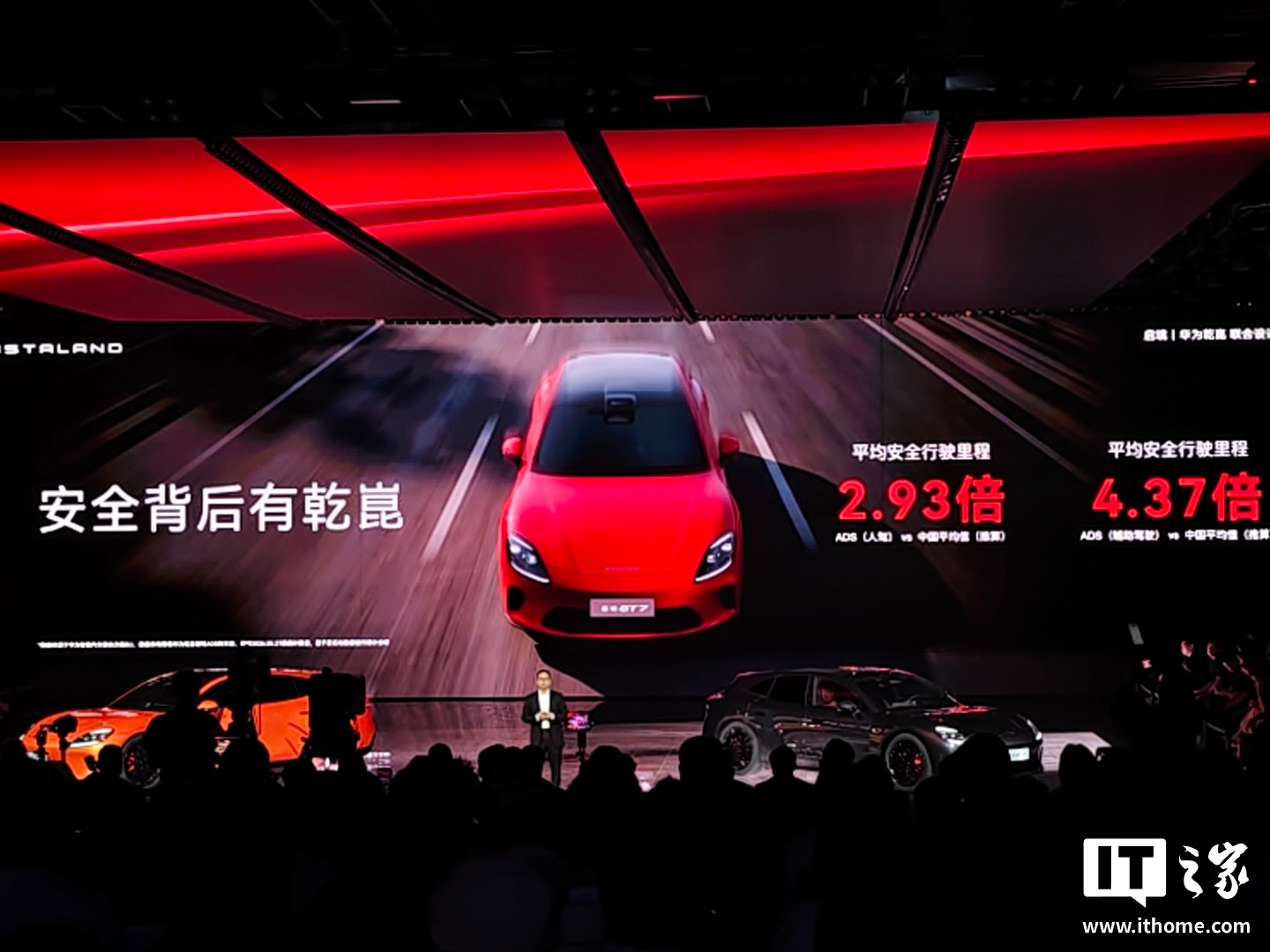
Huawei crammed most of its automotive tech stack into this thing. The ADS 5 system runs on 36 sensors — 11 cameras, five millimeter-wave radars, 12 ultrasonic sensors — but the headline component is an 896-line dual-optics image-grade LiDAR. Huawei claims the resolution is 400 percent higher than conventional LiDAR, and that it can reliably detect small obstacles at 120 meters even in rain or fog. The car has already logged 200,000 kilometers of L3-level road testing and received a Level 3 autonomous driving road test permit in Guangzhou.
The interior has a 21-speaker 7.1.4 HUAWEI SOUND system with AI tuning, an 88-inch augmented-reality head-up display, and a “Star Ring” AI assistant that responds to vague voice commands — tell it you’re hungry and it’ll find a restaurant, navigate there, and order without you touching a screen. The assistant also physically nods and shakes its head when it talks.
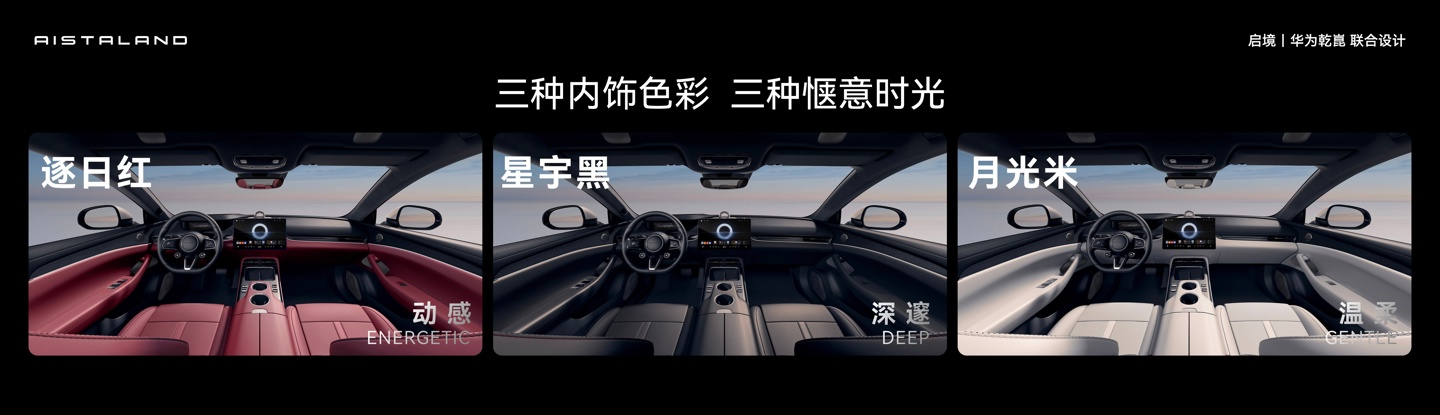
Both front seats are zero-gravity style with 16-way power adjustment and 10-point massage. Fold the rear seats flat and you get a 1.9-meter-long cargo area. The trunk itself holds 647 liters standard, or 1,606 with the seats down. There’s also a 215-liter frunk and 37 smaller storage compartments scattered around the cabin.
Power comes from a jointly-developed CATL Qilin battery pack available in 86.1 kWh and 102.8 kWh capacities. Range varies by configuration — the longest-rated version manages 900 km on the CLTC cycle. The 6C ultra-fast charging supports “a kilometer per second,” per the company’s marketing, which is refreshingly specific for a charging claim.
The chassis uses a front double-wishbone and rear H-arm multi-link suspension, with dual-chamber air springs and continuously adjustable dampers as standard. Huawei’s XMC digital chassis engine — the same system used in the ultra-luxury Jie-S S800 — coordinates drive, brake, steering, suspension, body control, and thermal management at millisecond intervals.
Huawei also integrated its own headlight tech: the front lamps are million-pixel HUAWEI XPIXEL matrix projectors that can project graphics onto the road, and the “Sapphire Wings” taillight array uses 526 individual LEDs in a segmented diffuser layout.
The Qijing GT7 already holds the production-car lap record at Tianmen Mountain, with a 9:29.14 run. GAC and Huawei plan to have 300 retail locations across 70 Chinese cities operational by the end of this month, split between Huawei-authorized experience centers and Qijing-owned service hubs.
What’s notable here is how much technology Huawei is shipping on a car that starts at $29,000. The ADS 5 hardware suite alone — particularly that 896-line LiDAR — is typically found on vehicles costing two or three times as much. That pricing strategy is going to put pressure on BMW, Nio, and Xpeng, all of which offer similar ADAS capabilities, but at higher price points.