Li Auto opens first fully automatic EV charging station — robot arm handles the cable
There’s a quiet arms race happening in EV charging, and Li Auto just raised the stakes. On June 25, the company published its Q2 2026 supercharging operations report — but the headline isn’t about numbers (though those are impressive). It’s about a new charging station that does something no other production station in China does: plug itself in.
Li Auto has opened what it calls the industry’s first fully automatic charging station. The car navigates into the bay and parks itself. A robotic arm swings over and inserts the charging gun. The driver never steps out of the car. When charging finishes, the arm unplugs and retracts on its own.
For anyone who’s fumbled with a heavy charging cable in rain, snow, or freezing temperatures, the appeal is obvious. Conventional EVs still require the driver to manually plug and unplug the gun, which is exactly the kind of friction automakers have been trying to eliminate. Li Auto’s solution relies on a vehicle-station-cloud coordination system. The car communicates its position to the station, which directs the robotic arm — the cloud handles the authentication handshake.
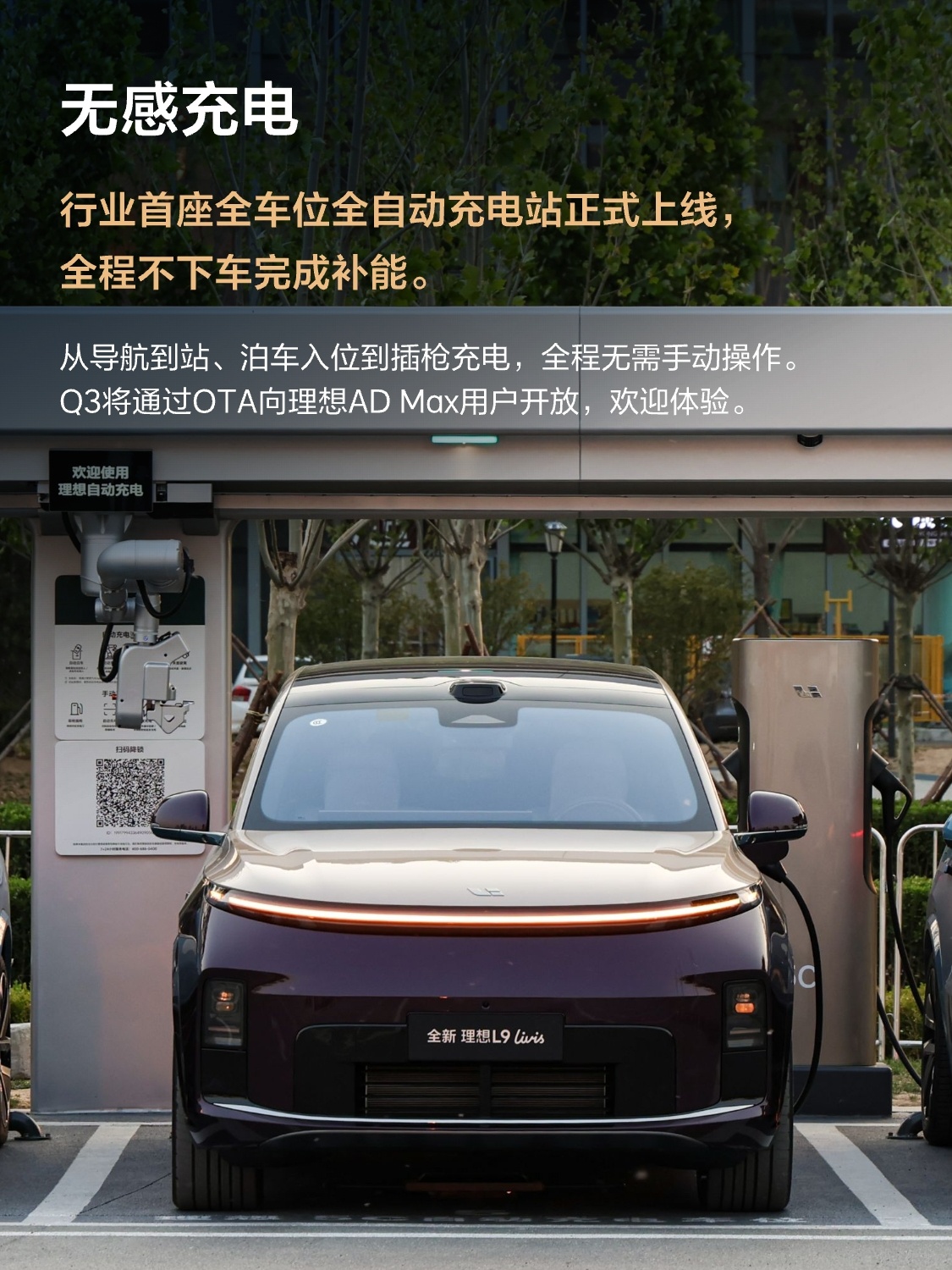
For now, the system works with the 2026 Li L9. The automatic charging feature will roll out to all AD Max-equipped vehicles via an over-the-air update in Q3 2026.
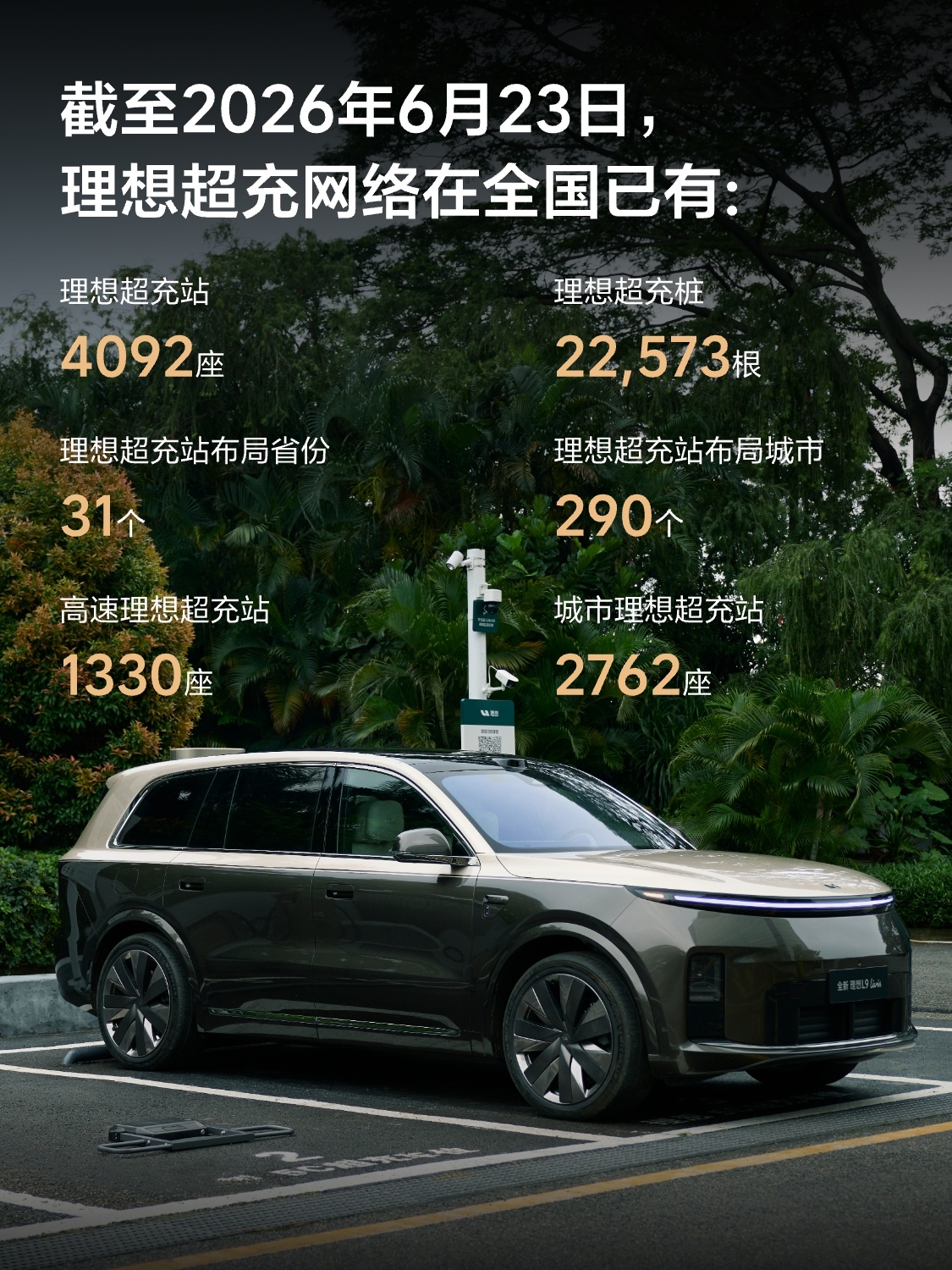
The broader charging numbers are worth noting, too. As of June 23, Li Auto’s supercharging network had handled over 39 million charging sessions and crossed 1 billion kilowatt-hours of cumulative charging. The company now operates 4,092 stations with 22,573 charging posts across 31 provinces and 290 cities. Of those, 5C ultra-fast chargers — capable of adding significant range in minutes — now exceed 5,000 units, with more than 600 stations equipped with 5C chargers exclusively.

On highways, Li Auto’s network covers 160 routes totaling over 100,000 kilometers. During the May Day holiday, its highway chargers accounted for more than 15% of all highway charging volume nationwide — a striking number for a single automaker’s proprietary network.
Li Auto has also expanded access through third-party platforms. An Alipay mini-program launched, dedicated charging cards are available on JD.com, and the Amap navigation app now supports QR-code charging at Li Auto stations.
The automatic charging station is still in its early days — just one location, and only one model fully supported. But it signals where Li Auto thinks the charging experience needs to go. The cable is the last physical chore in EV ownership. Getting rid of it matters most on a rainy night when you just want to get inside.