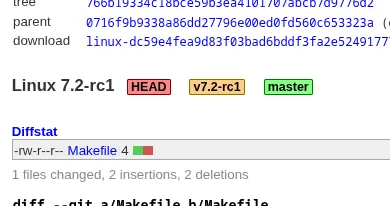
Linux 7.2-rc1 goes live with cache-aware scheduling, tops 43 million lines of code
Linux 7.2-rc1 is out, and it’s the kind of release that tells you two things at once: how fast the kernel keeps growing, and where the next wave of performance work is really focused.
Linus Torvalds opened the merge window two weeks ago, closed it this weekend, and the numbers are in. The kernel now sits at over 43 million lines of code. About a third of that delta comes from a single source: AMD submitted a fresh batch of header files packed with GPU register definitions for their ever-expanding hardware lineup. The rest covers the usual ground — architecture updates, tooling improvements, and documentation.
The headline feature this cycle is Cache Aware Scheduling. It’s a scheduler enhancement designed to be smarter about how processes get assigned to cores based on cache topology. The kernel now has a better sense of which CPU caches are shared, which are private, and how to place workloads to minimize cache misses. For anyone running modern multi-CCD AMD chips or Intel’s hybrid architectures, this should translate into more consistent performance under load.
Beyond scheduling, Linux 7.2 brings a stack of performance optimizations across the board, along with fixes for the newer NTFS driver. Intel contributed USB4 STREAM support, adding functional tagging for isochronous USB4 transfers. On the AMD side, the ISP 4 driver lands for integrated image signal processing, and there’s preliminary support for AMDGPU HDMI 2.1 FRL — the Fixed Rate Link mode needed for higher refresh rates and deeper color at 4K and above over HDMI.
The release candidate will spend the next eight weeks in testing before a stable 7.2 ships. Once it does, expect to see it as the default kernel in Fedora 45 and Ubuntu 26.10, among others.
Torvalds, as usual, kept his merge-window summary short: “Two weeks have passed and the merge window is over. At least everything looks fairly normal (hopefully).” For a kernel that now clocks 43 million lines and counting, “normal” is a win.