Meta's next MTIA AI chips will use Samsung's 2nm process
Meta’s custom AI chip roadmap is taking a sharp turn. After two generations built on TSMC’s process technology, the company’s next MTIA accelerators will be manufactured by Samsung Foundry using its 2nm node — and the partnership goes far beyond simple wafer orders.
South Korean media outlet SEDaily reports that Meta has selected Samsung’s 2nm process for upcoming chips in its MTIA (Meta Training & Inference Accelerator) family. The total order value exceeds 10 trillion KRW, roughly $7.8 billion.
That’s a significant win for Samsung Foundry, which has been trying to land a major external AI chip customer as TSMC continues to dominate the market for leading-edge silicon.
The deal wasn’t just about pricing. Meta and Samsung’s System LSI business are collaborating at the chip architecture level, working together to hit what the companies describe as a six-month iteration cycle — an unusually aggressive cadence for custom silicon. Getting to tapeout in half the usual time requires deep coordination between the chip designer and the foundry from the earliest stages of floorplanning and power delivery.
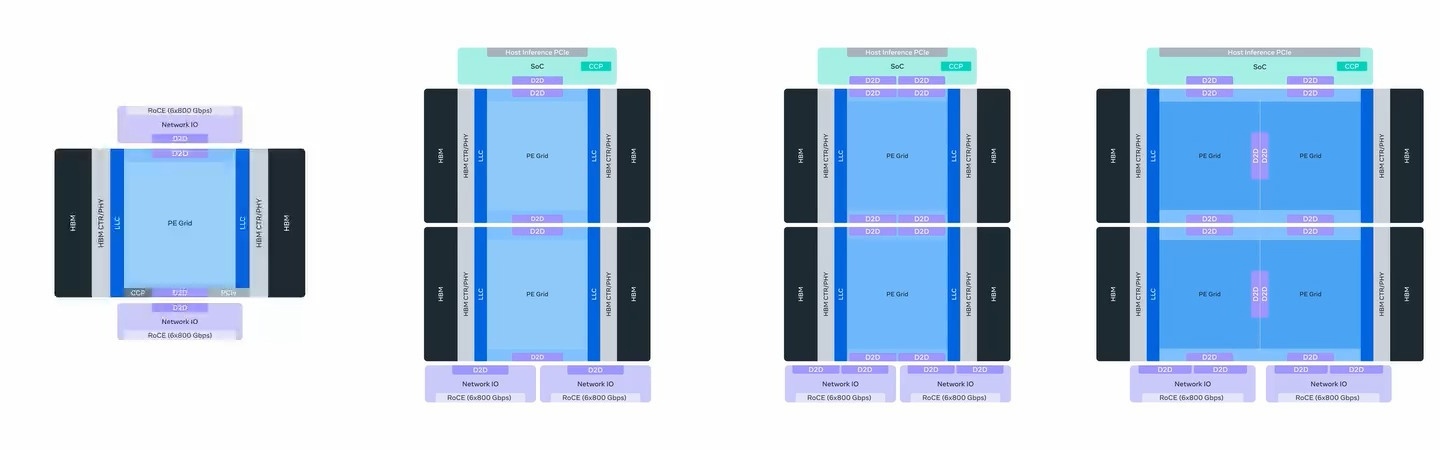
Meta laid out its AI silicon ambitions in March 2026 with a two-year, four-generation plan. The MTIA 300 was already in production at the time. The MTIA 400 was heading into data center deployment. An inference-optimized MTIA 450 is expected to hit large-scale deployment in early 2027, followed by the MTIA 500 in 2028.
The first two MTIA generations — the original MTIA 100 and the MTIA 200 — were both fabbed by TSMC. Moving to Samsung for the next wave signals that Meta sees value in diversifying its foundry supply, especially as AI chip demand strains capacity across the industry.
Samsung’s 2nm node promises higher transistor density and better power efficiency — both critical for AI workloads that push silicon to its limits. Whether Samsung can deliver competitive yields on time remains the open question. But the depth of the architectural collaboration suggests both sides are treating this as more than a trial run.