Moonshot AI's K2.7 Code HighSpeed goes permanent — 5x faster, 3x the cost
Fast models cost more. That’s the trade-off Moonshot AI is betting on with the latest update to its Kimi Code platform — making the high-speed variant of its K2.7 Code model a permanent, always-available option instead of a temporary beta feature.
Allegretto subscribers and above can now call K2.7 Code HighSpeed directly from Kimi Code CLI without any additional application process. The catch: it burns through Coding Plan credits three times faster than the standard model.
The high-speed mode runs the exact same model as the standard K2.7 Code — but at 5 to 6 times the output velocity. On typical programming tasks, Moonshot says it delivers roughly 180 tokens per second at median input length, and up to 260 tokens per second on shorter contexts. That’s fast enough that code completions feel near-instantaneous rather than a pause-and-wait interaction.
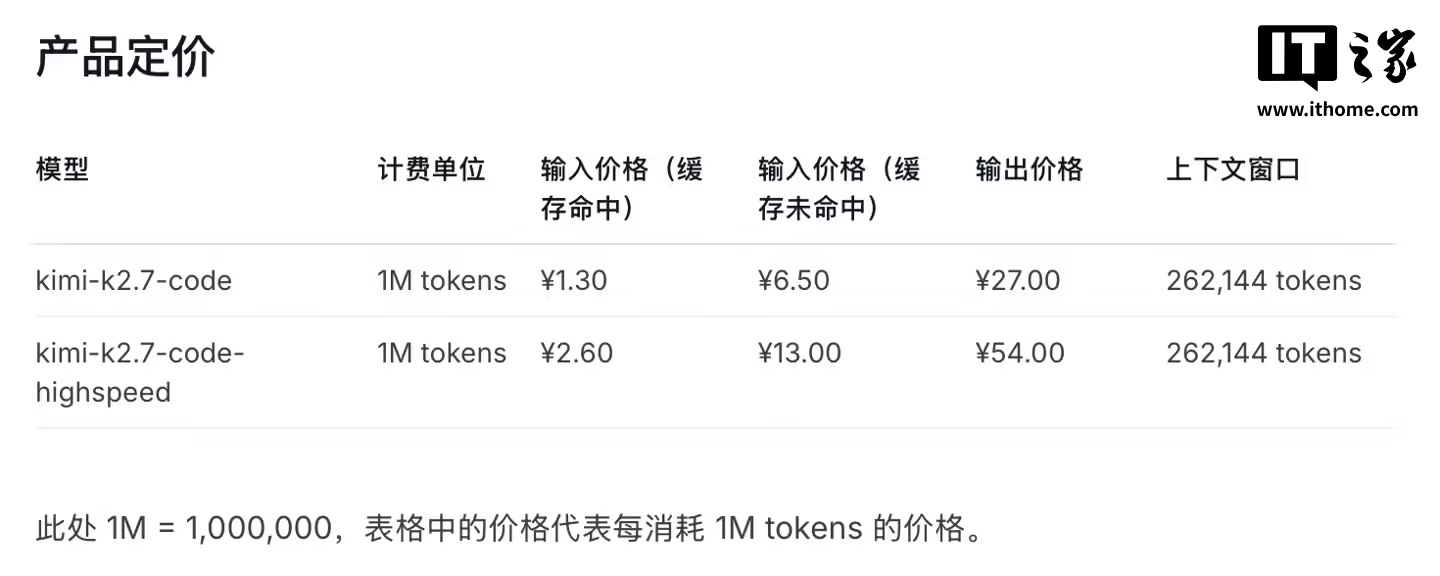
The pricing reflects the speed premium. K2.7 Code HighSpeed costs exactly double the base model: 13 yuan per million tokens for standard input, 54 yuan for output. Cache-hit input drops to 2.6 yuan. Whether the throughput justifies the markup depends heavily on the workflow — rapid iteration and large refactors where latency compounds, probably yes; one-off queries where a two-second wait is fine, probably not.
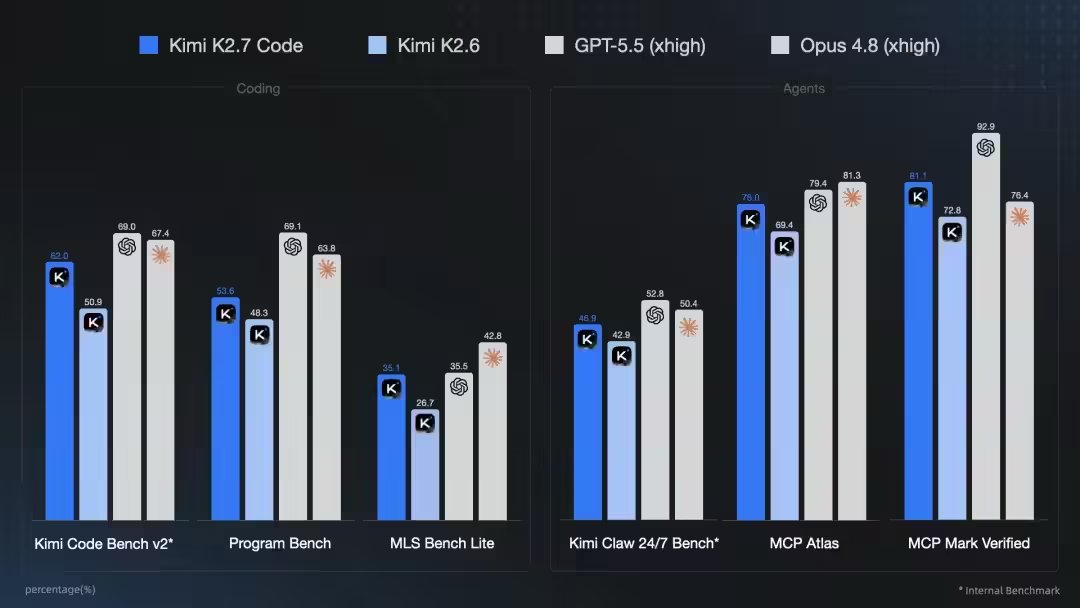
Moonshot shipped the original K2.7 Code on June 12, positioning it as a purpose-built coding model. Internal and external benchmarks show significant improvements over the K2.6 predecessor: better instruction-following in long-context programming scenarios, stronger performance on extended coding tasks, and — notably — a sharp reduction in overthinking. The model now burns roughly 30% fewer tokens on average, which partly offsets the higher-speed tier’s credit cost.
The high-speed tier is Moonshot’s answer to a growing expectation in the AI coding space: that tools should keep pace with the developer, not the other way around. With GitHub Copilot, Cursor, and Claude Code all competing on latency and quality, the margin between “fast enough” and “frustratingly slow” has narrowed to a handful of tokens per second.
Whether developers will pay double for that margin is the open question.