NVIDIA Says Its Next-Gen Kyber AI Rack Is Still On Track for 2027
NVIDIA is pushing back hard against rumors that its next-generation AI server rack platform could be delayed by a full year.
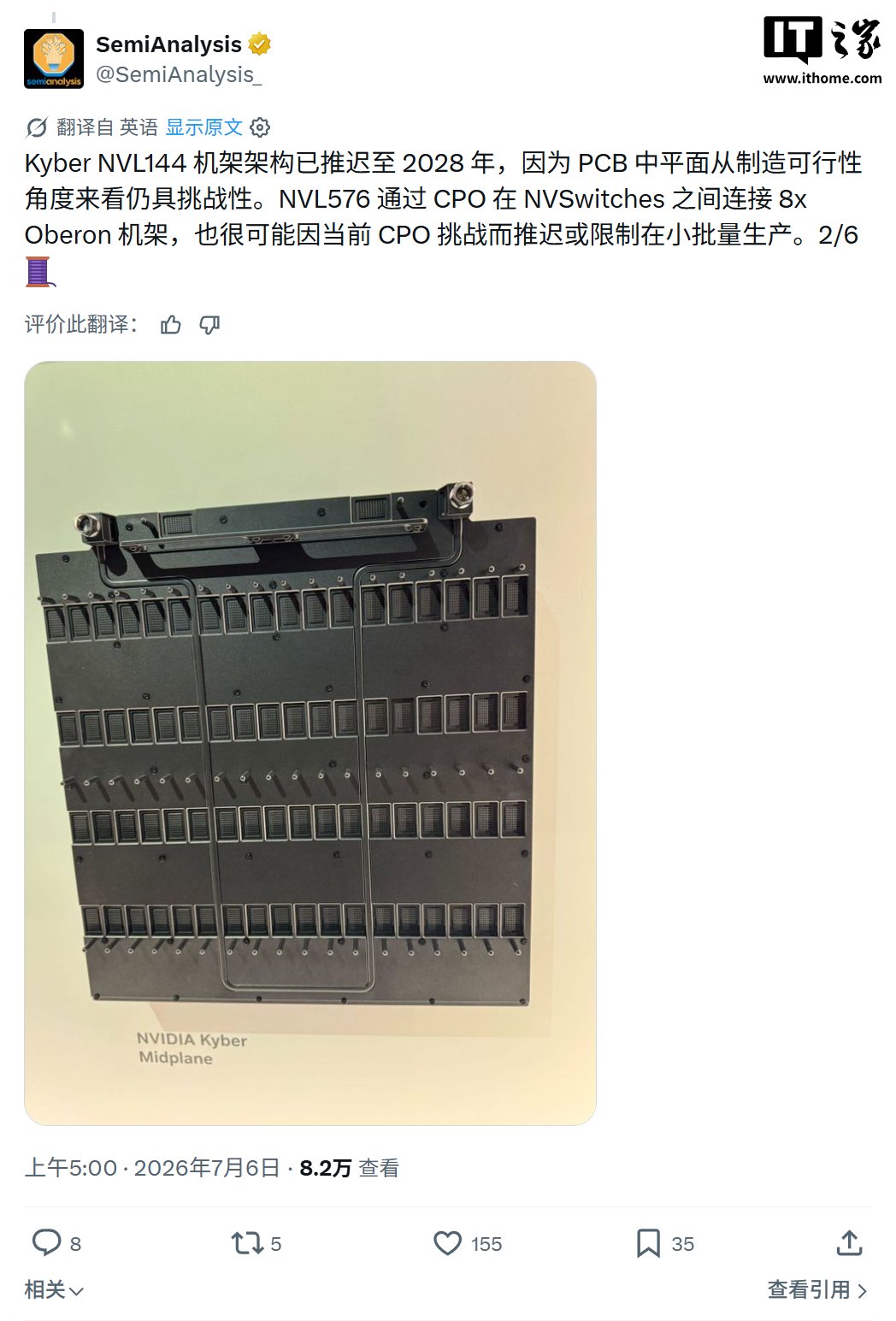
The company told IT-NEWS on Tuesday that its roadmap remains unchanged after a report from SemiAnalysis — cited by DataCenterDynamics — suggested the Kyber rack system might not ship until 2028 due to manufacturing issues with PCB interposer substrates.
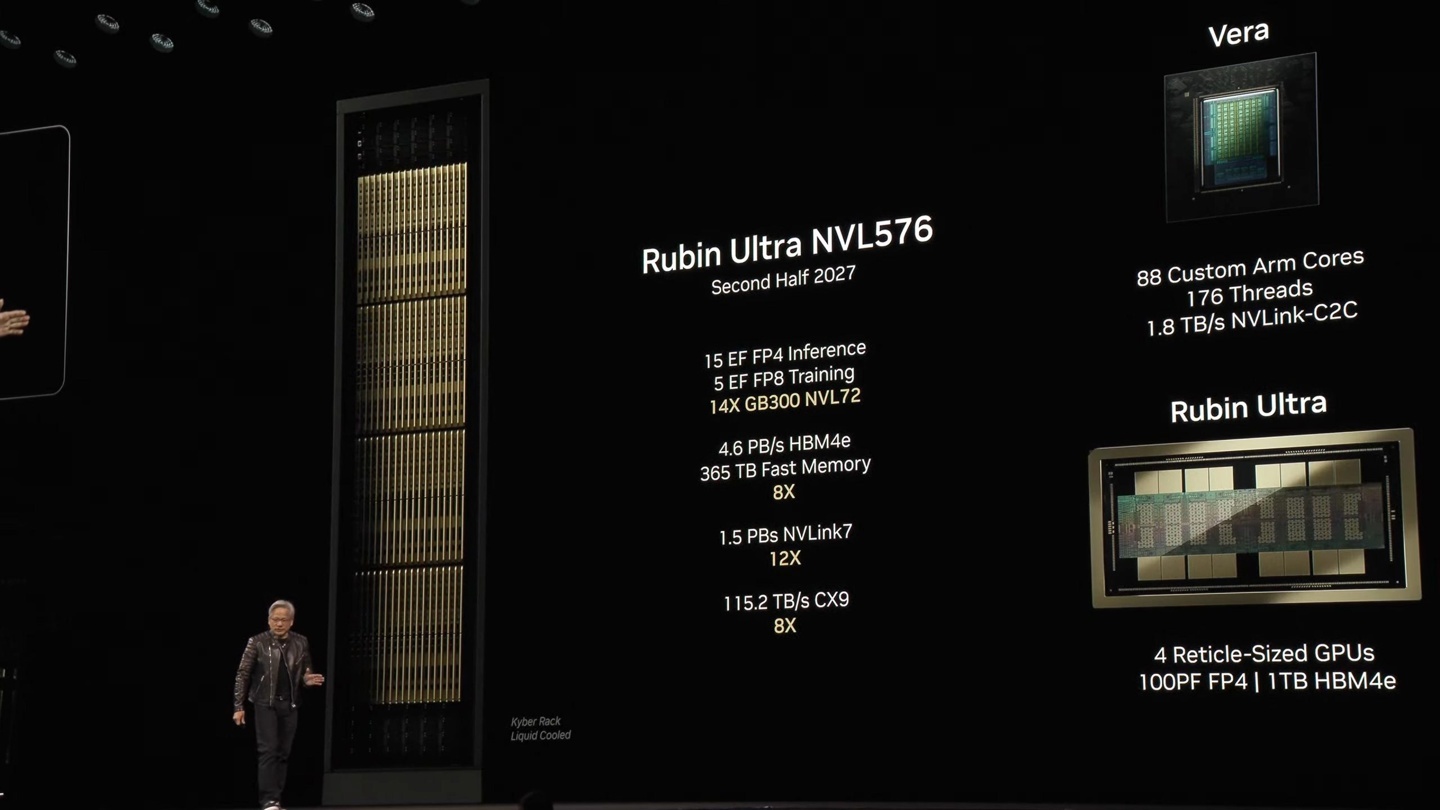
Kyber NVL144 is NVIDIA’s flagship AI supercomputer rack system for the upcoming Vera Rubin Ultra GPU architecture, built around a design that looks nothing like the rack systems that came before it. Unlike the horizontal blade layouts used in previous generations, Kyber uses a vertical plug-in design with orthogonal backplane technology that lets it squeeze 144 GPUs into a single cabinet with much shorter signal paths between them.
The business stakes are enormous. AI hyperscalers — Microsoft, Meta, Google, and the rest — are spending tens of billions of dollars on NVIDIA hardware this cycle, and any delay at the top of the GPU food chain ripples through their entire datacenter buildout plans. A year-long slip would force them to either wait or rebalance their orders toward current-generation Hopper and Blackwell systems.
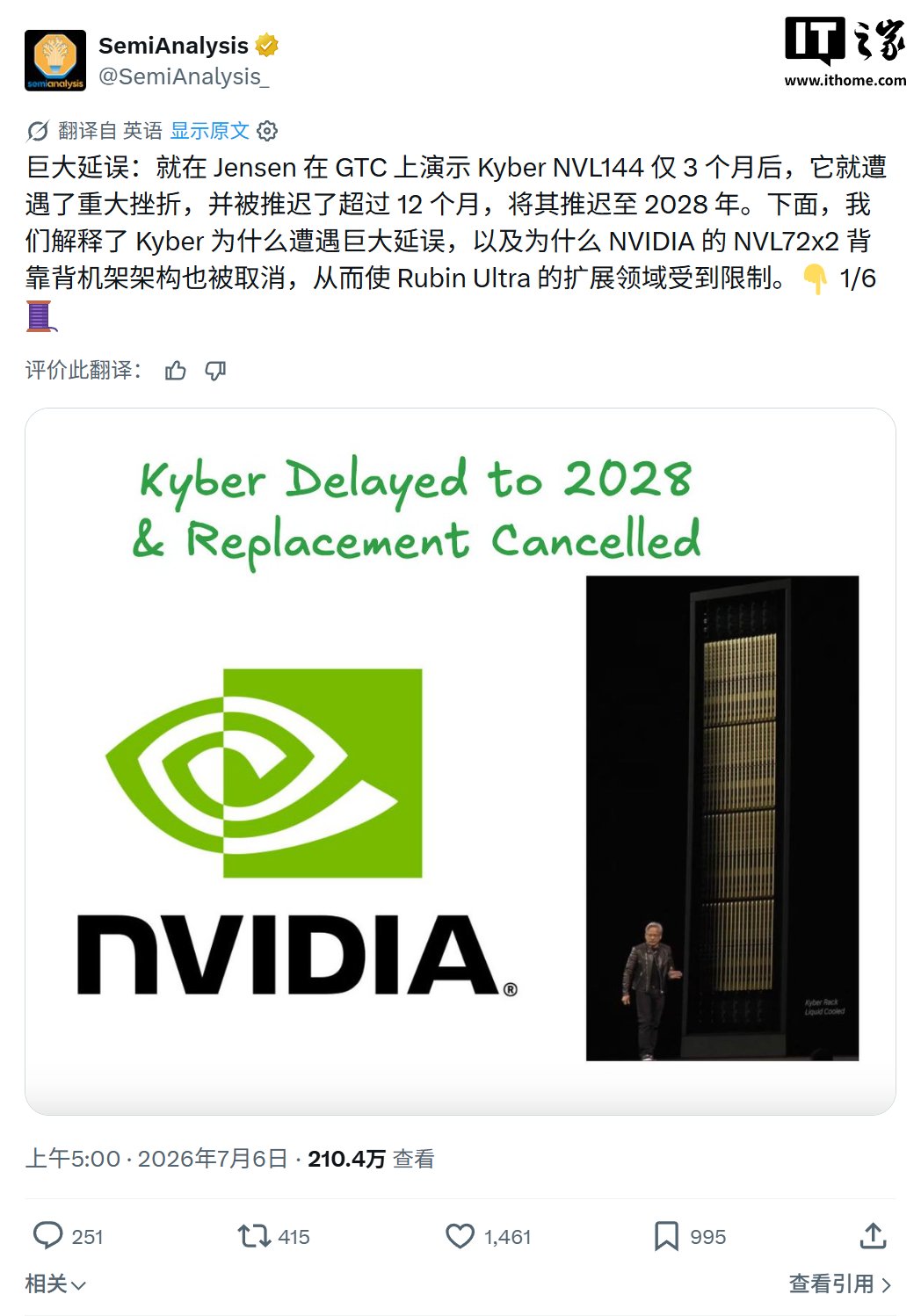
NVIDIA’s official position is that Kyber is on schedule for the second half of 2027, alongside the Vera Rubin Ultra chip platform it’s designed to house. The company didn’t offer additional details on the manufacturing reports, but the statement was notable for being unusually direct — these sorts of speculative supply-chain stories usually get the silent treatment from NVIDIA’s comms team.
The Vera Rubin Ultra platform itself represents a big architectural shift for NVIDIA. Where current-generation systems connect GPUs across multiple racks using networking fabrics, Kyber is designed from the ground up as a tightly integrated 144-GPU supercomputer in a single frame. The vertical interconnect approach reduces latency and power consumption compared to the cable-and-switch sprawl that characterizes today’s largest AI clusters.
Whether Kyber actually ships in 2027 depends on whether NVIDIA’s partners can solve the interposer manufacturing bottleneck SemiAnalysis identified. PCB interposer substrates — the layer that sits between the GPU die and the main board, routing thousands of connections — become dramatically harder to manufacture at scale as the number of connected components grows. For a 144-GPU system, the tolerances are brutal.
NVIDIA has navigated similar production challenges before. The Hopper H100 faced yield issues in its first year, and the Blackwell B200 reportedly had design tweaks before ramping. The company has a track record of pulling timelines back from the brink. Whether Kyber follows that pattern or breaks it is worth watching closely.