SpaceX's Mysterious 'Starfall' Return Capsule Set for Maiden Flight, Featuring a Flat Disc Design
SpaceX is preparing to launch the maiden flight of “Starfall,” an unconventional return capsule developed almost entirely in-house, as early as Tuesday, June 23. The Falcon 9 rocket is targeting a launch window opening at 6:43 AM Eastern Time from Cape Canaveral Space Force Station’s SLC-40, with a backup window the following day. Nearly everything known about the vehicle comes from regulatory filings with the FAA and FCC — SpaceX has yet to formally unveil the spacecraft to the public.
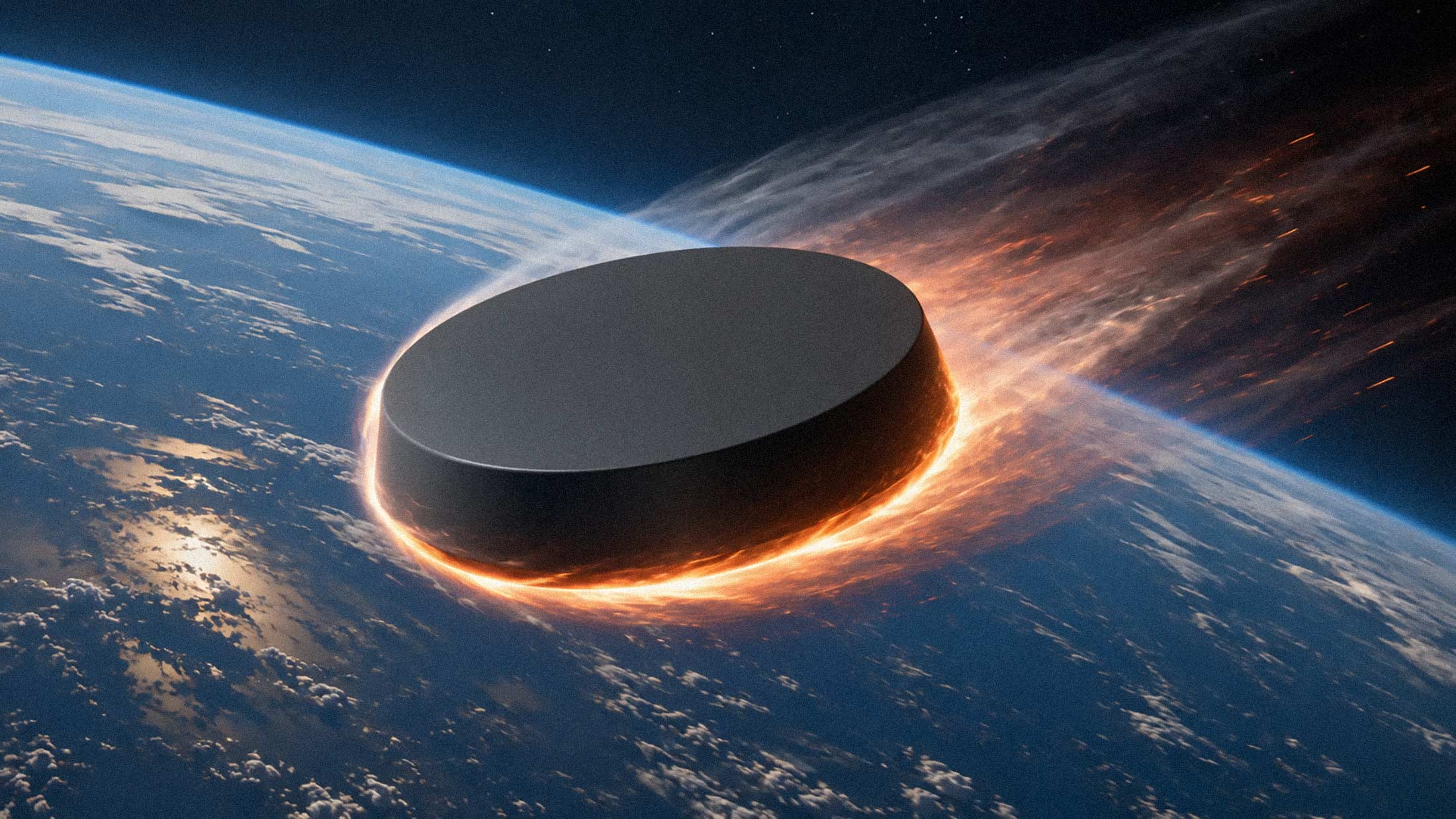
The most striking feature of Starfall is its shape. While the Dragon capsule and every operational cargo return vehicle today use a traditional conical design, Starfall adopts a flat disc form factor: roughly 10.2 feet (3.1 meters) in diameter but just 2.5 feet (0.75 meters) tall, weighing 4,630 pounds (2,100 kg) and capable of returning up to 2,200 pounds (1,000 kg) of payload from orbit. The disc architecture maximizes structural efficiency and payload volume for a given mass, and the heat shield is designed to mechanically separate before splashdown, allowing recovery teams to retrieve both the capsule and its shield independently from Pacific Ocean waters.
The capacity numbers put Starfall in a league of its own. Varda Space Industries, the current leader in orbital manufacturing return, can recover substantial payloads on a single mission — but Starfall boasts roughly 30 times that capacity and is designed for serial production. It can launch atop both Falcon 9 and Starship, giving it a launch-flexibility edge that no independent startup can replicate. This combination of massive capacity and flexible launch options also means SpaceX will directly compete with the very companies currently paying to use its rockets for orbital return services.
The target market is in-orbit manufacturing. Certain pharmaceuticals, protein crystals, semiconductors, and specialty optical fibers simply cannot be produced at scale on Earth because gravity introduces layering, sedimentation, and deformation during fabrication. In microgravity, those constraints disappear entirely. FAA documents describe Starfall’s long-term goal as creating a “self-sustaining commercial space manufacturing industry” — essentially stepping into the industrial R&D role currently served by the International Space Station, which is slated for retirement by the end of the decade. SpaceX is also reportedly in discussions with the U.S. Department of Defense about a parallel application: rapid global military cargo delivery.
Starfall represents a strategic pivot for SpaceX. The company already functions as the “platform landlord” for virtually every competitor in the orbital return business by controlling the launch infrastructure. With Starfall, it transitions from landlord to full-stack operator: owning and operating the return capsule itself, controlling the entire recovery logistics chain, and capturing the full value of the service. When viewed alongside Starlink, the Colossus program, and the xAI acquisition, Starfall fits neatly into SpaceX’s broader playbook — lock down the underlying infrastructure that an industry depends on, then achieve full vertical ownership. Orbital manufacturing return appears to be the next piece on that board.
If Tuesday’s re-entry, parachute deployment, and ocean recovery demonstrations all proceed as planned, SpaceX will proceed to a second FAA-approved test flight. After two successful demonstrations, the company plans to formally launch Starfall as a commercial service, with initial customers expected to be primarily pharmaceutical and materials-science companies, followed by defense and broader industrial manufacturing clients.