Tesla's Cybercab is now testing on public roads — no steering wheel, no pedals
Tesla’s dedicated robotaxi is finally rolling on real roads. Production versions of the Cybercab — a two-seat vehicle with no steering wheel and no pedals — have started engineering tests on public streets in Austin, Texas. The news broke Tuesday, and Elon Musk confirmed it within minutes, posting video of the car navigating Austin traffic autonomously.
The Cybercab’s path from concept to asphalt has been fast by automotive standards. Tesla first showed the vehicle on October 10, 2024. On June 30, 2026, a production version drove itself through Austin traffic. That’s about 20 months — roughly the same gap between the unveiling of the Cybertruck and its first deliveries.
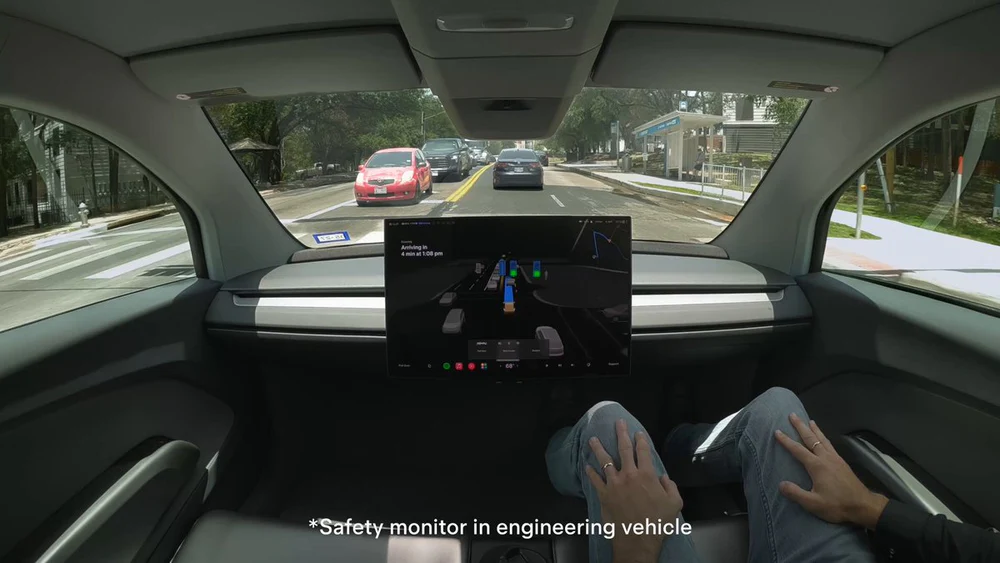
Each test vehicle carries a safety attendant, but there are no manual controls — no steering wheel, no pedals, nothing to grab. The attendant is there to observe and intervene only if something goes seriously wrong, not to drive. The Texas Department of Transportation has formally approved the no-controls design. That approval matters because it sets a precedent for purpose-built autonomous vehicles that were never designed for a human driver — not retrofitted after the fact.
Tesla is running 34 Cybercabs in downtown Austin for this engineering test phase. The company calls it “engineering testing” for a reason: these vehicles aren’t carrying passengers yet. The goal is to validate production hardware reliability under real-world conditions before scaling up to commercial service.
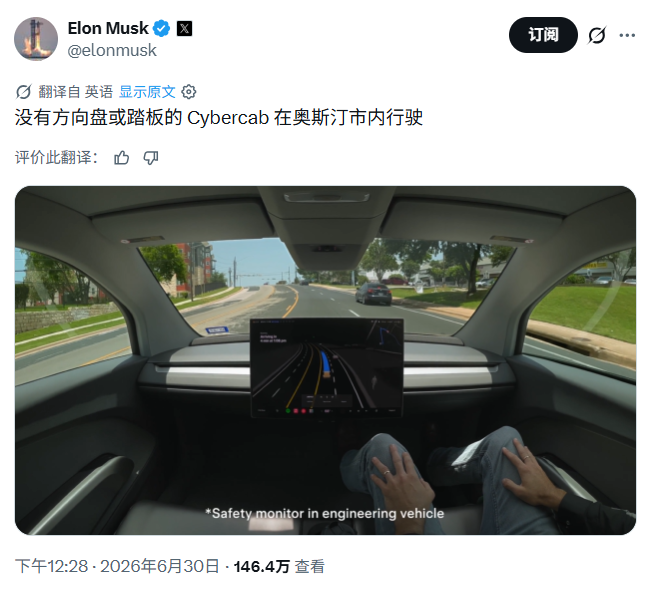
This isn’t Tesla’s first autonomous operation in Austin. The company started a driverless robotaxi service using Model Y vehicles on January 22, 2026 — no safety attendant, fully autonomous trips. By June 3, that service covered the entire city including suburbs and stretches of Interstate 35. Paid rides opened to the general public on June 22. The Cybercab tests sit on top of that operational foundation: Tesla now has a working autonomous fleet in Austin and is layering in its purpose-built hardware.
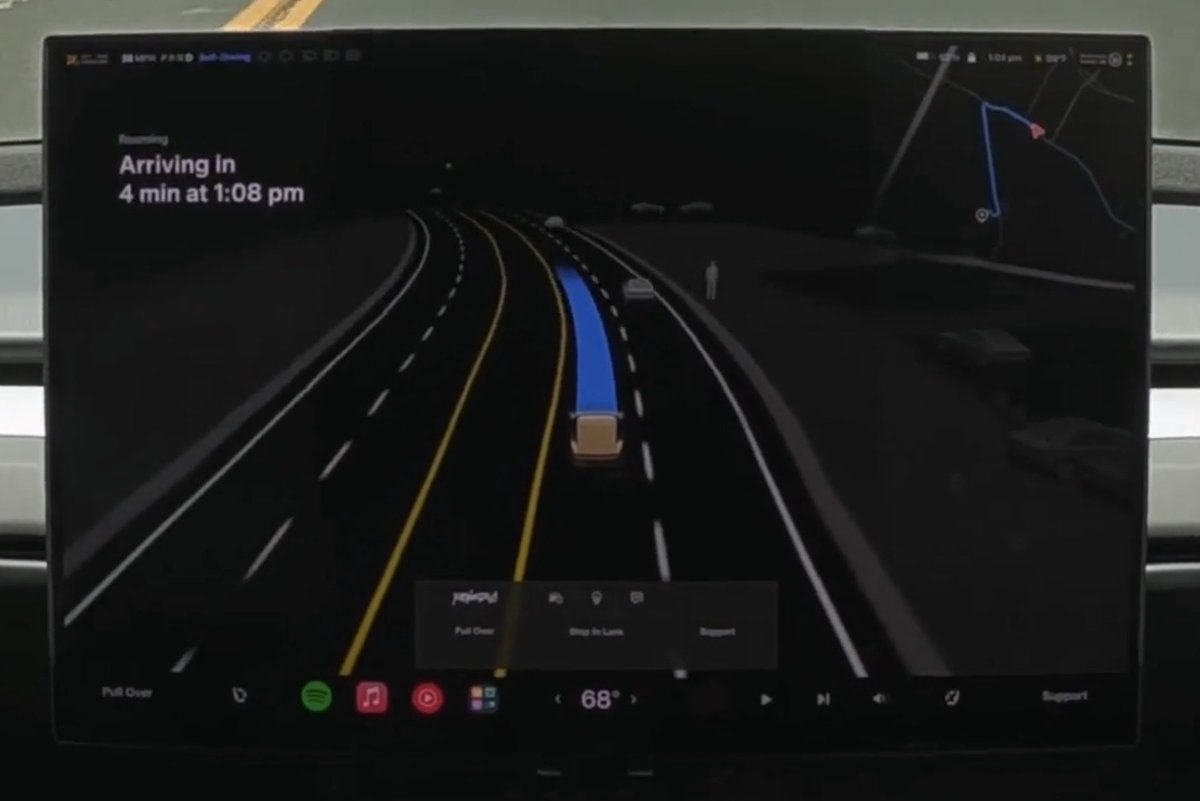
The Cybercab’s interior — visible for the first time in the test footage — is sparse and deliberate. The center screen runs Tesla’s familiar UI. There’s no driver-focused display, no stalks, and no glovebox — just seats, a screen, and empty space where a dashboard would normally sit.
What makes the Cybercab different from the Model Y robotaxis already running in Austin is that it was designed from the ground up for autonomy. The Model Y cars are modified production vehicles with the steering wheel removed and pedals blocked. The Cybercab was built without those parts in the first place. That distinction matters for regulators — and for the economics of scaling a robotaxi fleet.
For Tesla owners and industry watchers, the question has shifted from “will this actually happen” to “how fast can they scale it.” Austin’s autonomous network is already running and expanding. Now the dedicated Cybercab hardware is on the same roads. The gap between engineering testing and commercial deployment tends to be shorter than most people expect.