Fake AI crash videos are targeting a Xiaomi car that hasn't even launched yet
Xiaomi hasn’t delivered a single Pengcheng SUV to a customer yet. But on Chinese social media, AI-generated crash videos of the car are already circulating — complete with fake fire scenes and fabricated accident narratives.
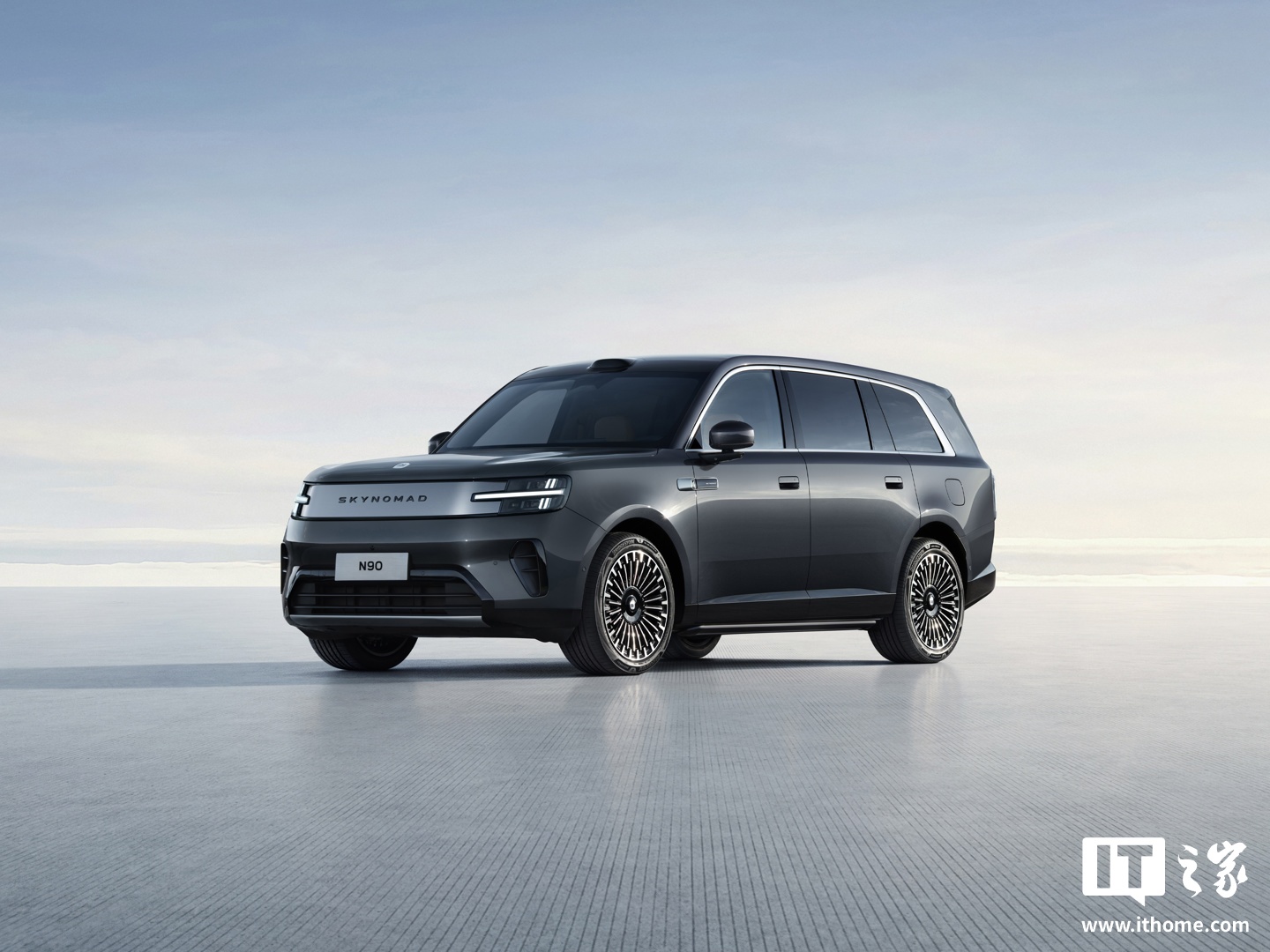
The company’s second EV brand, Pengcheng (also marketed as SkyNomad), just announced the name of its first model — the N90 SUV — when the disinformation campaign started. Search autocomplete on several platforms had already surfaced terms like “fire cause,” “accident details,” “owner protest,” and even “car explosion scene” tied to the N90. The car hasn’t been released. There are no owners. There are no accidents.
A senior new media engineer at Xiaomi, known as @小米_邹師傅 (Master Zou) on Weibo, called the situation out publicly. He pointed to AI-generated crash videos spreading across social feeds that Beijing Daily later confirmed were completely fabricated.
“In 2026, competition has evolved to the point where they don’t need to wait for you to make a mistake,” Zou wrote. “AI can ‘create’ mistakes for you.”
His post struck a nerve. He described the mechanics behind the smear campaign bluntly: AI doesn’t start generating fake content by itself. Someone is placing the order, paying the bill, and collecting the benefit. Then he added: “If they can fake an accident for Xiaomi today, they’ll do it for whatever brand you own tomorrow.”
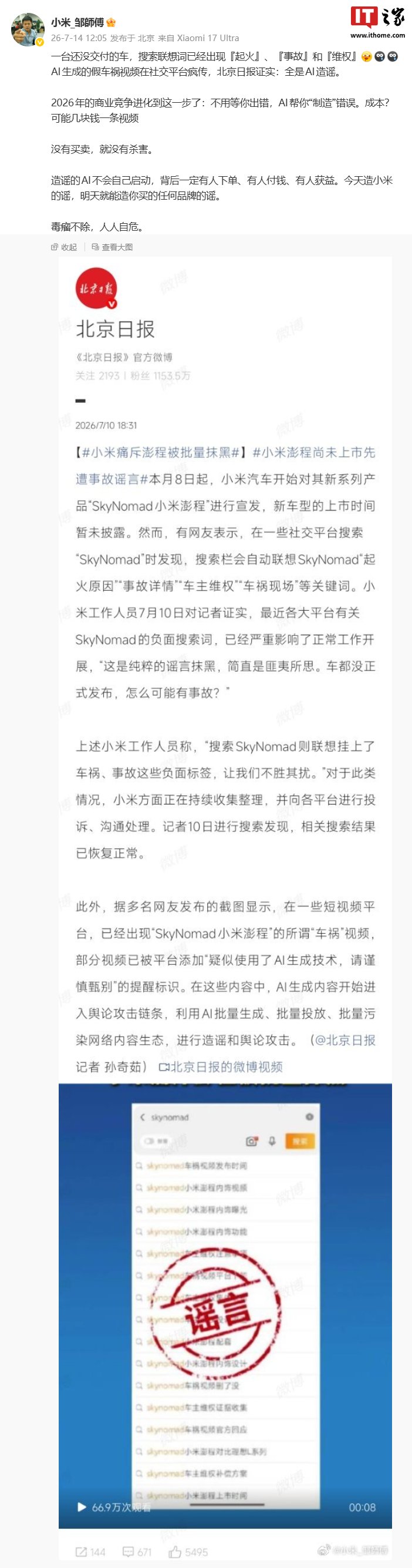
A Xiaomi staff member told Chinese media that the company was blindsided by the scale of the attack. “This is pure rumor-mongering. It’s completely preposterous,” the employee said. “The car hasn’t even been officially released — how could there possibly be an accident?” Xiaomi is now collecting evidence and filing complaints with social platforms while trying to get the fake autocomplete suggestions removed.
The Pengcheng N90 sits at a critical moment for Xiaomi’s automotive ambitions. After the SU7 sedan went from an unexpected debut to tens of thousands of deliveries in under a year, the company needs its second brand to prove the first wasn’t a fluke. Pengcheng was positioned as Xiaomi’s more adventurous lineup, with the N90 SUV carrying the weight of that bet. In that context, a coordinated disinformation campaign before delivery is more than online noise — it’s a direct threat to the brand before it has a chance to exist.
The incident is part of a broader trend. Deepfake tools and accessible AI video generators have made it trivial to produce convincing fake content, and the automotive industry, where a single crash video can crater a stock or kill a model launch, is an especially tempting target. Chinese authorities have been tightening rules around AI-generated content labeling, but enforcement lags behind the technology.
For now, Xiaomi is fighting a rear-guard action — collecting evidence and filing complaints, trying to clean up search results before they calcify into received wisdom. The N90 SUV remains months away from reaching its first driver. Whether the reputation survives the noise is an open question.