IBM Stock Crashes 25% in Biggest Single-Day Drop Since 1987
Wall Street gave IBM’s turnaround story a brutal reality check Tuesday. Shares cratered 25% — the biggest one-day tumble since the Black Monday crash of 1987 — after the company disclosed preliminary second-quarter numbers that missed every target.
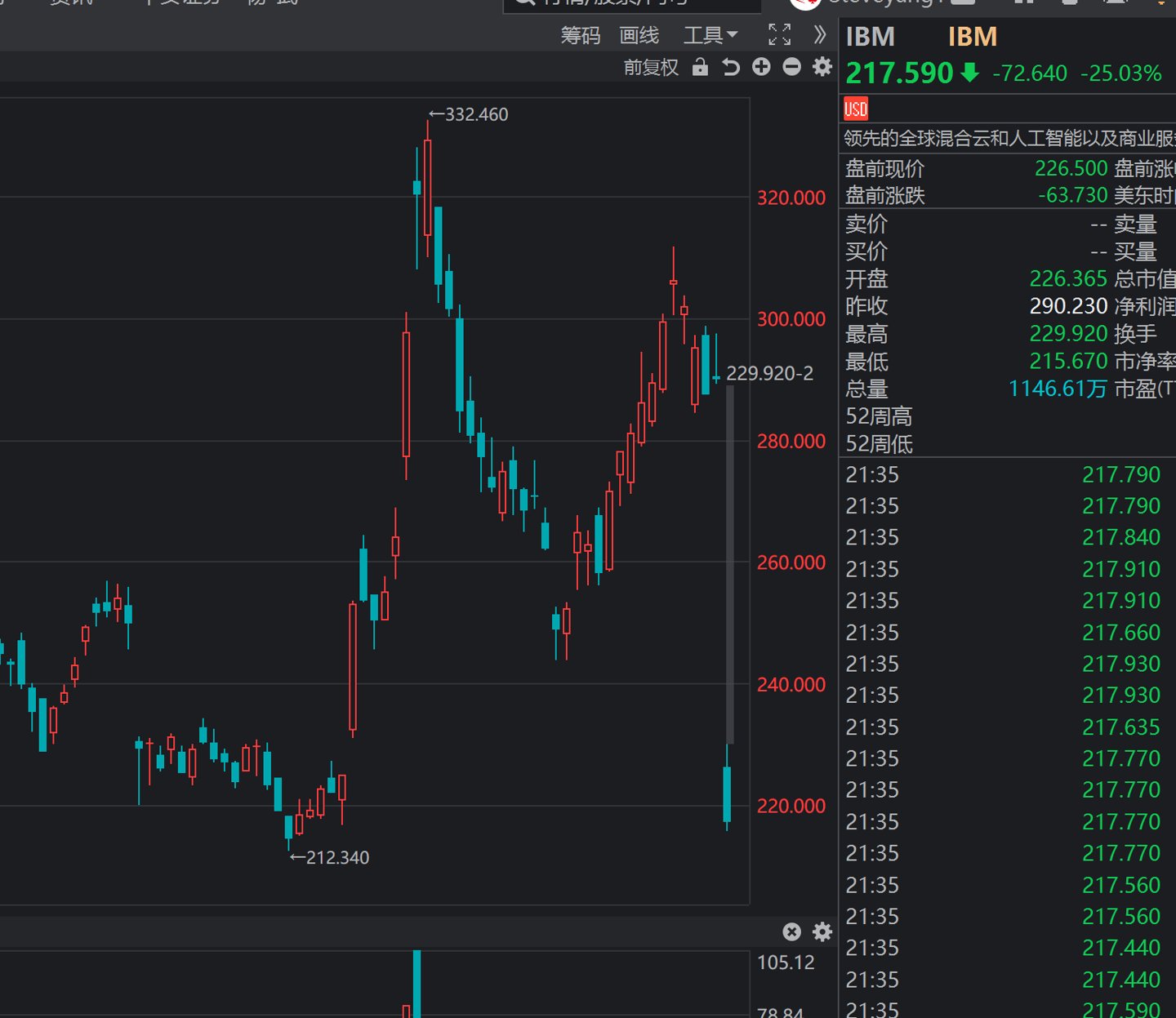
Revenue came in at roughly $17.2 billion, nearly $700 million below the consensus estimate of $17.86 billion. Adjusted earnings per share of $2.93 also undershot projections. The company blamed the shortfall on z17 mainframe and related software sales that fell short of internal forecasts, combined with customers unexpectedly redirecting spending toward servers, storage, and memory — shifts that pushed several large software deals past the quarter-end.
The infrastructure business alone is estimated to have declined roughly 7%.
What makes this quarter different from a run-of-the-mill miss is what it says about IBM’s broader strategy. For years, the company has been selling a transformation story: pivot away from legacy hardware toward hybrid cloud and AI services. The market bought into it, rewarding IBM with a premium valuation despite years of tepid top-line growth.
Tuesday’s pre-announcement undercuts that narrative in a direct way. When the flagship mainframe cycle stumbles and software licensing revenue slips at the same time, the AI transformation thesis starts looking more like a promise than a plan.
The selloff erased tens of billions in market capitalization in a single session. Investors are effectively demanding proof that the transition is real — not just a slide deck.
For IBM, the message is unambiguous: show growth, or the market will stop believing the pitch.