Amazon's Zoox Unveils Upgraded Robotaxi with Starlight Headliner and Face-to-Face Seating
Amazon-owned autonomous vehicle company Zoox has taken the wraps off an upgraded version of its purpose-built Robotaxi, incorporating passenger feedback to refine comfort, usability, and exterior communication features. The refreshed vehicle positions the company closer to its goal of launching commercial operations later this year.
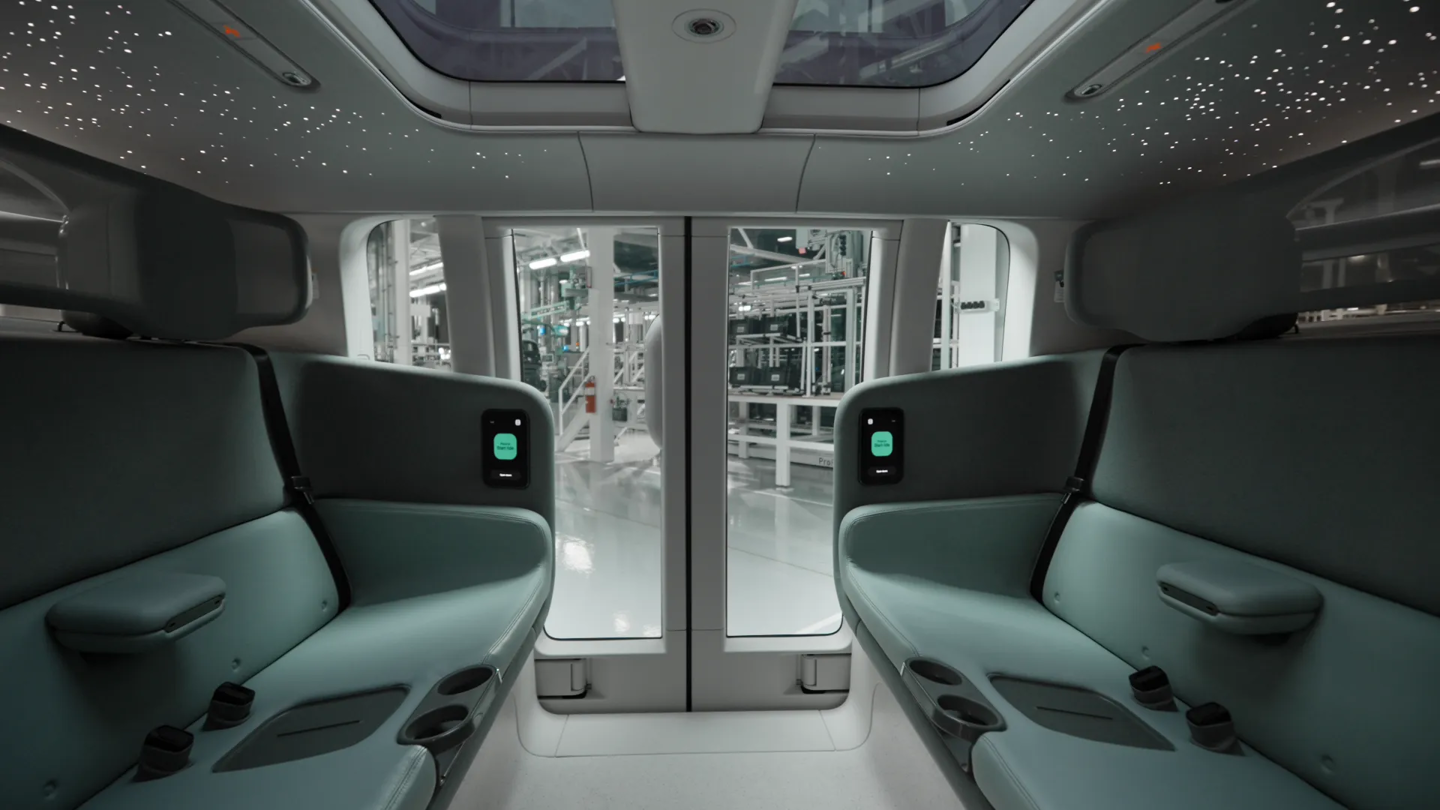
The core design philosophy remains intact. The vehicle retains its distinctive boxy silhouette, a bidirectional driving capability, four-wheel steering, and a four-seat cabin arranged in a face-to-face configuration — with no steering wheel or traditional driving controls anywhere in sight. A panoramic glass roof with a starlight-style headliner runs overhead, while 40 sensors — including cameras, radar, lidar, and infrared — provide a 360-degree perception suite. Top speed remains approximately 121 km/h (75 mph).
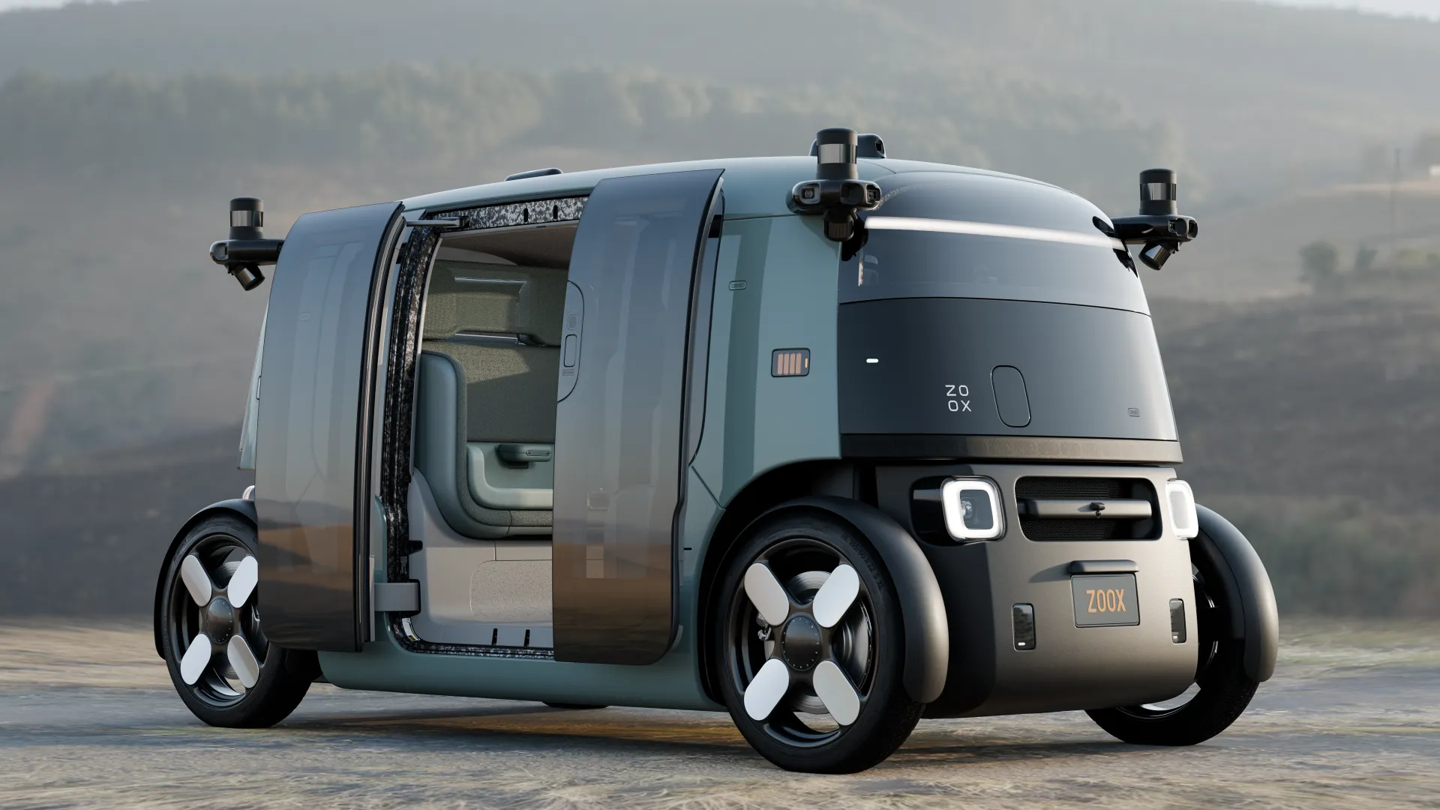
The meaningful changes in this iteration are aimed squarely at the demands of high-frequency daily service. Zoox envisions each vehicle shuttling thousands of passengers per day, and the updates reflect lessons learned from real-world testing feedback.
Seats and headrests now feature additional padding with more ergonomic contouring. The interior palette has been brightened considerably, swapping darker tones for aloe-green seats paired with limestone-colored flooring and trim panels. According to Zoox, the lighter color scheme serves a dual purpose: it creates a calmer, more spacious-feeling cabin environment, and the increased visual contrast makes it easier for passengers to spot dropped items like smartphones against the seats and floor.
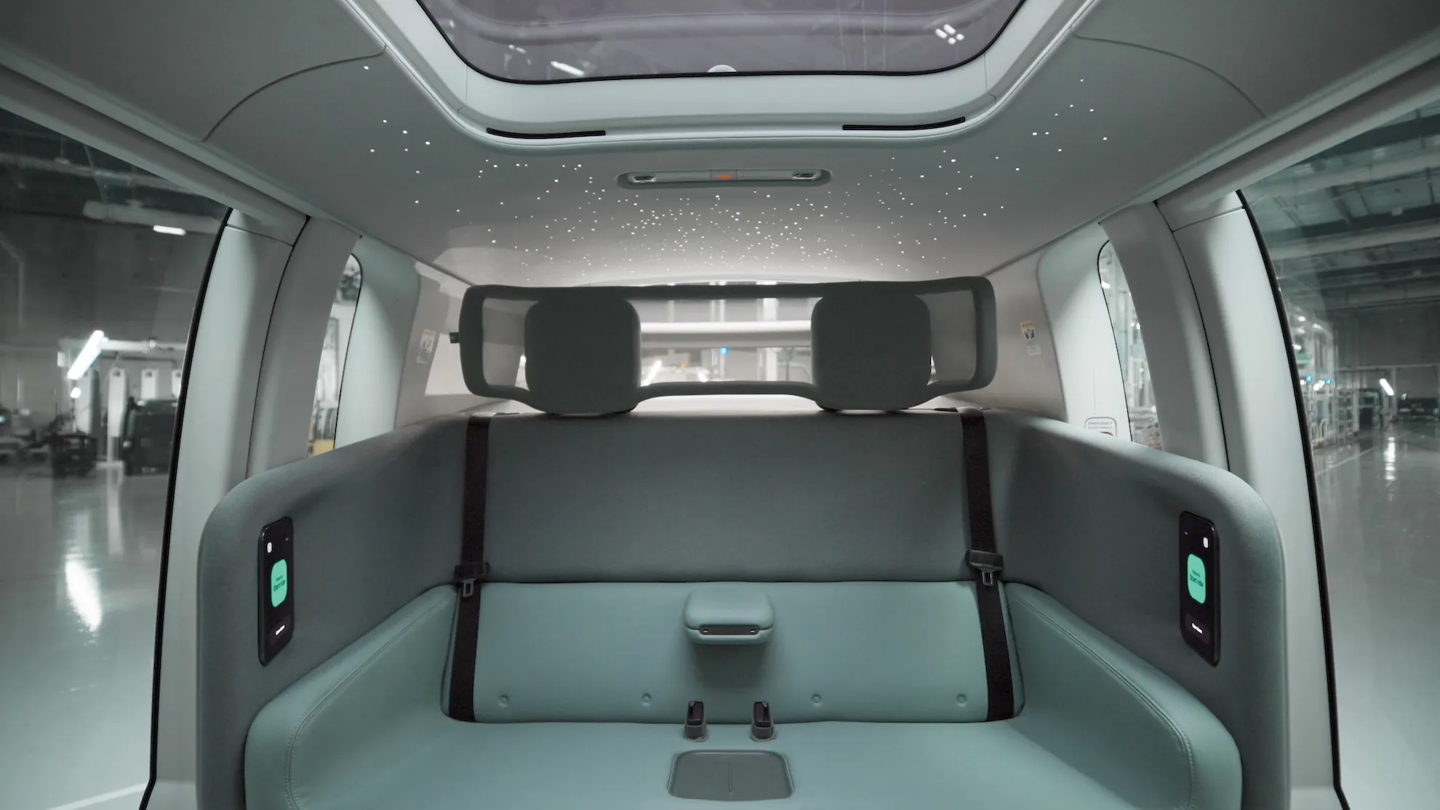
Practical touches abound. The wireless charging pad now includes grooves to prevent phones from sliding around during cornering and acceleration. Cup holders have been enlarged, and the touchscreen interface has been repositioned for greater visibility.
On the exterior, Zoox has relocated the vehicle’s bidirectional reflectors to improve conspicuity for other road users. New speakers and microphones have been integrated into the door interaction zones, enabling two-way communication between passengers, pedestrians, and Zoox’s support team — or even first responders in an emergency.
The timing of the reveal is notable. Zoox has been steadily working toward its commercial debut, and these refinements suggest the company is in the final stretch of preparing its fleet for paying passengers. With Amazon’s deep pockets behind it and a vehicle architecture that fundamentally rethinks what a taxi can be, Zoox remains one of the most distinctive players in the increasingly crowded autonomous ride-hailing race.