China's AEE25 Aviation Electric Engine Delivers with Record-Breaking Torque Density
China has achieved a major milestone in electric aviation propulsion. The AEE25 aviation electric engine, independently developed by the AECC Aero Engine Control System Institute (AECC AECSI), completed its first unit delivery on June 5 in Wuxi, Jiangsu Province, and was recently featured in a special CCTV report.
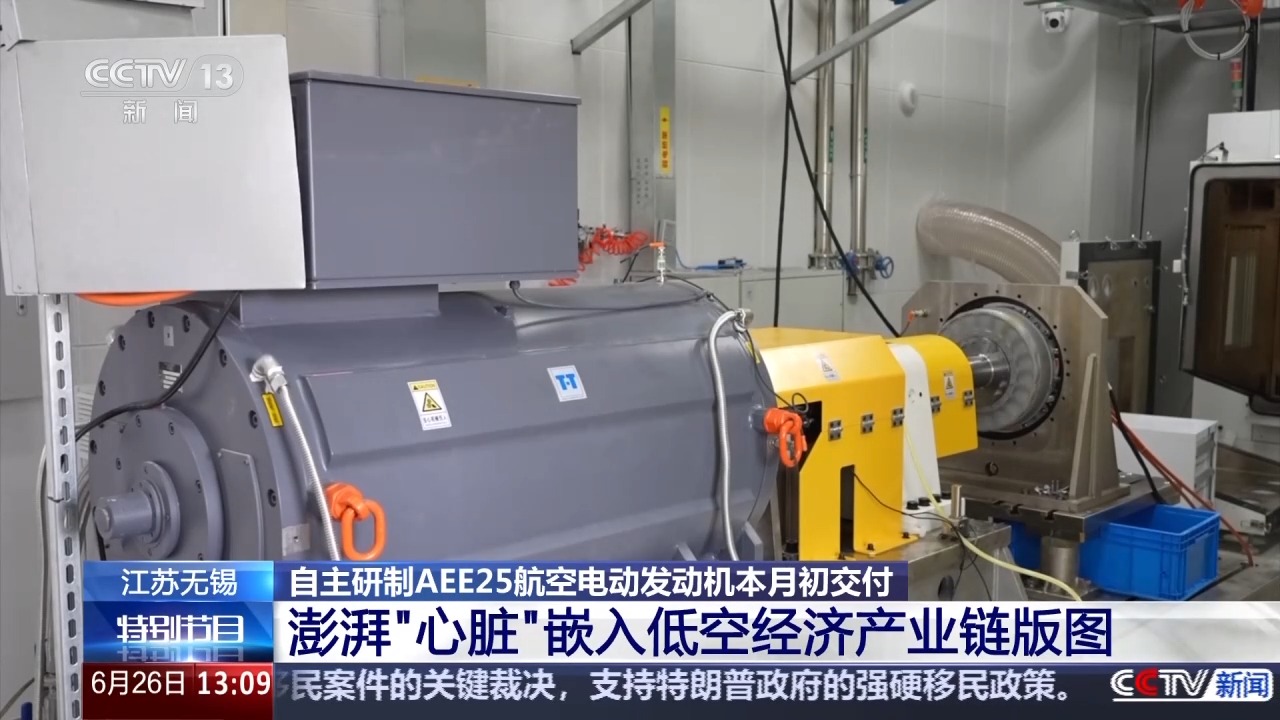
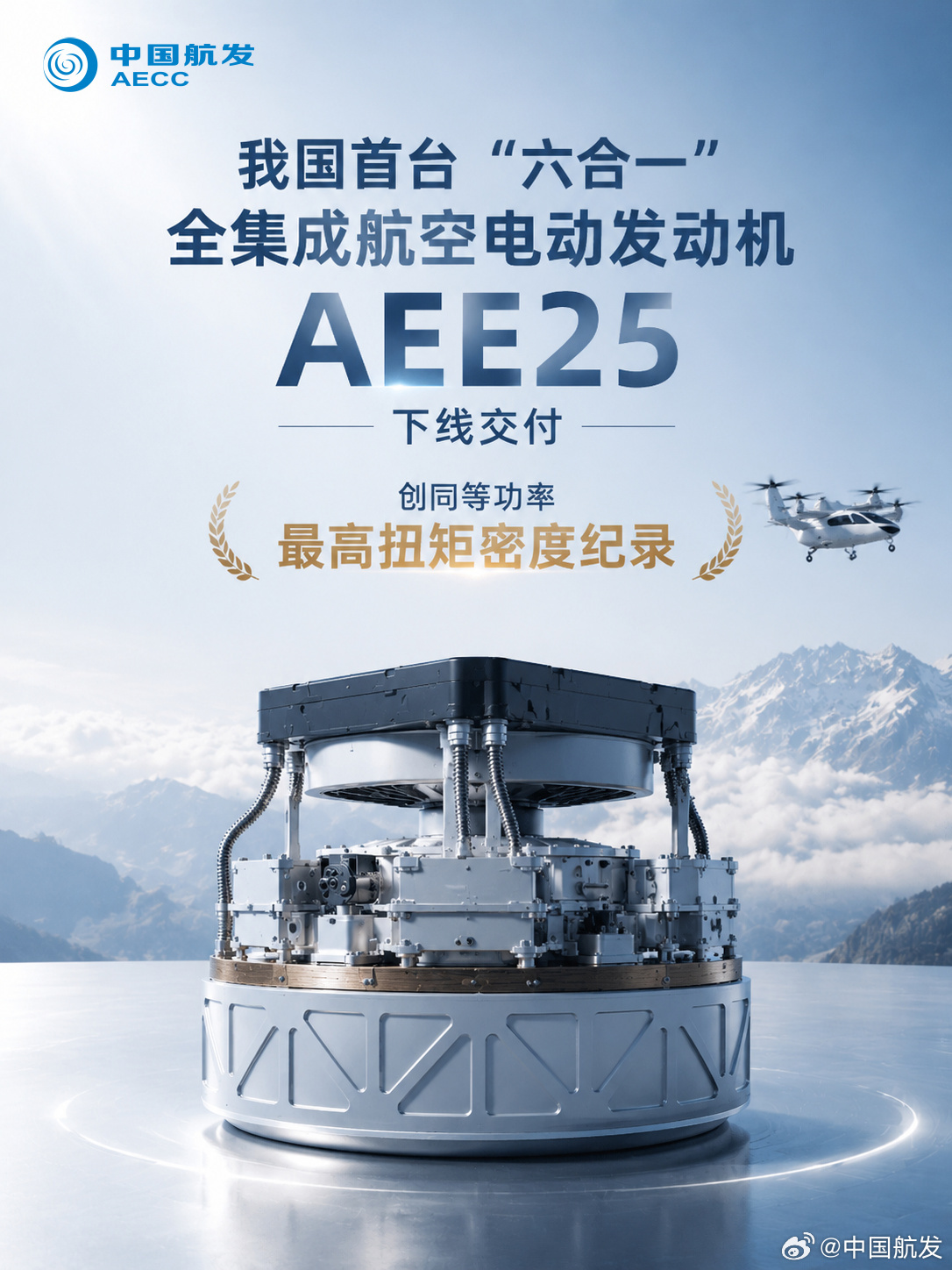
The AEE25 represents a breakthrough in fully integrated electric propulsion design. Its “six-in-one” architecture merges six core components — the main motor, main motor controller, cooling system motor, cooling system motor controller, variable-pitch actuator, and variable-pitch actuator controller — into a single, compact unit.
“Weighted and volume reductions from full integration bring a leap in system reliability, laying a solid foundation for aviation safety at the architectural level,” said Zhang Yu, project lead for the AEE25 at AECC AECSI. For aircraft manufacturers, the integrated design means the unit is essentially plug-and-play — attach the propeller, connect power, and it’s ready to operate, eliminating the need for separately designed actuator and cooling systems.
In terms of raw performance, the AEE25 delivers a torque density of 40 Nm/kg and a power density of 5 kW/kg, making it the highest torque density among all publicly released 200kW-class aviation electric motors in China. At this power level, the engine is well-suited for current mainstream 2-to-3-ton eVTOL aircraft carrying 4 to 6 passengers. Future iterations are expected to push torque density further to 44 Nm/kg.
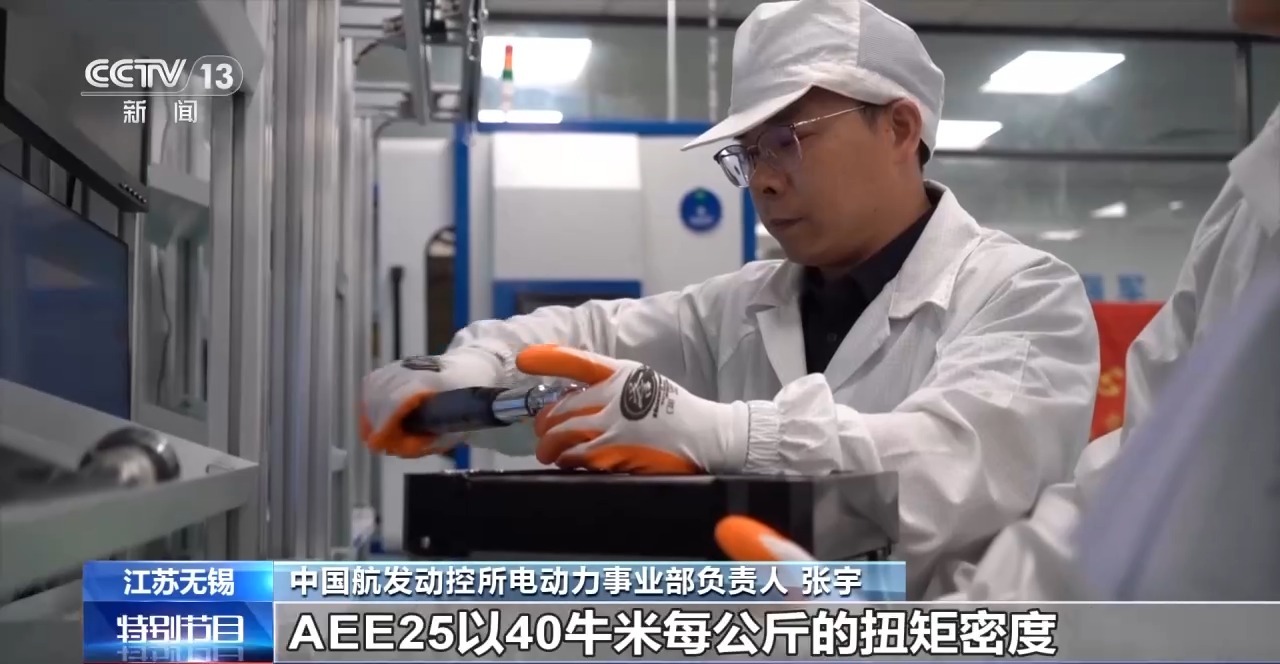
Behind the technology is more than a decade of focused development. AECC AECSI began investing in aviation motor research in 2016, and has since established a dedicated Electric Propulsion Division operating under a market-driven mechanism to accelerate technology transfer for the low-altitude economy. Multiple aviation electric motor models have passed key technology milestones and entered volume production.
The AEE25 is destined for the E20, a five-seat tilt-rotor electric vertical takeoff and landing (eVTOL) aircraft developed by Shanghai-based TCab Tech.
Already in the airworthiness certification pipeline, the AEE25 has completed SOI#1 software and hardware airworthiness reviews — the fastest progress among all aviation electric motors in China’s eVTOL sector, according to the Civil Aviation Administration of China.
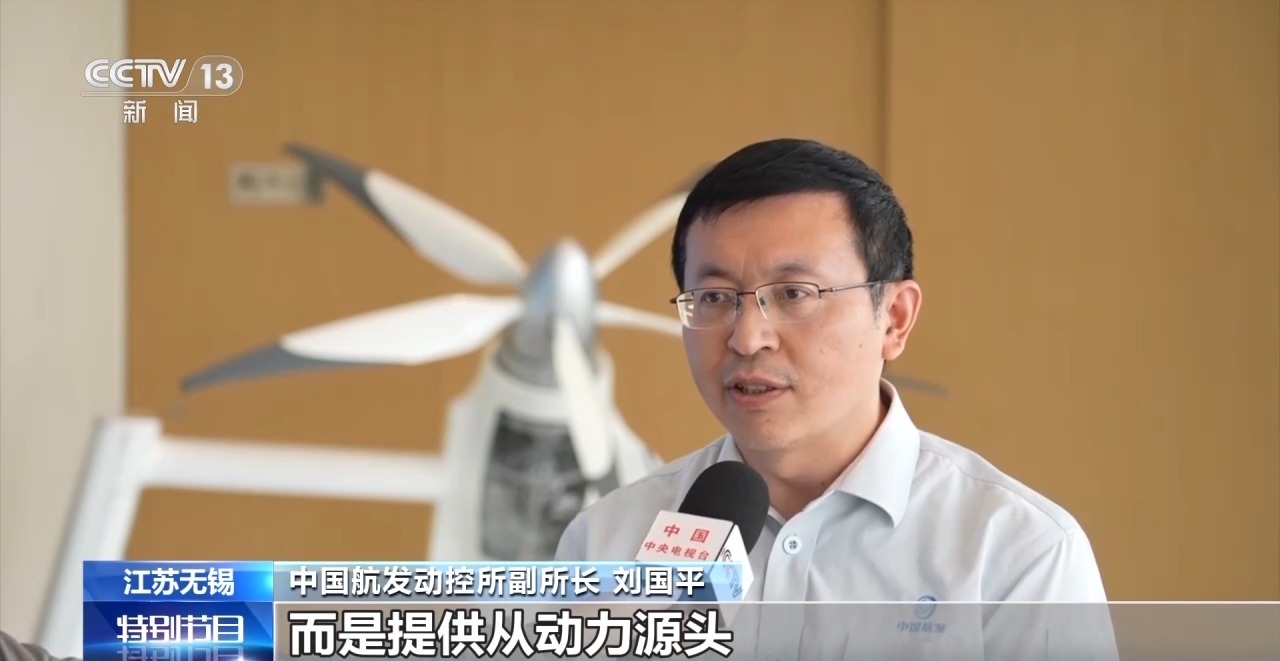
“AECC AECSI will continue deepening key technology research and engineering validation to provide more efficient, reliable, and lightweight aviation electric engines for emerging aircraft,” said Liu Guoping, deputy director of the institute. With airworthiness certification accelerating, mass production plans are steadily advancing to meet the growing demands of the low-altitude economy and next-generation electric aircraft.