Corning Unveils Glass Bridge Optical Interconnect Technology for Next-Gen AI Data Centers
Corning introduced “Glass Bridge,” a glass-based optical interconnect technology designed for next-generation AI data center architectures, at the AI Data Center Optical Communication & Interconnect Technology Conference held yesterday in Seoul.
The technology directly connects photonic integrated circuits (PICs) with optical fibers, targeting cutting-edge architectures such as co-packaged optics (CPO) and glass-core semiconductor packaging.
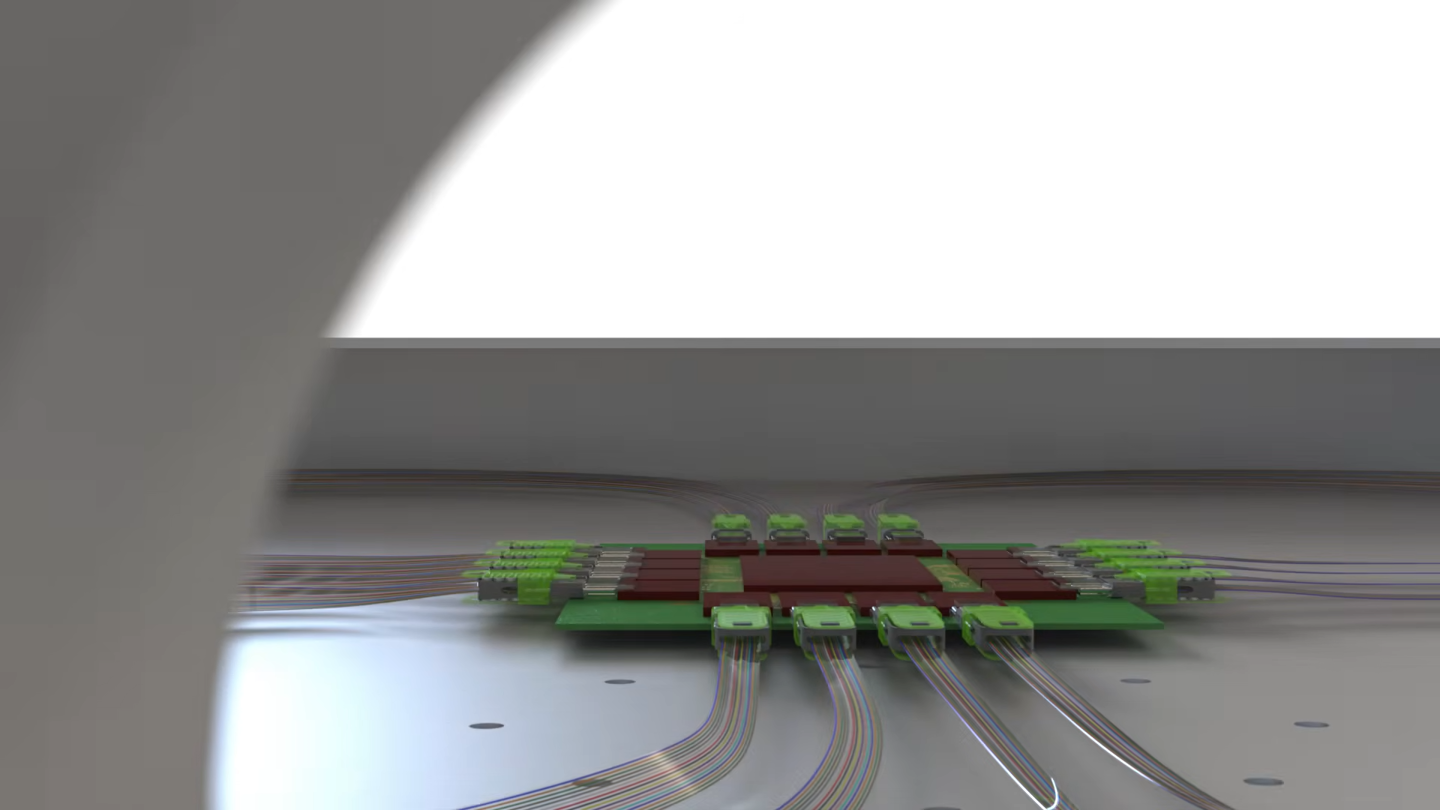
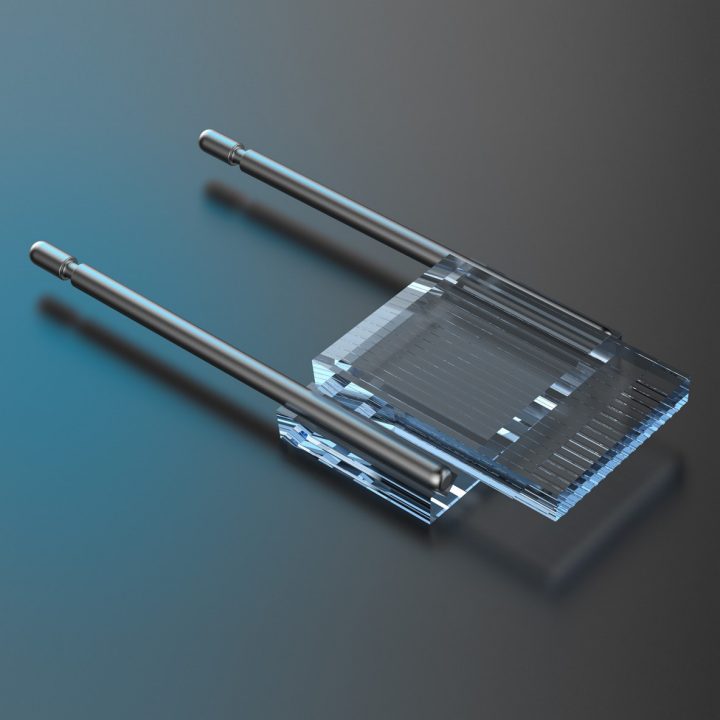
Glass Bridge is a glass optical connector that directly couples photonic chips with optical fibers. Currently, on-chip optical waveguides measure hundreds of nanometers wide, while fiber cores reach several micrometers — a size mismatch of tens of times. Corning leverages wafer-level ion-exchange waveguide technology to fabricate optical pathways inside the glass, allowing light transmitted through optical fibers to be precisely delivered to photonic chips via the glass waveguides.
This approach enables high-density optical I/O interfaces at the front end of photonic chips while simplifying alignment and assembly between fibers and photonic devices, eliminating the need for traditional pluggable transceivers or long-distance fiber array units (FAUs). Initial products support photonic chip core pitches of 30 micrometers and above, with Corning targeting a fiber-to-photonic chip coupling loss of under 2 dB.
Corning is currently co-developing Glass Bridge with multiple partners. The company announced last year that it was collaborating with GlobalFoundries to advance optical interconnect technology for AI data centers.
The Glass Bridge technology platform employs a wafer-level manufacturable design supporting passive alignment and a detachable, high-density fiber-to-photonic chip connector architecture. A single connector can support over 24 optical channels with customizable pitch configurations to suit different systems and photonic chip requirements. Its interface is based on the standard TMT physical contact design, utilizing the industry’s widely adopted TMT ferrule for reliable, repeatable plug-and-play connections, facilitating integration into existing optical ecosystems.
Compared to traditional fiber array units, Glass Bridge offers a more scalable alternative at very high channel counts while supporting rework and system testing.

At the conference, Corning also demonstrated a next-generation CPO architecture combining glass substrates with optical interconnects. The design integrates optical waveguides on glass substrates equipped with through-glass vias (TGVs) and mounts photonic devices using flip-chip technology, addressing future glass-substrate-based semiconductor packaging needs.
Additionally, Corning introduced the “GlassWorks AI” optical communications platform for AI data centers. The platform delivers integrated optical connection infrastructure spanning intra-data-center, inter-rack, and campus-wide scenarios, comprising optical fibers, cables, connectors, fiber array units, and alignment components. Corning has recently expanded its optical communications manufacturing investments in North Carolina, Texas, and Poland, and has signed multi-billion-dollar long-term supply agreements with hyperscale operators including Meta, NVIDIA, and Amazon.
“Demand for optical fiber continues to grow, along with requirements for higher density and performance,” said Ko Joo-hyun, Vice President of Corning Optical Communications. “With the GlassWorks AI platform, we are integrating technologies from optical fiber and cables to connectors and optical coupling, meeting the needs of next-generation data centers.”