Huawei Mate 80 Pro benchmarks confirm: Kirin 9030 Pro GPU is 76% faster than last gen
Chinese YouTube channel Geekerwan published an exhaustive performance analysis of Huawei’s Mate 80 Pro on Thursday, and the numbers tell a clearer story than any press release: Huawei’s in-house silicon is catching up faster than most expected.

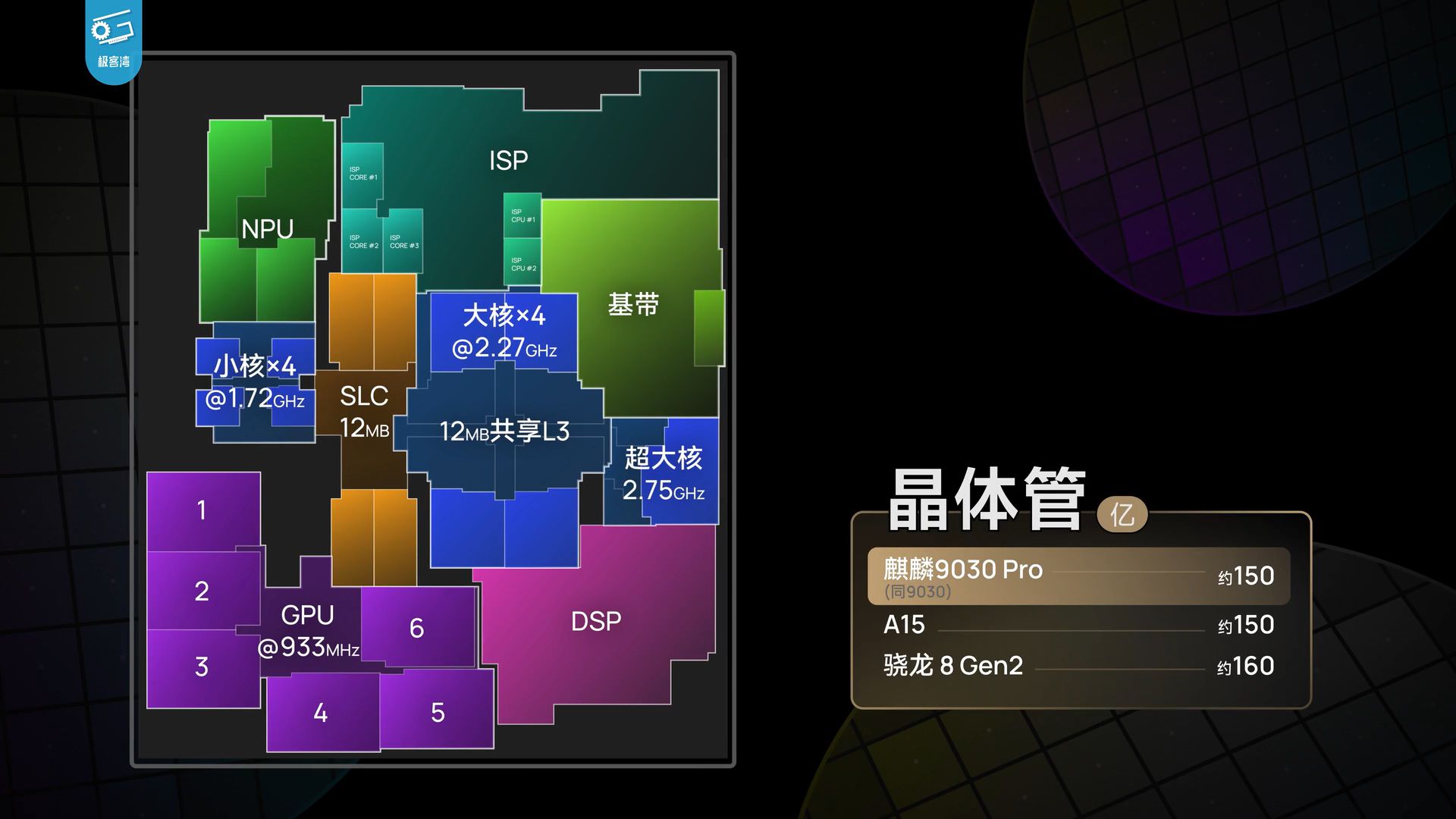
The Mate 80 Pro runs on the Kirin 9030 Pro, fabricated alongside its slightly cut-down sibling, the Kirin 9030. Both chips share the same die — roughly 15 billion transistors, placing them in the same league as the Apple A15 and Qualcomm Snapdragon 8 Gen2 by transistor count.
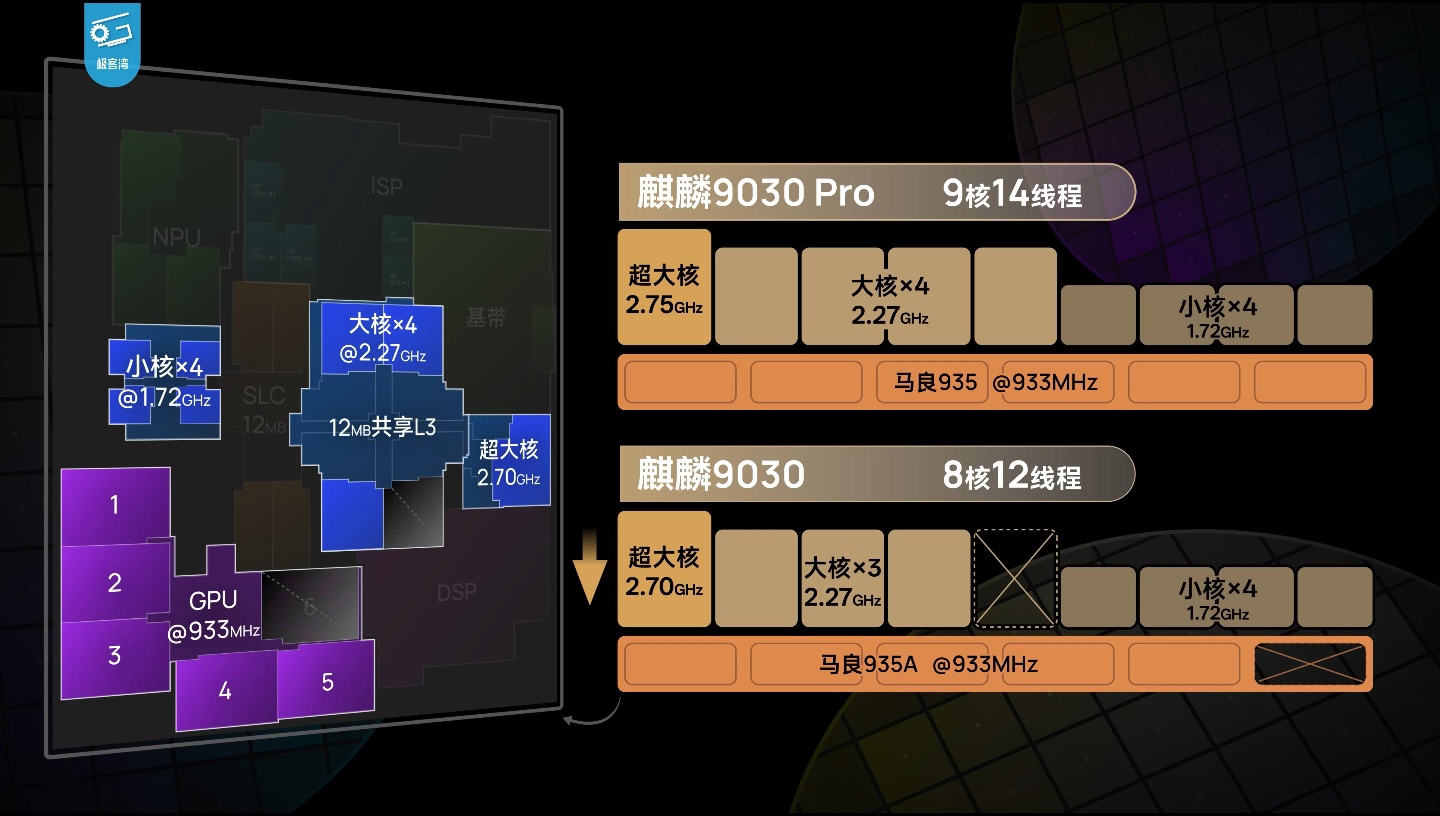
The full-fat 9030 Pro uses a 9-core, 14-thread layout: a single 2.75GHz super-core, four 2.27GHz big cores, and four 1.72GHz efficiency cores. It packs a 6-core Mali 935 GPU. The standard 9030 disables one CPU big core (bringing it to 8 cores, 12 threads) and swaps in a 5-core Mali 935A GPU.
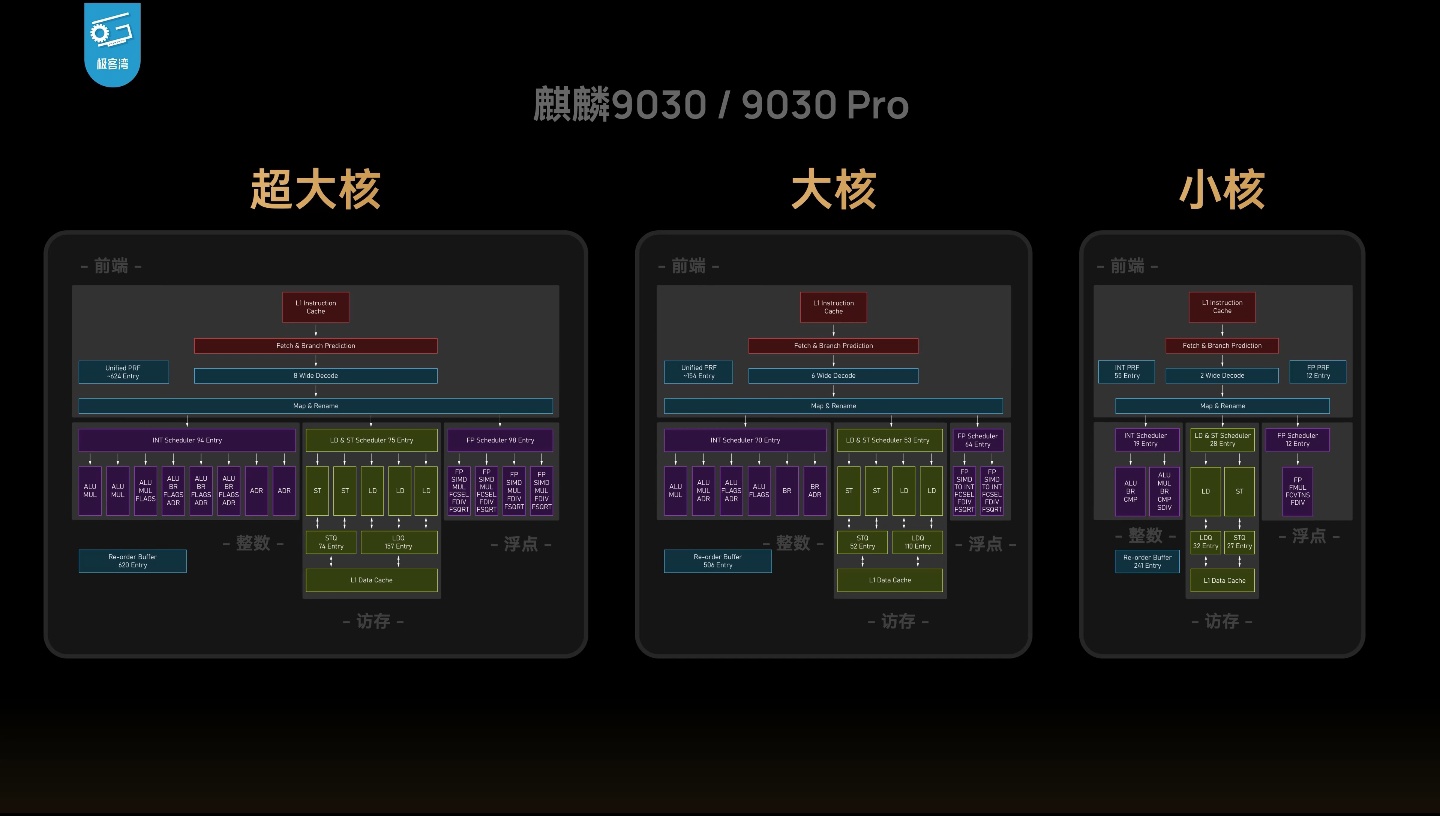
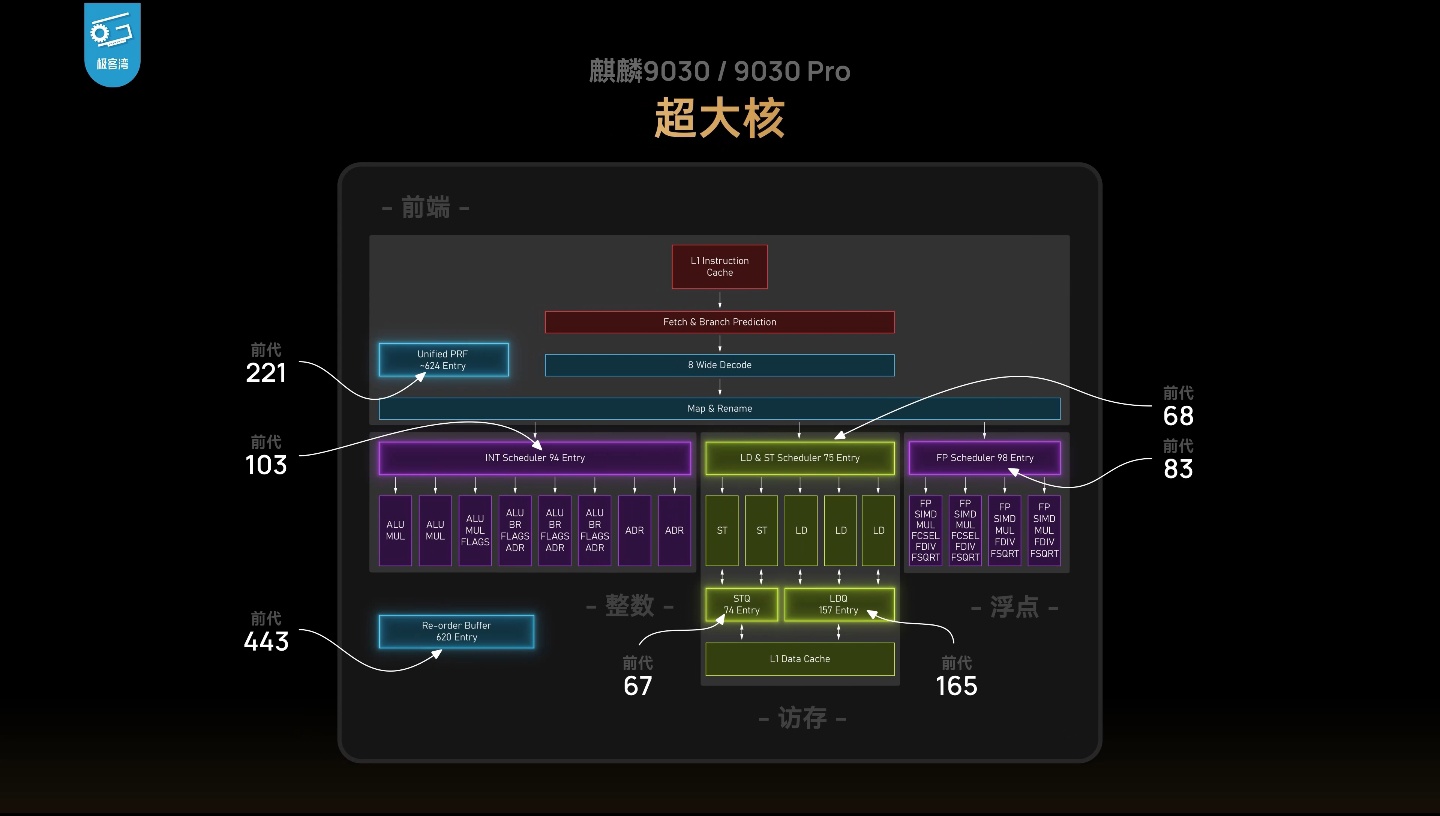
Architecturally, the big and little cores saw only minor changes this generation. The real work went into the super-core — Huawei doubled its L2 cache to 2MB, expanded the shared L3 from 10MB to 12MB across the five big cores, and bumped system-level cache to 12MB. The register file depth and out-of-order execution window also got small but meaningful refinements.
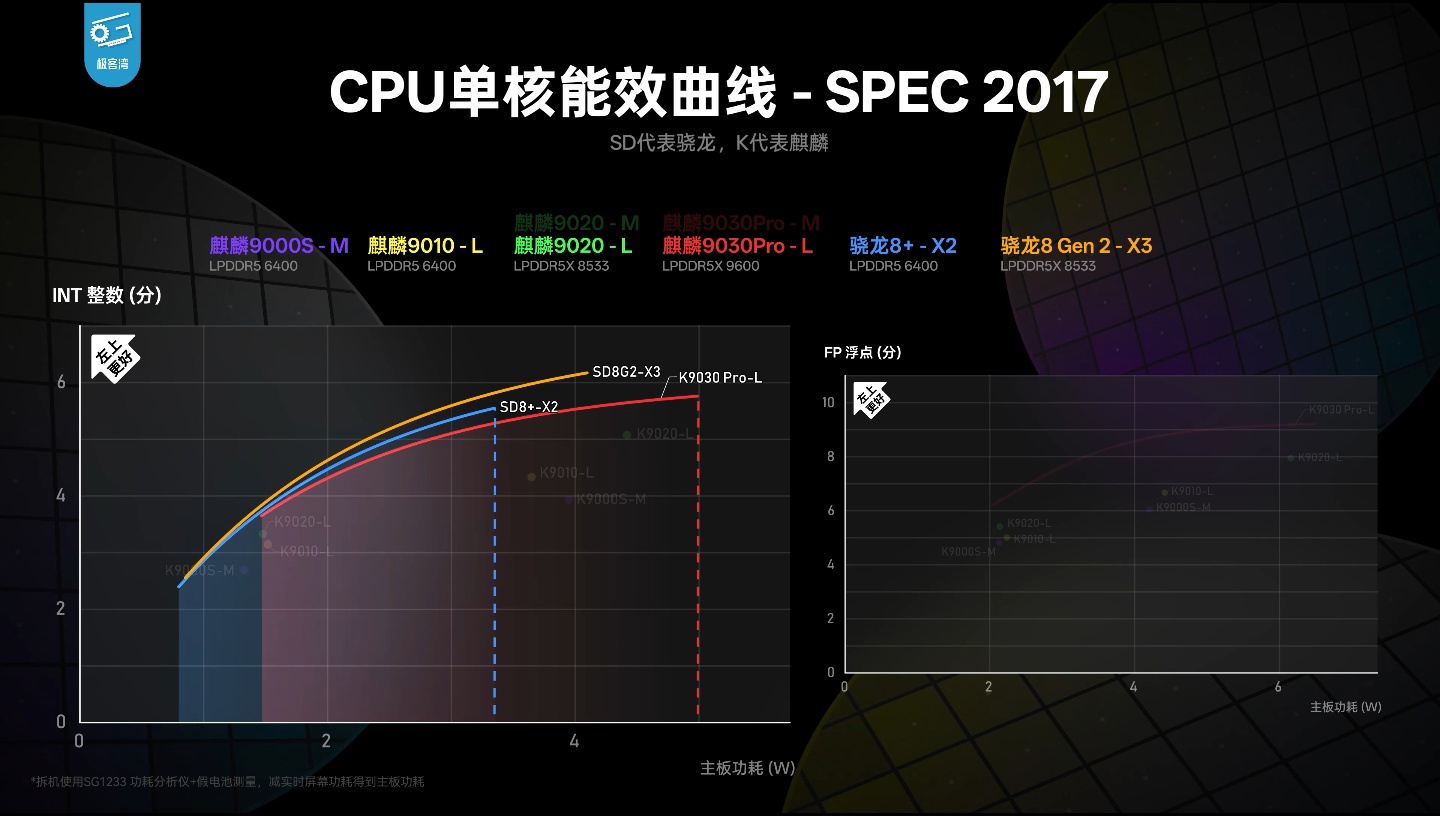
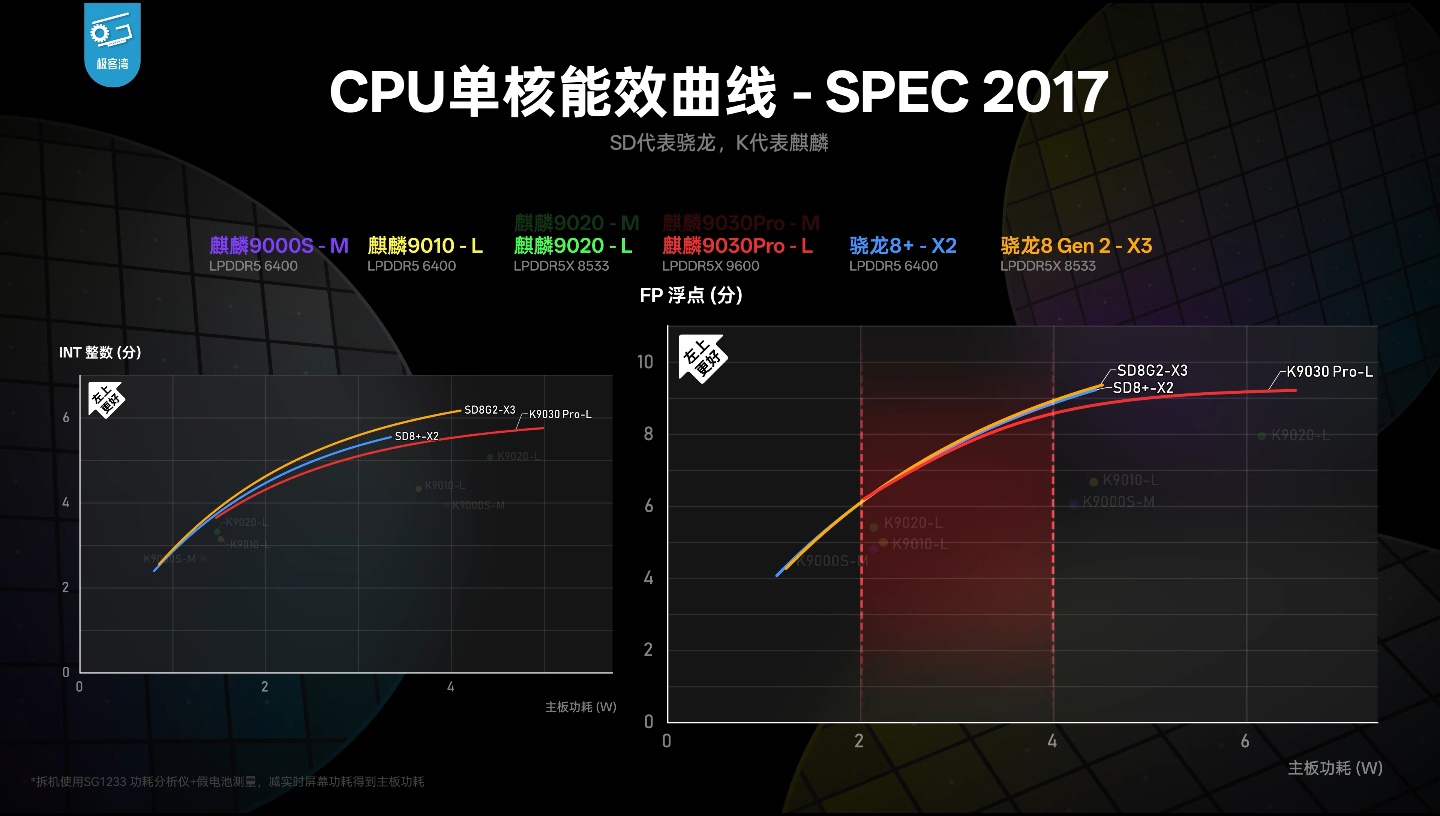
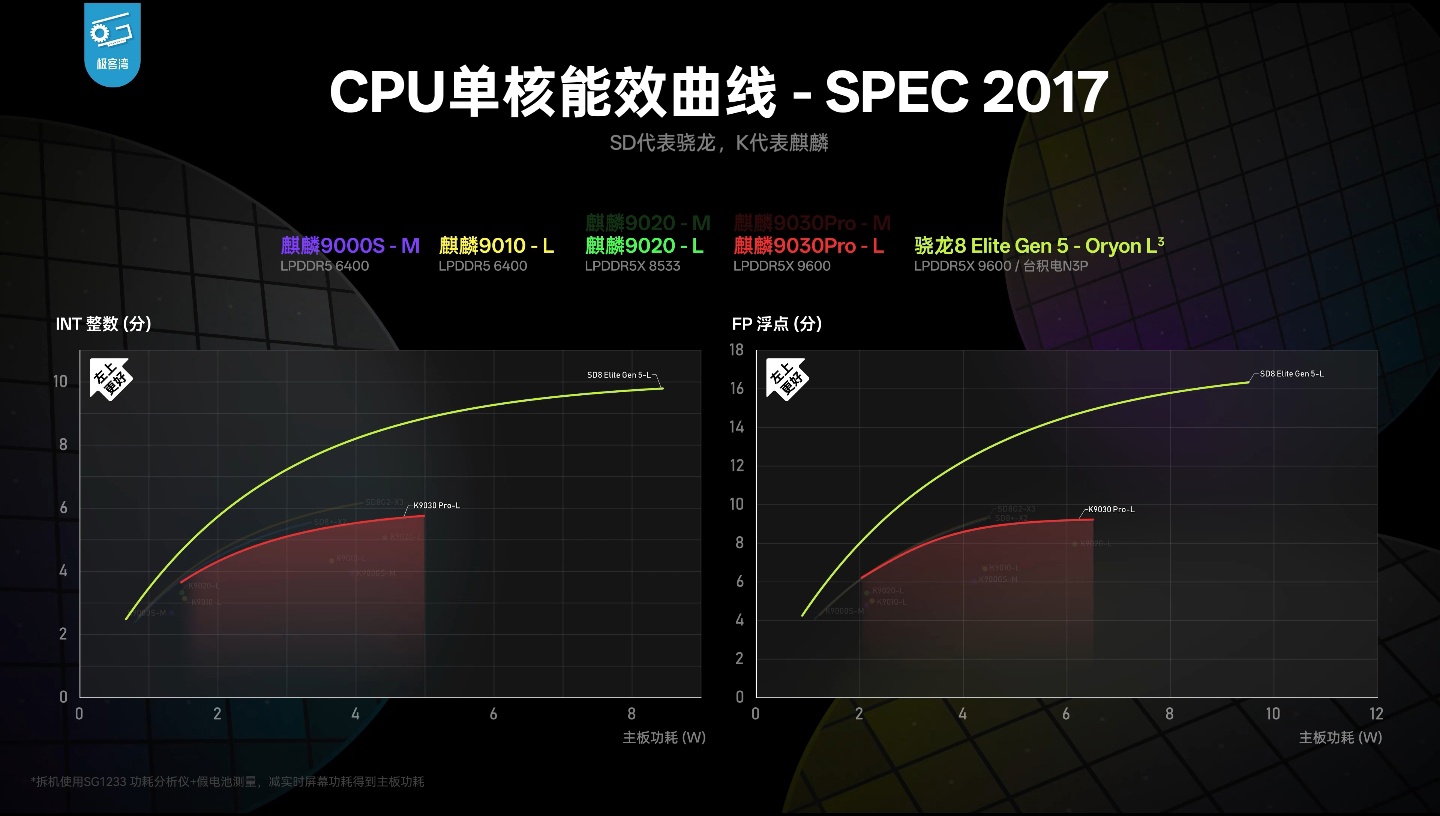
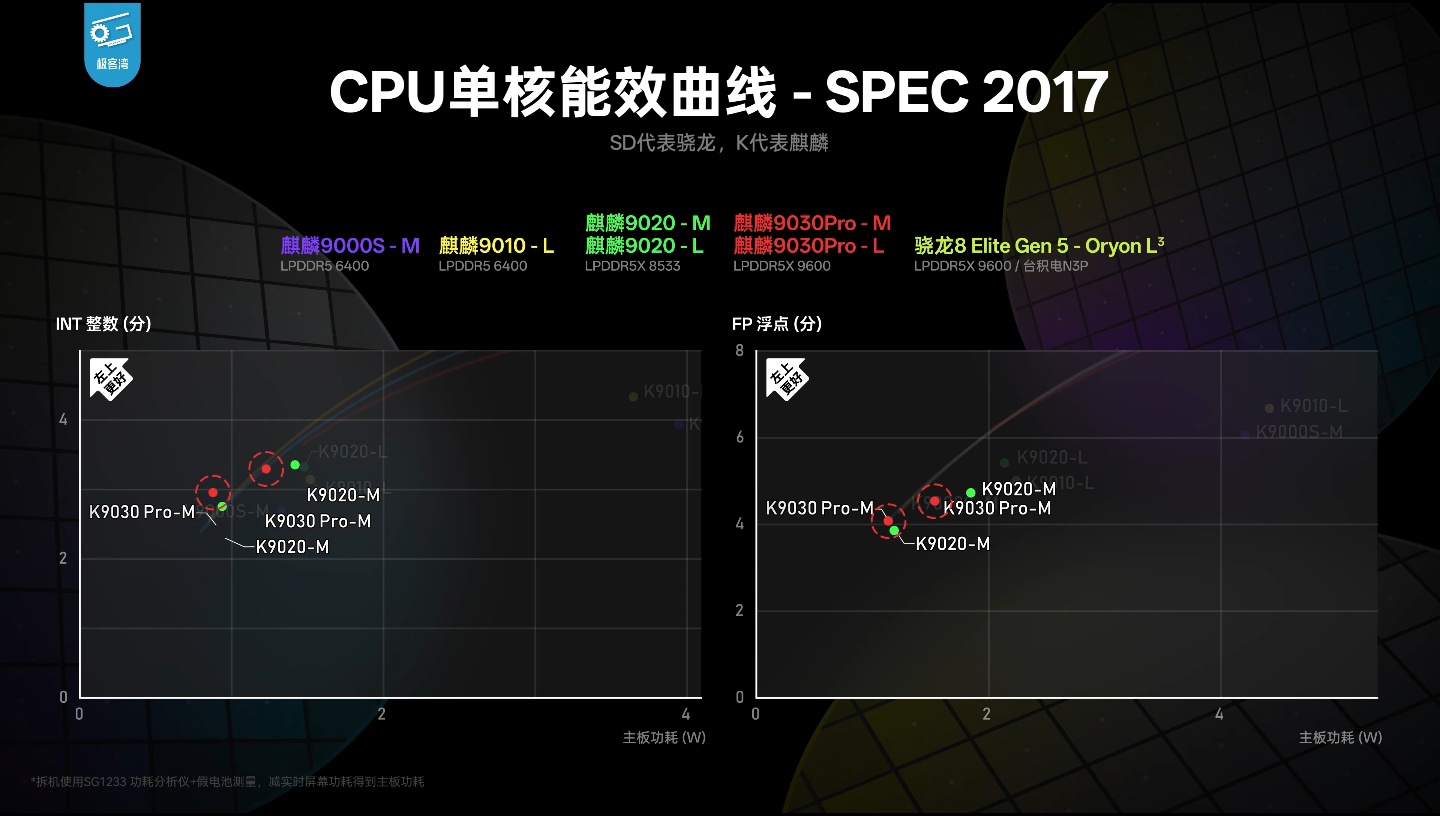
Geekerwan ran native SPEC CPU 2017 benchmarks on the chip using HiSmartPerf’s high-performance mode. The super-core’s efficiency curve has improved steadily: it now approaches the Snapdragon 8+ Gen1’s Cortex-X2 core in single-thread performance, and while it hasn’t fully closed that gap, the gap is now very narrow. Floating-point throughput showed even more improvement, especially in the mid-frequency range where efficiency is strongest.
Multi-core efficiency lands the 9030 Pro between the Snapdragon 8 Gen2 and 8 Gen3 — and at lower frequencies, it actually brushes up against the 8 Gen3’s efficiency curve. That’s a massive leap from the 9020 generation.
The GPU story is where things get interesting. The Mali 935 architecture doubles the ALU count over its predecessor, pushing raw compute power up over 200%. In 3DMark’s Steel Nomad Light benchmark, the 9030 Pro beats the 9020 by 76%, with an efficiency curve that lands near the Snapdragon 8+ Gen1.
But synthetic benchmarks only tell part of the story. The real test is how these numbers translate into actual use.
Geekerwan tested the HarmonyOS-native version of Genshin Impact on the Mate 80 Pro Max — and the results are striking. At 804P resolution (higher than the typical 720P), the phone held a steady 60 frames per second with the whole system drawing just 4.9W. That’s better efficiency than a Snapdragon 8 Gen3 device running the same game at a lower 720P resolution. The credit goes two ways: HarmonyOS native apps shed the Android runtime overhead, and the chipset’s graphics drivers benefit from deep, low-level optimization.
Honor of Kings at 120fps with maximum settings averaged just 3W of power draw. Games like Infinite Tango (Yihuan) still have room for scheduler optimization, but even so, performance lands in the top tier of current smartphones.
The Mali 935 GPU also marks Huawei’s first mobile ray tracing implementation. In heavy titles like Arena Breakout (Anqu Tuwei), driver-level optimizations keep power and thermals in check while maintaining playable frame rates.
Beyond the GPU, the 9030 Pro brings a redesigned ISP (version 9.0), a tri-core NPU architecture (one large, two small cores), and a modem that shrank 31% in die area from the previous generation.
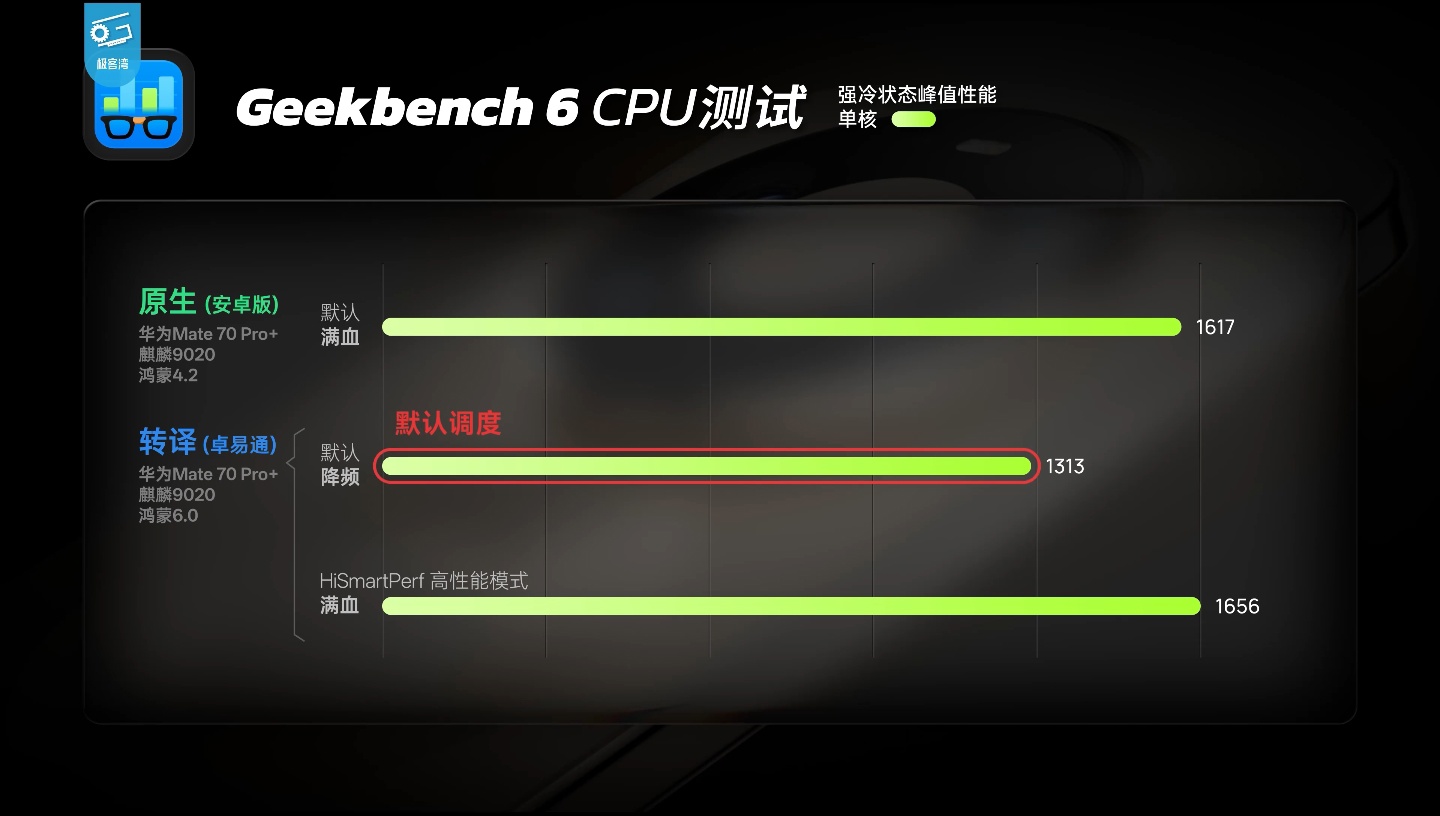
Geekerwan also highlighted system-level smoothness. The Mate 80 series, they said, significantly outperforms expectations for day-to-day fluidity. HarmonyOS’s scheduler avoids the broad-brush frequency throttling common on Android devices, and native apps built with HarmonyOS’s framework produce less overhead. The result is UI interactions that feel genuinely snappy rather than benchmark-fast-but-real-world-mediocre.
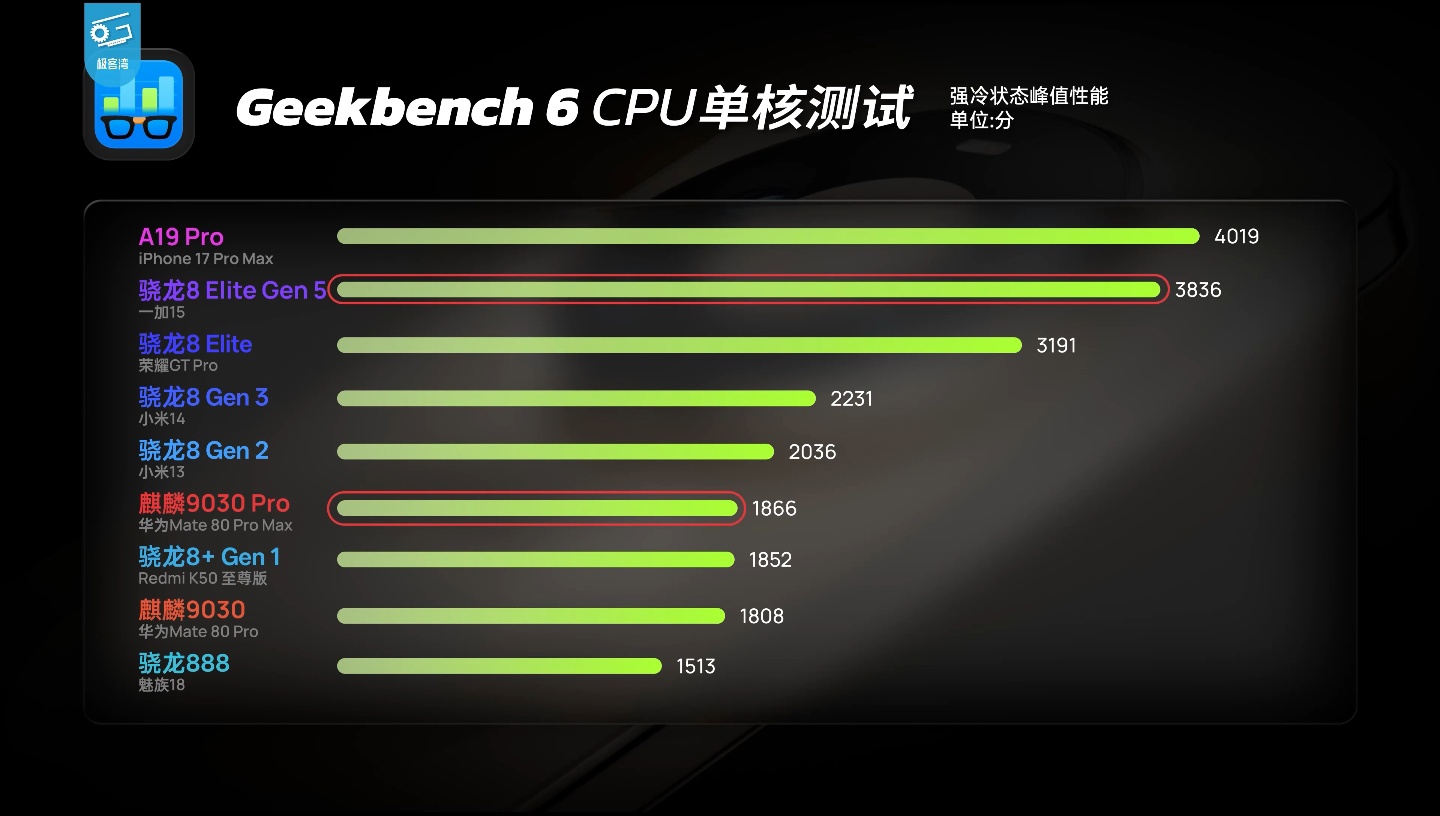
Battery life holds up its end, too. The Mate 80 Pro packs a 5,750mAh cell; the Pro Max bumps that to 6,000mAh. In Geekerwan’s 5G battery life 5.0 test suite, both models scored 8.14 out of 10 — comfortably in the flagship tier.
The full Geekerwan video is embedded below for those who want to dig into the raw charts and thermal camera footage.