Hyundai union calls partial strike after wage talks collapse — Kia and GM Korea could follow
The labor dispute at Korea’s largest automaker is heating up. Hyundai Motor’s union announced Wednesday that it will launch a partial strike starting July 13, after management and workers failed to reach a wage agreement in their 15th round of negotiations.
The strike will run for three days — July 13 through July 15 — with workers walking off the job for two hours each day, a legally protected form of industrial action. The decision came out of a meeting of the union’s Central Dispute Response Committee held at Hyundai’s massive Ulsan plant.
The talks broke down over the company’s latest offer. Management proposed a base salary increase of 89,000 won (about $68), a performance bonus equal to 350% of base salary plus an additional 10 million won ($7,600), and 15 shares of treasury stock per employee. That was a modest bump over the previous proposal — 5,000 won more on salary, 500,000 won more on bonus, and three extra stock shares. But the union said it still fell short.
“We’ll resume talks when the company comes back with a more forward-looking proposal,” the union told management, according to local reports.
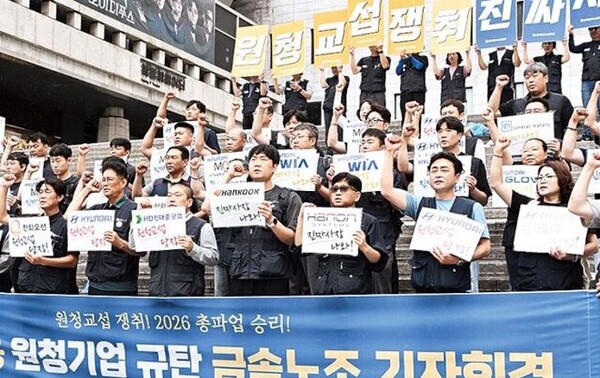
The ripple effects could spread across Korea’s auto industry. GM Korea’s union already secured legal strike authorization on July 6 and plans to keep negotiating through July 9. Kia’s union is scheduled to hold a “declaration of total struggle” ceremony on July 9, signaling it may also escalate. All three unions are pushing for similar demands — including performance bonuses tied to 30% of operating profit and extended retirement ages.
Why are the unions pushing so hard now? Simple: the companies are making money. A lot of it.
Hyundai’s second-quarter revenue is expected to hit 49.9 trillion won ($37.8 billion), up 3.4% year over year, according to FnGuide. The growth is largely driven by a weaker won boosting export earnings. If Hyundai crosses the 50 trillion won threshold, it would become only the third Korean company — after Samsung Electronics and SK Hynix — to join the “50 Trillion Won Club.”
Kia is also on a tear. Analysts expect Q2 revenue of 31.8 trillion won ($24.1 billion), up 8.5%. The company posted its highest-ever first-half sales at 1.63 million vehicles. GM Korea, while not publicly traded, exported 270,252 vehicles in the first half — up 12% from a year ago, with exports accounting for 98% of its total sales.
Despite the strong financials giving unions leverage, industry watchers say a full-scale strike across all three automakers is unlikely. The reason: the 15% tariff the U.S. now imposes on imported cars. The tariff has created a situation where revenue grows but operating profit doesn’t keep pace.
“We don’t see a high probability of a full strike at this point,” one auto industry insider said. Last year’s Hyundai strike lasted a total of 16 hours — modest by global standards — and this year’s action is even more restrained.