Mac Users Rally to Defend Microsoft Edge: 'It's Actually Better Than Chrome'
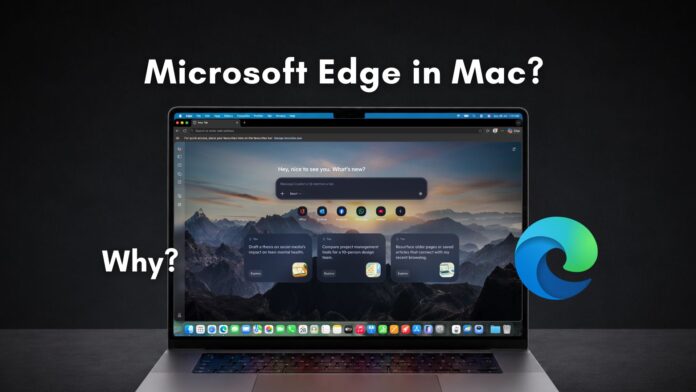
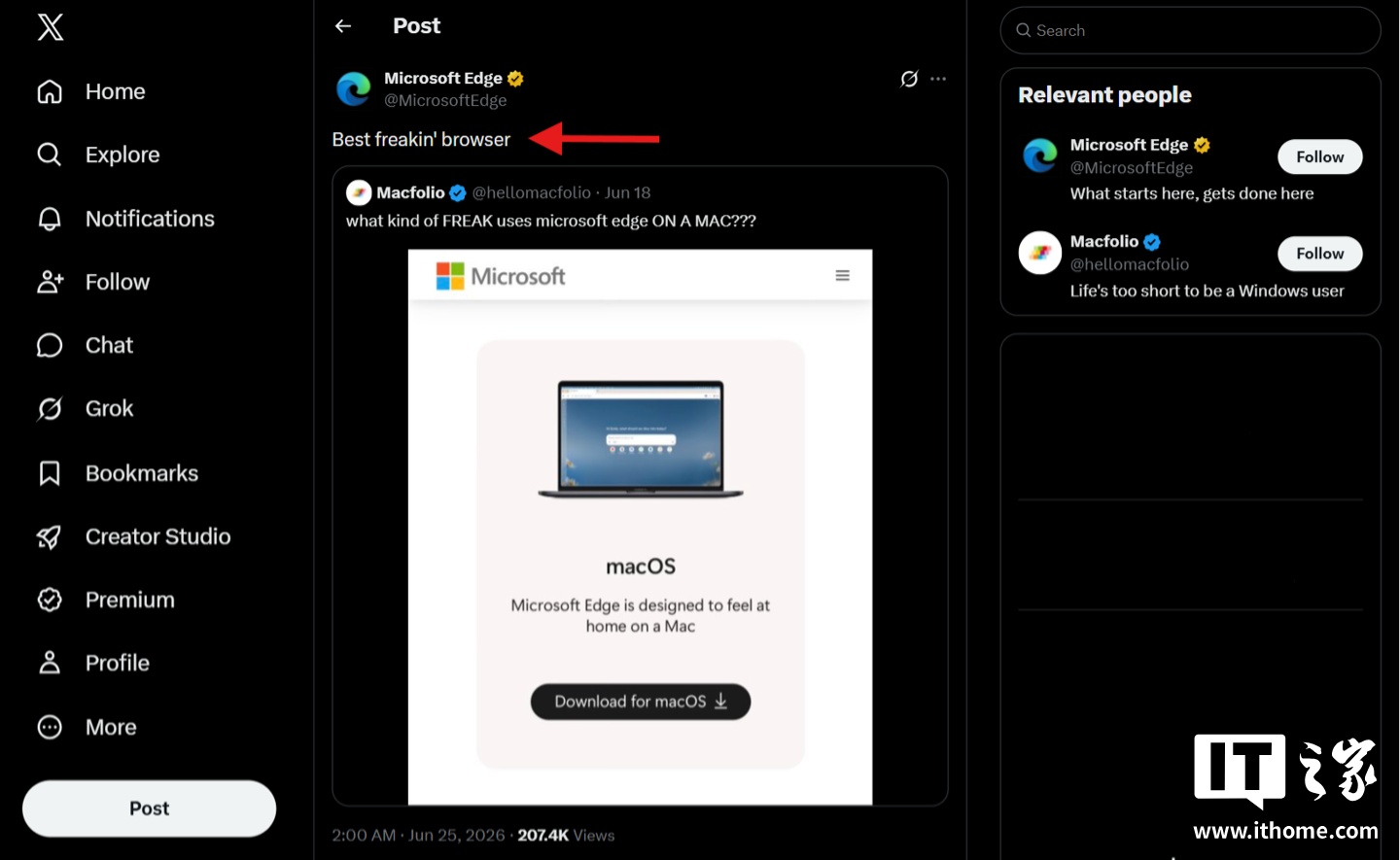
An X user posted a screenshot of Microsoft Edge’s Mac download page last week with a simple question: “What kind of weirdo would use Edge on a Mac?” The post racked up over 380,000 views. But instead of piling on with the usual Microsoft mockery, the replies took a sharp turn — Mac users started defending the browser.
“Edge is genuinely one of the best Chromium-based browsers out there in terms of speed and performance,” wrote user @aidancwest. “It uses minimal resources, has excellent memory optimization, and is actually faster than Chrome. The product is rock solid. The marketing is just terrible.”
Low memory usage was the single most cited reason. “It’s the most memory-efficient browser on Mac,” said @peter_cheng. User @secretised added: “It’s the only browser where opening 4 tabs won’t eat 4GB of RAM.” Another commenter put it bluntly: “You get Chromium’s speed without Chrome’s terrible memory management.”
Microsoft’s Edge account noticed the thread and replied with a two-word quote tweet: “Best browser.” For a company that rarely engages this casually, the confidence was notable — and it was backed by an unsolicited groundswell of support.
Beyond raw performance, enterprise users pointed to a more practical reason: compatibility. Many government websites only work with Edge because their security certificates weren’t configured for Chrome, even though both share the same Chromium foundation. Corporate Mac users said their companies manage browsers through Microsoft Intune and Group Policy — machines come with Edge pre-installed.
“Why not use Edge on a Mac when you’re already running Office, VS Code, and Teams?” asked user @AjitKumar. The logic is hard to argue with.
There’s also the Bing Rewards program. Microsoft has been running points-based giveaways — including a million-dollar prize pool — that incentivize using Edge and Bing, and Mac users can participate just as easily.
Of course, not everyone was buying it. “You’re just a Chromium reskin,” one reply shot back under Microsoft’s post. It’s a fair point, but it ignores an inconvenient fact: Microsoft has been one of the largest contributors to the Chromium open-source project since Edge switched to the engine in 2020. Thousands of commits from Microsoft engineers have improved rendering, security, accessibility, and performance — many of which also made Chrome better.
Mac-specific features helped too. Edge on Mac shipped vertical tabs and sleeping tabs months before Chrome had them. Apple later borrowed Edge’s AI tab organization concept for Safari, folding it into Apple Intelligence.
The biggest barrier has always been the Microsoft account requirement for syncing data. That wall is finally coming down: in July, Edge will support Google account login. For users who switched from Windows to Mac specifically to escape Microsoft’s ecosystem, that removes the last friction point.
But for every good decision Microsoft makes with Edge, there’s a baffling one right behind it. Version 149 removed Collections and the sidebar. Then Drop, the file-sharing tool, got pulled. Microsoft’s explanation — “simplifying the browser” — gets harder to swallow with each removal. In all three cases, the official replacement was the same: Copilot AI assistant.
A major AI-driven UI redesign is coming, pushing Edge’s look toward Copilot and Bing’s design language. Users have pushed back hard. Enterprise workers in particular have complained about Edge embedding Copilot into workplace workflows, and Microsoft has had to respond to those complaints directly. There was also the Windows 11 update that popped open Edge automatically on some machines, which didn’t help.
The picture that emerges is of a genuinely good browser that keeps getting undermined by Microsoft’s own product decisions. The Mac users who spoke up weren’t defending the brand — they were defending the tool. If anything, the episode proves that Microsoft still has a real shot at competing in the browser market. It just needs to get out of its own way.