Nvidia's RTX Spark drivers confirm two GPU tiers ahead of fall launch
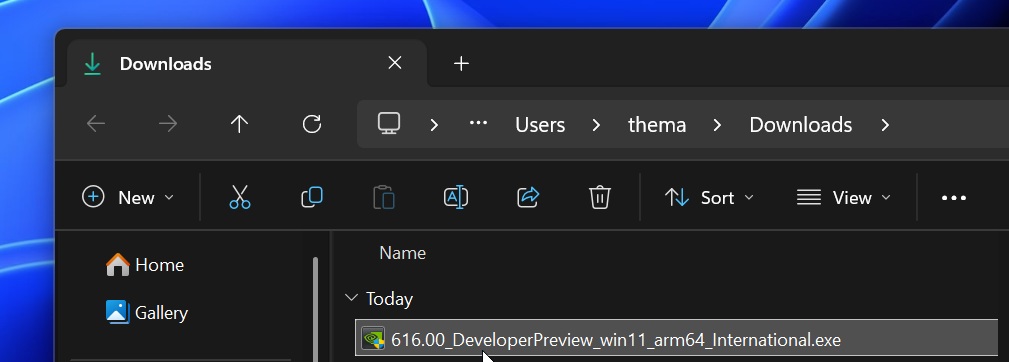
Nvidia just published Windows 11 Arm64 drivers for its upcoming RTX Spark platform — and buried inside the installer files are the clearest hardware specs yet for the N1X chip.
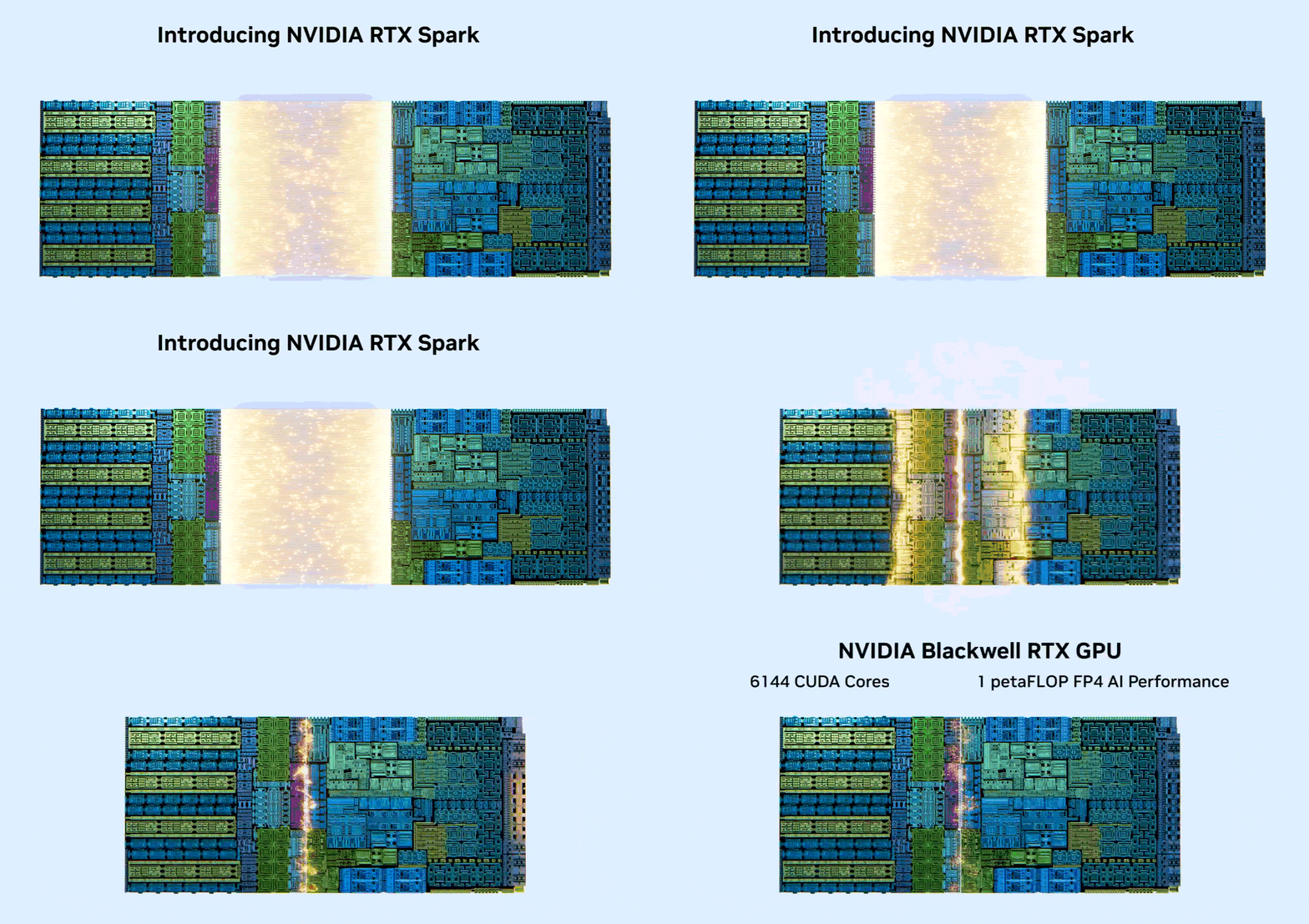
The driver, version 616.00, targets development test hardware rather than retail devices, but its configuration files tell a detailed story. An INF file labeled “nv_surface_woa.inf” lists multiple Nvidia device IDs, including two distinct RTX Spark N1X GPU configurations. One carries 6,144 Blackwell RTX cores. The other steps down to 5,120.
A third entry labeled “NVIDIA Desktop Device” also appears, hinting at a compact desktop variant that Nvidia or its partners may have in the works. No details on that product yet.
The driver also includes references to an “NVIDIA NPU” component, using device IDs associated with Nvidia’s deep learning accelerator architecture. It’s a reminder that the RTX Spark package isn’t just about GPU muscle — it’s a complete system-on-chip with dedicated AI processing.
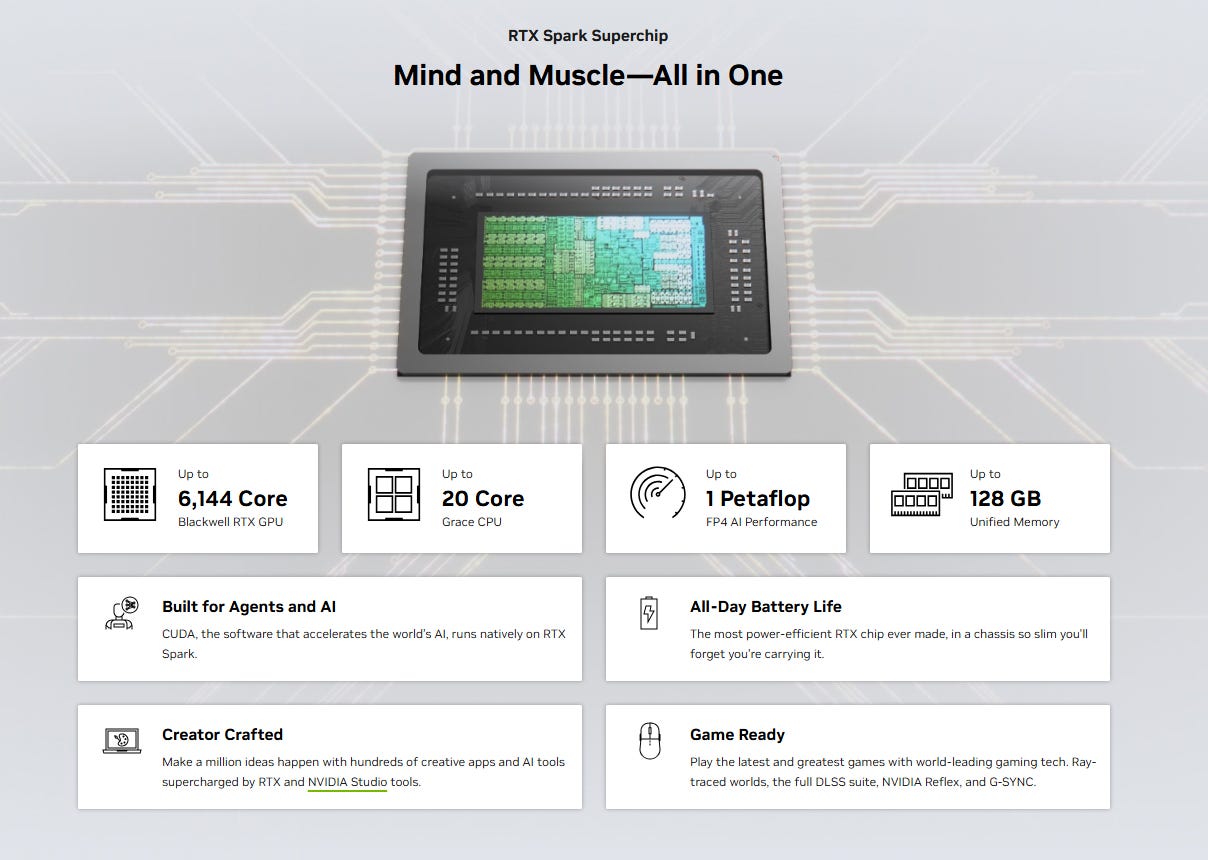
Nvidia and Microsoft first announced the RTX Spark platform on May 31, 2026, positioning it as a new class of Windows PC for developers, creators, and power users. The architecture pairs Arm-based CPU cores with Blackwell GPU technology, delivering up to 20 Arm CPU cores, 6,144 Blackwell RTX cores, and 128 GB of unified memory in a single package.
Microsoft has been tuning Windows 11 specifically for this hardware. The company added a feature called Workload Profile Scheduling, which lets the operating system better manage task distribution across the chip’s heterogeneous core architecture. A separate framework — the Microsoft Power and Thermal Framework — handles performance scaling and power delivery, particularly for laptops that need to balance high loads with thermal constraints.
First RTX Spark devices are expected to ship in fall 2026. Microsoft, ASUS, Dell, HP, Lenovo, and MSI are all planning products, ranging from notebooks to small-form-factor desktops. Microsoft has already revealed the Surface Laptop Ultra, which tops out at 128 GB of unified memory and targets local AI workloads, development, and creative work.
For the Windows on Arm ecosystem, RTX Spark marks Nvidia’s first serious push into Arm-based Windows PCs. Until now, Qualcomm’s Snapdragon platform has dominated the space. Microsoft has been steadily improving Arm compatibility — including x64 app emulation through its Prism layer — and Nvidia claims RTX Spark will support the existing Windows application and game ecosystem, though real-world testing will have to wait for retail hardware.
What’s still missing: pricing, final benchmark numbers, and a firm release date. The driver leak confirms the platform is moving through software validation, but the full picture won’t come together until the first retail units arrive this fall.