AMD's Zen 6 'Medusa Point' APU surfaces again — single-core performance 35% ahead of Zen 5
AMD’s next-generation Zen 6 mobile processor, codenamed “Medusa Point,” has reappeared in Geekbench with the highest scores yet for an engineering sample.
The chip — a 10-core, 20-thread ES unit identified as “100-000001713-33_N” — posted a single-core score of 3,329 and a multi-core result of 16,555. That’s roughly 5% higher than its previous single-core run of 3,174, and nearly 9% above the earlier multi-core mark of 15,000. The test system, an AMD Plum-MDS1 reference platform with 32GB of RAM running Windows 11 Pro, was the same environment used in prior leaks.
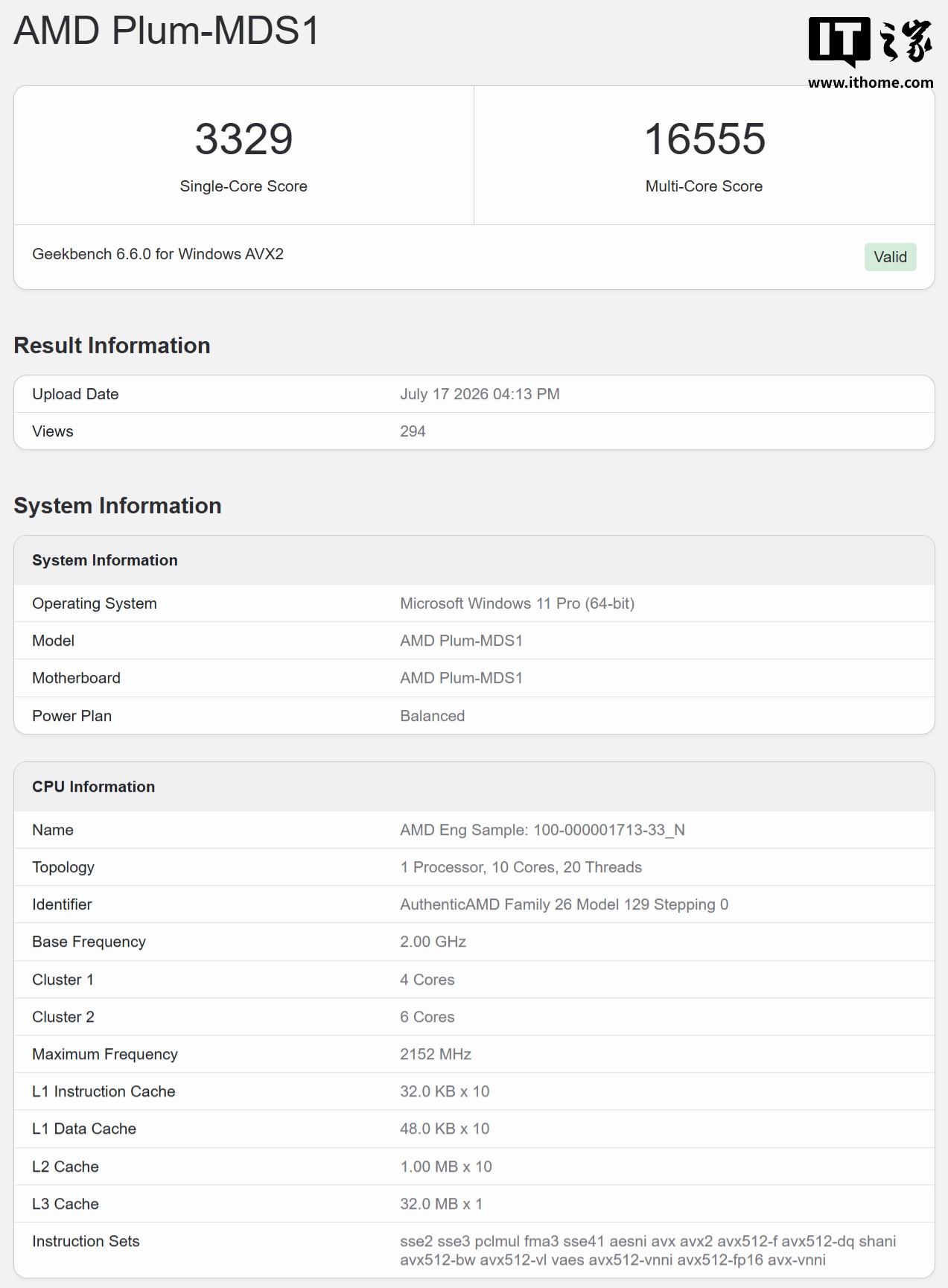
By the numbers, this 10-core sample’s single-core performance now sits about 35% above the Ryzen AI 9 365 — a Zen 5-based mobile processor. The gap is wide enough to suggest the architectural uplift from Zen 5 to Zen 6 is real, even if this early silicon is still several steps removed from retail hardware.
Geekbench results are notoriously sensitive to system configuration, firmware revisions, and power state settings. AMD has not confirmed any final clocks, core counts, or power targets for Medusa Point, so these numbers should be treated as directional rather than definitive.
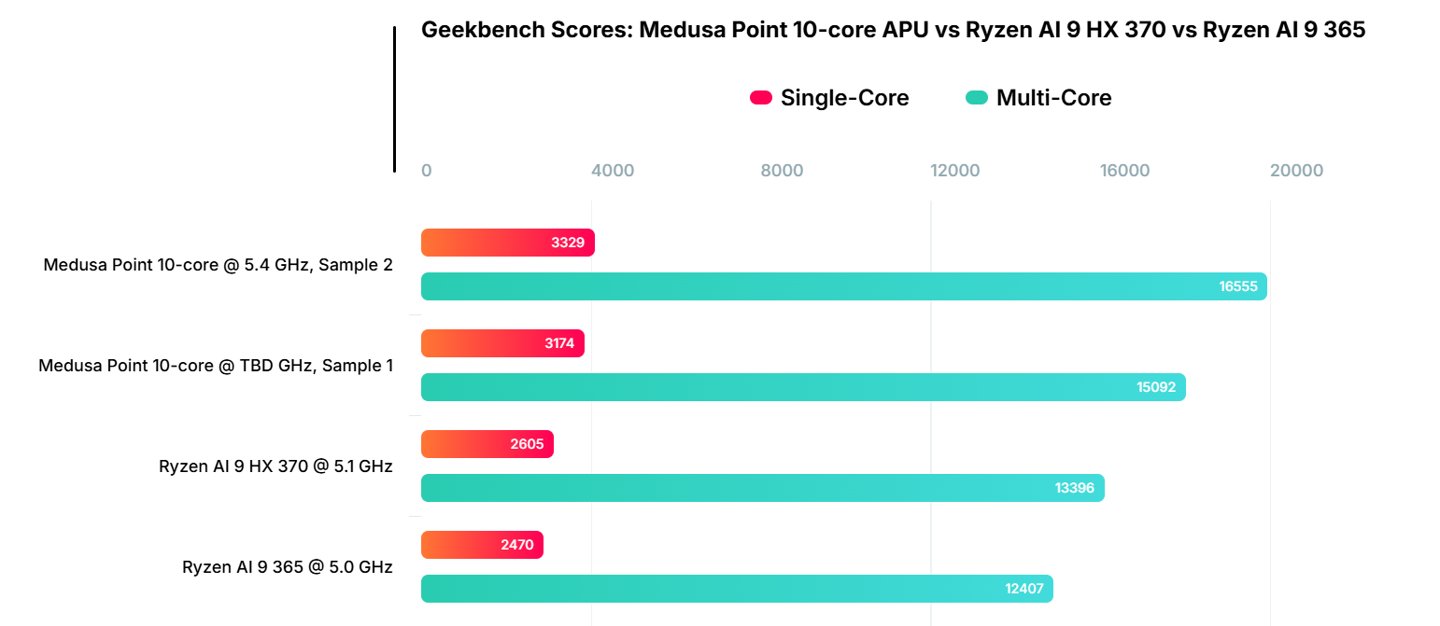
What’s more concrete: the engineering sample hit a peak frequency of 5,370 MHz, roughly 300 MHz higher than the top-end Strix Point (Ryzen AI 300 series) parts currently shipping. That suggests AMD’s process and frequency scaling on Zen 6 are both progressing well.
The chip carries 32MB of L3 cache across its 10 physical cores (20 logical threads). Whether Medusa Point uses a hybrid big.LITTLE-style core arrangement remains unconfirmed — AMD has not disclosed the core composition.
Medusa Point is expected to target the laptop segment, with integrated AI acceleration carried over from the current generation. AMD has not announced a launch timeline or product lineup, though the steady cadence of engineering sample leaks points to active development and validation.
A related report from earlier this month showed a 29% single-core and 22% multi-core lead for an earlier Medusa Point sample over the Ryzen AI 9 365 — the latest results push that gap wider.