AI Can Now Predict Turbulence 13 Minutes Before It Hits Your Plane
You know the feeling. You’re mid-sip of a drink or mid-sentence in conversation, and suddenly the plane drops. Your stomach lurches. The seatbelt sign pings on — way too late.
That delay isn’t pilot error. It’s a fundamental problem: turbulence is one of the hardest things in aviation to predict. Pilots rely on weather briefings, reports from other aircraft, air traffic control chatter, and gut instinct. None of it is real-time. None of it is precise.
But that’s changing. A growing number of airlines are now using AI to predict turbulence minutes before it arrives — and the results are striking.
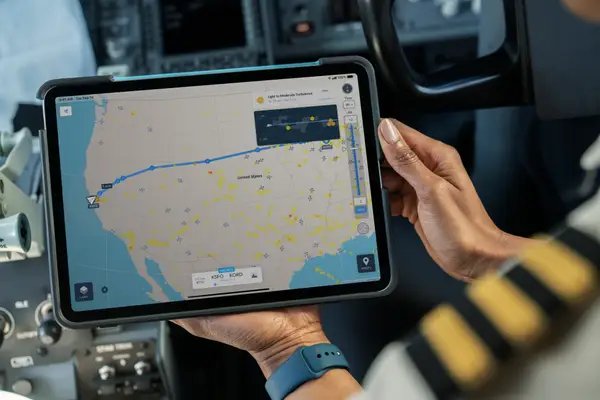
The system getting the most attention is called SkyPath. It’s already in use by United Airlines, Japan Airlines, and Silver Air Private Jets, among others. Here’s how it works: every aircraft in flight is constantly uploading real-time conditions — bumps, shifts, wind data from their onboard iPads. SkyPath’s AI model aggregates all that data alongside weather forecasts and runs it through a prediction engine. The company claims 90% accuracy for turbulence forecasts up to 24 hours out.
For pilots, the difference is concrete. Will Ware, a US Airways captain with over 40 years of flying experience who now helps promote SkyPath, described it like this: “My iPad pops up a notification telling me there’s moderate turbulence in 13 minutes. I can call the cabin crew, tell them to sit down in 10 minutes, then turn on the seatbelt sign. By the time we hit it, everyone’s secure.”
He compares SkyPath to Google Maps. Just as thousands of cars sharing traffic data build a real-time picture of road conditions, every plane sharing what it’s flying through builds a clearer picture of what’s ahead. The system also helps pilots decide when it’s safe to turn the seatbelt sign off — a capability that matters more than it sounds like.
The decision of when to switch that sign on is surprisingly delicate. Flip it too early and cabin service grinds to a halt — meals half-served, drink carts stuck in aisles. Flip it too late and passengers and crew get hurt. Turbulence has thrown unbelted people into cabin ceilings. In 2024, a Singapore Airlines flight hit sudden severe clear-air turbulence that killed one passenger and injured dozens. The seatbelt sign had come on only seconds before. A year earlier, a Lufthansa flight serving meals hit violent turbulence with the sign still off; seven people ended up in the hospital.
SkyPath isn’t alone in this space. Japan’s All Nippon Airways has deployed its own AI turbulence system, which it says achieves roughly 86% accuracy using historical flight data and atmospheric models. The International Air Transport Association is coordinating a broader effort called Turbulence Aware, with nearly 30 airlines sharing live turbulence data and exploring how to layer AI on top of it.
A 2025 study by Japan Airlines found that AI tools reduced pilot workload and improved safety decisions — but noted that prediction quality would improve significantly if more carriers in Southeast Asia joined the data-sharing effort.
SkyPath’s CEO Maya Shpak says the data backs the technology. After analyzing two years of operational data from multiple airlines, the company found that flights using SkyPath experienced roughly 50% fewer encounters with moderate or greater turbulence — even as the global frequency of reported turbulence rose. In a separate analysis of 180 real turbulence events, the system had relevant data on 79% of them before they happened. That means pilots had a real window to change altitude, reroute, or at least get everyone belted in.
There’s a growing body of research suggesting turbulence — particularly clear-air turbulence, the kind that comes with no visual warning — will become more frequent as global temperatures rise. The changing atmosphere makes accurate prediction more urgent, not less.
Still, turbulence remains the most feared part of flying for many passengers. A study by Phobia Aero found that 25 to 30 percent of adults experience some level of anxiety when flying, and 67 percent said turbulence was their biggest fear. Ware, the captain, understands the anxiety — you’re in a metal tube at 35,000 feet with zero control. He offers a different framing. Turbulence, he says, is like driving on a bumpy road. And modern aircraft handle it far better than passengers realize.
He uses a simple analogy: imagine a crumpled ball of paper inside a cup of jelly. Shake the cup, and the paper bounces around inside but never falls out. A plane in turbulence works the same way. Widebody jets like the Boeing 787 have flexible wings that bend and absorb much of the force. No modern commercial airliner has ever crashed because of turbulence alone.
Maya Shpak says the goal isn’t just safety — it’s also about reducing the dread. When pilots can tell passengers ahead of time what’s coming, people feel like they’re in the loop. They get a sense of control back. And that, sometimes, matters as much as the seatbelt sign itself.