OpenAI's new strategy chief calls open-weight AI models "decelerationism" — and suggests the US manufacture FUD about Chinese models
Moonshot AI dropped Kimi K3 last week — a 2.8 trillion parameter model that topped the Frontend Code Arena leaderboard with 1,679 points, beating Claude Fable 5. The company said it would release the model weights soon. That decision has drawn sharp criticism from OpenAI’s newly appointed head of strategy.
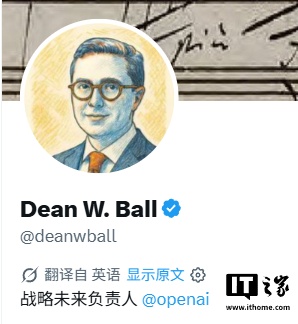
Dean W. Ball, who joined OpenAI this month as its first Strategy Future Lead, didn’t mince words. On social media, he called open-weight models a form of “decelerationism” — arguing that releasing cutting-edge AI weights for free undermines the economic incentives that drive AI capital expenditure. “Open-weight models are, by their very nature, decelerationist,” Ball wrote, according to IT-NEWS.
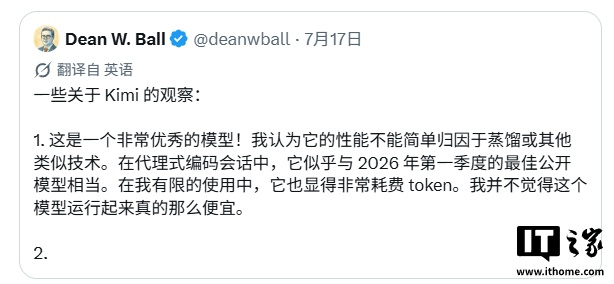
Ball acknowledged that Kimi K3 is genuinely impressive. He said it couldn’t be dismissed as a simple distillation of existing models. What surprised him more, he said, was that China continues to allow the open-source release of models this capable.
Then Ball went further. He floated a hypothetical — an “non-biological, invisible, dangerous, and infinitely self-replicating agent” that could escape from a laboratory in the future. The implication being that open-weight models increase the risk of such scenarios.
Perhaps most striking was Ball’s suggested strategy for the US government to counter Chinese open-source AI. He publicly recommended that Washington doesn’t even need evidence — it just needs financial regulators like the Federal Reserve to issue soft guidance suggesting Chinese models “might have backdoors.”
“You just need to create enough regulatory risk that every regulated enterprise backs off,” Ball said, according to IT-NEWS.
The rhetoric is not subtle. Ball is proposing regulatory fear as a competitive tool — essentially weaponizing compliance uncertainty against open-source AI from China. Whether this reflects OpenAI’s official posture or just Ball’s personal views remains unclear; he joined the company only weeks ago.
Ball’s background adds context. Before OpenAI, he served as a senior advisor at the White House Office of Science and Technology Policy, where he worked on AI policy. His new role at OpenAI positions him at the intersection of AI development and government relations — a line the company has been walking more carefully as it pushes for massive infrastructure spending.
The clash captures a deeper divide in the AI industry. On one side: companies like Moonshot AI that bet on open-weight models as a way to accelerate global research and adoption. On the other: firms like OpenAI that argue open releases erode the commercial case for building frontier AI systems — and that governments should actively discourage them.
Ball’s suggestion to manufacture regulatory doubt about Chinese models is likely to fuel an already heated debate. Whether the US government takes that advice is another question. But the fact that a senior OpenAI executive is openly proposing it says something about how the AI industry’s openness wars are escalating.