After 30 Years of Development, Open-Source Windows Clone ReactOS Can Finally Run Half-Life 2
The ReactOS project has been chasing a seemingly impossible goal for nearly 30 years: build an open-source operating system that can run Windows applications. It has been a slow, grinding process. But this week, the team hit two milestones. One is a fun demo. The other could matter for years to come.
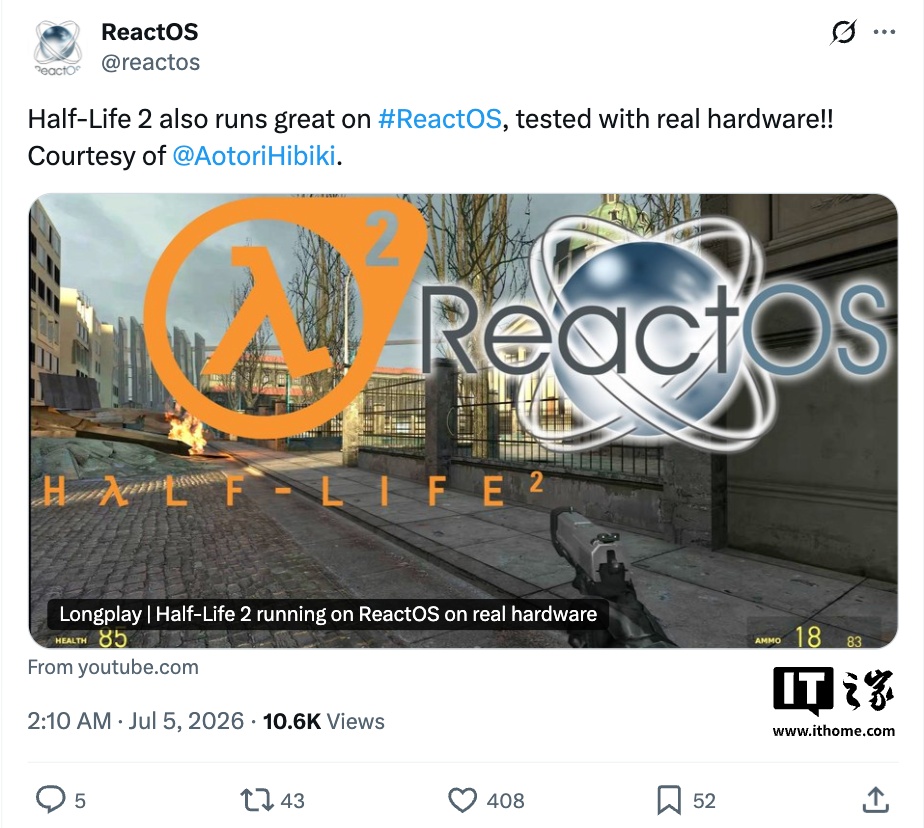
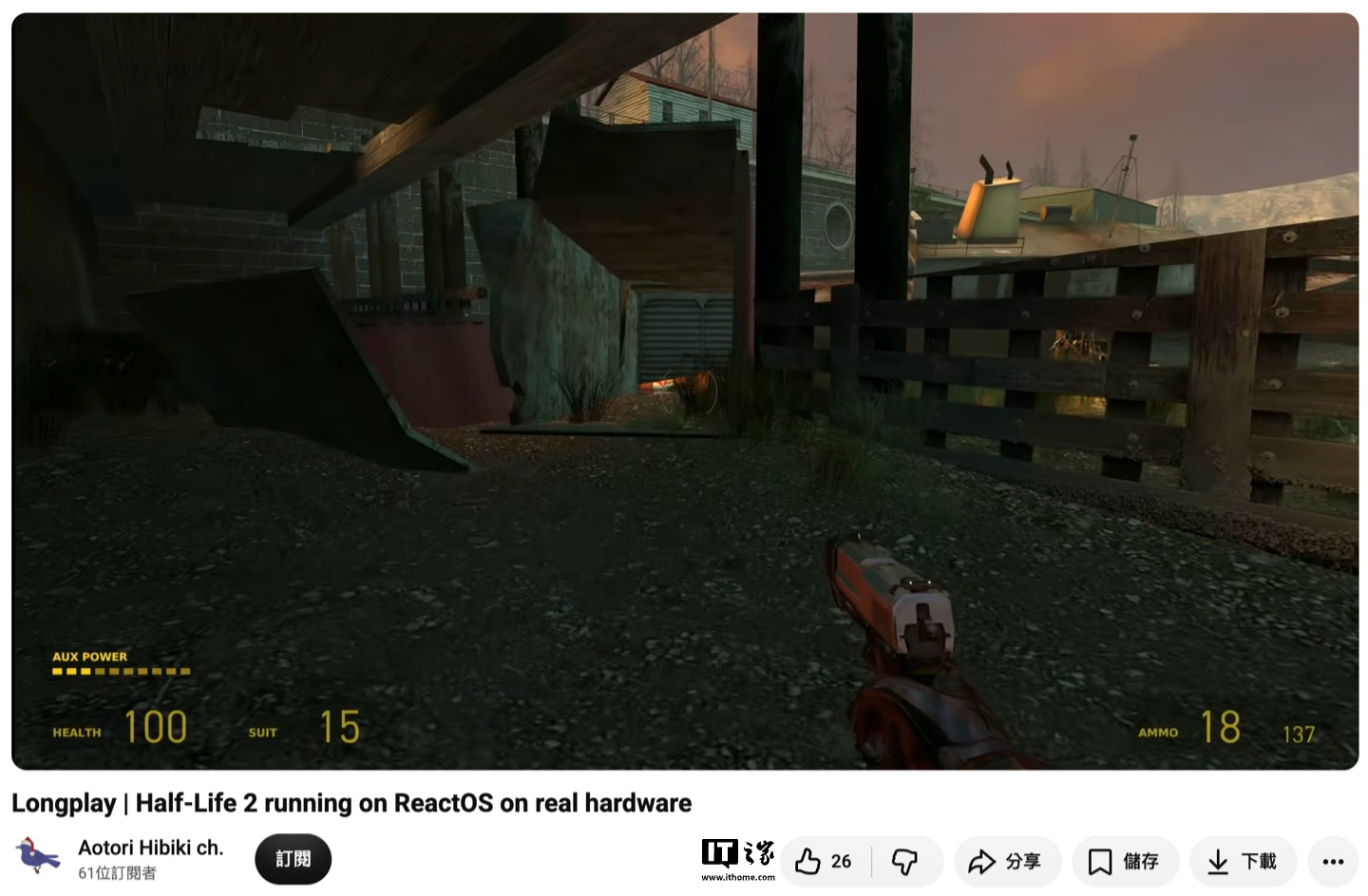
First, the fun part. ReactOS can now run Half-Life 2.
That is a 22-year-old game, and on paper it does not sound like much. But it is a real step up from last month, when the project showed footage of the original Half-Life booting on ReactOS. Half-Life 2 uses Valve’s Source engine, which demands far more from an OS — DirectX 9 rendering, threaded audio, and complex input handling. Getting it to boot means the ReactOS kernel, graphics stack, and driver model are all working together at a level they have never reached before.
The test rig used a GeForce GTX 960 with NVIDIA’s legacy 368.61 Windows driver and a Creative Sound Blaster Audigy sound card. The latest nightly build launched the game.
The second milestone is quieter but potentially more important. ReactOS recently implemented its first Windows NT6 system calls. NT6 is the kernel architecture that shipped with Windows Vista and Windows 7 — the foundation beneath the Win32 API. For most of its life, ReactOS was limited to the NT 5.2 (Windows Server 2003) syscall interface. Adding NT6 processor functions opens the door to running software that relies on Vista-era or later kernel behavior.
The scope of what ReactOS can realistically run is still narrow. DirectX 10 and 11 titles, modern Windows apps, and anything depending on Windows 8 or 10 kernel features remain out of reach. But the trajectory has shifted. The project started in 1996 as a clean-room clone of Windows, and for many years simply booting to a command prompt was an achievement. Today it plays one of the most influential games of the 2000s.
For the open-source community, that trajectory matters as much as any compatibility checklist.