A phone with gimbal-level video stabilization might ditch its giant camera sensor
There’s a tug-of-war happening inside the next generation of camera phones. Bigger sensors mean better image quality. Bigger stabilization hardware means smoother video. You can’t max out both at the same time — not inside a phone that still fits in your pocket.
A familiar leaker just threw a new variable into that equation.
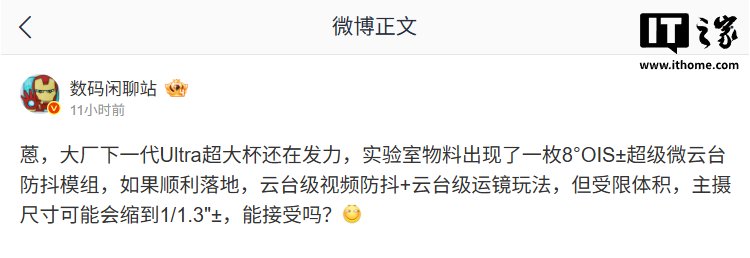
Digital Chat Station, the source behind many accurate Chinese phone leaks, reports that a major manufacturer is testing an 8° OIS± super micro-gimbal module for its next Ultra flagship. If it makes it to production, it would deliver gimbal-grade video stabilization — the kind that lets you walk and shoot without the jitter, or execute smooth panning shots that look like they came from an actual camera rig.
The trade-off: the main camera sensor would likely shrink to around 1/1.3 inches. That’s still large by most standards, but a step down from the 1-inch-class sensors that have become common in Chinese flagship phones over the past two years.
It’s not clear yet which phone this module is destined for. Commenters are split between two candidates: vivo’s X500 Ultra or OPPO’s Find X10 Ultra.
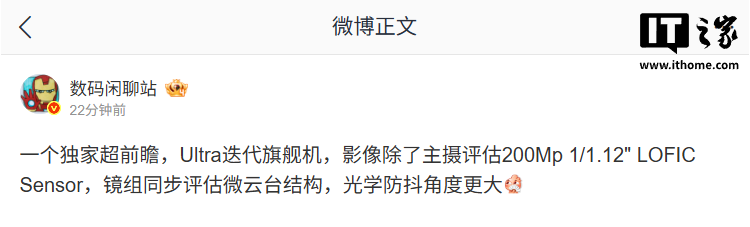
The same leaker posted on July 6 about what was widely understood to be the OPPO Find X10 Ultra. That leak described a phone evaluating a 200MP 1/1.12-inch LOFIC sensor paired with a micro-gimbal structure for wider-angle OIS. That combination would push sensor size to the extreme, which makes the new 8° gimbal rumor an interesting contrast — are these two different phone projects, or did the spec direction change?

vivo has the longer history with this kind of hardware. The company put a micro-gimbal in the X50 series back in 2020 — a module where the entire lens-and-sensor assembly moves as one unit, eliminating the relative motion between components that plagues conventional OIS designs. Earlier this year, the vivo X300 Ultra launched with a 3° OIS ultra-large telephoto lens, which vivo’s product manager described as a revival of the micro-gimbal era.
An 8° module would be a significant jump from that 3° implementation.
The sensor size trade-off is the detail worth watching. A 1/1.3-inch sensor is still capable of excellent photography, but the selling point of recent Ultra-tier phones has been their willingness to stuff in physically large sensors — the Xiaomi 15 Ultra and vivo X200 Pro both use 1-inch sensors. If a manufacturer chooses gimbal stabilization over sensor size, they’re betting that video quality and stabilization matter more to their audience than marginal low-light gains from a larger sensor.
Details are sparse for now. But the direction of travel — wider OIS angles, mechanical gimbal modules, and the hard engineering choices they force — tells you where phone camera R&D is heading.