SoftBank's Masayoshi Son Dismisses Musk's Space Data Center Vision, Says AI Race Will Be Won on the Ground
SoftBank Group founder Masayoshi Son has poured cold water on Elon Musk’s ambitious vision of building data centers in space, arguing that the AI arms race will ultimately be decided by computing power firmly planted on Earth.
Speaking at SoftBank mobile subsidiary’s annual shareholder meeting on Tuesday, Son dismissed the core premise behind orbital data centers — that they could dramatically cut electricity costs by harnessing solar power in space. “Electricity costs account for a very low proportion of overall data center operating expenses,” Son explained. The real cost driver, he noted, is the hardware itself: chips and other computing equipment.
Even if some power savings were achievable, Son argued they would be offset by the enormous expense of transporting equipment into orbit, the ongoing cost of in-space maintenance, and the unavoidable communication latency introduced by beaming data back to Earth. When a shareholder asked whether the Japanese conglomerate would follow SpaceX CEO Musk’s lead in space-based computing, Son was unequivocal: “In this AI battle, the next few years are far more important than what might happen a decade or so from now.”
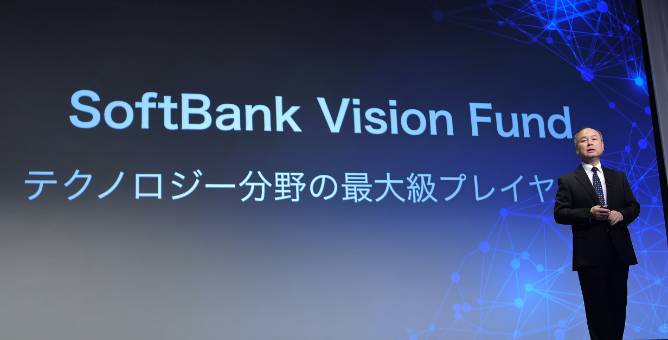
Son described Musk as “an extraordinary agent of change,” yet made clear that SoftBank’s strategy is firmly terrestrial. “The first mover wins,” he said. The firm intends to concentrate on building “powerful” data center computing capacity on the ground.
To that end, SoftBank has already committed approximately $65 billion to OpenAI, and Son has pledged hundreds of billions more toward constructing data centers and supporting infrastructure worldwide. The push comes as global demand for AI compute continues to surge — SpaceX and Jeff Bezos’ Blue Origin have both announced plans to build and launch orbital data centers, aiming to bypass the dual constraints of terrestrial energy supply and physical space.
Son acknowledged the intensifying competition in AI, noting that OpenAI, along with its biggest rivals Anthropic and Google, still have ample room to grow. The AI industry, he said, remains in its early stages with the potential for tenfold to hundredfold market expansion ahead.
But for Son, the path to capturing that growth runs through data centers built on solid ground — not through the vacuum of space.