SpaceX cleared for Starship Flight 13 — 20 Starlink satellites on board
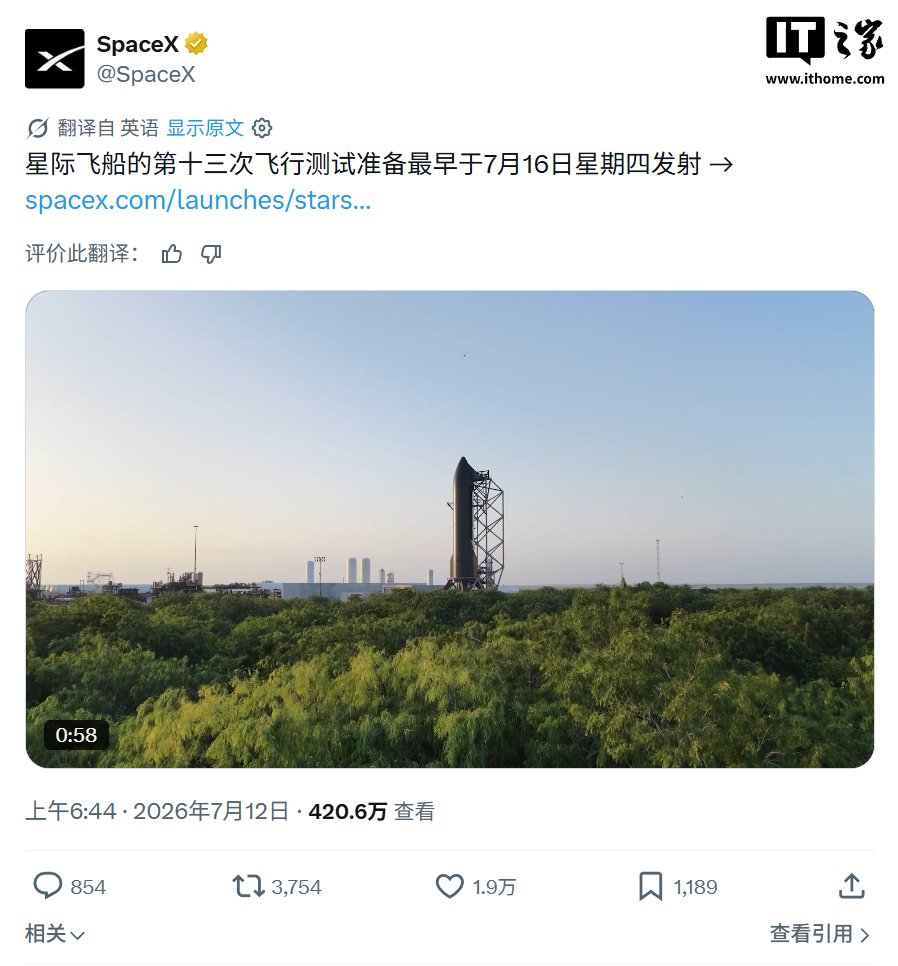
The FAA has officially closed its investigation into the anomaly that cut short Starship’s 12th test flight, clearing SpaceX to attempt its 13th launch as early as July 16. This time, the rocket will carry 20 Starlink V3 satellites — the first real payload for the world’s most powerful launch vehicle.
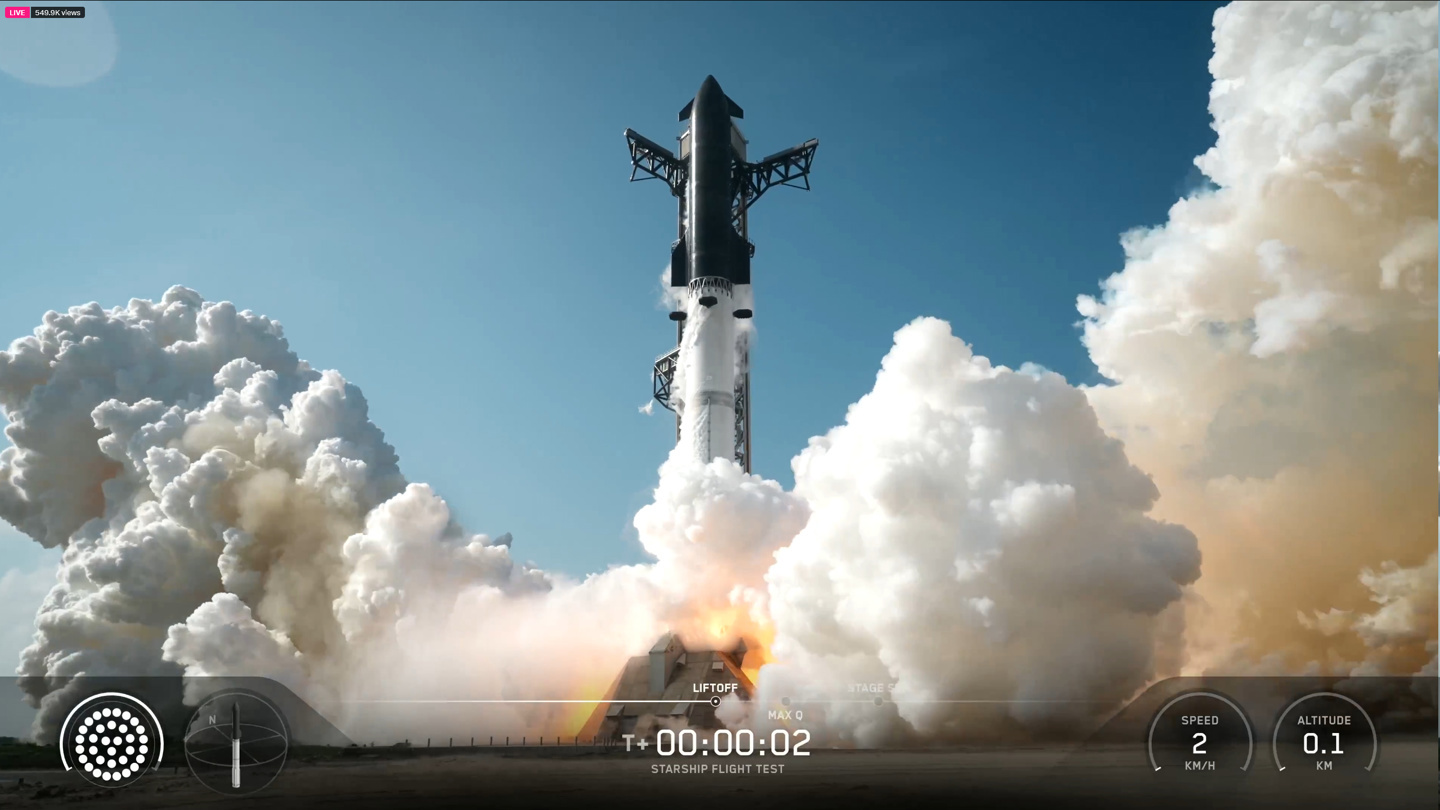
Flight 12, which took place on May 22, was the first full test of the upgraded Starship V3. The mission showed early promise, but things went wrong after stage separation. The Super Heavy booster failed to complete its return-to-launch-site braking burn and crashed uncontrolled into the Gulf of Mexico.
The FAA’s final accident report identified two root causes for the booster’s destruction: heat damage to propulsion components during ascent, and an incorrectly configured engine alarm system. Five of the booster’s 33 Raptor engines malfunctioned during the re-light attempt, cutting the return burn short. On the upper stage, one of three vacuum-optimized Raptor engines failed about 40 seconds after stage separation.
SpaceX proposed four corrective measures in response. The company has updated the booster’s engine start sequence to handle timing variations better, added hardware improvements to boost re-light reliability, revised the engine alarm and abort logic, and optimized propulsion systems on the upper stage. The FAA confirmed no injuries or property damage resulted from the incident.
Flight 13 will push the envelope further. The Super Heavy booster will run through launch, ascent, stage separation, return burn, and landing burn. The Starship upper stage will deploy 20 next-generation Starlink V3 satellites — a genuine revenue-generating payload, not just test mass. It will also attempt to re-light a Raptor engine in orbit, then execute a controlled reentry and splashdown in the Indian Ocean.
Six of those 20 Starlink satellites are equipped with camera systems to photograph the Starship heat shield during flight and beam images back in real time. The test will evaluate several heat shield upgrades, gathering data toward SpaceX’s goal of rapid, full reusability.
The launch window opens at 6:45 AM Beijing time on July 17, with a 90-minute window at SpaceX’s Starbase facility in Texas.