Tata Motors outlines 2031 plan: 25 models, 400,000 annual EV sales target
India’s largest automaker by market share has a roadmap for the next five years, and it leans heavily on electrification.
Tata Motors’ passenger vehicle division presented its 2031 fiscal year plan during an investor day on June 23. The strategy spans aggressive EV targets alongside major product and capacity expansion — all aimed at doubling annual sales to over 1.2 million vehicles.
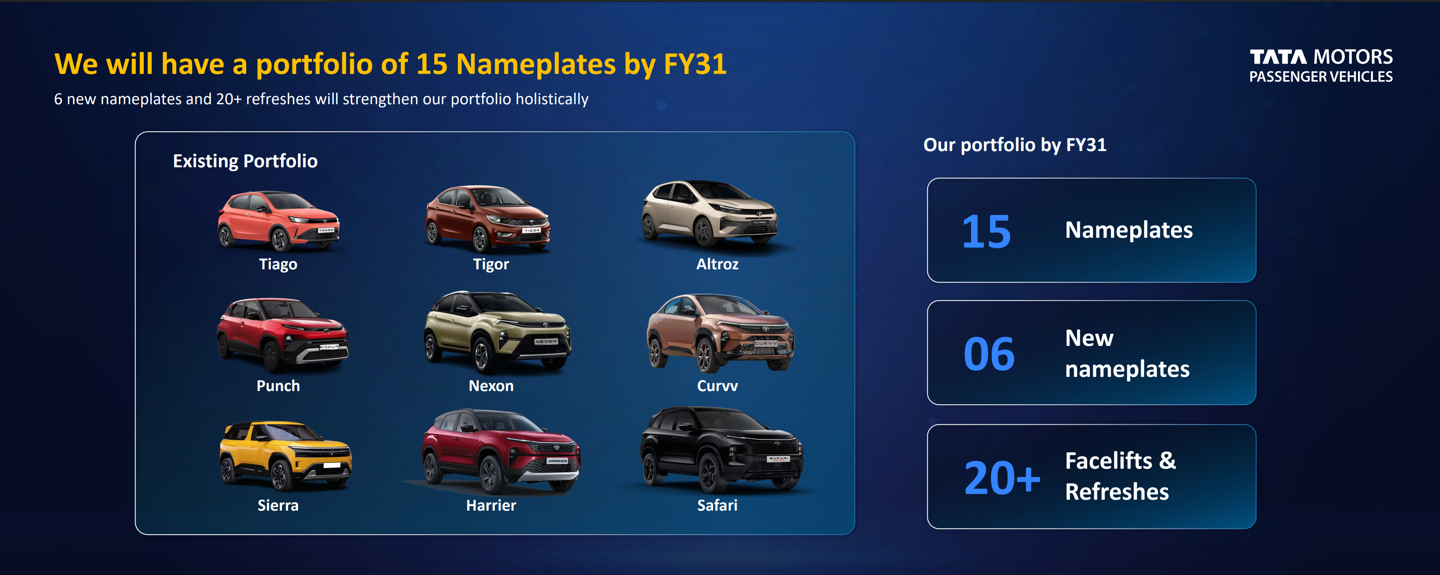
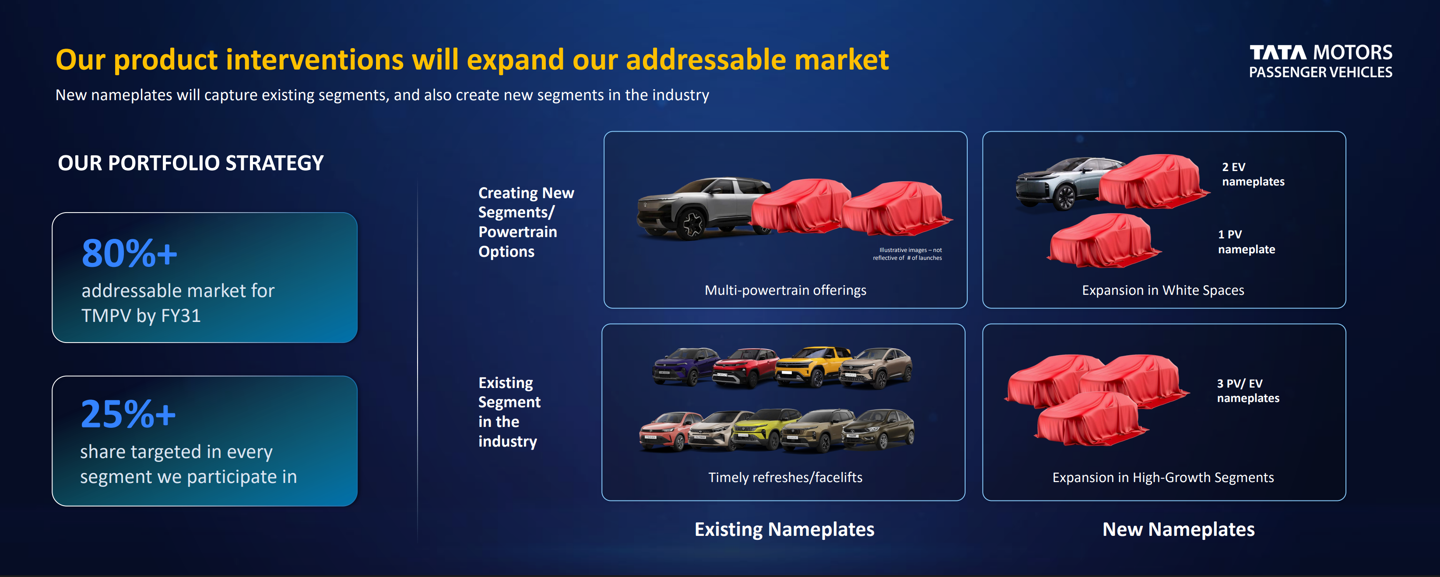
The company plans to grow its passenger vehicle lineup from the current 15 models — nine with internal combustion engines and six EVs — to 25. That means six new fuel-powered models and four entirely new EVs, plus more than 30 mid-cycle refreshes, facelifts, and other variant additions to existing models.
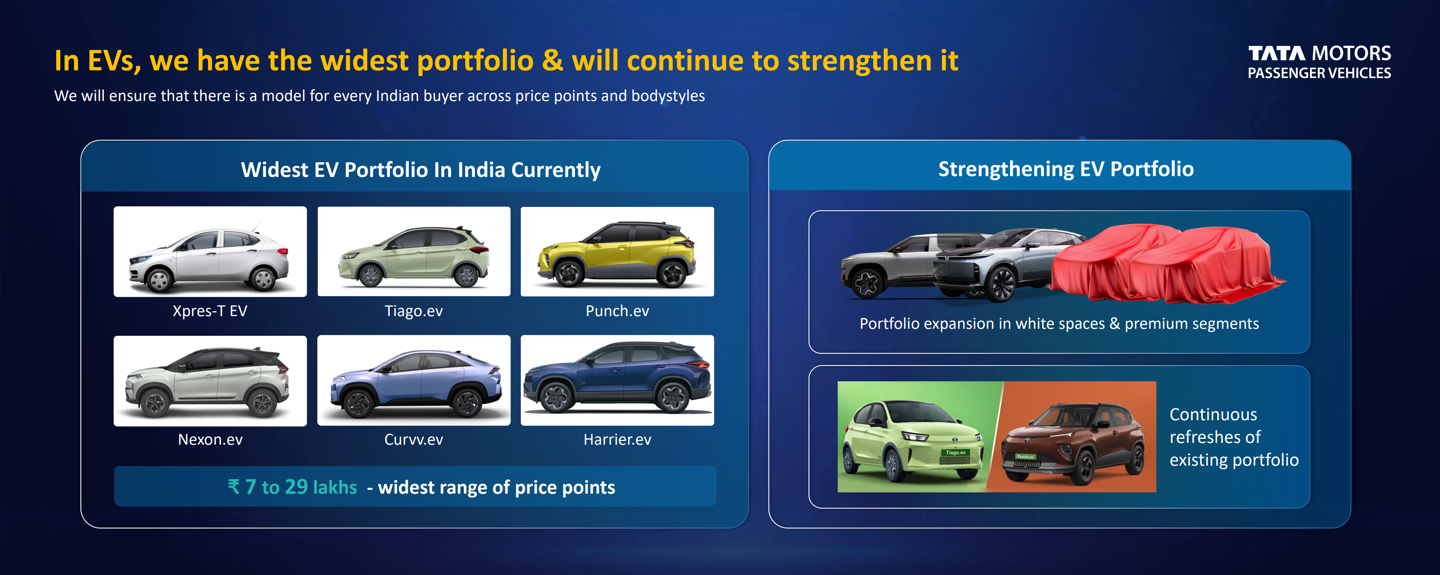
Tata already commands a leading position in India’s EV market with six models on sale. Two of the four planned new EVs have been announced. The Sierra EV, set to debut on June 30, will offer a dual-motor all-wheel-drive variant and a 65 kWh LFP battery on the base model. Then there’s Avinya, a planned premium sub-brand whose first model is expected in early 2027.
The other two EVs remain unconfirmed, but industry speculation points to the Safari EV — expected around the 2026 festive season and likely Tata’s first three-row electric SUV — and an electric MPV, which would be another first for the company.
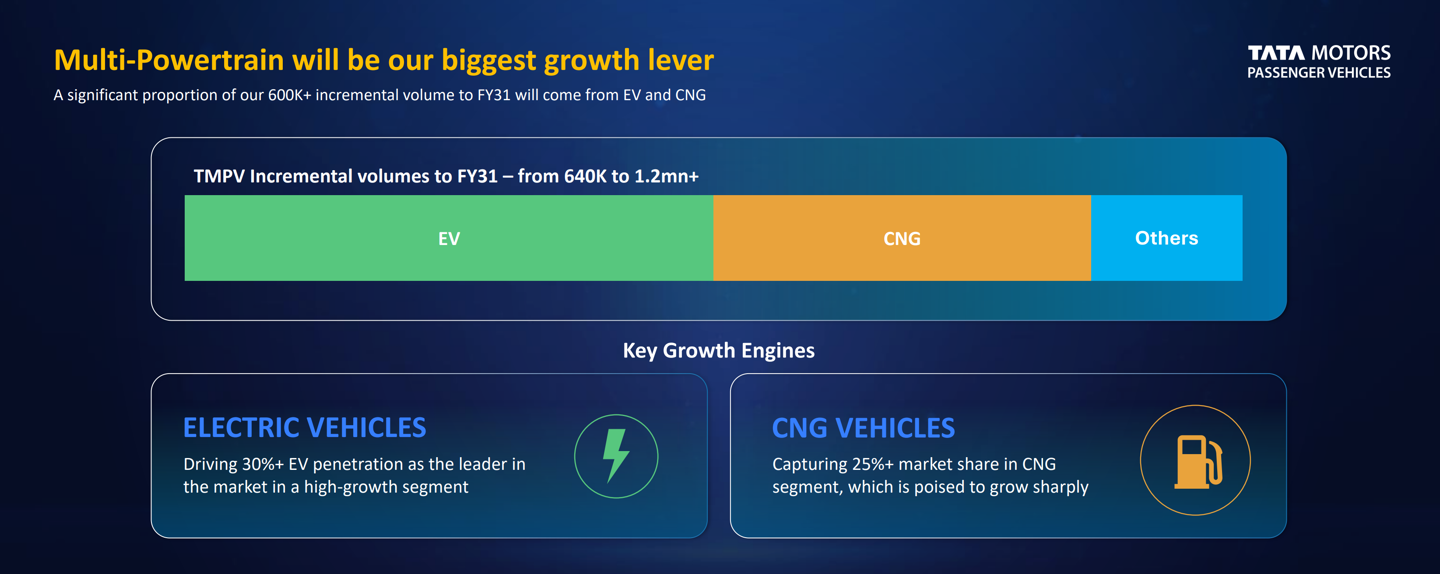
Tata wants EVs to account for over 30% of its passenger vehicle sales by fiscal 2031, or roughly 350,000 to 400,000 units annually. To keep those cars profitable after the government’s Production Linked Incentive scheme expires in 2028, the company is working on battery localization and integrated drive units, alongside next-generation battery tech promising 20-23% higher energy density and up to 3x faster charging.
On the combustion engine side, Tata plans to expand from 9 to 15 models by 2031. Alongside six entirely new vehicles, there will be over 20 facelifts and updates. One of those new models — a conventionally-powered SUV — will enter a segment Tata hasn’t touched before: the premium SUV space dominated by the Toyota Fortuner, Skoda Kodiaq, and Hyundai Santa Fe.
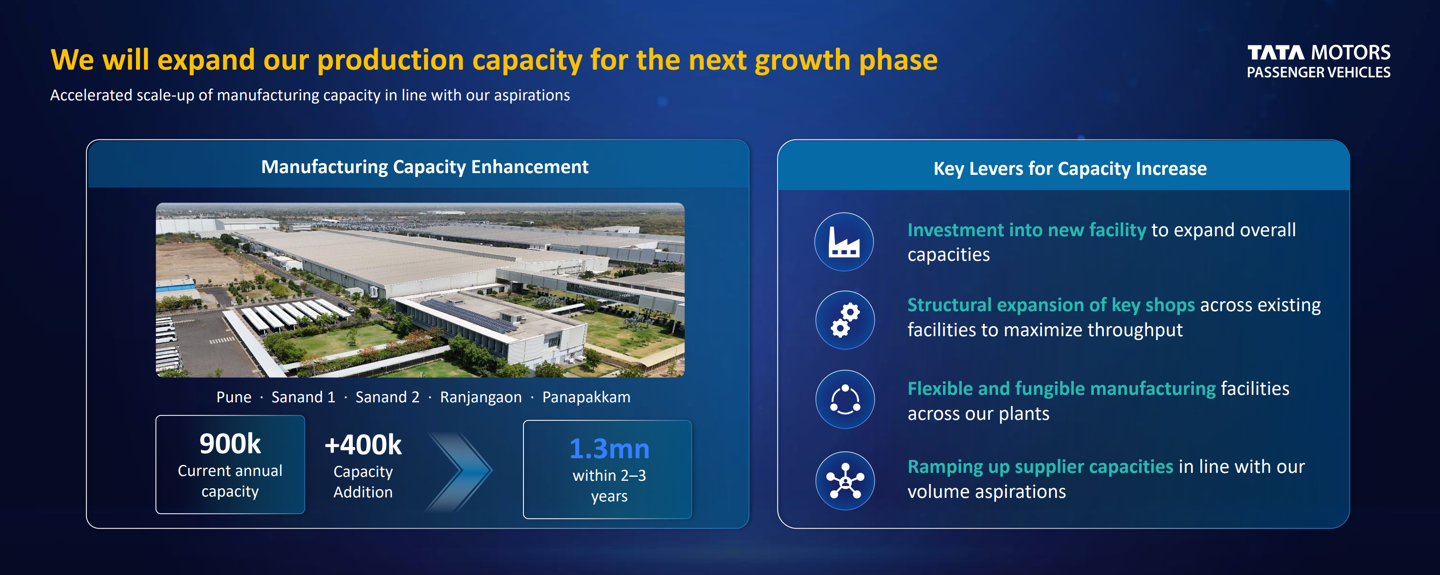
Supporting all this product growth requires a serious ramp in manufacturing. Tata aims to push annual production capacity from roughly 900,000 units today to 1.3 million within two to three years. That expansion will come through greenfield plants and structural upgrades to existing facilities in Pune, Sanand, Ranjangaon, and Panapakkam. Passenger vehicle and e-mobility managing director Shailesh Chandra said most of the new capacity will come from expanding the Sanand plant.
The sales target is ambitious: 1.2 million vehicles annually by fiscal 2031, nearly double the roughly 640,000 units sold in fiscal 2026. Tata expects revenue from its India passenger vehicle business to grow from ₹585 billion to ₹1.4 trillion over the same period. The company also wants to capture 20% of the Indian passenger vehicle market, up about five to six percentage points from its current share.
To get there, Tata plans to nearly double its sales network from 1,669 outlets to around 3,200, with over 3,000 service points.
In the CNG segment, Tata is targeting more than 25% market share. The company expects EVs and CNG vehicles together to account for a “significant portion” of the over 600,000 units of incremental sales volume by 2031.
On the financial side, Tata has set a 10% EBIT margin target for fiscal 2031. A structural cost-reduction program aims to cut combustion-engine vehicle costs by 5-6% over the next two years, with additional optimization measures for EVs. The company plans to invest ₹330-350 billion in its passenger vehicle and EV businesses between fiscal 2026 and 2030.