Tesla's Cybercab has a bizarre wheel setup — and a new patent reveals why
Tesla’s dedicated robotaxi, the Cybercab, is moving closer to production, and a freshly published patent gives us the best look yet at one of its strangest features: the wheels.
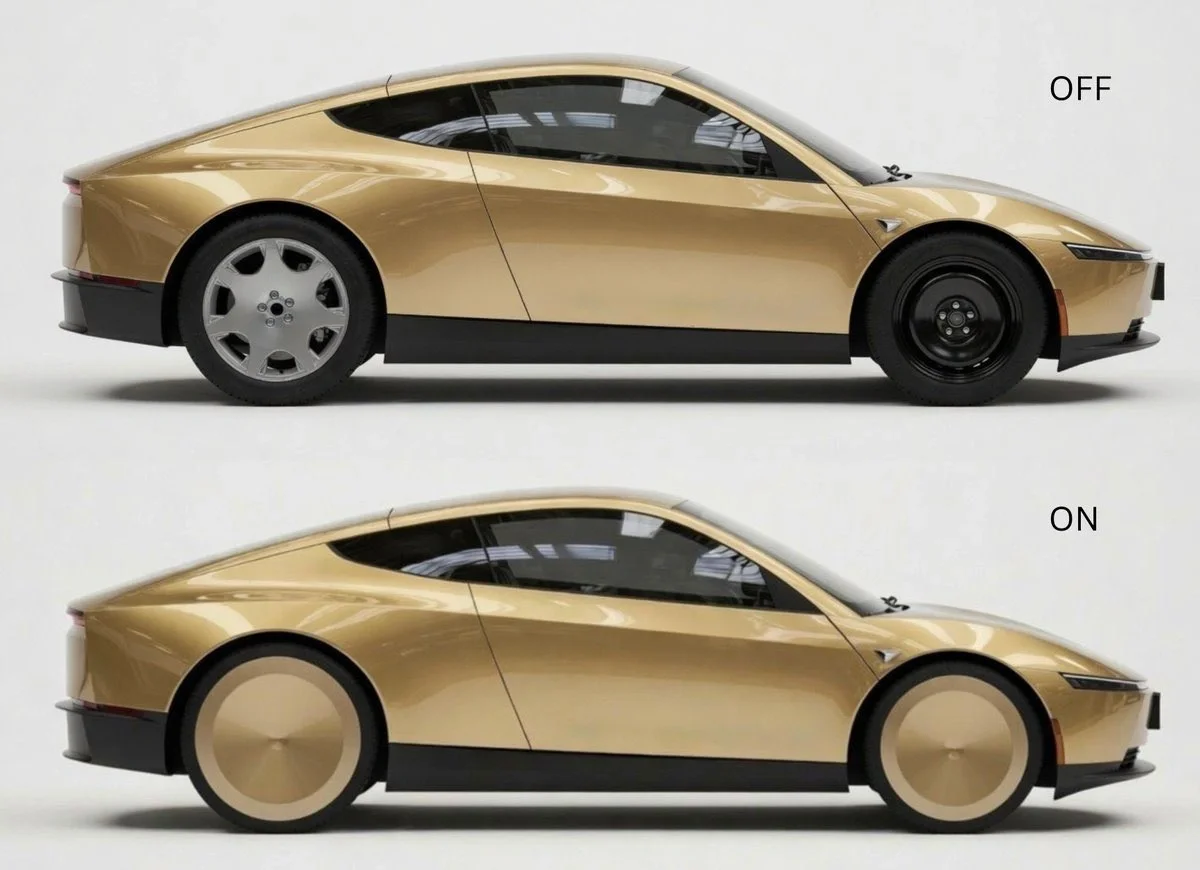
The design patent — registered with the US Patent and Trademark Office as US-D1130251-S — covers the Cybercab’s wheel design. Design patents don’t disclose technical specs, but they confirm the wheel layout Tesla has been testing: a front-wheel-drive vehicle with mismatched tire sizes front and rear, capped with gold-colored hubcaps.
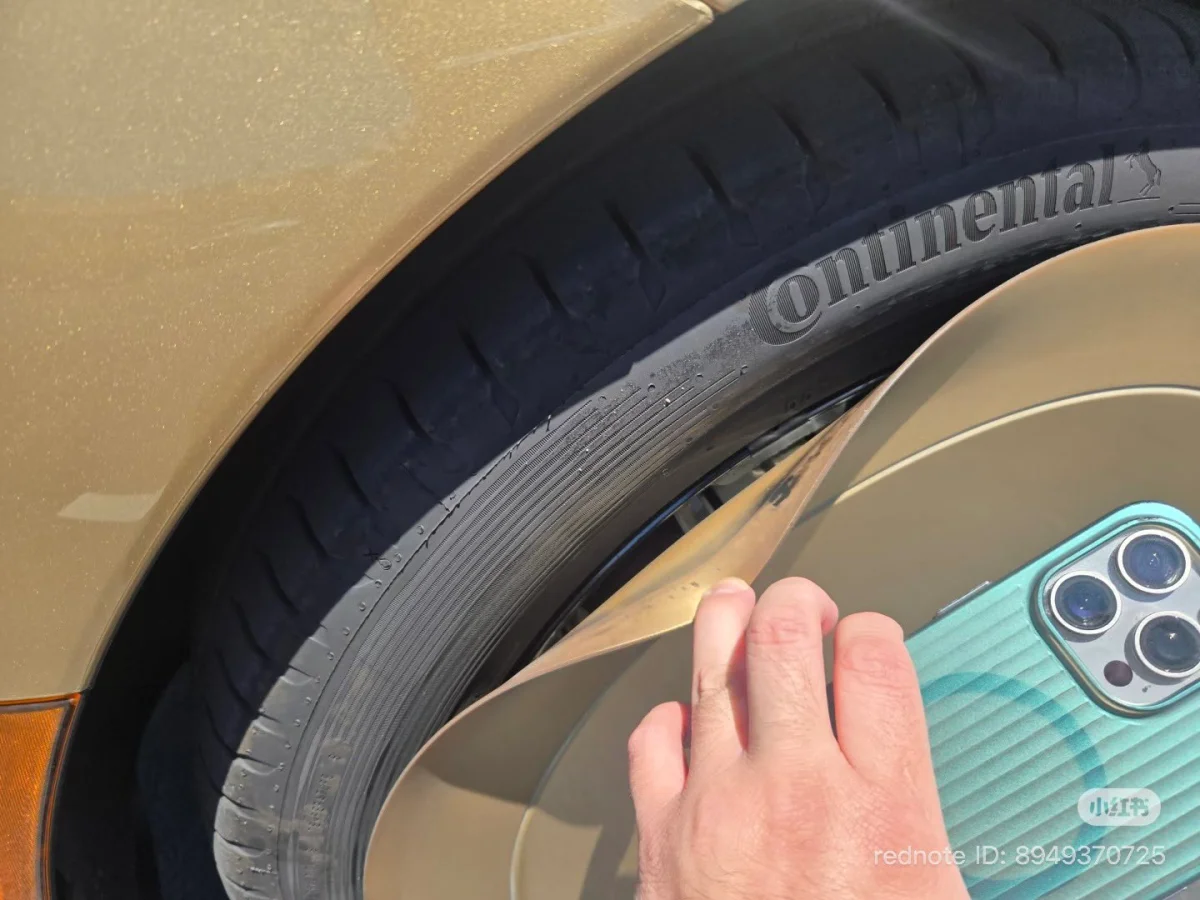
The centerpiece of the design is a flat gold hubcap that snaps over the wheel rim, sealing the gaps to maximize aerodynamics. Tesla blogger @Tslachan posted a teardown on X, showing the cover being pried off the rim. The outer edge is made of flexible rubber that seals against the sidewall of the Continental tires — a deliberate choice. A rigid material would grind against the tire as it flexes during driving, generating friction and wear. Photos even show black rubber debris clinging to the inside of the cover. The main body of the hubcap, covering the center of the rim, is molded from harder materials — likely ABS or polypropylene, the same plastic used in automotive interior trim.
But the hubcap is just the cosmetic layer. Underneath, the Cybercab’s wheel and drivetrain layout is where things get genuinely strange.
The front axle runs 215/60 R18 tires. The rear axle runs 225/60 R21 tires — a full 32 inches in diameter, closer to what you’d find on a light truck. And the whole thing is front-wheel drive.
That combination makes the Cybercab, as far as anyone can tell, the first production front-wheel-drive car shipping from the factory with wider rear wheels than front wheels. Some production cars run a staggered setup — but it’s almost always the front tires that are wider, to counter understeer. Rear-wheel-drive performance cars run wider rear tires for traction. Nobody ships a front-wheel-drive car with massive rear hoops.
The reason is fleet economics. Tesla analyst @AlexEdgerton broke it down: conventional rear-wheel drive uses wider rear tires for grip, but for a robotaxi, aerodynamic drag and per-mile operating costs matter more than lap times. A teardrop body that tapers at the rear is the most aerodynamic shape possible — and that demands narrow fronts with a smooth, enclosed underbody.
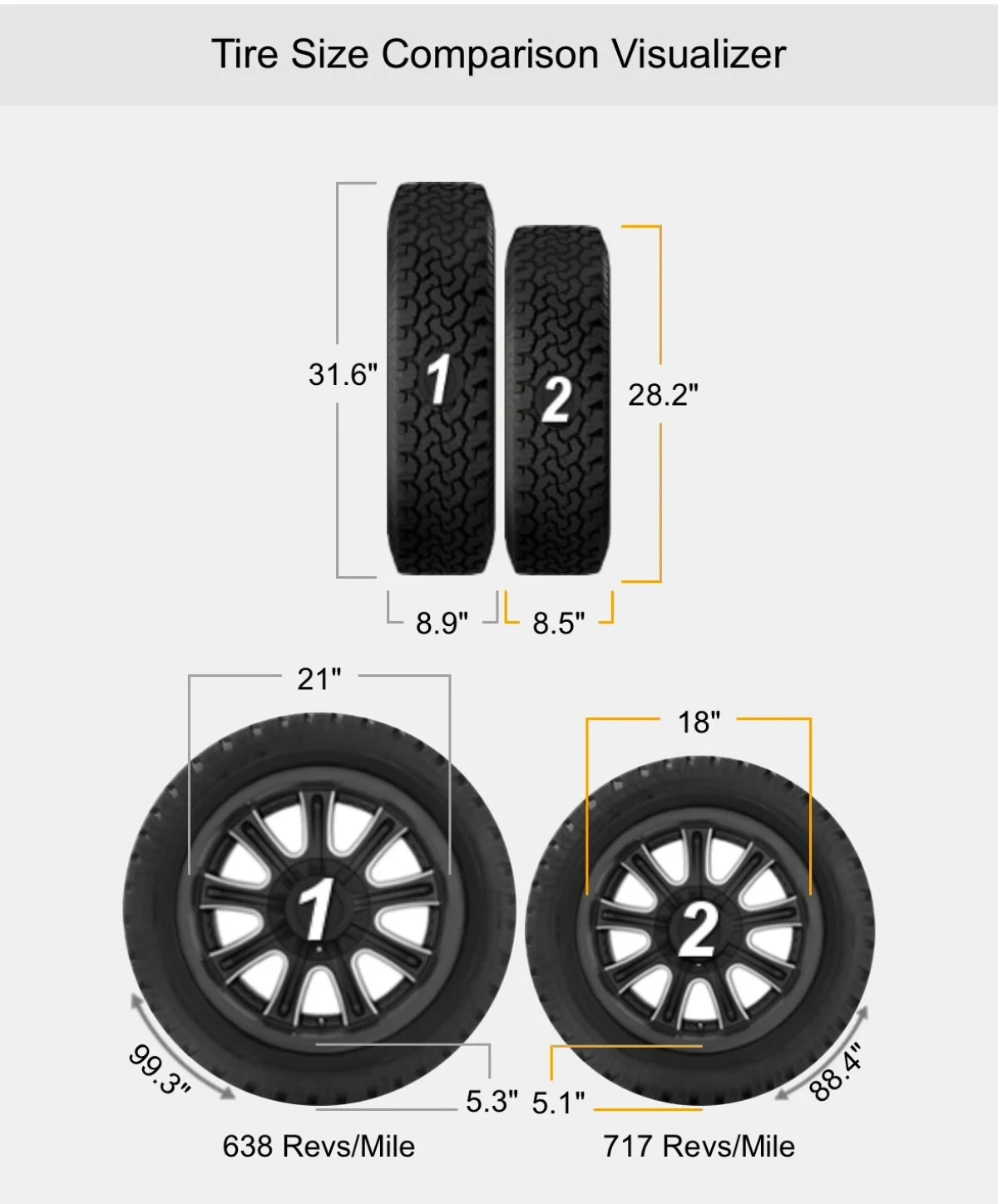
The smaller front wheels also improve steering agility in tight urban maneuvers, which matters when the car is ferrying passengers through city streets all day. And the giant 32-inch rears do two things: they smooth out potholes and bumps for a better ride, and they rotate fewer times per mile, extending tire life. For a vehicle expected to rack up tens of thousands of miles per year in fleet service, that last point alone is a real cost saver.
The wheel design is just one piece of a broader hardware package built specifically for driverless operation. Cybercab also carries a larger forward-facing camera mounted behind the windshield to support the full self-driving system, a cargo-bay camera to monitor passenger luggage, and — in its fully autonomous variant — no steering wheel, no brake pedal, no accelerator pedal at all.
Regulators are clearing the path. NHTSA recently eliminated the requirement that autonomous vehicles must have a brake pedal. Tesla has already started Cybercab production at Giga Texas, running two variants down the same line: a fully driverless version and a transitional model with manual controls. Production is ramping as Tesla’s commercial robotaxi launch date approaches.