Four of China's biggest phone makers just agreed to stop wasting your RAM
If you own an Android phone from any major Chinese brand, there’s a decent chance its RAM is being eaten alive by apps that have no business running in the background. vivo, Xiaomi, OPPO, and Honor are doing something about it — together.
The four companies announced a joint “Fair Running Memory Mechanism” at the 2026 Golden Label Alliance Developer Salon in Beijing on Thursday. The idea is straightforward: stop letting apps hog memory they don’t need, establish clear rules for how much RAM an app can use, and notify developers when their software is being a resource hog.
Android’s memory management has been a pain point for years. Apps launch services, keep processes alive, and pre-load content — all in the name of being “ready” when the user taps the icon. The result is stuttering, overheating, and apps that reload the moment you switch back to them. Each manufacturer has tried to fix this on its own, with varying degrees of aggression. Samsung kills background processes early. Xiaomi used to do the same. But without a shared standard, developers have to optimize for every vendor’s approach differently.
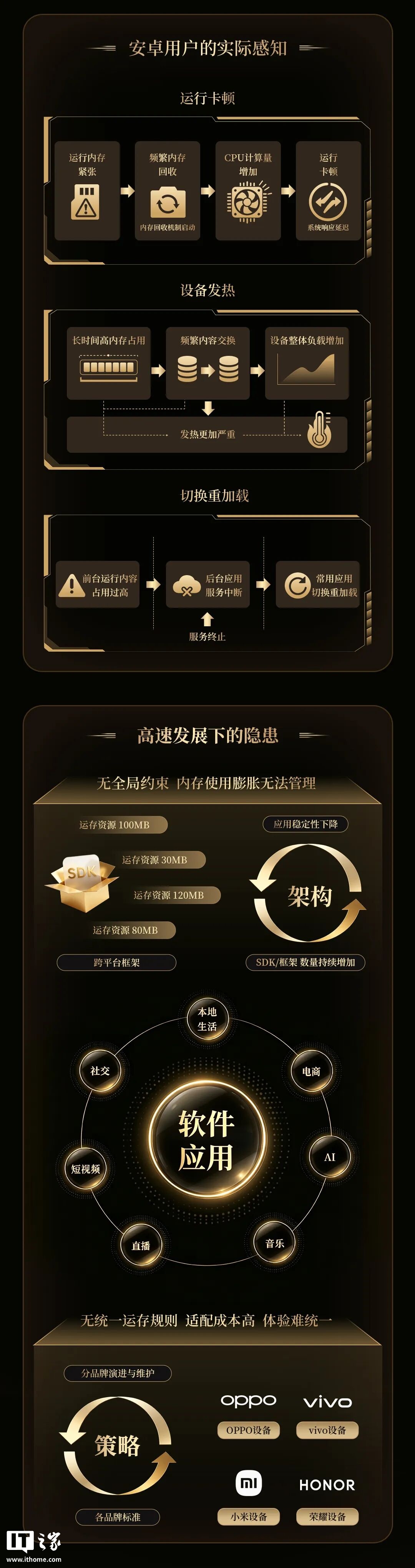
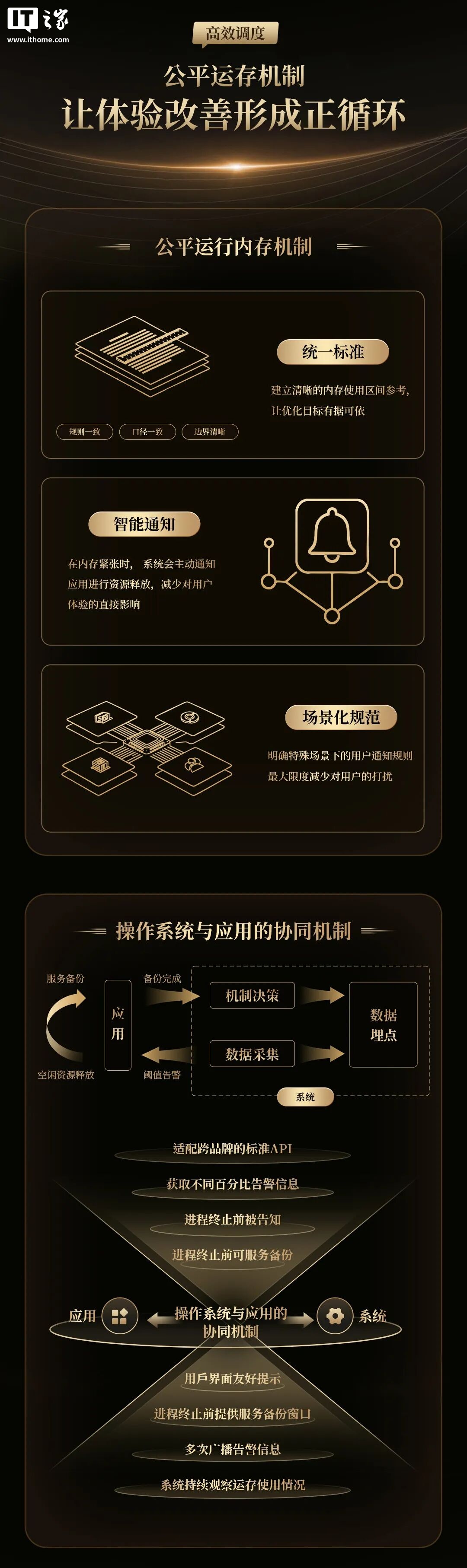
The new mechanism has three pillars. First, unified standards — a clear reference for how much memory an app is allowed to use in different states. Second, smart notifications — when memory gets tight, the system tells the app to release resources instead of just killing it silently. Third, scenario-specific rules — the phone knows when you’re gaming, navigating, or taking a call, and adjusts its memory policing accordingly instead of interrupting you.
The four brands are calling this the “Golden Label” standard, and at least four major apps are already on board. IT-NEWS has learned that a beta version of QQ (version 9.3.25) has integrated the mechanism, joining Douyin, WPS Office, and WeChat. All four are among the most resource-hungry apps on any Chinese phone.
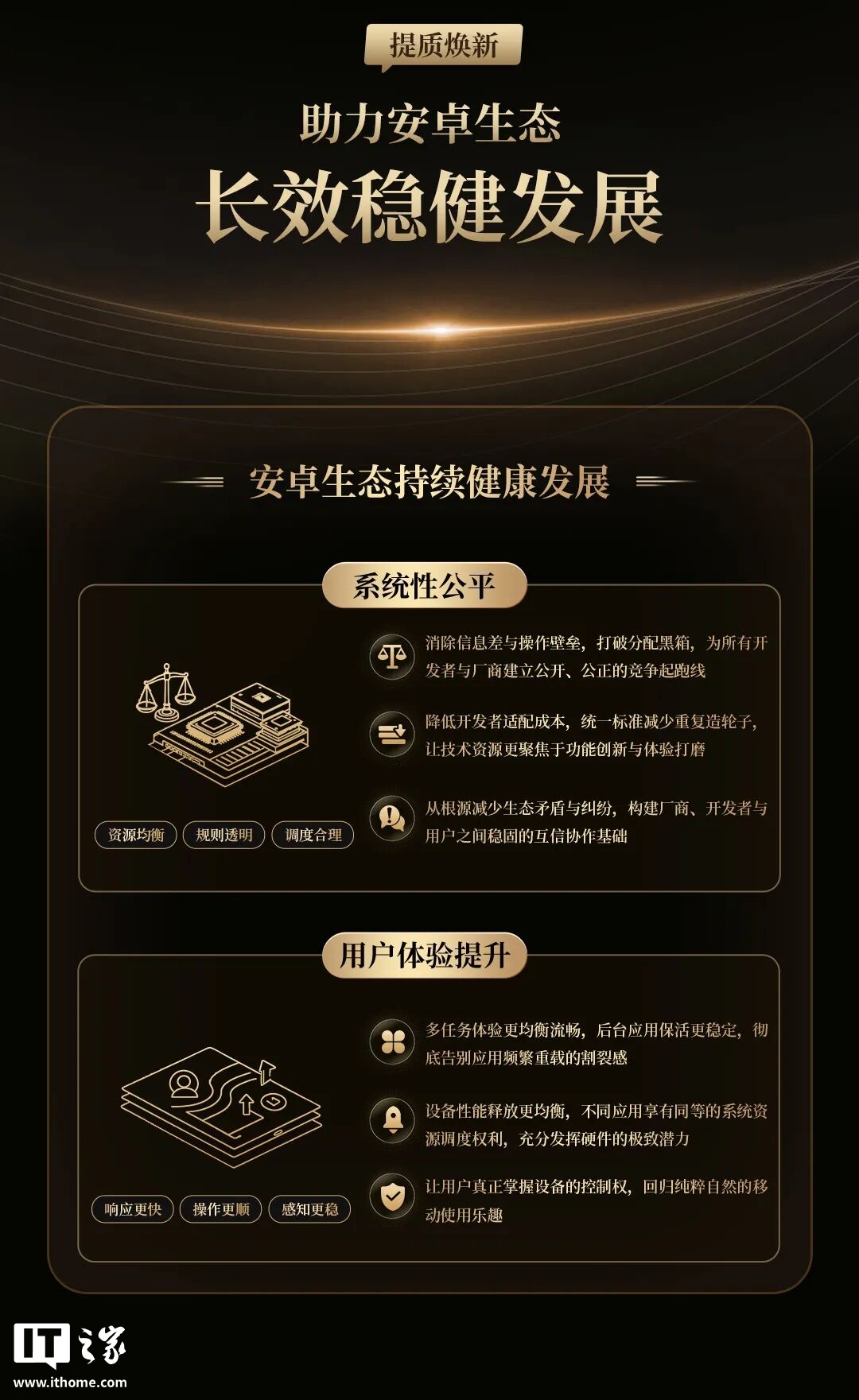
What makes this different from the usual “we formed an alliance” announcements is that the standard is tied to the Golden Label certification program — an existing ecosystem framework that vivo, Xiaomi, OPPO, and Honor have been building together. Apps that comply get better treatment; apps that don’t risk getting reined in by the system anyway. For developers, it means one set of rules to follow instead of four. For users, it means their 12GB or 16GB of RAM might actually translate to apps that stay open and a phone that doesn’t heat up in their pocket.
The mechanism is expected to roll out in upcoming system updates from all four manufacturers.