XPeng's MONA L03 racks up 46,859 orders in the first hour
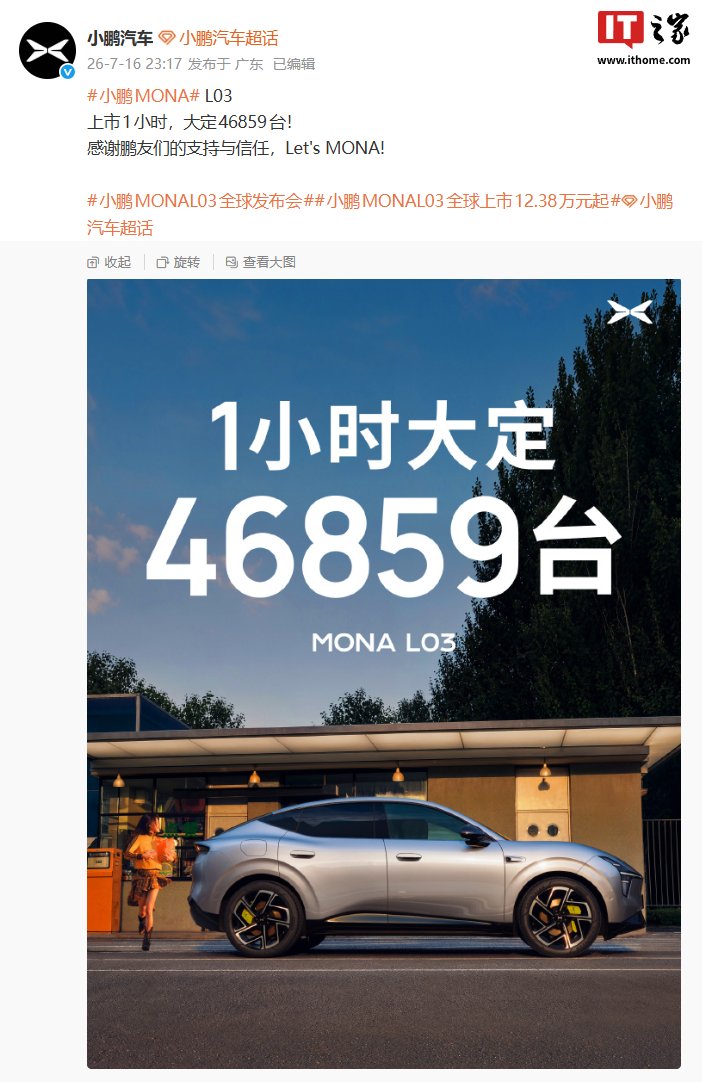
46,859. That’s how many people put down a deposit on XPeng’s MONA L03 in the first hour it went on sale Thursday night.
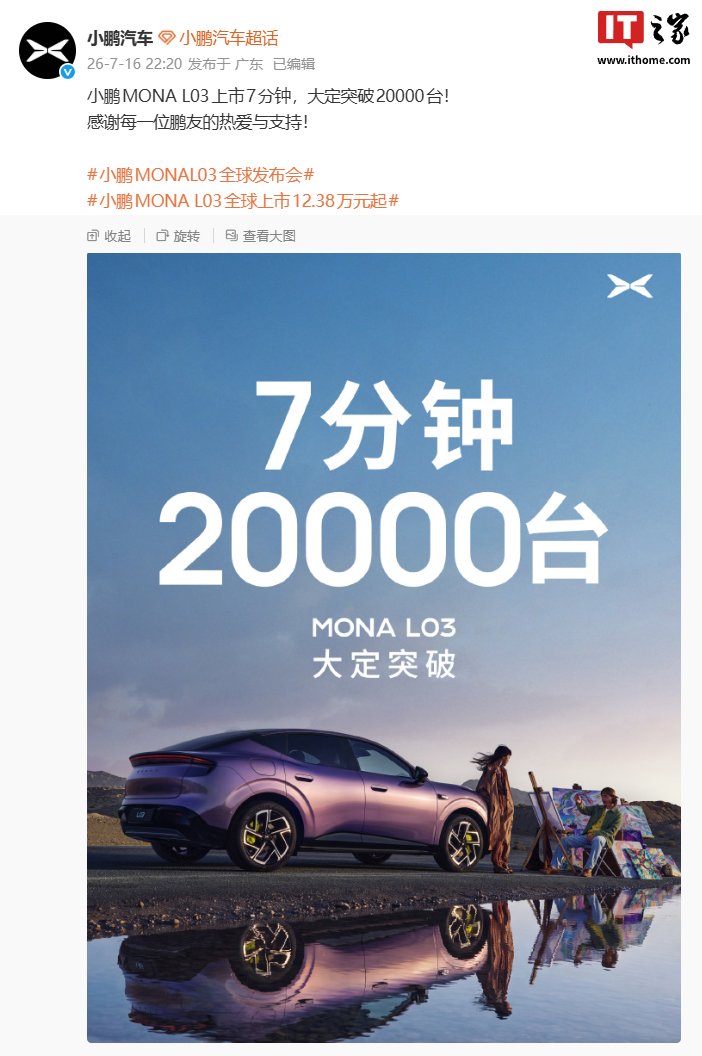
The number is big even by Chinese EV standards, where launch-day order counts have become a sport of their own. Earlier in the evening, XPeng had already announced 20,000 firm orders in the first 7 minutes — a pace that would make most carmakers jealous on its own.
The L03 is a critical car for XPeng. It’s the company’s shot at the volume end of the market, and the pricing reflects that ambition: starting at 128,800 yuan (roughly $17,800). The sedan comes in both pure-electric and extended-range (EREV) variants, with the EREV version scheduled to begin deliveries in late August.
XPeng is leaning hard on the car’s tech credentials. The L03 is powered by the company’s own Turing AI chip — a piece of silicon XPeng designed in-house to handle its autonomous driving stack. The Max trim runs a single chip rated at 750 TOPS with a distilled version of XPeng’s second-generation Vision-Language-Action model. The Ultra SE trim doubles down: two chips, 1,500 TOPS, and the full-fat second-gen VLA model.
The design comes from Juanma Lopez, a former Ferrari exterior designer — an unusual pedigree for a sub-$18,000 sedan. The proportions are clean, with a low front hood and sharp creases along the side that give it more presence than its price bracket would suggest.
The order numbers suggest the formula is working. 46,859 units in an hour is a strong signal that Chinese consumers are hungry for affordable EVs with serious autonomous driving hardware — and that XPeng’s bet on vertical integration (design its own chip, write its own driving software, build its own car) can scale beyond premium models.

Whether XPeng can deliver the cars fast enough to meet that demand is the next question. The company is still ramping MONA production, and supply chain bottlenecks have a way of catching up with even the best launch numbers.