The World's First Underwater Habitat Just Started Operating — 56 Feet Down, 4 People at a Time
There’s a strange kind of silence 56 feet below the surface of the Florida Keys National Marine Sanctuary. Fish drift past portholes. Sunlight filters through in shifting blue-green shafts. And inside a steel tube bolted to the seafloor, four people are trying to figure out if humans can live underwater — not temporarily, not in a submarine, but as residents.
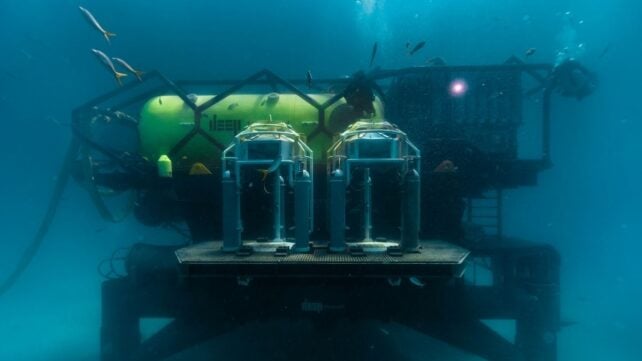
Vanguard, the world’s first operational underwater living module, just went live at Tennessee Reef. It’s a pilot project built by DEEP, a British company founded in 2021, and it’s designed to test something ambitious: year-round human habitation on the seabed.
Vanguard is installed on a fixed platform at a depth of 17 meters (56 feet) and can accommodate up to four crew members at a time. The first residents rotate in weekly — they enter and exit using scuba gear, spending seven days at a stretch living and working inside the module.
The inaugural team includes Dawn Kernagis, DEEP’s director of research, who previously took part in NASA’s NEEMO 21 undersea mission. Her focus is on brain and nervous system physiology — the kind of science that matters when you’re trying to understand how prolonged isolation and pressure affect the human body. Four scientists will rotate through in shifts, each spending a week underwater before surfacing.
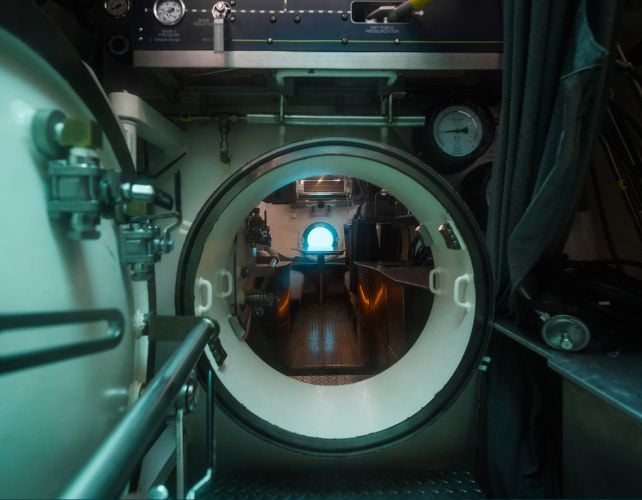
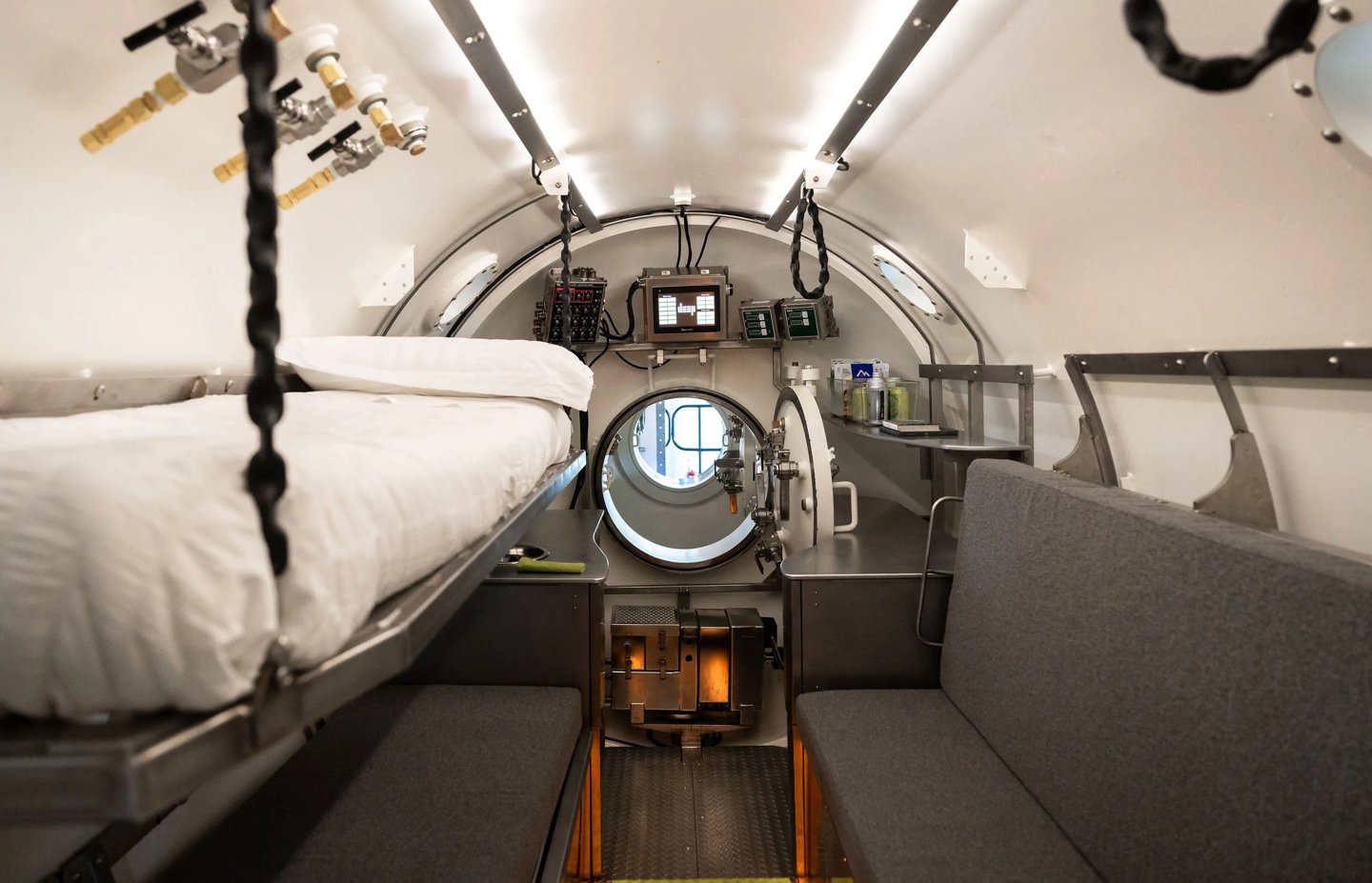
Inside, Vanguard looks like a very well-equipped RV. Long gray benches double as beds. A microwave sits tucked under the counter. There’s a French press and cutlery next to the steel sink — someone on the design team clearly had priorities. A small toilet hides behind a curtain. It’s compact, but it’s meant to be comfortable enough for a week-long stay.
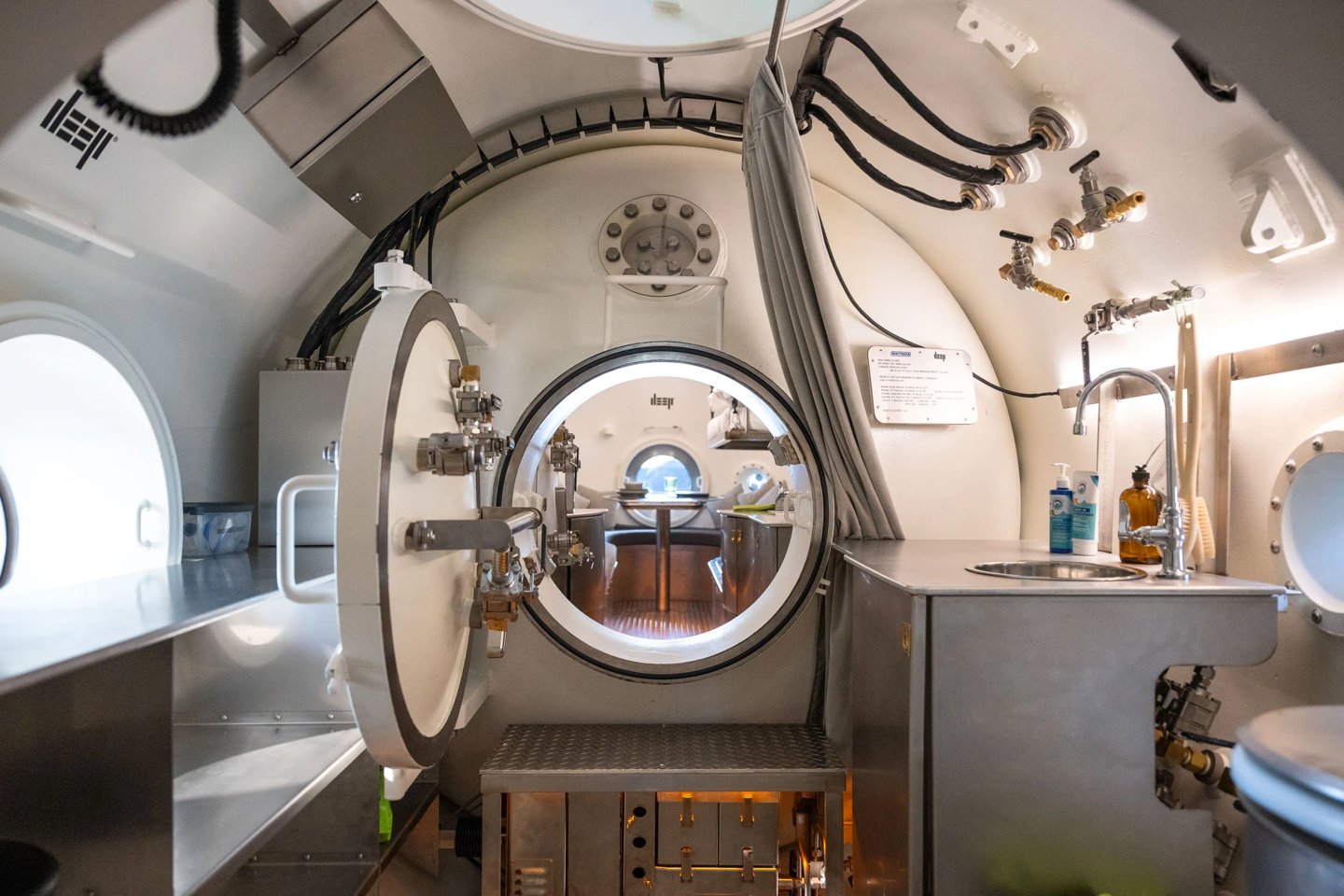
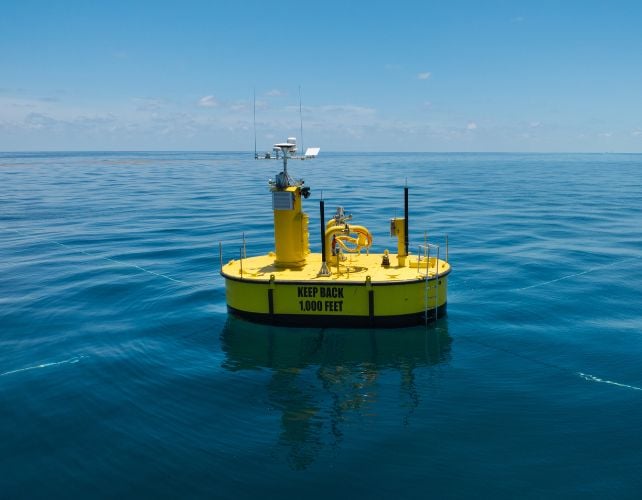
A surface buoy connected by an umbilical line provides constant air, power, and satellite communications. A shore base stays in 24/7 contact with the crew. Fresh water is stored in onboard tanks. Wastewater and sewage are collected and removed. When nobody is inside, the habitat’s sensors keep measuring water conditions — temperature, pressure, current — running autonomously between crew rotations.
So what are four people actually supposed to do down there for a week? The task list is surprisingly broad: coral reef restoration, species surveys, underwater archaeology, and — in some rotations — astronaut training. NASA has been running undersea missions as space analog environments for decades. Vanguard makes that kind of training cheaper, more accessible, and continuous.
DEEP’s long-term goal is Sentinel, a much larger permanent underwater habitat targeting 2027. If Vanguard proves the concept works — if the life support systems hold, if crews can stay healthy, if the psychological strain is manageable — Sentinel would be the first truly semi-permanent human settlement on the seabed. Not a research station you visit. A place you live.
For now, four people are doing exactly that, 56 feet down, off the coast of Florida. The fish are still swimming past the portholes. But the silence isn’t quite what it used to be.