Arm China Launches Open AIOS Alliance With 20 Chip and AI Partners
Arm China used this year’s World Artificial Intelligence Conference in Shanghai to announce the “Open AIOS Alliance,” an attempt to build an open-source operating system purpose-built for AI devices. More than 20 companies have already signed on.
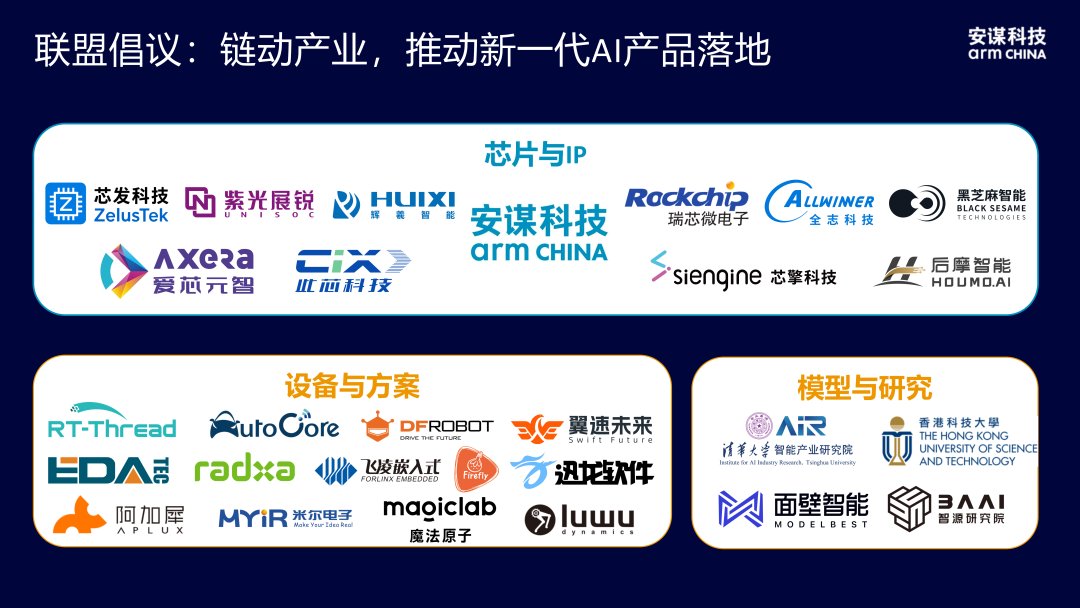
The alliance spans the full domestic AI supply chain. On the chip side, the founding members include Rockchip, Unisoc (紫光展锐), Allwinner Technology (全志科技), Xinfa Technology, Huixi Intelligence, and Cixi Technology — some of China’s best-known fabless semiconductor houses. Software and model providers Faci AI, RT-Thread, and AutoCore are also in, alongside two academic partners: Tsinghua University’s Institute for AI Research and HKUST’s Physical AI Research Center.
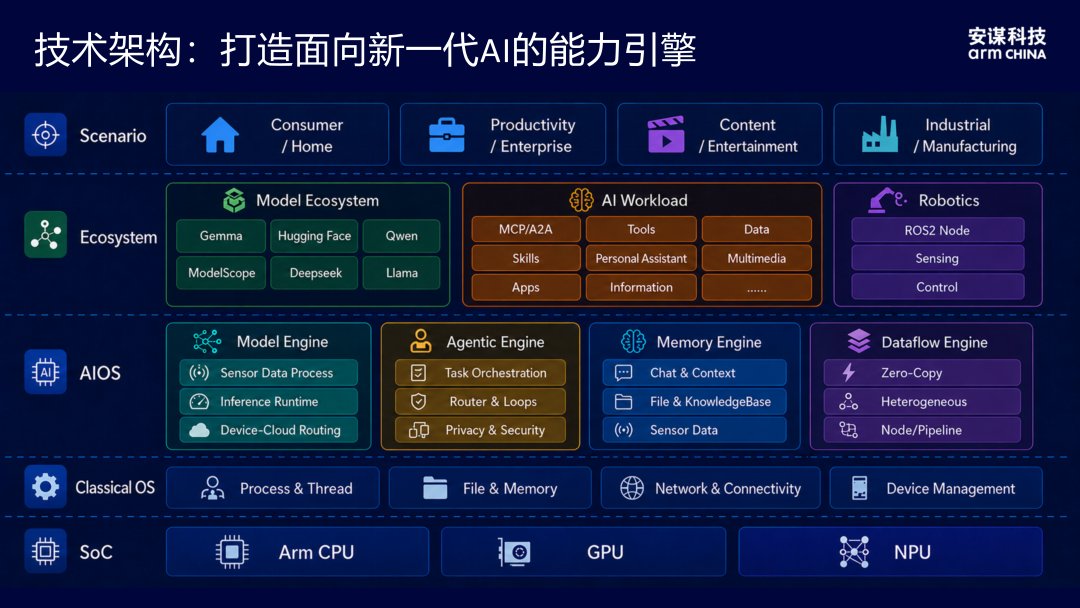
The group is building the open-source AIOS around four technical modules: AI model capabilities, sensing and motion control, AI task orchestration, and memory systems. The idea is that a standardized open OS layer sitting between chips and applications could accelerate how fast AI features move from research into shipping products — especially for embodied AI and robotics, where the hardware is still fragmented and every vendor rolls its own stack.
China’s AI hardware ecosystem has long suffered from fragmentation. Unlike x86 or Arm mobile, there’s no dominant software platform for AI accelerators and robotics controllers. Each chip vendor ships its own SDK, its own runtime, its own toolchain. The Open AIOS Alliance is essentially trying to do for Chinese AI hardware what Android did for smartphones — provide a common software foundation that lets apps run across devices from different manufacturers without custom porting.
Whether the alliance can avoid the fate of previous industry consortiums remains to be seen. But with 20 partners across chips, models, and academia already committed, and the backing of Arm China’s extensive partner network, it has more momentum than most.