2027 iPad Pro Rumored to Get M7 Chip With Dual Strategy and Vapor Chamber Cooling
Apple is reportedly splitting its next-generation M7 chip into two tiers — standard and Pro — for the 2027 iPad Pro lineup, according to leaker @智慧皮卡丘. The same source mentions a vapor chamber cooling upgrade, a technology Apple first brought to the iPhone 17 Pro.
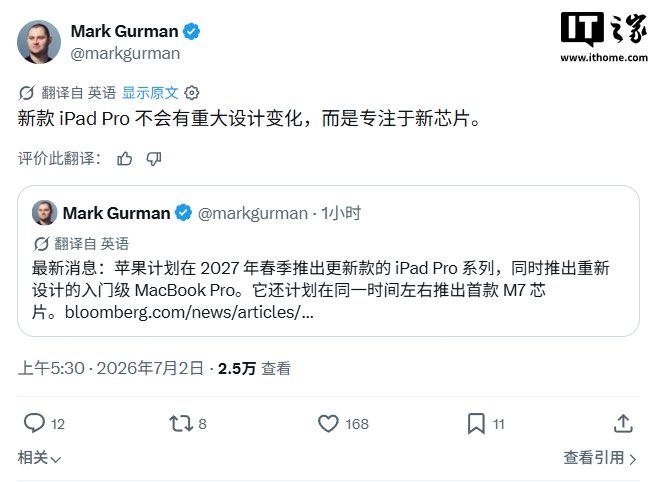
Bloomberg’s Mark Gurman has separately reported a spring 2027 refresh for the 11-inch and 13-inch iPad Pro, focused on internal upgrades and faster chips. Gurman is uncertain which chip will power the tablets. It could be the M6, expected in late 2026 on TSMC’s 2nm process with a 12-core GPU and 200GB/s memory bandwidth, or the M7, slated for the first half of 2027.
The M7 is expected to deliver a substantial boost to on-device AI performance. Standard models could see memory bandwidth reach roughly 240GB/s, up from the M5’s 153GB/s.


The last iPad Pro refresh — the M5 update in October 2025 — was, by Gurman’s own assessment, the smallest in years. It was a processor swap with little else new. Then in June 2026, Apple raised iPad Pro prices in China from ¥8,999 to ¥10,799, a ¥1,800 jump tied to a broader memory shortage.
The vapor chamber system matters independently. Apple’s VC cooling, first deployed in the iPhone 17 Pro, uses a small amount of deionized water to draw heat from the chip and spread it evenly across the chassis. The company says it improves sustained performance under heavy loads by up to 40%. Gurman predicted in July 2026 that the 2027 iPad Pro would adopt the same system to handle thermal demands from AI workloads.
The current iPad Pro already has some thermal engineering. Apple equipped the 2024 M4 iPad Pro with a graphite thermal sheet and a copper Apple logo on the back, improving heat dissipation by about 20% over the previous generation. The VC system would be a clear step beyond that.
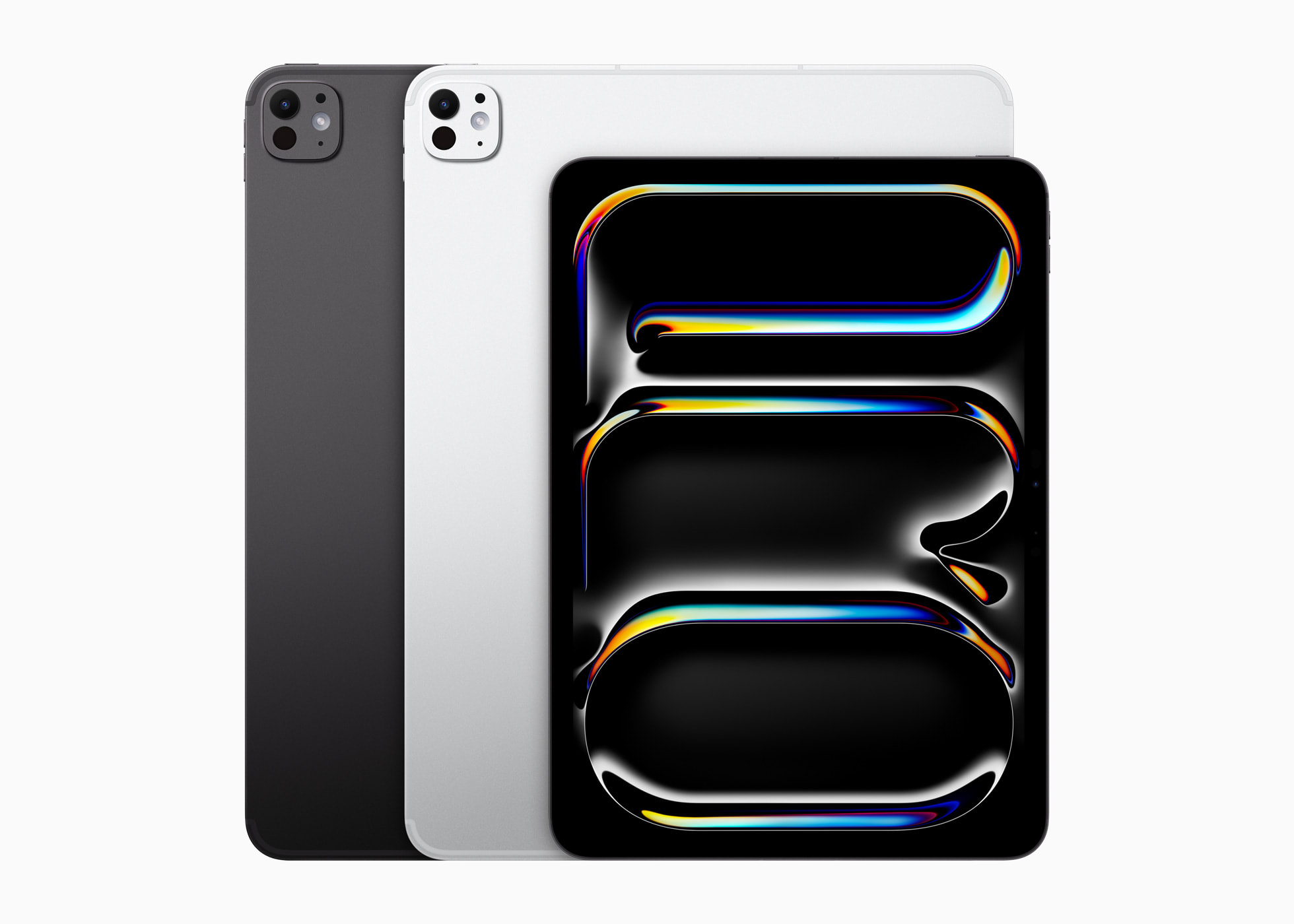
If Apple picks the M6, it would use TSMC’s 2nm node with a 12-core GPU, up from 10 on the M5, and 200GB/s memory bandwidth. But the M7 would arrive just months later, forcing a difficult chip choice.