Enflame and ZTE unveil a zero-cable AI supernode — backed by a $830M IPO
The 2026 World AI Conference in Shanghai delivered its share of flashy demos, but one announcement carried weight well beyond the expo floor. Chinese AI chip startup Enflame Technology, in partnership with ZTE, took the wraps off the Cloud燧 ESL64-O supernode — a compute cluster built around a design philosophy that’s almost stubbornly simple: remove every cable you can.
The ESL64-O uses what Enflame calls an OEX orthogonal backplane-less architecture. No cables connect the compute nodes. The company claims this dramatically cuts interconnect costs and shortens the product development cycle. That’s a meaningful claim in an industry where cabling complexity and signal integrity issues routinely inflate both the bill of materials and the time-to-market for AI clusters.
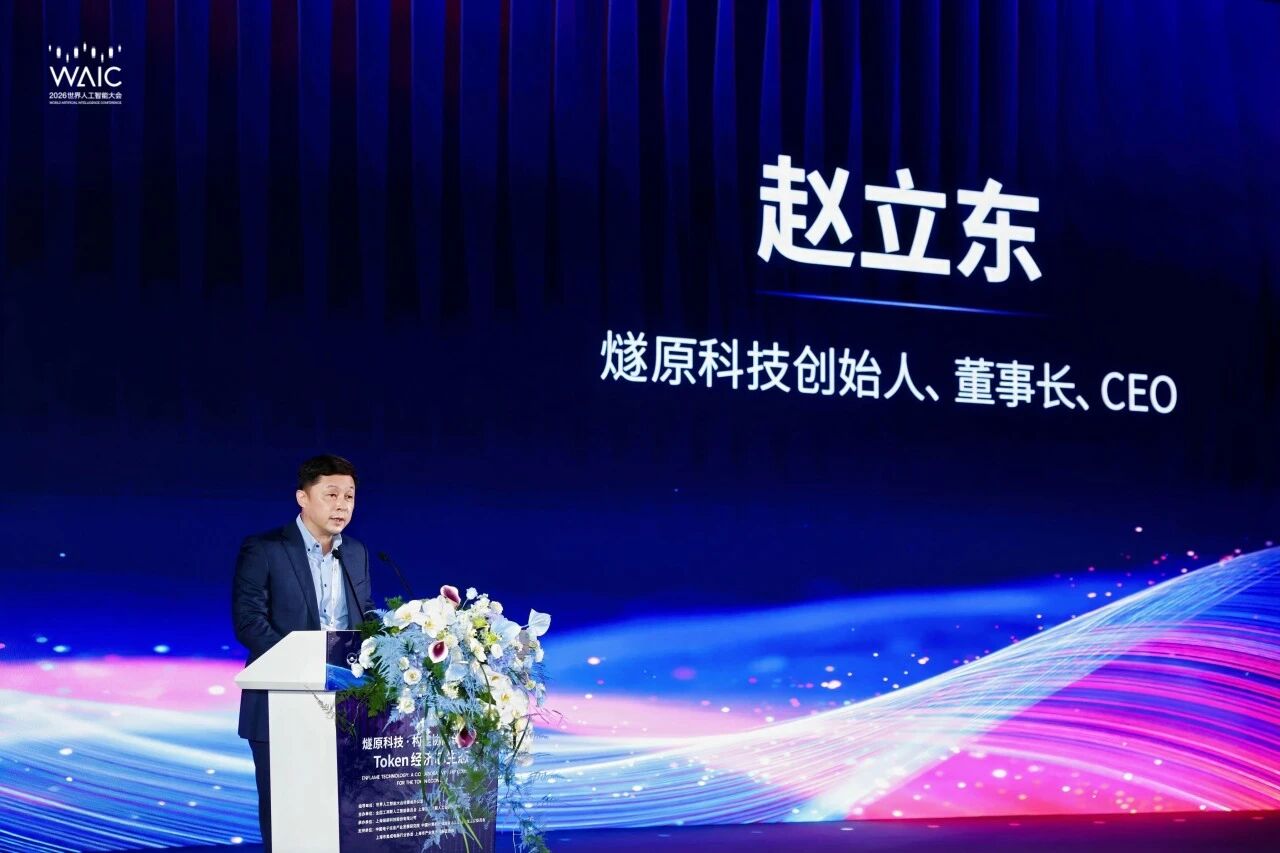
Beyond the hardware, Enflame positioned the supernode as a full-stack play. The company laid out four pillars for the system: its own AI chips (decoupled and open to support multiple domestic GPU ecosystems), the OEX interconnect architecture, dual-path commercial and experimental connectivity enhancements, and system-level co-optimization spanning chips, algorithms, systems, clusters, software, and data center infrastructure. It’s a lot of ground, but the unifying thread is clear — Enflame is betting that tightly integrated hardware-software co-design gives it an edge in China’s increasingly crowded AI chip market.
Enflame also showed a CoPoS (Chip-on-Panel-on-Substrate) panel-level advanced packaging sample, developed with Xianfeng Technology. This is the company’s first attempt to pair its high-end AI compute chips with a fully domestic advanced packaging flow. The approach offers adjustable thermal expansion coefficients, very low high-frequency signal loss, and excellent flatness across large panel formats — three attributes that matter a great deal as chip sizes grow and signal speeds climb.
The timing is notable. Enflame is one of four domestic GPU startups — alongside Moore Threads, Muxi, and Biren — that industry watchers call the “Four Little Dragons.” On July 9, the China Securities Regulatory Commission approved Enflame’s IPO registration on the STAR Market (Shanghai’s Nasdaq-style board). The company plans to raise 60 billion RMB, or roughly $830 million, to fund fifth- and sixth-generation AI chip series development, plus an advanced hardware-software collaborative innovation project.
That IPO pipeline gives Enflame something most of its Chinese AI chip competitors lack: a clear path to public-market capital at a scale that can sustain multi-generational silicon development. Whether the ESL64-O supernode can deliver on its zero-cable promise at production scale is the next question — but the company now has both the technology narrative and the financial firepower to try.